
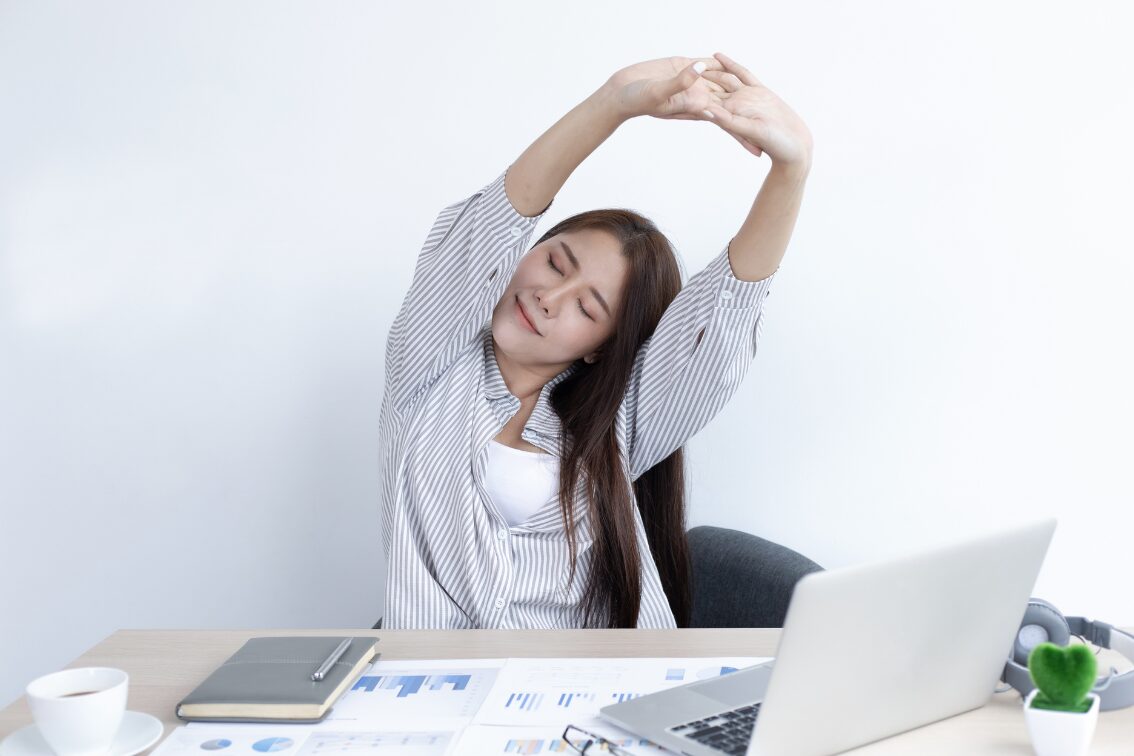
Some mornings, even getting out of bed feels like a workout. Stiff fingers, achy knees, and a lower back that refuses to cooperate can make the simplest tasks feel daunting. When movement hurts, it’s completely natural to want to avoid it—but gentle, intentional motion is actually one of the most powerful tools you have to fight back.
Chair yoga for arthritis offers a safe, low-impact way to reduce stiffness, improve circulation, and restore confidence in your body—all without the stress of getting down onto the floor. Whether you live with osteoarthritis, rheumatoid arthritis, or general chronic joint tightness, these seated yoga exercises can help you move easier and feel better.
⭐ Quick Answer: What Is the Best Chair Yoga Routine for Arthritis?
The most effective chair yoga exercises for arthritis pain relief include:
- Seated Cat-Cow: Restores spinal mobility and eases morning back stiffness.
- Gentle Spinal Twists: Lubricates the vertebrae and improves core flexibility.
- Seated Leg Extensions: Builds strength around the knees to reduce joint strain.
- Knee Lifts & Ankle Rolls: Boosts lower body circulation and hip flexibility.
- Shoulder & Wrist Rolls: Eases tension from hand arthritis and neck tightness.
- Deep Belly Breathing: Activates the nervous system to lower inflammation-linked stress.
Practicing these movements for just 10 to 15 minutes daily helps stimulate synovial fluid, drastically reducing stiffness and improving overall daily mobility.
What Exactly Is Chair Yoga?
Chair yoga is a modified form of traditional yoga where poses are adapted so they can be performed while securely seated, or while standing and using a chair for balance support. It eliminates the barriers that make traditional yoga difficult for sore joints.
Unlike floor-based yoga mat routines, chair yoga offers unique advantages:
- No floor transitions: Eliminates the painful struggle of getting up and down from the mat.
- Reduced weight-bearing strain: The chair carries your weight, protecting inflamed hips, knees, and ankles.
- Zero fall risk: Provides a secure, stable base for those managing balance issues.
- Flare-up friendly: Gentle enough to practice even on days when your joints are actively throbbing.
According to the Arthritis Foundation, regular low-impact physical activity is essential for maintaining joint function. It stimulates the production of synovial fluid—which acts like a natural “WD-40” lubricant inside your joint capsules. That is why consistent, gentle stretching is a game-changer for long-term comfort.
The Life-Changing Benefits of Seated Yoga for Arthritis
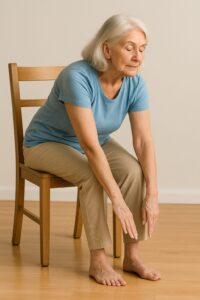
1. Eases Morning Stiffness and Chronic Pain
By gently guiding your body through an accessible range of motion, you increase localized circulation. This warmth helps flush out inflammatory cellular debris that accumulates in the joints while you sleep.
2. Protects and Improves Range of Motion
When joints hurt, we tend to stop moving them. Over time, this causes the surrounding muscles to tighten and shorten, making stiffness worse. Chair yoga stretches tight muscles safely, relieving pressure on the joint itself.
3. Enhances Circulation & Joint Tissue Repair
Because cartilage doesn’t have its own direct blood supply, it relies on joint movement to absorb nutrients. Better blood flow delivers essential oxygen and nutrients needed to support joint tissue health.
4. Downregulates Stress and Inflammation
Chronic pain keeps the body in a constant state of fight-or-flight, which can worsen inflammation. Slow, mindful breathing triggers the parasympathetic nervous system, inducing physical relaxation and mitigating stress-related pain flares.
5. Enhances Everyday Balance and Coordination
By engaging minor stabilizing muscles in a safe, seated position, you secretly build the core and lower-body stability needed to stay steady on your feet. For comprehensive protection, consider pairing your routine with our guide on Fall Prevention for Arthritis: Practical Strategies for Safety & Independence.
10 Best Chair Yoga Exercises for Arthritis Pain Relief
Setup Tip: Choose a sturdy, armless chair placed flat on a non-slip surface (like a rug or yoga mat). Sit up nice and tall away from the backrest to engage your core muscles.
1. Seated Cat-Cow Stretch
Target Area: Spine mobility, neck flexibility, and posture.
- Place your hands flat on your thighs.
- Inhale (Cow): Gently arch your lower back, roll your shoulders back, and lift your chest upward.
- Exhale (Cat): Slowly round your spine, tucking your chin slightly toward your chest and drawing your belly button inward.
- Repeat smoothly for 5 to 10 deep breaths. This is a perfect morning reset for a stiff back.
2. Seated Forward Bend
Target Area: Lower back, tight hamstrings, and shoulder release.
- Scoot slightly toward the front third of your chair with your feet flat and wide.
- Inhale deeply to lengthen your spine toward the ceiling.
- Exhale as you gently hinge forward from the hips, letting your hands slide down your shins.
- Hold for 5 deep breaths, letting your head hang loose. Always prioritize comfort over depth—never force a deep fold.
3. Seated Side Stretch

Target Area: Rib cage, intercostal muscles, and lower back tension.
- Hold the side of your chair with your left hand for stability.
- Raise your right arm overhead (or rest your right hand on your shoulder if your arm is stiff).
- Lean gently to the left, keeping both seat bones rooted firmly into the chair.
- Hold for 3 to 5 breaths, then slowly switch sides.
4. Seated Spinal Twist
Target Area: Mid-back stiffness and thoracic spine rotation.
- Sit tall with your feet firmly planted on the floor.
- Place your right hand on the outside of your left knee, and gently place your left hand on the seat behind you.
- Inhale to sit up taller, then exhale to gently rotate your torso to the left.
- Hold for 5 slow breaths, release, and repeat on the opposite side. Keep the movement fluid—never force a deep rotation.
5. Seated Knee Lifts
Target Area: Hip flexor mobility and pelvic circulation.
- Hold the sides of your chair seat for stability.
- Gently lift your right knee toward your chest as high as comfortably possible.
- Lower it down with control.
- Repeat 8 to 10 times, then switch to the left leg. This helps ease stiff hips before walking.
6. Wrist and Ankle Rolls
Target Area: Hand, finger, foot, and ankle micro-joints.
- Extend both hands out and gently rotate your wrists in a circle 10 times clockwise, then 10 times counter-clockwise.
- Extend your right leg straight out and circle your ankle in both directions. Switch to the left leg.
- Perfect alternative movement during painful hand arthritis flare-ups.
7. Restorative Shoulder Rolls
Target Area: Neck strain, upper back stiffness, and stress tension.
- Inhale as you lift both shoulders up toward your ears.
- Exhale as you roll them backward, squeezing your shoulder blades together, and drop them down away from your neck.
- Repeat for 8 to 10 slow, smooth cycles.
8. Seated Leg Extensions
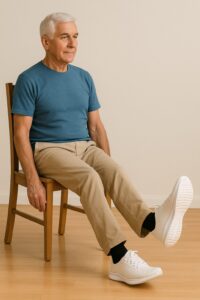
Target Area: Quadriceps strengthening and knee joint stabilization.
- Sit straight and activate your core muscles.
- Slowly straighten your right leg out in front of you, flexing your toes toward your face.
- Hold the contraction for 3 seconds, then slowly lower your foot back down.
- Repeat 8 to 10 times per leg. Strengthening the surrounding quadriceps muscles takes a significant load off painful knee joints. For more strategies like this, see our feature on Effective Low-Impact Exercises to Ease Arthritis Knee Pain.
9. Mindful Deep Breathing (Pranayama)
Target Area: Stress reduction and blood oxygenation.
- Place one hand on your chest and the other on your lower belly.
- Inhale deeply through your nose, feeling your belly expand outward rather than your chest lifting.
- Exhale slowly through your mouth with a soft sigh.
- Repeat for 5 to 10 breaths to immediately calm your body’s pain responses.
10. Seated Relaxation Pose (Savasana)
Target Area: Central nervous system integration and recovery.
- Slide your hips all the way back into your chair, letting the backrest fully support your posture.
- Rest your hands loosely in your lap, close your eyes, and loosen your jaw.
- Let go of all muscle tension and breathe naturally for 1 to 2 minutes. Ending your practice with stillness lets your nervous system shift into deep recovery mode.
A Structured 10-Minute Chair Yoga Routine for Daily Use
If you prefer a structured daily routine to follow, try this simple, well-rounded 10-minute sequence:
- Minute 0–1: Deep Breathing (Centering)
- Minute 1–2: Shoulder Rolls
- Minute 2–4: Seated Cat-Cow Stretch
- Minute 4–6: Seated Side Stretch (1 minute per side)
- Minute 6–7: Seated Knee Lifts
- Minute 7–9: Seated Leg Extensions
- Minute 9–10: Seated Relaxation Pose
Short. Simple. Sustainable. Consistency always beats intensity when managing chronic arthritis symptoms.
How Often Should You Practice Chair Yoga?
Aim to practice this routine 3 to 5 times per week. Even short 10-minute sessions will reliably reduce daily stiffness, maintain your range of motion, and build your confidence in your body’s mobility. Listen to your body and scale back on days when you face intense flare-ups.
Essential Safety Tips for Seated Workouts

- Check your chair: Never use a chair with wheels or rolling casters. Make sure it is completely stationary.
- Move with slow control: Avoid rapid, bouncing movements. Smooth extensions protect joint capsules.
- Avoid sharp pain: There is a distinct difference between a deep, productive muscle stretch and a sharp, pinching sensation. If it hurts sharply, stop immediately.
- Modify during severe flares: If a joint is hot, red, and swollen, let it rest and focus strictly on deep breathing and very minor joint rolls.
Note: If you manage severe rheumatoid arthritis, have a history of spinal fractures, or recently underwent joint replacement surgery, consult your rheumatologist or physical therapist before starting any new exercise regimen.
Recommended Chair Yoga Resources for Guided Practice
If following online text or videos feels a little overwhelming, having a physical, beautifully illustrated guide on your coffee table makes staying consistent much easier.
📘 Chair Yoga for Arthritis
This book is perfect for targeted, arthritis-focused guidance, filled with easy-to-read, large-print instructions and step-by-step illustrations designed specifically for joint health.
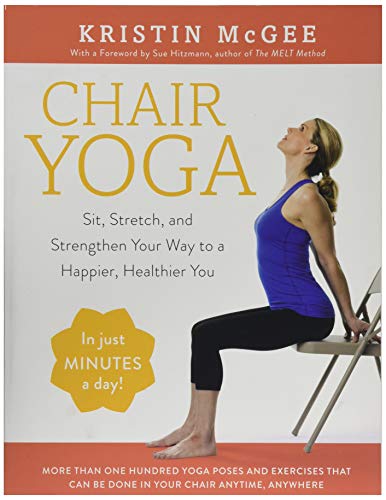
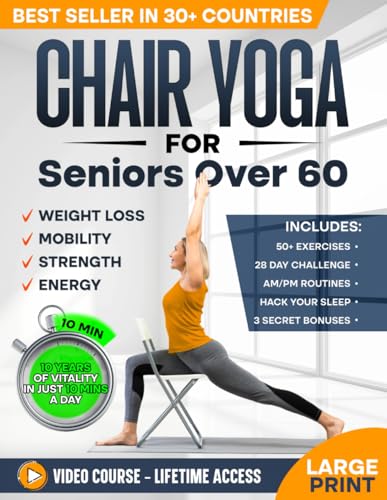
📗 Chair Yoga for Seniors 60+
A bestselling guide featuring ultra-simple 10-minute routines tailored for long-term consistency, stability, and everyday functional ease.
Frequently Asked Questions (FAQs)
Is chair yoga safe for severe rheumatoid arthritis (RA)?
Yes, chair yoga is completely safe for RA when adapted thoughtfully. During a severe, systemic flare-up, avoid deep stretching or pulling on active joints, and focus purely on breathing and very gentle ranges of motion.
Can chair yoga reduce systemic inflammation?
While it is not a direct medical cure for arthritis, regular low-impact exercise lowers systemic inflammation over time by promoting blood flow, reducing cortisol (the stress hormone), and supporting metabolic health.
How long does it take to see flexibility improvements?
Most individuals notice a tangible reduction in morning stiffness and a smoother overall range of motion within 2 to 3 weeks of consistent, daily practice.
Is chair yoga better than daily walking for arthritis?
They complement each other beautifully rather than compete. Chair yoga is unmatched for targeted flexibility, core stability, and joint lubrication, while walking is fantastic for lower-body stamina and cardiovascular health.
Final Thoughts
Chair yoga for arthritis is so much more than a simple set of modifications—it’s a realistic, dignified way to reclaim comfort, control, and independence. When high-impact workouts feel entirely out of reach, a reliable chair provides a sustainable, safe path forward. Just a few mindful minutes each day can keep your body lubricated, ease your daily pain, and help you feel secure in your own skin again.
🌿 Start small, stay consistent, and let gentle movement work its magic for you.
Related Guides from ArthritisWares.com
- The Ultimate Guide to Living Well With Arthritis
- Best Low-Impact Exercise Equipment for Arthritis At Home
- Ease Arthritis Knee Pain: 7 Proven Strategies for Relief
- Arthritis Exercise Guide: Safe Routines for Pain Relief