
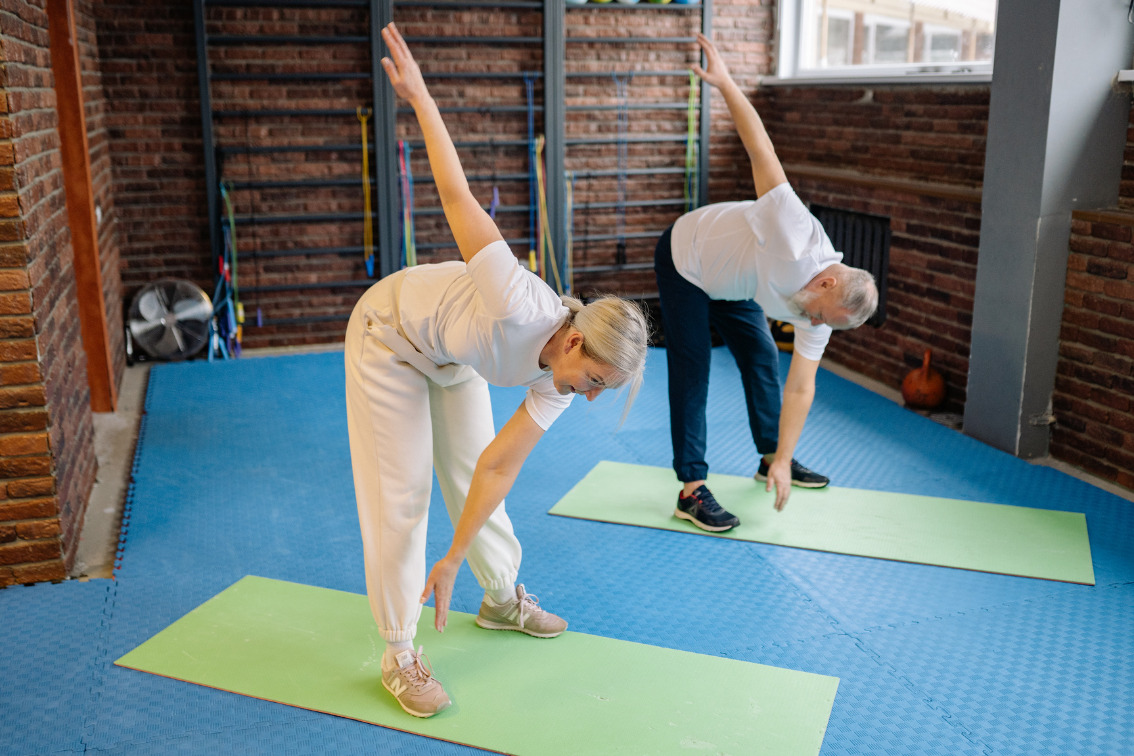
Living with arthritis can make exercise feel difficult, especially when joints are painful, stiff, swollen, or less mobile than they used to be. But avoiding movement altogether can make everyday activities harder over time.
The goal is not to exercise through pain or follow an intense workout program. For most people with arthritis, a better approach is to find activities that are comfortable enough to do consistently and then gradually build strength, mobility, endurance, and confidence.
This guide explains the main types of exercise that can be useful with arthritis, how to get started, how to modify activities for painful or stiff joints, and how to recognize when you are doing too much.
Quick Answer: What Are the Best Exercises for Arthritis?
There is no single exercise that is best for everyone with arthritis. A balanced routine usually combines several types of movement:
- Range-of-motion exercises to help joints move comfortably through their available motion
- Strength exercises to build the muscles that support your joints
- Low-impact aerobic exercise to improve endurance and make everyday activities easier
- Flexibility exercises such as gentle stretching, yoga, or tai chi
- Balance exercises, particularly for older adults or anyone concerned about stability or falls
Walking, cycling, swimming, water exercise, chair exercises, resistance bands, strength training, tai chi, and modified yoga can all be options.
The best choice is the activity you can perform safely, modify when necessary, and continue regularly.
Important: Exercise recommendations can vary depending on your type of arthritis, affected joints, other health conditions, medications, and current fitness level. If you are unsure how to exercise safely, a doctor, physical therapist, or occupational therapist can help you develop an appropriate plan.
Why Exercise Can Help With Arthritis
When joints hurt, it is natural to want to rest them. Rest can be useful when symptoms are particularly intense, but too little movement can contribute to stiffness, weakness, reduced endurance, and difficulty with everyday activities.
Regular physical activity can help people with arthritis:
- Reduce arthritis-related pain
- Improve joint function
- Maintain or improve muscle strength
- Improve flexibility and range of motion
- Build endurance for everyday activities
- Support balance and mobility
- Improve mood and overall well-being
- Make activities such as walking, climbing stairs, or getting out of a chair easier
Exercise does not cure arthritis, and it does not need to eliminate pain to be worthwhile. The goal is to improve how comfortably and confidently you can move.
How Much Exercise Should You Get?
A commonly used long-term target for adults is:
- At least 150 minutes of moderate-intensity aerobic activity per week
- Muscle-strengthening activities on at least 2 days per week
- Balance activities for older adults, along with aerobic and strengthening activities
That does not mean you need to start with 30 minutes of exercise five days a week.
If you are inactive, have significant joint pain, or have limited mobility, start with less and build gradually. Even short periods of activity can count. For example, you might begin with several 5- or 10-minute sessions spread throughout the day.
Your starting point matters more than immediately reaching a weekly target.
1. Range-of-Motion Exercises
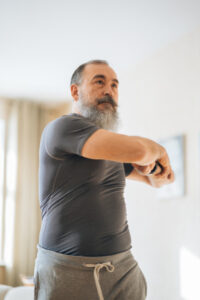
Range-of-motion exercises move a joint gently through its available movement. They can be particularly useful when stiffness makes movement feel difficult.
These exercises generally do not require much equipment and can often be performed seated or standing.
Shoulder Rolls
Sit or stand comfortably.
- Slowly roll your shoulders forward in a gentle circle.
- Repeat several times.
- Reverse the direction.
- Keep the movement comfortable rather than forcing the shoulders through a large range.
Wrist Circles
With your arms relaxed:
- Slowly circle your wrists in one direction.
- Repeat in the opposite direction.
- Keep the circles small if larger movements are uncomfortable.
Ankle Circles
While seated:
- Lift one foot slightly from the floor.
- Slowly circle the ankle.
- Reverse direction.
- Repeat with the other foot.
Gentle Neck Movement
Slowly turn your head from side to side within a comfortable range.
You can also gently bring your ear toward one shoulder, but avoid forcing the stretch or making quick movements.
If a particular neck movement causes pain, dizziness, numbness, or other unusual symptoms, stop.
How Often Should You Do Range-of-Motion Exercises?
Gentle mobility exercises can often be incorporated into daily routines, particularly when stiffness is a problem.
They can also work well as a short warm-up before other forms of exercise.
2. Strength Exercises
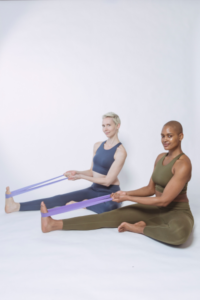
Strong muscles can help support the joints and make everyday movements easier.
Strength training does not necessarily mean lifting heavy weights. Body-weight exercises, resistance bands, light weights, and seated exercises can all be used.
Sit-to-Stands
Sit in a sturdy chair.
- Place your feet comfortably on the floor.
- Lean forward slightly.
- Stand up using your legs.
- Slowly sit back down.
- Use your hands on the chair or armrests for assistance if needed.
If a full sit-to-stand is difficult, start with a higher chair or practice only part of the movement.
Wall Push-Ups
Stand facing a wall with your hands against it.
- Keep your body in a comfortable straight position.
- Slowly bend your elbows and bring your chest toward the wall.
- Push gently back to the starting position.
Wall push-ups can be easier to modify than floor push-ups.
Seated Leg Extensions
While sitting in a sturdy chair:
- Straighten one leg as comfortably as possible.
- Pause briefly.
- Lower it slowly.
- Repeat with the other leg.
Resistance-Band Exercises
Resistance bands can provide adjustable resistance without requiring heavy weights.
Depending on the joints involved, bands can be used for exercises such as:
- Seated or standing rows
- Arm curls
- Shoulder exercises
- Leg exercises
- Hip exercises
Start with light resistance and controlled movements.
If a joint is painful or inflamed, the exercise may need to be modified or temporarily replaced with gentler movement.
How Often Should You Strength Train?
A common recommendation is to perform muscle-strengthening activities at least twice per week, allowing recovery between sessions.
You do not need to train every muscle group intensely in every workout.
The important thing is to develop a routine that you can maintain.
3. Low-Impact Aerobic Exercise

Aerobic activity raises your heart rate and helps improve endurance.
For people with arthritis, lower-impact activities can be a useful starting point because they can place less stress on painful joints than some higher-impact activities.
Options include:
- Walking
- Stationary or regular cycling
- Swimming
- Water aerobics
- Dancing at a comfortable intensity
- Low-impact exercise classes
- Recumbent cycling
- Some seated aerobic routines
Walking
Walking is one of the simplest ways to add more physical activity to your day.
You can adjust it by changing:
- Distance
- Speed
- Terrain
- Duration
- Number of walking sessions
If walking for 20 or 30 minutes is too much, try several shorter walks.
Cycling
A stationary bike or recumbent bike can provide aerobic exercise while allowing you to control the pace and resistance.
A recumbent bike may be easier for some people who find getting onto a conventional bicycle uncomfortable.
Swimming and Water Exercise
Water can make movement easier for some people because buoyancy reduces the amount of body weight being supported by the joints.
Swimming is one option, but you do not need to swim laps to exercise in water.
Water walking and water aerobics can also provide aerobic activity.
4. Flexibility Exercises
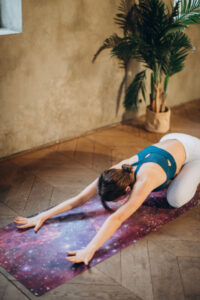
Flexibility exercises can help maintain comfortable movement and may be useful when stiffness limits activity.
Options include:
- Gentle stretching
- Chair yoga
- Modified yoga
- Tai chi
- Gentle mobility routines
Stretching should generally feel like a gentle pull rather than sharp or intense pain.
Avoid bouncing or forcing a joint farther than it comfortably moves.
Chair Yoga
Chair yoga can be a useful option when standing exercises are difficult.
Many movements can be performed while seated, while others can use a chair for support.
See our related guide:
Related Reading: Chair Yoga for Arthritis: Gentle Seated Exercises for Stiff and Painful Joints
Tai Chi
Tai chi uses slow, controlled movements and can combine gentle physical activity with attention to balance and body position.
It may be particularly appealing to people who prefer a slower-paced form of exercise.
5. Balance Exercises
Balance exercises can help you practice stability and body control.
They can include:
- Standing on one foot while holding a sturdy counter
- Heel-to-toe walking
- Controlled weight shifting
- Modified yoga poses
- Tai chi
Practice Balance Safely
Do not practice challenging balance exercises in the middle of an open room if you are at risk of falling.
Instead, exercise near a sturdy counter, railing, or other stable support.
If you have significant balance problems or a history of falls, ask a health professional about appropriate exercises.
Best Arthritis Exercises by Joint
The best exercises can depend on which joints are affected.
Knee Arthritis
People with knee arthritis may benefit from a combination of:
- Walking at a comfortable pace
- Cycling
- Water exercise
- Sit-to-stands
- Leg strengthening
- Gentle range-of-motion exercises
If an activity consistently causes significant knee pain, try reducing the duration or intensity or switching to a lower-impact alternative.
Hip Arthritis
Possible options include:
- Walking
- Cycling
- Water exercise
- Gentle hip mobility exercises
- Leg and hip strengthening
- Sit-to-stands
A physical therapist can help identify exercises appropriate for your specific limitations.
Hand and Wrist Arthritis
Exercises may focus on:
- Gentle range of motion
- Finger movement
- Wrist movement
- Grip and hand strengthening when appropriate
- Larger-body exercises that maintain overall fitness without aggravating the hands
Avoid repeatedly squeezing hard objects if that increases joint pain.
Related Reading: Best Hand Therapy Tools for Arthritis
Shoulder Arthritis
Gentle shoulder range-of-motion exercises can help maintain movement.
Depending on your symptoms, activities such as walking, stationary cycling, or lower-body exercises can also help you stay active without putting as much demand on the shoulder.
Avoid forcing painful shoulder movements.
Back Arthritis
Low-impact aerobic activity, gentle mobility exercises, and appropriate strengthening may help maintain movement and function.
Walking, cycling, water exercise, and professionally guided strengthening can be options depending on the cause of your back symptoms.
Persistent, severe, or unusual back pain should be evaluated rather than simply treated with exercise.
Exercises for Limited Mobility

You do not need to be able to stand, walk, or get down on the floor to be physically active.
Depending on your abilities, exercises can be performed while sitting in a sturdy chair.
Examples include:
- Seated marching
- Ankle pumps
- Seated leg extensions
- Seated arm raises
- Gentle shoulder rolls
- Seated resistance-band exercises
- Chair yoga
- Seated upper-body movements
Start with movements you can perform safely and comfortably.
If transferring in and out of a chair is difficult, avoid exercises that require you to repeatedly stand up without appropriate support.
Related Reading: Home Accessibility: A Mini-Assessment for Safer Everyday Living With Arthritis
How to Start Exercising With Arthritis
If you have not exercised for a long time, resist the temptation to make up for lost time with a difficult workout.
Instead:
Start Small
Begin with an amount of activity that feels manageable.
That might mean:
- A 5-minute walk
- A few chair exercises
- Several range-of-motion movements
- One or two strengthening exercises
- A short session in the pool
Increase Gradually
Once your starting routine feels manageable, increase one thing at a time.
For example, you might add a few minutes to a walk before increasing its speed.
Or you might add another repetition before moving to a stronger resistance band.
Choose Activities You Actually Like
An exercise program is more useful if you will continue doing it.
If you dislike walking, consider cycling, water exercise, chair exercise, tai chi, dancing, or another activity that feels more appealing.
Make Exercise Easier to Repeat
Keep resistance bands where you can see them.
Take a short walk at the same time each day.
Keep a chair available for supported exercises.
The easier it is to begin, the more likely exercise is to become part of your routine.
How to Tell If You’re Doing Too Much
Some people experience temporary muscle soreness or mild increases in joint discomfort when beginning a new activity.
That does not mean you should automatically stop exercising.
However, pain is a useful signal that something may need to change.
Consider reducing the intensity, shortening the session, changing the exercise, or taking additional recovery time if:
- Joint pain becomes significantly worse during exercise
- Pain continues to increase after the activity
- Swelling becomes noticeably worse
- A movement repeatedly aggravates the same joint
- You are struggling to recover between sessions
Sharp, severe, or unusual pain is different from ordinary exercise discomfort and should not be pushed through.
Seek medical attention for concerning symptoms such as chest pain, severe shortness of breath, fainting, or other symptoms that are substantially different from what you normally experience.
What If Exercise Makes Your Arthritis Hurt?

Exercise should be adjusted rather than treated as an all-or-nothing activity.
If walking hurts your knees, you might try cycling or water exercise.
If standing exercises are difficult, try seated exercises.
If a resistance exercise irritates a joint, reduce the resistance, change the movement, or work a different muscle group.
The goal is not to prove that you can tolerate a particular exercise. The goal is to find movement that works for your body.
If pain repeatedly limits your ability to exercise, a physical therapist or other qualified health professional can help you identify appropriate modifications.
Exercising During an Arthritis Flare
An arthritis flare can make your normal exercise routine feel unrealistic.
During a flare, you may need to reduce the intensity, shorten your workouts, or temporarily focus on gentle movement.
Depending on your condition and symptoms, options may include:
- Gentle range-of-motion exercises
- Short walks
- Seated movement
- Gentle stretching
- Water exercise
- More frequent rest periods
Complete inactivity is not always necessary, but neither is pushing through a significant flare.
If a particular movement clearly makes your symptoms worse, stop that exercise and reassess.
The appropriate approach can also depend on the type of arthritis you have. If you experience frequent or severe flares, discuss an exercise plan with your healthcare provider or physical therapist.
Heat, Cold, and Exercise
Some people find heat helpful before activity when stiffness is making movement difficult. Others prefer cold afterward when a joint feels irritated.
These strategies are not required for every workout, and they do not work the same way for everyone.
If you use heat or cold, follow appropriate safety precautions and avoid applying extreme temperatures directly to the skin.
For persistent swelling, significant pain, or symptoms that are getting worse, consider discussing the problem with a healthcare professional rather than relying on heat or cold alone.
Do You Need Exercise Equipment?

You can get a useful amount of exercise without buying specialized equipment.
A simple routine may use:
- A sturdy chair
- Comfortable walking shoes
- A wall or countertop for support
- A resistance band
- Light hand weights, if appropriate
Equipment can make certain exercises easier or more accessible, but it is not a requirement for getting started.
Related Reading: Best Exercise Equipment for Arthritis
This guide focuses on what to do and how to exercise safely, while the equipment guide can focus on choosing products.
A Simple Weekly Arthritis Exercise Plan
There is no single schedule that works for everyone. The following is an example of how different types of movement can fit together.
| Day | Example Activity |
|---|---|
| Monday | Walking + gentle range-of-motion exercises |
| Tuesday | Strength exercises + stretching |
| Wednesday | Walking, cycling, or water exercise |
| Thursday | Gentle mobility + balance exercises |
| Friday | Strength exercises + short aerobic activity |
| Saturday | Walking, swimming, tai chi, or another enjoyable activity |
| Sunday | Gentle movement, stretching, or rest |
You can shorten these sessions, split them into smaller periods, or substitute different activities.
If you are currently inactive, start with less than this example and gradually build your routine.
A Simple Arthritis Exercise Checklist
Use this checklist when building your own routine:
- Choose an aerobic activity you can tolerate
- Include strength exercises at least twice a week when appropriate
- Practice gentle joint mobility regularly
- Include flexibility or stretching
- Add balance exercises if appropriate
- Start below your maximum ability
- Increase activity gradually
- Modify exercises that aggravate your joints
- Allow time for recovery
- Pay attention to persistent or unusual pain
- Ask a healthcare professional for guidance when needed
Frequently Asked Questions About Exercise and Arthritis
What is the best exercise for arthritis?
There is no single best exercise for every person with arthritis. Walking, cycling, swimming, water exercise, strength training, range-of-motion exercises, tai chi, yoga, and chair exercises can all be useful depending on your joints, symptoms, mobility, and fitness level.
Is walking good for arthritis?
Walking can be a useful low-impact aerobic activity for many people with arthritis. Start with a comfortable distance and pace, and use shorter walks if longer sessions aggravate your symptoms.
Can exercise make arthritis worse?
Exercise can temporarily increase discomfort, especially when starting a new activity or doing too much too quickly. However, regular physical activity can improve pain and physical function for many people with arthritis. If pain consistently worsens after exercise, reduce the intensity or change the activity and consider discussing it with a healthcare professional.
How often should you exercise with arthritis?
A commonly recommended long-term goal for adults is at least 150 minutes of moderate aerobic activity each week plus muscle-strengthening activities on at least two days. You can build toward that goal gradually, and shorter activity sessions count.
What exercise is best for knee arthritis?
Walking, cycling, water exercise, leg strengthening, sit-to-stands, and gentle range-of-motion exercises can all be options. The best choice depends on your symptoms and how your knee responds.
Is swimming good for arthritis?
Swimming and water exercise can be useful because water provides support and can make movement more comfortable for some people. Water walking and water aerobics are alternatives if swimming laps is not appealing or practical.
Can I exercise during an arthritis flare?
You may be able to continue some gentle movement during a flare, but your normal routine may need to be reduced or modified. Gentle range-of-motion exercises, short walks, or seated movement may be more appropriate than strenuous exercise. If symptoms are severe or unusual, seek medical advice.
What if I have limited mobility?
Exercise can often be adapted for a seated position. Chair exercises, seated marching, ankle pumps, gentle arm movements, resistance bands, and chair yoga are examples.
Should I exercise if my joints hurt?
Pain does not automatically mean you must stop all movement, but significant, sharp, or unusual pain should not be ignored. Try reducing the intensity, changing the exercise, or choosing a lower-impact activity. Persistent worsening pain should be discussed with a healthcare professional.
Can resistance bands help with arthritis?
Resistance bands can provide a convenient way to perform strengthening exercises without heavy weights. Start with light resistance and controlled movements, and modify exercises if they aggravate a painful joint.
Related Reading
Chair Yoga for Arthritis: Gentle seated exercises for people who find standing exercise difficult.
Best Exercise Equipment for Arthritis: A separate guide to equipment that can make exercise more accessible at home.
Best Hand Therapy Tools for Arthritis: Options for gentle hand and finger exercises and mobility work.
Under-Desk Pedal Exercisers for Arthritis: A look at compact pedal machines for adding movement while seated.
How to Reduce Morning Joint Stiffness From Arthritis: Practical strategies for getting moving when stiffness is worst after waking.
Key Takeaways
- There is no single exercise that is best for everyone with arthritis.
- A balanced routine can include aerobic activity, strengthening, range-of-motion work, flexibility, and balance exercises.
- Walking, cycling, swimming, water exercise, chair exercises, resistance bands, tai chi, and modified yoga are possible options.
- You do not need to start with a full exercise program. Short sessions count.
- Start at a level you can manage and increase activity gradually.
- Modify exercises rather than forcing movements that aggravate painful joints.
- During a flare, gentle movement and reduced activity may be more appropriate than a normal workout.
- Pay attention to persistent, severe, sharp, or unusual pain.
- Consistency matters more than intensity.
- If you are unsure what exercises are appropriate for your condition, a doctor, physical therapist, or occupational therapist can help you create a safer plan.
Medical Disclaimer: This article is for informational purposes only and does not constitute medical advice. Always consult your doctor, rheumatologist, or occupational therapist before making changes to how you manage your arthritis.
