

Arthritis pain can make it difficult to fall asleep, stay asleep, or get comfortable after waking during the night. Aching hips, knees, shoulders, hands, feet, and other joints may become more noticeable when you are lying still for hours.
The solution is not always a new mattress or a specialized product. Small changes to sleep position, pillow support, bedding, temperature, movement, and your bedtime routine may make your nighttime environment more comfortable.
For some people, the bigger issue is not the sleep environment at all. Persistent nighttime pain can be a sign that the underlying arthritis or another condition needs attention.
This guide focuses on practical, non-drug strategies you can try at home. It is intentionally broader than our guide to Why Does My Neck Hurt When I Wake Up?, which focuses specifically on morning neck pain and its possible causes.
Quick Answer: What Can Help Arthritis Pain at Night?
If arthritis pain is interfering with sleep, start with the simplest changes:
| If nighttime discomfort is mainly caused by… | Try first |
|---|---|
| Pressure on a painful joint | Change sleeping position and use pillows for support |
| Stiffness after lying still | Gentle movement before bed and after waking |
| Muscle tightness or ordinary stiffness | A warm shower, bath, or comfortable heat |
| A joint that feels hot or swollen | A wrapped cold pack may be more comfortable |
| Difficulty turning over in bed | Smooth bedding and sleepwear that allow easier movement |
| An uncomfortable mattress | Check for sagging, pressure points, or poor support |
| Trouble settling down to sleep | A consistent, relaxing bedtime routine |
| Pain that repeatedly wakes you | Look for patterns and discuss persistent symptoms with a healthcare professional |
There is no single nighttime routine that works for everyone. Start with the problem that seems most obvious and change one or two things at a time.
Why Arthritis Pain Can Feel Worse at Night
Nighttime can make arthritis discomfort more noticeable for several reasons.
When you are awake during the day, you regularly change positions, move your joints, and have other activities competing for your attention. At night, you may remain in one position for much longer.
Sleep problems can also make pain harder to manage. The Arthritis Foundation notes that poor sleep can worsen pain, while arthritis pain itself can make sleep more difficult.
For some types of inflammatory arthritis, symptoms can also vary according to the body’s natural daily rhythms. However, nighttime pain does not automatically mean inflammation is increasing, and persistent pain should not simply be attributed to arthritis.
The useful question is:
What is making you uncomfortable at night, and what can you reasonably change?
1. Adjust Your Sleeping Position
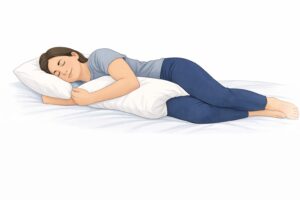
Your sleeping position can put pressure on already-sensitive joints.
You do not need to force yourself into a completely different sleeping position if your current position is comfortable. Instead, experiment with pillows and support to reduce pressure and make your body more comfortable.
If You Sleep on Your Side
Try:
- A pillow between your knees
- A pillow between your ankles if your lower legs need additional support
- A supportive pillow that keeps your head comfortable
- A pillow to hug if it helps support a painful shoulder
If one hip or shoulder is particularly painful, try sleeping on the opposite side if that is comfortable.
The Arthritis Foundation recommends using pillows to support painful joints and help maintain comfortable alignment during sleep.
If You Sleep on Your Back
Try:
- A pillow under your knees
- A comfortable pillow under your head
- Additional support beneath your lower back if it feels comfortable
The goal is not a perfectly measured position. It is to reduce uncomfortable pressure and allow your joints to rest in a position that feels supported.
If You Sleep on Your Stomach
Stomach sleeping can make comfortable positioning more difficult because your body and joints may remain rotated for an extended period.
If you regularly wake with pain, experiment with side or back sleeping if either position is comfortable for you.
For neck-specific problems, see Why Does My Neck Hurt When I Wake Up? rather than trying to solve the problem with this general nighttime guide.
2. Use Pillows to Support Painful Joints
You do not necessarily need a special arthritis pillow.
Ordinary pillows can sometimes be useful for changing where pressure is placed while you sleep.
| Where you hurt | Pillow support to try |
|---|---|
| Hips | Pillow between your knees when side sleeping |
| Knees | Pillow under your knees when back sleeping |
| Shoulders | Pillow under or around the painful arm for support |
| Lower back | Small pillow under your knees or additional lumbar support |
| Hands and wrists | Small pillow or cushion to support your arms |
| Feet | Adjust bedding or positioning if pressure from blankets is uncomfortable |
The best arrangement is the one that allows you to stay comfortable without forcing a joint into an awkward position.
If you need more general pillow recommendations, see Best Pillows for Arthritis Pain Relief.
For neck-specific pillow problems, use our Best Cervical Pillows for Neck Pain and Arthritis guide.
3. Try Gentle Movement Before Bed
Some people become stiffer after spending hours in one position.
Gentle movement before bed may help you transition into sleep more comfortably. This does not need to be a workout.
Consider:
- A short, easy walk
- Gentle range-of-motion movements
- Light stretching that does not increase pain
- A few minutes of comfortable movement for the joints that tend to stiffen overnight
The Arthritis Foundation recommends regular physical activity and gentle movement as part of arthritis pain management, while also advising people not to overdo activity when symptoms are worse.
You do not need to stretch through pain. If a movement makes your symptoms worse, stop.
4. Consider Heat for Stiffness and Muscle Tightness

Heat can be comforting when your main problem is stiffness or tight muscles.
Options include:
- A warm shower
- A warm bath
- A heating pad
- A microwaveable heat wrap
- Another comfortable heat source designed for the body area being treated
The Arthritis Foundation notes that heat can increase blood flow and relax muscles, while cold can be useful for pain and swelling.
Heat is not necessarily the right choice for every situation. If an area feels hot or swollen, some people find cold more comfortable.
Always follow the instructions for the heat product you use and avoid excessive temperatures or prolonged exposure.
See Heating Pads and Wraps for Arthritis Pain for product options.
5. Consider Cold When a Joint Feels Hot or Swollen
Cold can be useful when discomfort is accompanied by swelling or a feeling of heat.
A reusable gel pack or cold wrap can be placed over the affected area with a layer of fabric between the cold source and your skin.
Cold therapy can reduce swelling and numb pain sensations for some people. The Arthritis Foundation recommends protecting the skin and limiting applications rather than leaving ice directly against the skin for prolonged periods.
Heat and cold are not competing treatments where one is always better.
A simple way to think about them is:
- Stiffness or muscle tightness: heat may feel better
- A hot, swollen, or irritated area: cold may feel better
- Not sure: experiment cautiously and pay attention to how your body responds
For a more detailed comparison, see Heat vs Cold Therapy for Arthritis: Which One Works Best?.
6. Make It Easier to Change Positions
Some people wake because a painful joint becomes uncomfortable after remaining in one position.
You cannot control every movement while sleeping, but you can make repositioning easier.
Consider:
- Smooth sheets or sleepwear that allow you to move more easily
- Keeping pillows within easy reach
- Avoiding bedding that feels excessively heavy over painful areas
- Using a bedside lamp that is easy to operate if you need to get up
- Keeping frequently needed items within comfortable reach
The Arthritis Foundation specifically notes that smooth bedding can make nighttime movement easier and recommends avoiding devices that hold you rigidly in one position overnight.
The goal is support without confinement.
7. Check Your Mattress Before Replacing It
A mattress can affect how your body settles during the night.
If your mattress is sagging, uneven, or creating obvious pressure points, it may be worth investigating.
Look for:
- A noticeable depression where you normally sleep
- Hips or shoulders sinking uncomfortably far
- Persistent pressure on one area
- A surface that feels uncomfortable regardless of your pillow arrangement
- Better sleep when you sleep somewhere else
However, a new mattress is not automatically the answer to nighttime arthritis pain.
Try simpler changes first, especially pillow positioning and sleep position.
If your mattress appears to be part of the problem, see Best Mattresses for Arthritis Pain Relief.
8. Make Your Bedroom Comfortable for Sleep
Your sleep environment matters too.
A few practical changes can make it easier to settle down:
- Keep the bedroom dark and reasonably quiet
- Use a comfortable temperature
- Follow a consistent bedtime and wake-up schedule
- Reduce stimulating activities close to bedtime
- Give yourself time to relax before getting into bed
- Avoid caffeine too close to bedtime if it interferes with your sleep
The Arthritis Foundation recommends consistent sleep schedules and good sleep habits as part of managing arthritis-related sleep problems.
These changes will not directly treat arthritis, but better sleep can make pain easier to manage.
9. Give Yourself Time to Wind Down

Pain can make it difficult to relax, and worrying about whether you will sleep can make the cycle worse.
A simple wind-down routine may include:
- Reading
- Gentle breathing exercises
- A warm shower or bath
- Quiet music
- Gentle stretching
- Meditation or another relaxation activity
You do not need an elaborate routine.
The goal is to create a predictable transition between daytime activity and sleep.
What About Different Types of Nighttime Arthritis Pain?
The best adjustment may depend on which joints bother you most.
Hip Pain at Night
Side sleeping can put pressure directly on a painful hip.
Try sleeping on the opposite side or on your back if comfortable. A pillow between your knees may also help keep your hips in a more comfortable position.
Persistent hip pain that repeatedly interferes with sleep deserves attention, especially if changing your sleeping position does not help.
Knee Pain at Night
If you sleep on your back, try placing a pillow beneath your knees.
If you sleep on your side, experiment with one or more pillows between your knees.
The exact amount of support is personal. You are looking for a position that reduces uncomfortable pressure without making your hips or back feel strained.
Shoulder Pain at Night
If one shoulder is painful, try sleeping on the opposite side if comfortable.
A pillow supporting the painful arm may prevent the shoulder from dropping forward or hanging unsupported.
Back sleepers can also experiment with pillows beneath the arms.
Hand and Wrist Pain at Night
If your hands or wrists bother you at night, avoid positions that leave them bent or compressed for long periods.
A small pillow can provide gentle support.
For persistent nighttime hand or wrist symptoms, ask a healthcare professional or occupational therapist whether a properly fitted splint or another support would be appropriate. The Arthritis Foundation notes that improperly fitted splints can potentially cause more discomfort.
Foot Pain at Night
Foot and toe pain can become particularly noticeable when bedding rests against sensitive areas.
If blankets pressing against your feet are part of the problem, consider changing the bedding arrangement so there is less direct pressure.
If swelling is a recurring problem, discuss it with a healthcare professional rather than assuming it is simply a sleep-position issue.
Should You Use Heat or Cold at Night?
Both can have a place in a nighttime comfort routine.
| Situation | What may be worth trying |
|---|---|
| General stiffness | Warm shower, bath, or comfortable heat |
| Tight muscles | Gentle heat |
| Hot or swollen joint | Wrapped cold pack |
| Discomfort after activity | Heat or cold depending on how the area feels |
| Unsure which feels better | Try one cautiously and see how your symptoms respond |
Neither heat nor cold should be used as a substitute for medical evaluation when pain is severe, persistent, or accompanied by concerning symptoms.
What About Adjustable Beds?

An adjustable bed can make it easier to change your sleeping position and experiment with different levels of support.
Some people may find that raising the head or legs creates a more comfortable position. Others may prefer a conventional mattress and pillows.
An adjustable bed is a comfort and positioning option, not a requirement for sleeping well with arthritis.
Before making an expensive purchase, consider whether pillows, a mattress topper, or changes to your existing sleeping position solve the problem.
See Best Adjustable Beds for Arthritis Pain Relief & Better Sleep if an adjustable bed is something you are considering.
Common Mistakes to Avoid
Buying an expensive product before identifying the problem
If your hip hurts because you are sleeping directly on it, a $300 sleep gadget may not solve the problem. Try changing your position and pillow support first.
Assuming more support is always better
Too many pillows can put your body into an uncomfortable position. Support should make you more comfortable, not hold you rigidly.
Using heat because it is popular
Heat can feel good for stiffness, but it is not automatically appropriate for every type of pain.
Staying completely still
If you wake stiff, gentle movement may be more useful than trying to remain perfectly still.
Treating persistent pain as a sleep problem
If nighttime pain continues despite reasonable changes, consider whether something other than your bedding or sleep position needs attention.
When Should You Talk With a Healthcare Professional?
Occasional nighttime discomfort can happen with arthritis. But persistent or changing symptoms deserve more attention.
Consider seeking medical advice if:
- Pain is severe or steadily worsening
- Pain repeatedly prevents you from sleeping
- You have significant swelling, redness, or warmth
- You develop numbness, tingling, or weakness
- Your joint becomes increasingly difficult to move
- Nighttime pain is new and unexplained
- Pain follows an injury
- You regularly wake because of pain despite changing your sleep setup
- You are experiencing significant daytime fatigue because of disrupted sleep
Persistent nighttime pain can have causes other than arthritis, and poor sleep can itself make pain harder to manage.
If pain is repeatedly disrupting your sleep, it is worth discussing the pattern with your healthcare professional rather than continually adding new products to your bedroom.
Frequently Asked Questions
What is the best way to relieve arthritis pain at night?
There is no single solution that works for everyone. Start with the source of your discomfort: adjust your sleeping position, support painful joints with pillows, consider comfortable heat or cold, and improve your bedtime routine.
If pain continues to wake you regularly, discuss it with a healthcare professional.
Is heat or cold better for arthritis pain at night?
It depends on the symptoms.
Heat may feel more comfortable for stiffness and muscle tightness, while cold may be useful when a joint feels hot or swollen. Both can be reasonable options when used safely.
How should I sleep if my arthritis hurts at night?
There is no single best sleeping position for everyone.
Side sleepers may benefit from a pillow between the knees, while back sleepers can try a pillow under the knees. The most useful position is one that reduces pressure and allows you to remain comfortable.
Can pillows really help arthritis pain at night?
They can help by changing pressure and providing support around painful joints.
For example, a pillow between the knees may make side sleeping more comfortable for someone with hip or knee discomfort.
Can a mattress make arthritis pain worse at night?
An unsupportive, sagging, or uncomfortable mattress can contribute to poor positioning and pressure points.
Before replacing your mattress, experiment with your sleeping position and pillow support. If the mattress remains an obvious problem, then replacement may be worth considering.
Why does arthritis pain sometimes wake me up?
Pain can become more noticeable when you are lying still and have fewer daytime distractions. Your sleeping position may also put prolonged pressure on a painful joint.
Sleep disruption can then make pain harder to manage, creating a frustrating cycle between pain and poor sleep.
Should I use an adjustable bed for arthritis?
You do not need an adjustable bed to sleep comfortably with arthritis.
Some people may find adjustable positioning useful, but pillows and changes to your existing sleep setup are simpler places to start.
What if my neck is what hurts when I wake up?
If your main problem is morning neck pain, use our dedicated guide:
Why Does My Neck Hurt When I Wake Up?
That article looks specifically at pillow height, sleeping position, muscle tension, mattress issues, and other possible causes of morning neck pain.
Final Thoughts
Managing arthritis pain at night is usually less about finding one perfect product and more about making your sleeping environment work better for your particular symptoms.
Start with the basics:
- Find a comfortable sleeping position
- Use pillows to reduce pressure on painful joints
- Try gentle movement before bed
- Consider heat for stiffness or cold for a hot or swollen area
- Make sure your mattress and bedding are comfortable
- Give yourself time to relax before sleep
- Pay attention to patterns in when and where your pain occurs
If nighttime pain keeps disrupting your sleep despite these changes, do not assume you simply need a better pillow, mattress, or gadget. Persistent pain deserves a closer look.
Practical tools can help, but the goal is better comfort—not buying more products.
Related Reading
- Sleep With Arthritis: A Complete Guide to Better Rest and Less Night Pain
- Best Sleeping Positions for Arthritis Pain
- Best Pillows for Arthritis Pain Relief
- Best Cervical Pillows for Neck Pain and Arthritis
- Best Mattresses for Arthritis Pain Relief
- Best Adjustable Beds for Arthritis Pain Relief & Better Sleep
- Heat vs Cold Therapy for Arthritis: Which One Works Best?
Medical Disclaimer: This article is for informational purposes only and does not constitute medical advice. Always consult your doctor, rheumatologist, or occupational therapist before making changes to how you manage your arthritis.
