
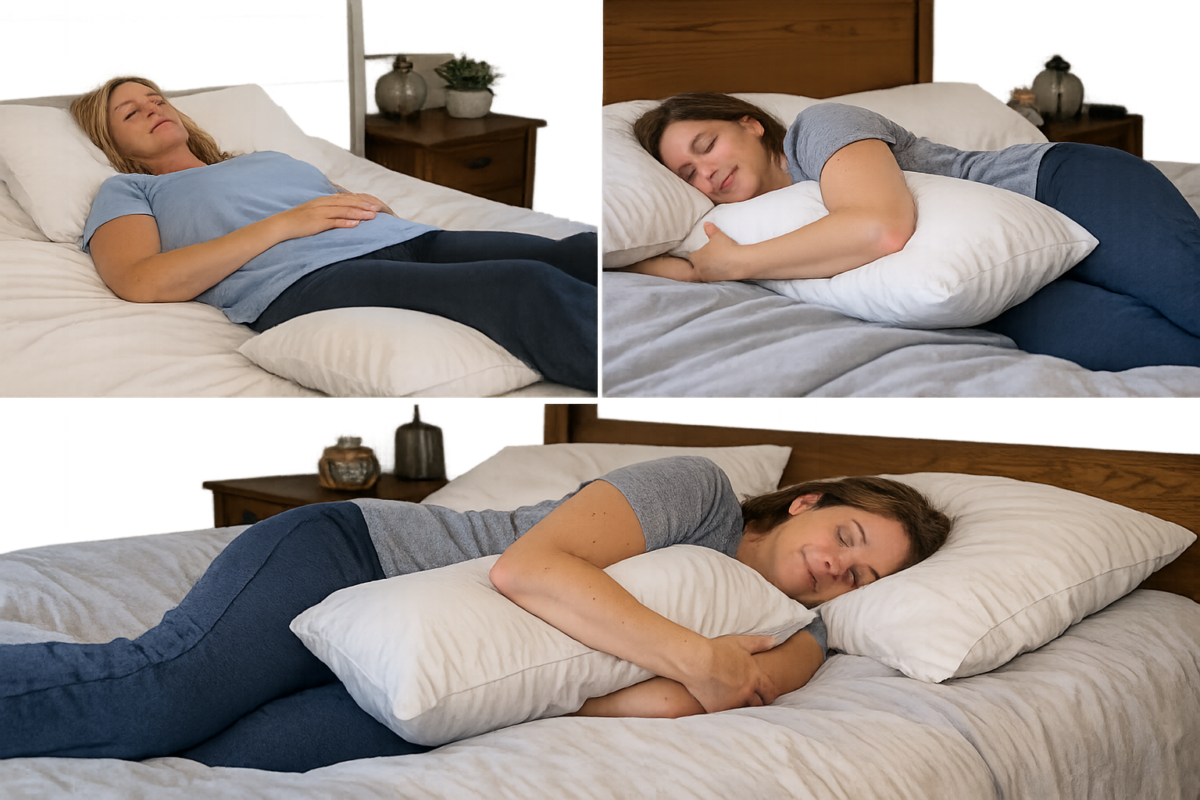
Finding a comfortable sleeping position can be difficult when arthritis affects your hips, knees, back, shoulders, neck, hands, or other joints. Staying in one position for hours can also make stiffness more noticeable when you wake up.
There is no single sleeping position that works for everyone with arthritis. The goal is to find a position that reduces pressure on painful joints, supports comfortable alignment, and allows you to relax without constantly repositioning.
Small changes—such as putting a pillow between your knees or under your knees—can sometimes make a noticeable difference in comfort.
Quick Answer: What Is the Best Sleeping Position for Arthritis?
For many people, side sleeping with appropriate pillow support or back sleeping with support under the knees can be comfortable options.
The best position depends on which joints are affected and what feels comfortable for your body.
- Back sleeping: Try a pillow under your knees to reduce strain and support a comfortable leg position.
- Side sleeping: Place a pillow between your knees to keep the hips and legs comfortably aligned.
- Shoulder pain: Avoid putting prolonged pressure directly on the painful shoulder and consider supporting your upper arm with a pillow.
- Hip pain: A pillow between the knees can reduce the tendency of the upper leg to rotate downward when side sleeping.
- Knee pain: Experiment with a pillow between the knees when side sleeping or under the knees when lying on your back.
- Neck pain: Use a pillow that keeps your head and neck in a comfortable, neutral position.
- Stomach sleeping: If it causes neck or back discomfort, try transitioning to your side or back instead.
There is no requirement to stay in one position all night. Changing positions when you become uncomfortable is perfectly reasonable.
Why Sleeping Position Matters With Arthritis
When a joint is already painful or sensitive, pressure from your body weight or an awkward position can make nighttime discomfort more noticeable.
Your sleeping position can affect:
- how much pressure is placed on a painful joint
- the position of your hips, knees, and spine
- whether your neck remains comfortably supported
- whether your shoulders are compressed
- how easily you can turn or reposition yourself
The objective isn’t to find a medically perfect posture. Instead, look for a position that feels comfortable, provides adequate support, and doesn’t leave you with increased pain or stiffness when you wake up.
1. Back Sleeping With Support Under the Knees
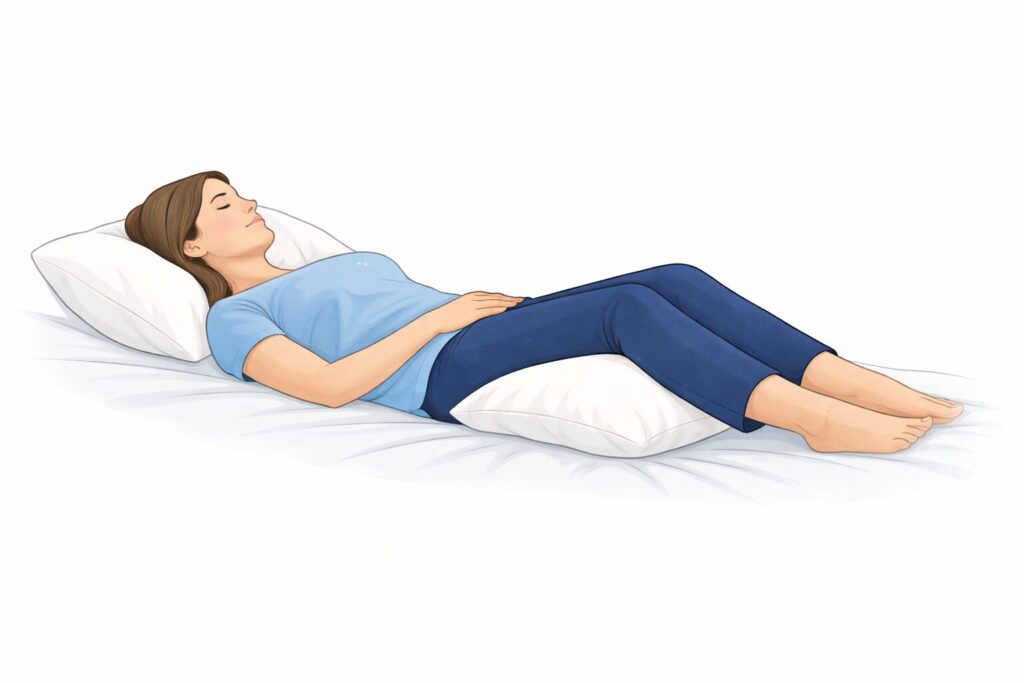
Back sleeping gives you an opportunity to support both sides of your body without putting your weight directly on one hip or shoulder.
Some people find it more comfortable to place a pillow or cushion under their knees. This can slightly bend the legs and provide additional support.
How to make back sleeping more comfortable
- Place a pillow under your knees if keeping your legs straight is uncomfortable.
- Use a pillow that supports your head without pushing your chin toward your chest.
- Keep your arms in a relaxed position rather than holding them overhead.
- If your lower back feels unsupported, experiment with a small amount of additional cushioning rather than a large pillow.
Back sleeping may be particularly worth trying if pressure on your hips or shoulders makes side sleeping uncomfortable.
2. Side Sleeping With a Pillow Between Your Knees
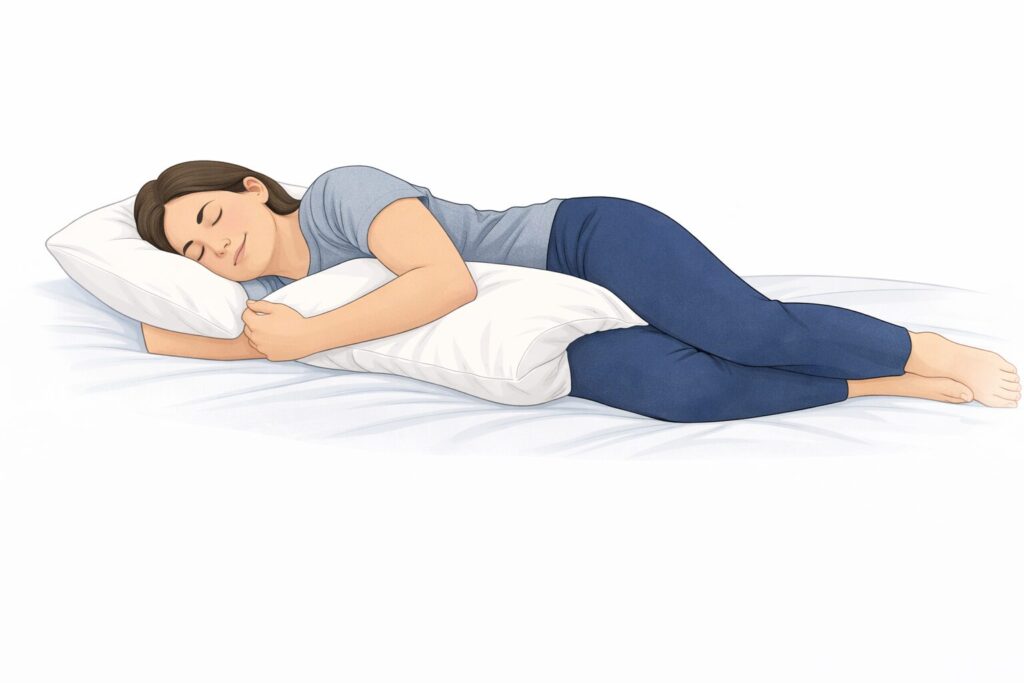
Side sleeping is a comfortable choice for many people, but the position can put pressure on the shoulder and hip underneath you.
A pillow between your knees can help keep the upper leg from dropping forward and may make the hips and knees feel more supported.
How to improve side sleeping
- Place a pillow between your knees rather than allowing them to press directly together.
- Choose enough pillow height to keep your hips and legs in a comfortable position.
- Keep your head supported so your neck isn’t tilted sharply toward the mattress.
- Consider hugging a body pillow if your upper shoulder or arm feels unsupported.
- Avoid curling yourself into an extremely tight fetal position if it increases hip, knee, or back discomfort.
You don’t have to keep your legs perfectly straight. The goal is simply to find a position that feels supported rather than twisted or compressed.
3. Reclined or Elevated Sleeping
Some people are more comfortable sleeping in a partially reclined position rather than completely flat.
A reclining position may be particularly worth experimenting with if lying completely flat makes it difficult to get comfortable.
An adjustable bed or adjustable base can make it easier to experiment with different positions without having to arrange several pillows behind your back.
For more information, see Best Adjustable Beds for Arthritis.
4. The Fetal Position: Modify It If Necessary
Curling onto your side is a natural sleeping position for many people. There’s no need to avoid it simply because it’s called the fetal position.
However, pulling the knees tightly toward the chest or curling the upper body forward may become uncomfortable for some people.
If you prefer this position:
- Keep your knees comfortably bent rather than tightly pulled toward your chest.
- Place a pillow between your knees.
- Make sure your head and neck remain supported.
- Try a body pillow if it helps you maintain a more relaxed position.
The most useful test is how you feel during the night and when you get up in the morning.
Sleeping Positions That May Be Less Comfortable
There is no universal list of positions that every person with arthritis must avoid. However, some positions can create problems for particular joints.
Stomach Sleeping
Stomach sleeping can require your head to remain turned to one side for an extended period. It can also be uncomfortable for people who already have back or neck problems.
If you naturally sleep on your stomach and don’t experience discomfort, you don’t necessarily need to force yourself into a completely different position. But if you regularly wake with neck or back pain, experimenting with side or back sleeping may be worthwhile.
Sleeping Directly on a Painful Shoulder
If one shoulder is particularly painful, lying directly on it for hours may increase discomfort.
Try sleeping on the opposite side or on your back. When side sleeping, hugging a pillow can also give the upper arm and shoulder additional support.
Unsupported Side Sleeping
Side sleeping without any support between the knees can allow the upper leg to rotate downward. Some people find that this increases discomfort around the hips, knees, or lower back.
A simple pillow between the knees is an inexpensive way to experiment with additional support.
Sleeping Positions for Specific Arthritis Pain
The best setup depends partly on which joints are bothering you.
Hip Arthritis
If your hip hurts when you sleep on your side:
- Try sleeping on the opposite side.
- Put a pillow between your knees.
- Consider back sleeping with a pillow under your knees.
- Avoid spending the entire night directly on the most painful hip if it increases discomfort.
If both hips are uncomfortable, back sleeping may be worth trying.
Knee Arthritis
For knee discomfort:
- Try a pillow between your knees when side sleeping.
- When back sleeping, experiment with a pillow under your knees.
- Avoid positions that leave your knees pressed together if that causes discomfort.
- Make sure your pillow isn’t so thick that it forces your hips or legs into an awkward position.
Shoulder Arthritis or Shoulder Pain
Shoulder pain can make side sleeping particularly challenging.
Try:
- sleeping on the opposite side
- sleeping on your back
- placing a pillow under or around the upper arm for support
- hugging a pillow when side sleeping
- avoiding prolonged pressure directly on the painful shoulder
If both shoulders are painful, a supported back-sleeping position may be more comfortable.
Neck Arthritis or Neck Pain

Your pillow matters as much as your sleeping position when neck discomfort is involved.
Look for a setup that:
- keeps your head comfortably supported
- doesn’t force your chin toward your chest
- doesn’t leave your head hanging toward the mattress
- keeps your neck in a comfortable, relatively neutral position
Side sleepers may need a different pillow height from back sleepers because the distance between the head and mattress changes.
See Best Pillows for Arthritis Pain Relief for more detailed pillow guidance.
Hand or Wrist Arthritis
Hand and wrist discomfort can sometimes make it difficult to find a comfortable position at night.
Try to:
- avoid sleeping with your wrist bent sharply
- keep your hands in a relaxed position
- use light cushioning if direct pressure is uncomfortable
- avoid positions that leave your hand trapped underneath your body
If you regularly wake with numbness, tingling, significant swelling, or worsening pain, discuss those symptoms with a healthcare professional.
Foot or Ankle Pain
If arthritis affects your feet or ankles, even light bedding can sometimes feel uncomfortable during a flare.
Experiment with:
- looser bedding around the feet
- a comfortable position that doesn’t put direct pressure on the painful joint
- slight elevation if that feels comfortable
- pillows positioned so they support rather than press against the affected area
How to Use Pillows to Improve Your Sleeping Position
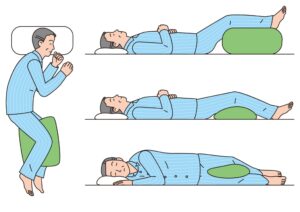
Pillows are often more useful as positioning tools than simply as something to put under your head.
Pillow between the knees
Best suited to many side sleepers. It can help keep the upper leg from rotating downward and provide cushioning between the knees.
Pillow under the knees
Useful for people who prefer sleeping on their backs and find a slight bend in the knees more comfortable.
Body pillow
A full-length body pillow can provide several points of support at once. Side sleepers can place their arms and legs around it to create a more supported position.
Pillow supporting the upper arm
If your shoulder feels unsupported when side sleeping, a pillow in front of your chest can give the upper arm somewhere to rest.
Cervical pillow
A contoured or appropriately sized pillow may help some people maintain a more comfortable neck position.
The right pillow isn’t necessarily the most expensive one. Height, firmness, shape, and your preferred sleeping position all matter.
Common Sleeping Position Mistakes
Sometimes the problem isn’t the sleeping position itself but the way it is supported.
Common issues include:
- using too many pillows
- using a pillow that is too high or too low
- allowing the knees to press directly together
- sleeping directly on a painful shoulder
- curling tightly into a position that becomes uncomfortable
- allowing the head to tilt sharply to one side
- staying in an uncomfortable position because you think you “shouldn’t” move
If you repeatedly wake because something hurts, treat that as useful information. Try changing one part of your setup at a time and see whether it improves your comfort.
How to Find Your Most Comfortable Sleeping Position
Instead of trying to completely change the way you sleep in one night, make one adjustment at a time.
Step 1: Identify the problem joint
Notice which area bothers you most when you’re trying to sleep or when you wake up.
Step 2: Change your position
Try your back, side, or another comfortable position and see whether the pressure changes.
Step 3: Add one support
Try a pillow under the knees, between the knees, or supporting your upper arm.
Step 4: Check your neck
Make sure your head isn’t being pushed too far forward, backward, or sideways.
Step 5: Give the adjustment some time
A new sleeping setup may feel unfamiliar at first. If it consistently causes more discomfort, however, there’s no reason to force it.
The goal isn’t to sleep in a particular position because an article says it’s best. The goal is to find a position that works for your body.
What About Your Mattress?
Your sleeping position and mattress work together.
A mattress that is too soft may allow your body to sink into an uncomfortable position, while a very firm surface may create uncomfortable pressure around the shoulders and hips.
There isn’t one mattress firmness that works for everyone with arthritis. If your current mattress is uncomfortable, consider whether a topper or a different sleeping surface changes how your body feels.
For more detailed guidance, see Best Mattress for Arthritis Pain Relief.
When an Adjustable Bed May Help

An adjustable bed or base lets you change the angle of your upper body or legs instead of relying entirely on pillows.
This can be useful for people who find a slightly elevated or reclined position more comfortable.
However, an adjustable bed isn’t necessary for finding a comfortable sleeping position. Pillows and other simple supports can often be used to experiment with different positions first.
See Best Adjustable Beds for Arthritis if you’re considering one.
Related Sleep Strategies for Arthritis
Sleeping position is only one part of making nights more comfortable.
If you’re dealing with arthritis-related sleep problems, also consider:
- choosing supportive pillows and bedding
- creating a comfortable bedroom environment
- using gentle heat before bed when appropriate
- incorporating gentle movement into your evening routine
- making nighttime trips to the bathroom easier and safer
- addressing morning stiffness so getting out of bed is easier
For the broader picture, see How to Sleep With Arthritis: Positions, Bedding, and Nighttime Relief Tips.
Frequently Asked Questions
What is the best sleeping position for arthritis?
There isn’t one sleeping position that is best for everyone. Back sleeping with a pillow under the knees and side sleeping with a pillow between the knees are two common options to try. The best position is the one that keeps you comfortable without placing excessive pressure on painful joints.
Is it better to sleep on your back or side with arthritis?
Either can be comfortable. Back sleeping may reduce direct pressure on the hips and shoulders, while side sleeping can be comfortable when the knees, hips, neck, and shoulders are properly supported. Try both and pay attention to how you feel during the night and when you wake.
How should I sleep with hip arthritis?
If side sleeping is comfortable, try sleeping on the less painful side with a pillow between your knees. Back sleeping with a pillow under your knees is another option. Avoid staying directly on a painful hip if doing so increases discomfort.
Where should I put a pillow when sleeping with knee arthritis?
When sleeping on your side, try placing a pillow between your knees. When sleeping on your back, a pillow under the knees may provide additional support. The ideal position depends on what feels comfortable for you.
What is the best sleeping position for shoulder arthritis?
Many people find it more comfortable to avoid putting direct pressure on a painful shoulder. Try sleeping on the opposite side or on your back. A pillow supporting the upper arm can also make side sleeping more comfortable.
Is stomach sleeping bad for arthritis?
Not necessarily, but it can be uncomfortable for some people because the head generally has to remain turned to one side. If stomach sleeping contributes to neck or back discomfort, try side or back sleeping instead.
Can a pillow help with arthritis pain while sleeping?
A pillow can provide support and cushioning that makes a sleeping position more comfortable. Knee pillows, body pillows, cervical pillows, and pillows supporting the upper arm can all serve different purposes.
Should I change sleeping positions during the night?
You don’t need to stay in one position all night. If a position becomes uncomfortable, changing positions is reasonable. Finding several comfortable positions can make it easier to get through the night without putting prolonged pressure on one area.
Key Takeaway
There is no single perfect sleeping position for arthritis. Comfort, support, and reducing pressure on painful joints are more useful goals than trying to follow a rigid sleeping posture.
Start with one simple change—such as a pillow between your knees when side sleeping or under your knees when back sleeping. Then adjust your pillow height, arm support, or sleeping position based on how your body responds.
For more comprehensive advice on nighttime arthritis discomfort, bedding, bedroom setup, and sleep routines, see How to Sleep With Arthritis: Positions, Bedding, and Nighttime Relief Tips.
Medical Disclaimer: This article is for informational purposes only and does not constitute medical advice. Always consult your doctor, rheumatologist, or occupational therapist before making changes to how you manage your arthritis.
