
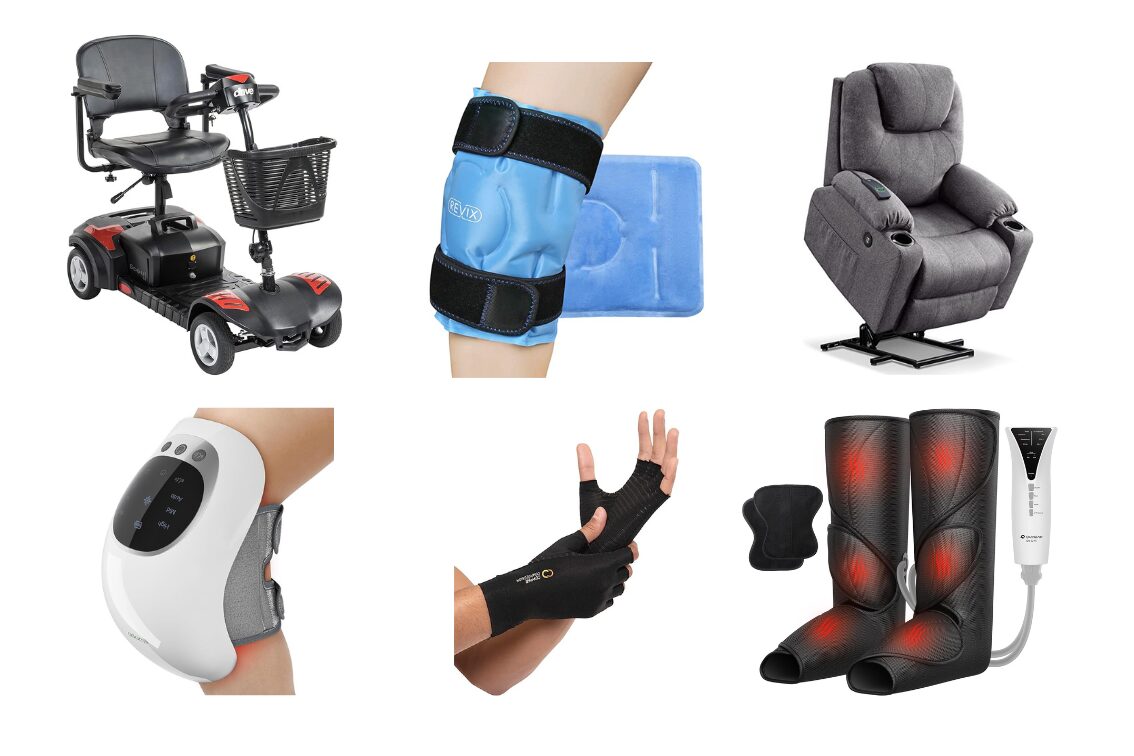
Living with arthritis can make ordinary tasks more difficult than they used to be.
Opening a jar. Turning a key. Getting dressed. Preparing a meal. Getting in and out of the shower. Reaching something from a high shelf. Walking safely through your home.
When joint pain, stiffness, reduced grip strength, fatigue, or limited mobility gets in the way, the right arthritis supplies and daily living aids can make these tasks easier to manage.
Arthritis tools and assistive devices are designed to change how a task is performed. They may reduce the amount of gripping, pinching, twisting, bending, reaching, lifting, or repetitive movement required.
The challenge is knowing what type of aid you actually need.
There are thousands of products marketed for people with arthritis, from simple jar openers and adaptive utensils to dressing aids, bathroom equipment, mobility devices, and ergonomic tools. You don’t need all of them.
This guide explains the major categories of arthritis supplies, arthritis aids, arthritis tools, and assistive devices so you can identify the type of help that fits your particular daily challenges.
Quick Answer: The most useful arthritis supplies are the ones that address a specific difficulty in your daily routine. Depending on your needs, that might mean a jar opener for painful gripping, a dressing aid for stiff fingers, a reacher for difficult bending, bathroom safety equipment for stability, or a mobility aid for walking support. Start with the task that causes you the most difficulty rather than shopping for arthritis products at random.
Arthritis Supplies at a Glance
A useful way to begin is to match the problem you are having with the type of aid designed to address it.
| If you struggle with… | Arthritis supplies to consider | What they can help with |
|---|---|---|
| Weak or painful grip | Jar openers, key turners, built-up handles | Gripping, twisting and pinching |
| Cooking | Adaptive utensils, electric openers, easy-grip tools | Cutting, stirring, opening and lifting |
| Getting dressed | Button hooks, zipper pulls, sock aids, shoe horns | Fine finger movements and bending |
| Reaching | Reachers and grabbers | Bending, stretching and retrieving objects |
| Bathing | Shower chairs, grab bars, handheld showerheads | Stability, standing and reaching |
| Walking | Canes, walkers and rollators | Mobility and stability |
| Standing from a chair | Stand-assist devices and lift chairs | Sit-to-stand transfers |
| Getting out of bed | Bed assist rails and transfer aids | Changing position and standing |
| Household chores | Lightweight tools and rolling carts | Carrying, lifting and repetitive tasks |
| Working at a desk | Ergonomic keyboards, mice and supports | Repetitive hand and wrist movements |
| Gardening | Ergonomic and adaptive garden tools | Grip, cutting and repetitive movements |
| Personal care | Large-handle grooming tools and long-handled aids | Grip, reach and fine movements |
The goal isn’t to buy everything on this list. Identify the activities that are hardest for you, then look for an aid that reduces the specific movement causing the problem.
What Are Arthritis Supplies, Arthritis Aids and Assistive Devices?
You may encounter several terms when searching for products that make everyday activities easier.
Although they overlap, they are not always used in exactly the same way.
What Are Arthritis Supplies?
Arthritis supplies is a broad term that can include products used to make daily activities easier, improve comfort, provide support, or assist with mobility and safety.
Depending on the context, arthritis supplies may include:
- Kitchen aids
- Dressing aids
- Reachers
- Bathroom equipment
- Mobility aids
- Ergonomic tools
- Hand and grip aids
- Braces and supports
- Heating and cold-therapy products
- Adaptive equipment for hobbies and work
The term is broad enough to cover both simple everyday tools and more specialized equipment.
What Are Arthritis Aids?
Arthritis aids generally refers to products that help someone perform an activity more easily or independently.
Examples include:
- Jar openers
- Button hooks
- Sock aids
- Long-handled shoe horns
- Reacher grabbers
- Shower chairs
- Adaptive utensils
- Key turners
An arthritis aid doesn’t necessarily treat arthritis. Its purpose is often to make a particular activity less demanding.
What Are Arthritis Tools?
Arthritis tools usually refers to physical tools designed to make a specific task easier.
For example, an ergonomic gardening tool may change the way you grip a handle, while an electric can opener removes much of the manual turning required to open a can.
What Are Assistive Devices?
Assistive devices is a broader accessibility term that can include equipment used to help with daily activities, mobility, transfers, communication, or other functions.
Simple daily living aids can be assistive devices, but the category can also include equipment such as:
- Canes
- Walkers
- Rollators
- Transfer aids
- Bathroom safety equipment
- Bed assist devices
In everyday shopping, these terms often overlap.
The name matters less than the problem the product is designed to solve.
How to Choose the Right Arthritis Supplies
Start with the task, not the product.
Instead of searching for “arthritis products” and choosing something that looks useful, identify exactly what is difficult.
For example:
- “Opening jars hurts my thumb.”
- “I can’t bend down easily to put on socks.”
- “My fingers have trouble fastening buttons.”
- “Standing through an entire shower is tiring.”
- “I struggle to get up from my low recliner.”
- “I drop things when my grip becomes painful.”
Each problem points toward a different type of solution.
Identify the Movement That Causes the Problem
Ask yourself what part of the movement is difficult.
Is it:
- Gripping?
- Pinching?
- Twisting?
- Bending?
- Reaching?
- Lifting?
- Standing?
- Walking?
- Repetitive movement?
- Fine finger control?
The answer can help narrow down the type of aid to consider.
If gripping is the problem, a larger or cushioned handle may help.
If twisting is difficult, an electric or lever-operated device may reduce the amount of manual force required.
If bending is the problem, a reacher or long-handled tool may be more appropriate.
If balance or mobility is the concern, safety equipment or a properly selected mobility aid may be more appropriate than a simple household tool.
Consider How the Product Is Operated
A product labeled “arthritis-friendly” can still require considerable hand strength.
Look at:
- Handle size
- Trigger design
- Buttons and switches
- Required pressure
- Pinch grip requirements
- Weight
- Adjustability
- Stability
The product should not replace one difficult movement with another.
A useful arthritis aid makes the task easier to perform, not merely possible.
Consider Your Environment
The best product for one home may not work well in another.
Before purchasing larger equipment, check:
- Product dimensions
- Doorway and hallway width
- Shower or tub dimensions
- Seat height
- Available storage space
- Weight capacity
- Installation requirements
This is especially important for mobility equipment, bathroom aids, lift chairs, shower seats, and other larger products.
Kitchen Supplies and Cooking Aids for Arthritis

The kitchen involves many movements that can become difficult with arthritis.
Opening containers, peeling vegetables, chopping food, lifting cookware, turning knobs, gripping utensils, and carrying dishes can all place demands on the hands and upper body.
Useful categories of kitchen aids include:
- Electric jar openers
- Electric can openers
- Easy-grip utensils
- Adaptive knives
- Wide-handle peelers
- Push-down food choppers
- Lightweight cookware
- Non-slip cutting boards
- Silicone or built-up grips
- Rolling kitchen carts
The right choice depends on the movement that causes difficulty.
For example, someone who struggles with twisting jar lids may benefit more from a lever-operated or electric opener than from another gripping aid.
Someone who struggles to hold a narrow utensil may find a larger, easier-to-hold handle more useful.
Explore more: Kitchen Tools for Arthritis: 10 Helpful Kitchen Aids
Hand and Grip Aids for Arthritis
Hands are involved in countless daily activities, so even relatively small changes in grip strength or finger movement can have a noticeable effect on daily life.
Keys, pens, toothbrushes, scissors, faucets, utensils, buttons, and small containers can all become harder to manage.
Common hand and grip aids include:
- Key turners
- Large-handle pens
- Built-up handles
- Easy-grip scissors
- Jar openers
- Electric openers
- Ergonomic household tools
- Compression gloves
When evaluating a hand aid, consider whether it actually reduces the movement causing the difficulty.
A larger handle may be useful if a narrow handle is difficult to grip. An electric opener may be more appropriate when sustained gripping and twisting are the problem.
Compression gloves are a different type of product. They are generally used for support or comfort rather than to perform a particular household task, so they belong in a different category from tools such as jar openers.
Explore more: Best Hand Relief Tools for Arthritis and Best Compression Gloves for Arthritis
Dressing Aids for Arthritis
Getting dressed requires more fine motor control than many people realize.
Buttons, zippers, shoelaces, socks, and shoes can all require pinching, pulling, bending, or reaching.
Dressing aids can change those movements.
Button Hooks and Zipper Pulls
A button hook lets you fasten a button using a larger handle and hooking motion rather than pinching the button directly.
A zipper pull makes a small zipper tab easier to grasp.
These can be useful when finger stiffness, painful thumbs, or reduced dexterity make traditional fasteners difficult.
Sock Aids
A sock aid holds the sock open so you can slide your foot into it without reaching down as far.
This can be useful when bending, reaching, or pulling is difficult.
Long-Handled Shoe Horns
A long-handled shoe horn allows you to put on shoes while standing or sitting without bending deeply toward your feet.
Adaptive Clothing
Sometimes the most useful solution isn’t an assistive tool.
Clothing with elastic waistbands, larger zipper pulls, magnetic closures, or hook-and-loop fasteners may eliminate difficult buttons or other fine finger movements altogether.
Explore more: Adaptive Clothing and Dressing Aids for Arthritis
Reacher Grabbers for Bending and Reaching
A reacher grabber is a versatile daily living aid that can help retrieve objects without bending or stretching as far.
You might use one to:
- Pick something up from the floor
- Reach a high shelf
- Retrieve an item from behind furniture
- Pick up lightweight objects
- Avoid repeated bending
When choosing a reacher, pay attention to the trigger.
If squeezing a conventional trigger is difficult because of hand arthritis, a long reach alone won’t solve the problem.
Useful features to consider include:
- Lightweight construction
- Comfortable handle
- Easy-to-operate trigger
- Non-slip gripping jaws
- Rotating head
- Magnetic tip for small metal objects
A longer reacher isn’t automatically better. An excessively long tool may be harder to control or store.
Explore more: Best Arthritis Tools for Daily Living: Practical Aids for Everyday Tasks
Bathroom Safety and Bathing Aids
The bathroom can present several challenges when arthritis affects strength, mobility, balance, or endurance.
Getting into a tub, standing in a shower, reaching lower legs, and getting up from a toilet can all require significant movement and stability.
Common bathroom aids include:
- Shower chairs
- Grab bars
- Non-slip bath mats
- Handheld showerheads
- Long-handled bathing sponges
- Raised toilet equipment
- Other bathroom transfer and safety aids
Shower Chairs
A shower chair allows you to sit while bathing rather than standing for the entire shower.
This may be useful for people who have difficulty standing for extended periods, although the appropriate equipment depends on individual mobility and bathroom setup.
Check the chair’s:
- Dimensions
- Seat height
- Weight capacity
- Leg adjustability
- Foot stability
Grab Bars
Properly installed grab bars can provide a stable handhold in areas where support is needed.
Do not use a towel bar as a substitute for a properly installed grab bar.
Installation requirements matter. A grab bar needs to be attached using an appropriate method for the wall and intended load.
Non-Slip Bath Mats
A properly designed non-slip bath mat can provide additional traction on wet bathroom surfaces.
However, the mat itself should not create a tripping hazard. Check that it lies flat and remains securely in place.
Long-Handled Bathing Tools
A long-handled sponge or brush can reduce the need to bend or reach when washing areas that are difficult to access.
Explore more: Arthritis Tools for Safe Bathing and Showering
Mobility Aids for Arthritis

Mobility aids are different from simple household tools because they can affect how you walk and move through your environment.
Common mobility aids include:
- Canes
- Walkers
- Rollators
- Mobility scooters
The appropriate choice depends on your mobility, balance, strength, endurance, and environment.
A cane may provide additional support for some people.
A walker generally provides a broader base of support.
A rollator combines wheeled mobility with features such as hand brakes and, commonly, a seat for resting.
These are general categories rather than recommendations for a particular individual.
Proper fit and adjustment are important. If you are unsure which mobility aid is appropriate or how it should be adjusted, a physical therapist or other qualified healthcare professional can help assess your needs.
Explore more: Best Mobility Aids for Arthritis: A Complete Guide, Best Walking Canes for Arthritis, and Best Walkers and Rollators for Arthritis
Bed, Chair and Transfer Aids
Some of the most difficult moments of the day aren’t activities like cooking or dressing. They’re transitions.
Getting out of bed.
Standing from a low chair.
Getting out of a recliner.
Moving from sitting to standing.
Transfer aids are designed to provide additional support during these movements.
Examples include:
- Bed assist rails
- Stand-assist devices
- Lift chairs
- Transfer aids
- Furniture risers
Bed Assist Rails
A bed assist rail can provide a handhold when changing position or getting out of bed.
Before purchasing one, check compatibility with your bed and mattress configuration and follow the manufacturer’s installation and safety instructions.
Stand-Assist Devices
Stand-assist devices can provide additional leverage or support when rising from a chair.
They may be useful for some people who have difficulty standing, but the right equipment depends on the person’s strength, mobility, and the chair itself.
Lift Chairs
Power lift recliners raise the seat to help bring the user toward a standing position.
When considering one, look at:
- Seat height
- Armrest position
- Weight capacity
- Available space
- Control placement
- Reclining positions
Explore more: Best Bed Assist Rails for Arthritis and Best Power Lift Recliners for Arthritis
Personal Care and Grooming Aids
Personal care tasks can require repetitive gripping and precise finger movements.
Depending on the task, useful products may include:
- Large-handle toothbrushes
- Electric toothbrushes
- Easy-grip hairbrushes
- Long-handled combs
- Easy-grip nail clippers
- Pump dispensers
- Long-handled grooming tools
The goal is to identify the movement that causes difficulty.
If squeezing a small bottle hurts your fingers, a pump dispenser may eliminate that movement.
If reaching your hair is difficult, a longer handle may be more useful.
Explore more: Personal Care Tools for Arthritis: When You Can’t Grip or Reach
Household Cleaning and Chore Aids
Household chores often combine several movements that can be difficult with arthritis: gripping, squeezing, bending, lifting, carrying, pushing, and repetitive movement.
Possible solutions include:
- Lightweight cleaning tools
- Long-handled dusters
- Spray mops
- Easy-grip handles
- Rolling carts
- Lightweight vacuum cleaners
- Tools with larger controls
The goal isn’t necessarily to find a specialized “arthritis cleaning product.”
Sometimes the better solution is simply to reduce the amount of lifting, carrying, bending, or repetitive movement involved.
A rolling cart, for example, can move several lightweight items at once rather than requiring repeated carrying.
Explore more: Cleaning Your Home with Arthritis: Tools and Tips
Arthritis-Friendly Office and Technology Tools
Working at a desk can involve prolonged typing, clicking, gripping, and repetitive hand movements.
Potentially useful office aids include:
- Ergonomic keyboards
- Alternative computer mice
- Trackballs
- Vertical mice
- Large-grip pens
- Wrist supports
- Monitor stands
- Adjustable desks
- Voice-to-text software
But buying specialized equipment isn’t always the first step.
Your workstation setup matters too.
Keep frequently used items within easy reach, position your monitor comfortably, and avoid prolonged awkward wrist positions.
Voice-to-text software can also reduce the amount of typing required when extended keyboard use becomes uncomfortable.
Explore more: The Arthritis-Friendly Office Setup Guide
Gardening and Hobby Tools for Arthritis
Arthritis doesn’t necessarily mean giving up activities you enjoy.
The right adaptation can sometimes change how much grip, bending, or repetitive movement a hobby requires.
Gardening tools may include:
- Large or cushioned handles
- Ergonomic grips
- Spring-assisted mechanisms
- Lightweight tools
- Long-handled tools
Raised garden beds and rolling garden carts can reduce kneeling, bending, or carrying.
Similar principles apply to crafts and other hobbies.
Larger-grip crochet hooks, adaptive scissors, card holders, book stands, and other tools can make certain activities easier to manage.
Explore more: Best Ergonomic Gardening Tools for Arthritis and Best Craft Tools for Arthritis
Comfort, Support and Pain-Relief Products
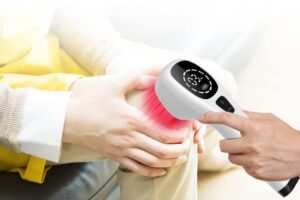
Not everything sold as an arthritis product is an assistive device.
Some products are intended primarily for comfort or support rather than helping you perform a task.
Examples include:
- Heating pads and wraps
- Cold therapy products
- Compression gloves
- Braces
- Splints
- Massage tools
- Other support products
This distinction is useful when deciding what you need.
A jar opener is an assistive tool because it changes how you perform a task.
A heating pad is primarily a comfort product.
A wrist brace provides support.
A massage tool is designed for a different purpose again.
These products shouldn’t all be evaluated in the same way.
When choosing a brace, splint, compression product, or other item that significantly affects movement or fits closely against the body, pay attention to fit and manufacturer instructions. Professional guidance may be appropriate in some situations.
Explore more: Heat vs. Cold Therapy for Arthritis, Best Hand Therapy Tools for Arthritis, Best Thumb & Wrist Braces for Arthritis, and Best Massagers for Arthritis
How to Tell Whether an Arthritis Aid Is Actually Useful
A product can look helpful on paper and still be a poor fit for your needs.
Before buying, ask:
Does it reduce the movement causing the problem?
If twisting hurts, does the product reduce twisting?
If pinching hurts, does it eliminate or reduce the pinch grip?
If bending is difficult, does it let you complete the task without bending as far?
Can you operate it comfortably?
Pay attention to triggers, buttons, handles, switches, and other controls.
A product that requires considerable hand pressure may not be suitable if hand strength is your main limitation.
Is it the right size?
Check dimensions and sizing carefully.
This is particularly important for:
- Mobility aids
- Shower chairs
- Bathroom equipment
- Braces
- Compression gloves
- Seating
- Reachers
Will you actually use it?
A complicated product with features you don’t need may be less useful than a simple tool that solves the problem quickly.
Consider how often you will use it, where you will store it, and whether it will be easy to clean or maintain.
Does it fit your environment?
A product that works perfectly in a large bathroom may not fit comfortably in a smaller one.
Measure first when dimensions matter.
Common Mistakes When Buying Arthritis Supplies
Buying the product before identifying the problem
“Arthritis-friendly” is a broad marketing term.
Start with the task that is difficult and identify the movement that causes the problem.
Assuming every arthritis product reduces pain
Many arthritis aids are designed to make tasks easier rather than directly relieve pain.
A jar opener, for example, changes the way you open a jar. It doesn’t treat the arthritis in your hand.
Choosing a product that still requires too much force
Always consider how a product operates.
A tool can have a large handle and still require considerable squeezing or twisting.
Ignoring measurements and fit
This is particularly important with mobility aids, bathroom equipment, chairs, braces, and other products that need to fit your body or environment.
Buying too much at once
You don’t need to equip your entire home immediately.
Start with one or two tasks that cause the greatest difficulty. If a particular type of aid genuinely helps, you can look for similar solutions elsewhere in your routine.
Assuming more expensive means better
Price doesn’t automatically determine usefulness.
A simple tool that solves your specific problem may be more valuable than an expensive product with features you don’t need.
Do You Need Arthritis Supplies for Every Room?
Not necessarily.
A better approach is to look at the activities you perform in each area of your home and identify the tasks that create the most difficulty.
For example:
Kitchen: Focus on opening, gripping, cutting, stirring, and lifting.
Bathroom: Focus on stability, transfers, standing, and reaching.
Bedroom: Focus on getting into and out of bed, changing position, and dressing.
Living room: Focus on sitting, standing, reaching, and carrying.
Office: Focus on typing, clicking, writing, and maintaining a comfortable workstation.
Garage or garden: Focus on gripping, lifting, bending, and repetitive movements.
You may find that a few well-chosen aids solve most of your daily problems.
When Should You Ask a Professional About an Assistive Device?
Many simple daily living tools are straightforward.
However, some equipment deserves more careful consideration.
Consider professional guidance if you are:
- Unsure which cane, walker, or rollator is appropriate
- Having significant balance or mobility problems
- Having difficulty transferring in or out of bed or a chair
- Considering equipment for a significant safety concern
- Unsure how to adjust a mobility aid
- Experiencing pain or difficulty when using an assistive device
An occupational therapist can be particularly helpful with daily activities and home adaptations. They can assess how a particular task is performed and suggest ways to make it easier.
A physical therapist may be helpful when mobility, walking, balance, strength, or certain mobility aids are involved.
The goal is not to use the most equipment possible. It is to use equipment that is appropriate for your needs and environment.
A Simple Arthritis Supplies Checklist
Use this as a starting point rather than a shopping list.
Hands and Grip
- Jar opener
- Key turner
- Large-grip pen
- Easy-grip scissors
- Built-up handles
Kitchen
- Electric can opener
- Jar opener
- Adaptive utensils
- Easy-grip peeler
- Lightweight cookware
- Non-slip cutting board
Dressing
- Button hook
- Zipper pull
- Sock aid
- Long-handled shoe horn
- Elastic shoelaces
- Adaptive clothing
Bathroom
- Grab bars
- Shower chair
- Non-slip bath mat
- Handheld showerhead
- Long-handled bathing tool
Mobility and Transfers
- Cane
- Walker
- Rollator
- Reacher
- Bed assist rail
- Stand-assist device
Home
- Motion-sensor lighting
- Easy-grip handles
- Supportive seating
- Lift chair
- Rolling cart
Office and Hobbies
- Ergonomic keyboard
- Alternative mouse
- Trackball
- Wrist support
- Large-grip craft tools
- Ergonomic gardening tools
Frequently Asked Questions About Arthritis Supplies
What are the most useful arthritis supplies?
The most useful arthritis supplies depend on which everyday tasks are difficult for you. Common categories include easy-grip kitchen tools, jar openers, dressing aids, reachers, bathroom safety equipment, mobility aids, and ergonomic tools. Start with the task that causes the most difficulty rather than buying products simply because they are marketed for arthritis.
What are the best arthritis aids for weak hands?
For weak or painful hands, useful options may include large-handle utensils, electric openers, jar openers, key turners, ergonomic pens, and other tools that reduce the amount of forceful gripping or pinching required.
Do assistive devices help with arthritis?
Assistive devices can make some everyday activities easier by reducing the gripping, twisting, bending, reaching, lifting, or repetitive movement required. They don’t treat the underlying arthritis, but they can change how a task is performed and may help some people remain more independent.
What is the difference between an arthritis aid and an assistive device?
The terms overlap. An arthritis aid usually refers to a product that helps with a particular daily activity, such as opening a jar or getting dressed. “Assistive device” is a broader term that can include daily living aids as well as mobility, transfer, and safety equipment.
Should I buy a cane or walker for arthritis?
A cane, walker, or rollator may be appropriate depending on your mobility, balance, strength, and walking needs. These devices should not be selected solely because they are marketed for arthritis. If you’re unsure which type is appropriate or how it should be adjusted, a physical therapist or other qualified professional can help assess your needs.
How can I make my home more arthritis-friendly?
Start with the activities that are hardest for you. You might reduce gripping in the kitchen, improve bathroom stability, use a reacher to reduce bending, improve lighting, or choose seating that makes standing easier. Small changes that address a specific problem are often more useful than trying to modify everything at once.
Are expensive arthritis products always better?
No. Price does not automatically determine whether an arthritis aid will be useful. A simple product that solves a specific problem can be more practical than a more expensive device with features you don’t need.
How do I know which arthritis aid is right for me?
Identify the task that is difficult and then identify the movement causing the problem. If gripping is difficult, look for a tool that reduces grip force. If twisting is painful, look for a lever-operated or powered alternative. If bending is difficult, consider a long-handled tool or reacher. For significant mobility or safety concerns, professional assessment may be appropriate.
Start With the Task, Not the Shopping Cart
You don’t need every arthritis product on the market.
The most useful approach is to start with one task that has become unnecessarily difficult.
If opening jars is a problem, look for a way to reduce the gripping and twisting.
If getting dressed is frustrating, look for a dressing aid that reduces pinching or bending.
If reaching the floor is difficult, consider a reacher.
If standing in the shower is tiring or unsafe, explore appropriate bathroom equipment.
If walking or transfers are becoming difficult, consider whether professional guidance could help you identify the right mobility or transfer equipment.
The best arthritis supply is not necessarily the most sophisticated one. It’s the one that addresses a real problem in your daily routine.
Once you identify what works, you can gradually adapt other parts of your home and routine using the same principle: reduce unnecessary gripping, twisting, bending, reaching, lifting, and repetitive movement.
For specific product recommendations and practical tools, see our Best Arthritis Tools for Daily Living guide.
For individual categories, explore our guides to hand relief tools, kitchen tools, bathroom aids, and mobility aids.
Medical Disclaimer: This article is for informational purposes only and does not constitute medical advice. Always consult your doctor, rheumatologist, or occupational therapist before making changes to how you manage your arthritis.
