

Disclosure: As an Amazon Associate, Arthritis Wares earns from qualifying purchases at no extra cost to you. We are not paid or sponsored by any manufacturer. Affiliate links help support our work.
Topical pain-relief creams and gels can be a convenient way to manage arthritis pain in a specific joint without taking another medication by mouth. But different products work in very different ways. Some contain an anti-inflammatory drug, while others cool, numb, or stimulate the skin to change how pain is perceived.
Quick Answer: If you want a topical product for arthritis, start by identifying what you want it to do. Diclofenac gel is the main topical option to consider when inflammation and osteoarthritis pain are the concern. Menthol products such as Biofreeze are designed for fast, temporary cooling relief. Lidocaine products such as Aspercreme temporarily numb the application area. Capsaicin takes longer to work and may be an option for persistent pain. Products containing botanical or other non-drug ingredients are available, but the evidence varies considerably by ingredient.
There is no single cream that is best for everyone. The most useful choice depends on the type of pain, the joint you are treating, how quickly you need relief, and which ingredients you are comfortable using.
👉 Looking for the bigger picture? See our complete guide to topical pain relief for arthritis for a comparison of creams, gels, patches, heat, cold, and different active ingredients.
Quick Picks: Arthritis Pain Relief Creams at a Glance
| Product | Best For | Key Ingredient | Type of Relief |
|---|---|---|---|
| Voltaren Arthritis Pain Gel | Osteoarthritis pain where an anti-inflammatory topical is appropriate | Diclofenac 1% | Anti-inflammatory |
| Biofreeze Pain Relief Gel | Fast, temporary cooling relief | Menthol | Cooling/counter-irritant |
| Aspercreme with Lidocaine | Localized pain where temporary numbing is desired | Lidocaine 4% | Numbing |
| Penetrex Joint & Muscle Care | People looking for a non-drug topical formula | Arnica, MSM, vitamin B6, boswellia | Evidence varies by ingredient |
| Hempvana Pain Relief Cream | People interested in a hemp-seed-based topical | Hemp seed extract | Evidence for pain relief is limited |
| PURESKIN Capsaicin Cream | Persistent pain where capsaicin is worth considering | Capsaicin 0.1% | Changes pain signaling with repeated use |
Important: These products are not interchangeable. A product that feels effective because it cools or numbs the skin is doing something different from a topical NSAID such as diclofenac. Likewise, a botanical cream should not automatically be assumed to work like a medication simply because it is marketed for arthritis pain.
How to Choose the Right Arthritis Pain Relief Cream
Before choosing a product, consider three questions: What type of pain are you trying to manage? How quickly do you need relief? And are you looking for an anti-inflammatory drug or a product that changes how the pain feels?
If inflammation and osteoarthritis pain are the main concern
A topical NSAID such as diclofenac is worth considering. Unlike cooling or numbing products, diclofenac is an anti-inflammatory medication. Research on topical NSAIDs provides the strongest evidence among the categories covered in this article for short-term relief of osteoarthritis pain.
For more background on topical treatments and how different ingredients work, see the Arthritis Foundation’s guide to topical treatments for arthritis pain.
If you want fast, temporary cooling relief
Menthol products such as Biofreeze create a cooling sensation that can temporarily reduce the perception of pain. They can be useful when you want something that works relatively quickly, such as before or after activity.
The tradeoff is that menthol does not treat the underlying arthritis or inflammation.
If you want temporary numbing
Lidocaine is a local anesthetic that reduces pain signaling in the area where it is applied. A lidocaine product may make sense when pain is concentrated in a small, easily reached area and temporary numbing is what you are looking for.
If you are considering capsaicin
Capsaicin works differently from menthol and lidocaine and generally requires repeated use rather than providing immediate relief. It can cause a noticeable burning or warming sensation when first applied, so it is not a good fit for everyone.
Research on topical capsaicin is more substantial than the evidence for many other natural or botanical ingredients, although results vary by condition and joint. The NCCIH review of arthritis and complementary health approaches is a useful source for understanding what the evidence does—and does not—show.
If you prefer botanical or non-drug ingredients
Products such as Penetrex and Hempvana may appeal to people who prefer formulations containing botanical or hemp-derived ingredients. However, “natural” does not automatically mean effective, and the evidence varies substantially from one ingredient to another.
Consider these products based on the ingredients they actually contain rather than assuming that a natural formulation will work like a prescription or over-the-counter medication.
A Note About the Products in This Guide
The products below are included because they represent different approaches to topical pain relief rather than because one product is universally better than the others.
Where an ingredient has relatively strong clinical evidence, such as topical diclofenac for osteoarthritis, we say so. Where evidence is limited or mixed, we point that out as well.
That distinction matters when comparing arthritis creams: a product can be popular or well reviewed without having the same level of clinical evidence as a medication.
Best Arthritis Pain Relief Creams: Full Reviews
The six products below use different active ingredients and are intended for different situations. Rather than treating one as the universal “best,” we explain what each product is designed to do, where it may fit, and where its limitations matter.
1. Voltaren Arthritis Pain Gel — Best for Topical Anti-Inflammatory Relief
Voltaren Arthritis Pain Gel contains diclofenac sodium 1%, a topical nonsteroidal anti-inflammatory drug (NSAID). Unlike menthol or lidocaine products, diclofenac is intended to reduce inflammation as well as pain.
Topical diclofenac has some of the strongest evidence among nonprescription topical treatments for osteoarthritis pain. The Arthritis Foundation notes that topical NSAIDs can be useful for mild to moderate arthritis, particularly when only a few joints are affected.
Voltaren is not designed for instant relief. The FDA labeling states that it may take up to seven days to work for arthritis pain, and the product is intended for specific joints: the hands, wrists, elbows, feet, ankles and knees.
That makes it a different type of product from a menthol gel. If you want something that produces a cooling sensation within minutes, Biofreeze is more suited to that purpose. Voltaren is the option to consider when you specifically want a topical NSAID.
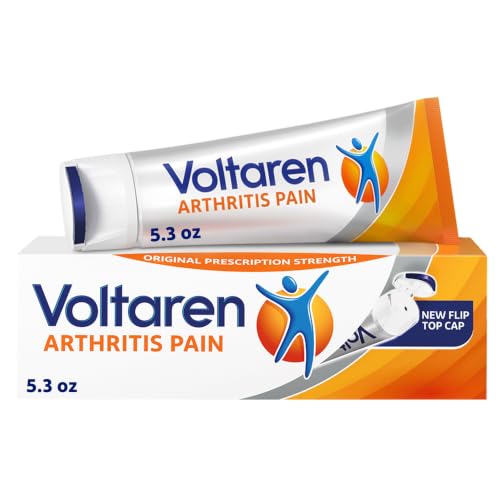
Active ingredient: Diclofenac sodium 1%
Pros:
- Contains a topical NSAID with evidence for osteoarthritis pain
- Addresses inflammation as well as pain
- Available without a prescription in the U.S.
- Useful for several commonly affected joints, including knees and hands
Cons:
- Not intended for immediate pain relief
- Requires consistent use according to the product directions
- NSAID precautions still apply even though it is applied to the skin
- Not appropriate for everyone, particularly people with certain NSAID allergies, medical conditions, or medication combinations
Best for: People with osteoarthritis pain who want a topical anti-inflammatory treatment, particularly for knees, hands, wrists, elbows, feet or ankles.
Not ideal for: Someone looking for an immediate cooling or numbing sensation, or someone who has been advised to avoid NSAIDs.
Important: Follow the package directions and use the enclosed dosing card. The FDA labeling specifies different amounts for upper- and lower-body joints and limits the total daily amount.
2. Biofreeze Pain Relief Gel — Best for Fast Cooling Relief
Biofreeze uses menthol, a counterirritant that produces a noticeable cooling sensation on the skin. Rather than reducing inflammation inside the joint, menthol changes the sensation coming from the treated area. The Arthritis Foundation describes menthol and camphor products as counterirritants that provide cooling or warming sensations that can temporarily distract from pain.
This makes Biofreeze particularly useful when you want something that feels fast-acting. It can be convenient before or after activity, during a temporary flare in symptoms, or when you simply prefer a cooling sensation over a warming or numbing product.
Biofreeze is available in several formats, including gel and roll-on products. A roll-on can be especially convenient for someone with hand arthritis because it reduces the amount of squeezing and rubbing required to apply the product.
It is important to distinguish that quick cooling sensation from treatment of the arthritis itself. Menthol does not work like diclofenac and should not be expected to reduce the underlying inflammation.

Active ingredient: Menthol 10.5% (professional strength)
Pros:
- Produces a cooling sensation relatively quickly
- Useful when temporary relief is the main goal
- Available in formats such as gels and roll-ons
- A roll-on can reduce the gripping and squeezing needed for application
Cons:
- Temporary relief rather than treatment of underlying arthritis
- Does not provide the anti-inflammatory action of diclofenac
- Some people may find the cooling sensation or menthol odor too strong
- Requires reapplication according to the product directions
Best for: Temporary relief during or after activity, flare-ups, and people who prefer a cooling sensation.
Not ideal for: Someone specifically looking for a topical anti-inflammatory treatment.
3. Aspercreme with Lidocaine — Best for Temporary Numbing
Aspercreme with lidocaine contains lidocaine 4%, a topical anesthetic. Lidocaine works differently from both diclofenac and menthol: it temporarily reduces pain signaling in the area where it is applied.
The Arthritis Foundation describes lidocaine as a topical anesthetic that produces a numbing effect, while also noting that research specifically examining lidocaine for arthritis is limited.
That makes lidocaine an interesting option when the sensation of pain itself is the main problem and you want temporary numbing rather than cooling.
Because lidocaine does not reduce inflammation, it is not a substitute for an anti-inflammatory treatment when inflammation is the primary concern.
The current DailyMed labeling for Aspercreme lidocaine products lists lidocaine HCl 4% as the active ingredient and warns against use on wounds or irritated or damaged skin. It also says not to use the product with a heating pad or tight bandage.

Active ingredient: Lidocaine 4%
Pros:
- Produces temporary numbing
- Useful when localized pain is the main concern
- Does not rely on a strong cooling or warming sensation
- Available in easy-to-apply topical formats
Cons:
- Does not reduce inflammation
- Relief is temporary
- Evidence specifically for arthritis pain is more limited than for topical diclofenac
- Must not be applied to damaged or irritated skin
Best for: Localized pain when temporary numbing is preferable to cooling or warming.
Not ideal for: Someone looking for an anti-inflammatory treatment for a swollen or inflamed joint.
4. Penetrex Pain Relief Cream — Best for a Non-Drug Formula
Penetrex uses a combination of arnica, MSM, vitamin B6 and boswellia rather than a conventional over-the-counter pain medication such as diclofenac, menthol or lidocaine.
This makes it appealing to people who specifically want a botanical or non-drug formulation. However, it is important not to confuse having several recognizable natural ingredients with having strong clinical evidence for the finished product.
Evidence for individual ingredients varies. NCCIH notes that evidence for many natural products used for arthritis is too limited to draw firm conclusions. Research on topical herbal products has also produced mixed findings.
Arnica is one of the ingredients with some clinical research behind topical use, but that does not establish that every arnica-containing cream will provide the same results. Similarly, evidence for topical boswellia is not as established as the evidence for some conventional topical medications.
For that reason, Penetrex makes more sense as an option for someone who prefers this type of formulation rather than as a replacement for a topical NSAID when anti-inflammatory treatment is specifically desired.

Active ingredients: Arnica, MSM, vitamin B6, boswellia
Pros:
- Uses a non-drug formulation
- May appeal to people who prefer botanical ingredients
- Cream format can be incorporated into a massage or self-care routine
- Different approach from NSAID, menthol and lidocaine products
Cons:
- Evidence varies considerably by ingredient
- Does not have the same level of evidence as topical diclofenac for osteoarthritis
- Not intended as an immediate-relief product
- Individual response can vary
Best for: People who prefer a botanical/non-drug topical and understand that the evidence is less established.
Not ideal for: Someone specifically seeking the strongest evidence-based topical anti-inflammatory option.
5. Hempvana Pain Relief Cream — Best for a Hemp-Based Topical
Hempvana is different from products containing CBD. Hemp seed ingredients are not the same thing as cannabidiol (CBD), and the presence of hemp in a product should not be interpreted as evidence that it provides the same effects as a CBD product.
Hemp-based topicals can appeal to people looking for a nontraditional or plant-based formulation, particularly when they want a cream that can be incorporated into a daily comfort routine.
The important limitation is the evidence. Research on natural and complementary products for arthritis varies considerably, and evidence for many individual ingredients is insufficient to draw firm conclusions.
For that reason, I would consider Hempvana primarily based on its formula, texture, application experience and your preference for a hemp-seed-based product, rather than assuming it will provide the same type of pain relief as diclofenac, lidocaine or menthol.

Active ingredient: Hemp seed extract
Pros:
- Plant-based formulation
- Different option for people who prefer nontraditional topical products
- Cream format can be convenient for daily application
- Does not contain diclofenac or lidocaine
Cons:
- Evidence for hemp-seed-based topical pain relief is limited
- Hemp seed extract is not the same as CBD
- Should not be assumed to have the anti-inflammatory effects of a topical NSAID
- Results may vary between users
Best for: People who specifically prefer a hemp-seed-based topical and understand the limitations of the evidence.
Not ideal for: Moderate or severe arthritis pain where you are specifically looking for an evidence-supported medication.
6. PURESKIN Capsaicin Cream Extra Strength — Best for Trying Capsaicin
Capsaicin is derived from chili peppers and works differently from the other ingredients in this guide. Repeated application can reduce the ability of certain nerve endings to transmit pain signals, which is why capsaicin is used in some topical pain-relief products.
Capsaicin is one of the better-studied non-NSAID topical ingredients for certain types of pain, but the evidence is not uniform across all forms of arthritis. NCCIH notes that topical capsaicin is conditionally recommended for knee osteoarthritis, while guidance differs for hand osteoarthritis.
Capsaicin also requires patience. Unlike menthol, it is not primarily intended to provide a quick cooling sensation. Early applications can produce burning, warmth or tingling, and repeated use is generally needed before the full effect is apparent.
PURESKIN uses 0.1% capsaicin, making it a relatively strong capsaicin formulation. If you have never used capsaicin before, the sensation is something to consider before choosing it.
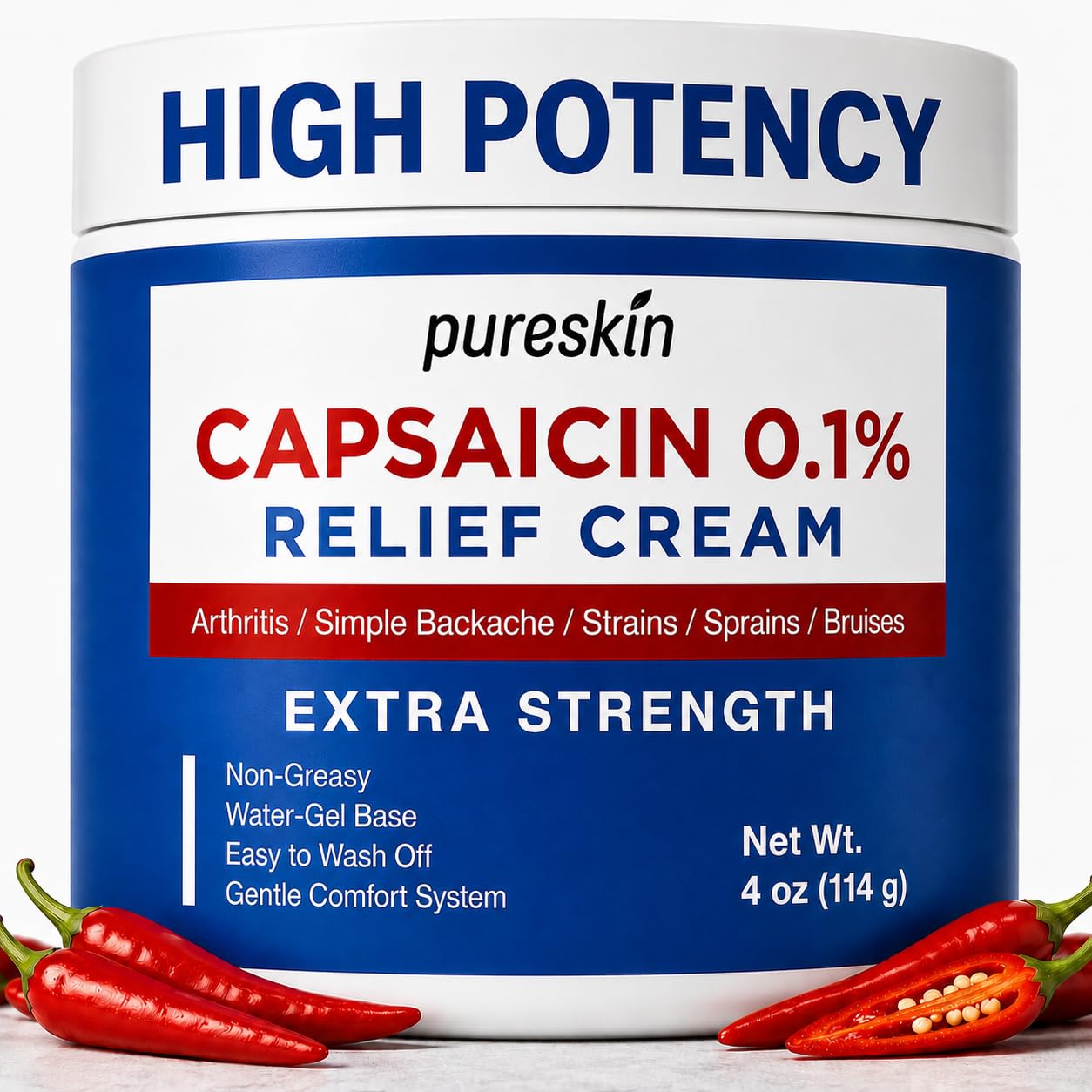
Active ingredient: Capsaicin 0.1%
Pros:
- Uses a different pain-relief mechanism from NSAIDs, menthol and lidocaine
- Capsaicin has clinical research supporting its use for some types of pain
- May be worth considering when other topical approaches have not provided enough relief
- Non-NSAID option
Cons:
- Burning or warming sensation can be uncomfortable
- Generally requires repeated use rather than providing immediate relief
- Evidence varies by arthritis type and joint
- Requires careful application to avoid contact with eyes and other sensitive areas
Best for: People willing to use capsaicin consistently and interested in trying a topical with a different mechanism of action.
Not ideal for: People who want immediate relief or strongly dislike burning or warming sensations.
Important: Apply only as directed on the product label. Do not apply capsaicin to broken or irritated skin, and wash your hands thoroughly after application. Avoid contact with the eyes and other sensitive areas. The Arthritis Foundation also advises avoiding heating devices and tight bandages with topical counterirritants.
Best Arthritis Cream by Joint Location
Where you plan to use a topical product matters. Topical treatments are generally most useful when the painful joint is relatively close to the skin’s surface. The Arthritis Foundation specifically identifies areas such as the hands, knees, elbows and ankles as joints where topical treatments may be useful.
The best choice also depends on the type of relief you want. Diclofenac is an anti-inflammatory medication, while menthol provides a cooling sensation, lidocaine temporarily numbs the area, and capsaicin works through a different pain-signaling mechanism.
What is a good topical option for hand and finger arthritis?
Hands are one of the more practical locations for topical treatments because the joints are relatively close to the skin.
Diclofenac gel is worth considering when osteoarthritis pain and inflammation are the main concerns. However, frequent hand washing can remove topical medication, so follow the product’s instructions about application and washing.
Lidocaine may appeal to someone who wants temporary numbing of a particularly painful area, while a menthol roll-on can be convenient when squeezing a tube is difficult because of hand stiffness or reduced grip strength.
Capsaicin requires more caution when used on the hands. Because it can cause burning or tingling and can be transferred to the eyes, careful application and hand washing are particularly important. The Arthritis Foundation advises waiting at least 30 minutes before washing the hands after applying capsaicin to the hands.
Practical choice: For hand osteoarthritis, consider diclofenac when an anti-inflammatory topical is appropriate; consider lidocaine or menthol when temporary symptom relief is the main goal.
What is a good topical option for knee arthritis?
The knee is one of the better-established locations for topical diclofenac. The Arthritis Foundation notes that topical NSAIDs are particularly useful for osteoarthritis of the knee, and diclofenac has substantial evidence behind its use for knee OA.
If you want an anti-inflammatory topical, Voltaren Arthritis Pain Gel is the most relevant product in this guide. If you are looking for a cooling sensation instead, a menthol product such as Biofreeze is a different option.
Capsaicin is another possibility for knee osteoarthritis, although it works differently and can take time to become useful. NCCIH notes that clinical guidelines conditionally recommend topical capsaicin for knee OA.
Practical choice: For knee osteoarthritis, diclofenac has the strongest evidence among the products covered here. Menthol may be more appropriate when you mainly want temporary cooling relief, while capsaicin is an option for someone willing to use it consistently.
What is a good topical option for elbow arthritis?
The elbow is relatively close to the skin’s surface, making it a reasonable location for a topical product.
Diclofenac gel may be appropriate when osteoarthritis pain is the concern and you want a topical NSAID. Menthol can provide temporary cooling relief, while lidocaine may be useful when localized numbing is what you are looking for.
Because elbow pain can also come from conditions other than arthritis, don’t automatically assume that persistent elbow pain is caused by arthritis. Pain that is severe, worsening, associated with significant swelling, or not improving should be evaluated rather than continually treated with topical products.
Practical choice: Match the ingredient to the type of relief you want rather than choosing solely because the product is marketed for arthritis.
What is a good topical option for foot and ankle arthritis?
The feet and ankles are also relatively accessible locations for topical treatments.
Diclofenac gel may be appropriate for osteoarthritis pain in the feet or ankles when a topical NSAID is suitable. Menthol products can provide a cooling sensation after a day of walking or standing, which some people may find more comfortable.
Application can be slightly more challenging on the feet because of footwear. Allow the product to dry according to its instructions before covering the area, and follow the label rather than applying extra product simply because the joint feels particularly sore.
Practical choice: Consider diclofenac when anti-inflammatory treatment is the goal, or menthol when temporary cooling relief is preferable.
What about shoulder arthritis?
Shoulder pain is more complicated for topical treatments because the shoulder joint is deeper and harder to reach than a hand or knee. A topical product may still provide some surface-level pain relief, but it should not be assumed that a cream will reach the joint itself in the same way it can be applied over a more superficial joint.
A menthol or lidocaine product may be reasonable when the goal is temporary relief in the area. Diclofenac may also be used where indicated, but persistent shoulder pain should not automatically be attributed to arthritis.
If shoulder pain is severe, persistent, associated with weakness or loss of movement, or has not been diagnosed as arthritis, it is worth having the cause evaluated rather than simply trying different creams.
Practical choice: For known shoulder arthritis, choose based on the type of symptom you want to manage, but recognize that topical treatment may be less straightforward than it is for a knee or hand.
What about hip arthritis?
The hip is another location where topical treatments have limitations. The hip joint sits relatively deep beneath muscle and other tissues, so a topical product should not be expected to work in the same way as it may over a knee or hand.
If you have hip arthritis, a topical product may still provide some surface-level relief, but persistent or significant hip pain may require other approaches.
Practical choice: Don’t choose a topical cream simply because it is marketed for arthritis. For deeper joints such as the hip, discuss persistent pain with a healthcare professional and consider topical treatment as only one possible part of symptom management.
Gel vs Cream vs Patch: Which Format Is Best?
The form of a topical pain reliever can affect how easy it is to apply and how well it fits into your routine. But gel, cream, and patch are not automatically different in effectiveness. The active ingredient matters more than the texture or format.
Here’s a practical way to compare them:
| Format | What may make it useful | Best suited for |
|---|---|---|
| Gel | Usually spreads easily and tends to feel lighter on the skin | Daytime use, larger areas, or people who prefer a less greasy texture |
| Cream | Thicker texture can be easier to control during application | Smaller areas or people who prefer a richer product |
| Patch | Convenient when a product is specifically designed for patch delivery | People who prefer not to repeatedly apply a cream or gel |
Arthritis Pain Relief Gels
Gels are common among topical arthritis treatments, including diclofenac gel and menthol-based products.
A gel can be a practical choice if you want to apply a product to a knee, hand, elbow, ankle, or another accessible joint without using a heavier cream. Some people also prefer gels because they feel less greasy after application.
For arthritis pain, however, don’t choose a gel simply because it is a gel. Check the active ingredient and what type of pain it is intended to treat. For example, diclofenac gel is an NSAID used for osteoarthritis pain, while menthol products provide temporary cooling or counterirritant effects.
Arthritis Pain Relief Creams
Creams tend to have a thicker texture than gels and may appeal to people who prefer a more substantial product during application.
This can be especially useful when applying a small amount carefully to an individual joint or painful area. However, a cream isn’t necessarily more effective than a gel simply because it feels richer.
When comparing two creams, look at the active ingredient, concentration, directions, warnings, and intended use rather than assuming the texture tells you how well it will work.
Arthritis Pain Relief Patches
Patches can be convenient because they don’t require repeatedly rubbing a cream or gel into the skin. But topical patches are not interchangeable with creams and gels.
Different patches contain different active ingredients and are designed to be used in different ways. Some provide counterirritant ingredients such as menthol, while other medicated patches may contain different drugs and may require a prescription.
If you choose a patch, follow the product’s directions carefully. Pay particular attention to:
- How long the patch should remain in place
- Which body areas it can be used on
- Whether the skin must be clean and intact
- Whether the patch can be used with heat
- Whether the adhesive may irritate your skin
- Whether the active ingredient is appropriate for your type of pain
Do not assume that a patch provides the same treatment as an arthritis cream or gel containing a similar-sounding ingredient.
Which Format Should You Choose?
For most people, the simplest approach is to start with the active ingredient and the type of pain you’re trying to address, then choose the format that is easiest to use consistently.
For example:
- Osteoarthritis pain in a knee or hand: a diclofenac gel may be worth considering when appropriate.
- Temporary cooling: a menthol gel or cream may be preferable if you like that sensation.
- Temporary numbing: a lidocaine cream or similar topical anesthetic may be an option for certain types of discomfort.
- A convenient application: a properly labeled patch may appeal to someone who doesn’t want to repeatedly apply a cream or gel.
If you’re comparing products with different active ingredients, don’t use gel versus cream versus patch as the main deciding factor. The ingredient, evidence for the intended use, safety information, and your ability to use the product correctly are more important.
How to Use Arthritis Pain Relief Creams Safely
Topical pain relievers are applied directly to the skin, but that does not mean they are risk-free. Different products contain different active ingredients, so always follow the directions and warnings for the specific product you are using.
The following guidelines can help you use arthritis creams, gels, and other topical pain relievers more safely.
1. Apply Topicals to Clean, Intact Skin
Apply topical pain relievers only to the area specified on the product label and, when directed, to clean, dry skin.
Do not apply them to:
- Open wounds or cuts
- Broken or irritated skin
- Infected areas
- Rashes or severely irritated skin
- Areas near the eyes, mouth, or other sensitive tissues
For example, the directions for OTC diclofenac 1% gel specifically state that it should be applied only to clean, dry skin without cuts, open wounds, infections, or rashes.
2. Use the Recommended Amount
More cream or gel does not necessarily provide more pain relief. Using more than directed can increase the risk of side effects.
Some products have very specific dosing instructions. OTC diclofenac 1% gel, for example, comes with a dosing card because the recommended amount differs between upper-body and lower-body joints. It is also labeled for use on no more than two body areas at the same time.
For other products, follow the package directions rather than trying to match the amount used with a different cream or gel.
3. Don’t Automatically Layer Different Topical Products
It may seem logical to combine a diclofenac gel with a menthol, lidocaine, capsaicin, or botanical cream, but that does not mean the combination is appropriate.
Some product labels specifically tell users not to apply the product to the same area as another topical product. Diclofenac 1% gel, for example, carries this instruction.
If you want to use more than one topical pain reliever, ask a pharmacist or other healthcare professional whether the combination is appropriate rather than assuming that the products are safe to layer.
4. Be Careful With Heat
Do not assume that adding heat will make a topical pain reliever work better.
Some topical products specifically warn against using external heat, such as a heating pad, over the treated area. OTC diclofenac 1% gel also instructs users not to apply a bandage over the treated area.
This is particularly important with products that create a warming, cooling, or tingling sensation. Follow the individual product’s instructions rather than adding a heating pad, hot pack, or tight covering unless the label specifically permits it.
5. Wash Your Hands When Appropriate
After applying a topical pain reliever, check the product directions for whether and when you should wash your hands.
This is especially important with products that should not come into contact with the eyes, mouth, nose, or other sensitive areas.
If you are treating your hands themselves, hand-washing instructions can be more complicated. For example, some topical arthritis treatments have specific instructions about when the hands can be washed after application. Follow the product label rather than assuming that the same rule applies to every cream or gel.
6. Give the Product Time to Work
Not every topical pain reliever is designed to provide immediate relief.
For example, OTC diclofenac 1% gel is labeled for arthritis pain and may take up to seven days to work; it is not intended to provide immediate relief.
Other products, such as menthol-containing counterirritants, are intended to provide a different type of temporary sensation and relief.
Don’t judge every arthritis topical by the same timetable. Check the active ingredient and product directions before deciding that a treatment has or has not worked.
7. Stop If You Develop Significant Skin Irritation
Mild sensations such as cooling, warming, tingling, or burning can occur with some topical ingredients. However, significant or persistent irritation should not simply be assumed to mean that the product is working.
Stop using the product and follow the label’s instructions if you develop a concerning reaction.
With diclofenac gel, the labeling includes skin irritation and allergic reactions among reasons to stop use and seek medical advice.
8. Remember That Topical NSAIDs Still Have Medication Risks
A topical NSAID such as diclofenac is still an NSAID. Applying it to the skin can reduce systemic exposure compared with taking an oral NSAID, but it does not eliminate medication-related risks.
Before using diclofenac, read the warnings carefully and ask a doctor or pharmacist if you have conditions such as heart disease, high blood pressure, kidney or liver problems, a history of stomach problems or bleeding, or certain medication interactions. The OTC labeling also contains specific warnings for people with previous reactions to aspirin or other pain relievers.
If you take other medications regularly, a pharmacist can help check for potential interactions.
9. Don’t Use a Topical Product for Every Type of Pain
A cream or gel marketed for arthritis isn’t necessarily appropriate for every painful joint or injury.
For example, OTC diclofenac 1% gel is specifically labeled for temporary relief of arthritis pain in certain joints and is not labeled for strains, sprains, bruises, or sports injuries.
If the cause of your pain is uncertain, particularly if the pain appeared suddenly or is accompanied by significant swelling, redness, warmth, fever, weakness, or another unusual symptom, it is better to have the problem evaluated rather than repeatedly treating it with a topical product.
A Simple Safety Checklist
Before using an arthritis pain relief cream or gel, ask:
- What is the active ingredient?
- What type of pain is this product intended to treat?
- Is it approved or labeled for the joint or body area I want to treat?
- Is my skin intact?
- How much should I apply?
- How often should I use it?
- Can I use heat or a bandage over it?
- Can I use another topical product on the same area?
- Do any of the warnings apply to me or my medications?
The most important rule is simple: don’t treat all arthritis creams and gels as if they are the same. Their active ingredients, directions, benefits, and safety precautions can be quite different.
Frequently Asked Questions About Arthritis Pain Relief Creams
What is the best pain relief cream for arthritis?
There isn’t one cream that is best for everyone. The right choice depends on the active ingredient, the joint being treated, the type of pain, and your health considerations.
For osteoarthritis pain in joints such as the hands, wrists, elbows, knees, ankles, and feet, diclofenac 1% gel has stronger evidence than many nonprescription topical alternatives. Menthol, lidocaine, and capsaicin work differently and may be more appropriate when the goal is temporary cooling, numbing, or a different type of pain relief.
Does Voltaren work better than other arthritis creams?
Voltaren Arthritis Pain contains diclofenac, a topical NSAID. Compared with many nonprescription topical ingredients, topical diclofenac has a substantial body of evidence for osteoarthritis pain.
That doesn’t mean it will work better for every person. The Arthritis Foundation notes that topical NSAIDs can help some people with mild to moderate arthritis pain, while the amount of relief varies between individuals.
Can I use arthritis cream on my hands?
Some topical arthritis products are specifically labeled for use on the hands. Diclofenac 1% gel, for example, is labeled for temporary relief of arthritis pain in the hands, wrists, elbows, feet, ankles, and knees.
Hands can present an additional practical problem because frequent handwashing can remove topical products. Some ingredients also require particular precautions around hand washing. Follow the instructions for the specific product you use.
Does capsaicin cream work for arthritis?
Capsaicin can provide pain relief for some people, but it isn’t equally appropriate for every type of arthritis or every joint.
The Arthritis Foundation reports that capsaicin has evidence for knee osteoarthritis and nerve pain, while the National Center for Complementary and Integrative Health notes that clinical guidelines conditionally recommend topical capsaicin for knee osteoarthritis and conditionally recommend against it for hand osteoarthritis.
Capsaicin can also cause burning or tingling, particularly when you first begin using it. It should not be applied to broken or irritated skin.
Is lidocaine cream good for arthritis pain?
Lidocaine is a topical anesthetic that produces a numbing effect. It does not reduce inflammation.
Research specifically examining lidocaine for arthritis is more limited than the evidence for topical NSAIDs. It may make sense for someone looking for temporary numbing rather than an anti-inflammatory effect, but it should not be treated as equivalent to diclofenac.
Do menthol creams reduce arthritis inflammation?
No. Menthol products are generally considered counterirritants. They create a cooling sensation that can temporarily distract from pain, but they do not work like an NSAID and should not be considered an anti-inflammatory treatment.
Are natural or herbal arthritis creams effective?
The evidence varies considerably between ingredients and products.
Some natural ingredients have been studied for osteoarthritis, but the available evidence is often limited or inconsistent. NCCIH notes that there is not enough evidence to draw conclusions about many topical herbal products.
A product containing several botanical ingredients should therefore not automatically be considered equivalent to a topical medication with established clinical evidence.
Can I use arthritis cream with oral pain medication?
That depends on the active ingredient in the topical product and the medication you are already taking.
This is particularly important with topical NSAIDs such as diclofenac because they are still NSAIDs. Although topical administration can result in less systemic exposure than oral NSAIDs, it does not eliminate medication-related risks.
If you regularly take prescription or over-the-counter pain relievers, blood thinners, or other medications, ask a pharmacist or healthcare professional whether the combination is appropriate.
How long does arthritis cream take to work?
There is no single answer because different active ingredients work differently.
Some products are intended to provide a noticeable cooling or numbing sensation relatively quickly, while others are intended for repeated use over time. OTC diclofenac 1% gel, for example, states that it may take up to seven days to work for arthritis pain and is not intended for immediate relief.
Follow the directions for the specific product rather than judging every topical treatment by the same timeframe.
Can I use a heating pad over arthritis cream?
Don’t assume that you can.
Some topical pain relievers specifically warn against external heat or tight coverings. This is particularly important with counterirritant products that already create warming or cooling sensations.
Check the label for your particular product before using a heating pad, hot pack, or other external heat source over the treated area.
What to Look for When Buying an Arthritis Pain Relief Cream
When comparing products, the ingredient list is more useful than the marketing language on the front of the package.
Look for:
Active ingredient: Is it diclofenac, menthol, lidocaine, capsaicin, or a botanical ingredient?
Purpose: Is the product intended for arthritis pain, temporary minor aches, nerve-related pain, or another type of discomfort?
Evidence: How much research supports the active ingredient for the particular type of pain you’re trying to treat?
Application: Can you comfortably apply it to the joint? This matters if arthritis makes squeezing a tube, opening a cap, or rubbing in a cream difficult.
Warnings: Check for medication interactions, skin restrictions, heat warnings, and other precautions.
Joint location: A topical treatment may be more practical for a knee or hand than for a deep joint such as the hip.
Your routine: A product that is easy to apply consistently may be more useful to you than one that is difficult to handle, even if both contain reasonable ingredients.
The Bottom Line
The best arthritis pain relief cream is not necessarily the product with the longest ingredient list or the strongest marketing claims.
For osteoarthritis pain, topical diclofenac has comparatively strong evidence and is an important option to consider when it is appropriate for you. Menthol can provide temporary cooling, lidocaine produces temporary numbing, and capsaicin offers another approach to pain relief with evidence that varies by joint and condition.
Products containing botanical ingredients can be reasonable options for people who prefer them, but their evidence should be considered separately from the evidence for established topical medications.
Most importantly, choose based on the active ingredient, the type and location of your pain, the product’s safety information, and how practical it is for you to use.
That approach is more useful than simply choosing the cream with the most impressive-sounding ingredient list.
Related Reading
- Best Topical Pain Relief for Arthritis: Creams, Heat, Cold & Natural Options Compared — A broader look at topical pain relief options, including creams, gels, patches, heat, cold, capsaicin, and natural approaches.
- Heat vs Cold Therapy for Arthritis: Which One Works Best and When — How to decide between heat and cold depending on the situation.
- Best Compression Gloves for Arthritis Pain Relief — Options for people dealing with hand and finger discomfort.
- Best Knee Massagers for Arthritis & Knee Pain — Other at-home approaches for people whose main problem is knee pain.
- Best Cervical Pillows for Neck Pain and Arthritis — Helpful if nighttime positioning and neck discomfort are part of your problem.
Medical Disclaimer: This article is for informational purposes only and does not constitute medical advice. Always consult your doctor, rheumatologist, or occupational therapist before making changes to how you manage your arthritis.
