
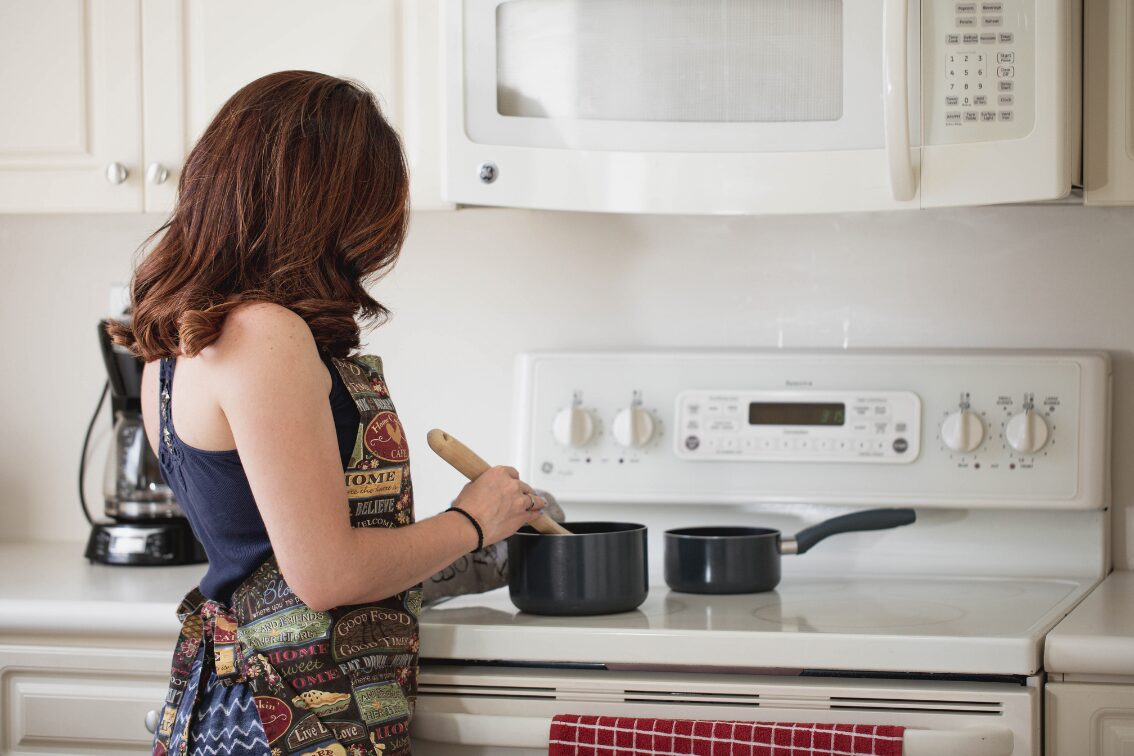
Cooking Shouldn’t Have to Hurt
Opening a jar. Cutting vegetables. Stirring a pot. Lifting a frying pan.
Disclosure: As an Amazon Associate, Arthritis Wares earns from qualifying purchases at no extra cost to you. We are not paid or sponsored by any manufacturer. Affiliate links help support our work.
These are simple tasks, but arthritis in your hands, fingers, wrists, or other joints can make them surprisingly difficult.
The problem is often the amount of gripping, twisting, pinching, cutting, lifting, and repetitive movement involved in everyday cooking.
The right kitchen tools can reduce some of that effort and make meal preparation more comfortable.
In this guide, I’ve rounded up 10 practical kitchen tools for arthritis hands, including electric openers, ergonomic utensils, rocker knives, adaptive cutting boards, food processors, and lightweight cookware.
You don’t need to buy everything. Start with the task that causes you the most frustration and choose a tool that specifically makes that task easier.
How We Chose These Tools
Each tool on this list earns its place by removing one specific kitchen movement — gripping, twisting, repetitive chopping — rather than just carrying an “arthritis-friendly” label. We compared handle size, required force, and weight across options in each category before narrowing to the picks shown here.
Quick Picks: Best Kitchen Tools for Arthritis
- Best for Opening Jars: Electric jar opener
- Best for Opening Cans: Electric can opener
- Best for Cutting: Rocker knife
- Best Everyday Utensils: Ergonomic cooking utensils
- Best for One-Handed Food Preparation: Adaptive cutting board
- Best for Chopping: Food processor or electric chopper
- Best for Hot Drinks: Electric kettle
- Best for Standing Comfort: Anti-fatigue kitchen mat
- Best for Seasoning: Electric salt and pepper grinder
- Best for Easier Lifting: Lightweight cookware
Comparison Table: Arthritis-Friendly Kitchen Tools at a Glance
| Tool | Best For | Main Benefit |
|---|---|---|
| Electric jar opener | Tight jar lids | Reduces gripping and twisting |
| Electric can opener | Canned foods | Eliminates manual squeezing and turning |
| Rocker knife | Chopping and slicing | Replaces repetitive cutting with a rocking motion |
| Ergonomic utensils | Stirring, serving and cooking | Larger handles can reduce gripping effort |
| Non-slip or adaptive cutting board | Food preparation | Keeps food and the board more stable |
| Food processor or chopper | Chopping ingredients | Reduces repetitive knife work |
| Electric kettle | Boiling water | Easier operation and controlled pouring |
| Anti-fatigue mat | Standing while cooking | Provides cushioning on hard floors |
| Electric salt and pepper grinder | Seasoning | Eliminates repetitive twisting |
| Lightweight cookware | Pots and pans | Easier to lift, carry and clean |
The 10 Best Kitchen Tools for Arthritis Hands
1. Electric Jar Openers
For many people with hand arthritis, opening a tightly sealed jar can be one of the most frustrating kitchen tasks.
A traditional jar requires you to grip the lid firmly while twisting. If your fingers, thumbs, or wrists are painful or weak, that combination can be difficult.
An electric jar opener does much of the work for you. Depending on the design, you position it over the jar, press a button, and allow the mechanism to loosen the lid.
Why it can help
An electric jar opener can reduce the need for:
- Strong gripping
- Pinching
- Wrist twisting
- Repetitive effort
This can make it particularly useful if opening jars is one of your regular kitchen frustrations.
What to look for
Look for a model that is easy to position, works with the jar sizes you commonly use, and has controls that are easy to operate.
Popular options:

If you prefer a permanent solution, an under-cabinet opener can stay mounted in your kitchen and be ready whenever you need it.
2. Electric Can Openers
Manual can openers can require both squeezing and repetitive wrist movement.
If those movements are painful, an electric can opener can be a much easier alternative.
Most electric models allow you to position the opener on the can and activate it with a button or lever. Some models also cut around the side of the lid rather than creating a sharp traditional edge.
Why it can help
An electric can opener can reduce:
- Squeezing
- Wrist rotation
- Repetitive hand movement
- The need to hold a manual opener tightly

For someone who opens cans regularly, this is one of those small appliances that can eliminate an annoying daily task.
3. Rocker Knives for Easier Cutting
A conventional kitchen knife requires repeated lifting and lowering of the blade. It also requires you to maintain a secure grip on the handle.
A rocker knife, sometimes called a mezzaluna or rocker knife, uses a curved blade and a rocking motion instead.
Instead of repeatedly lifting the knife, you rock the blade back and forth across the food.
Why it can help
The rocking motion may reduce the amount of repetitive wrist movement required for some cutting tasks.
It can also be useful for people who find a traditional knife handle uncomfortable to grip.
What to look for
Look for a comfortable handle and a blade size appropriate for the foods you commonly prepare. Some rocker knives are designed to be used with a bowl that helps keep food contained while cutting.
Popular options:

Safety reminder: Any kitchen knife requires care. Choose a design you can control comfortably and use it according to the manufacturer’s instructions.
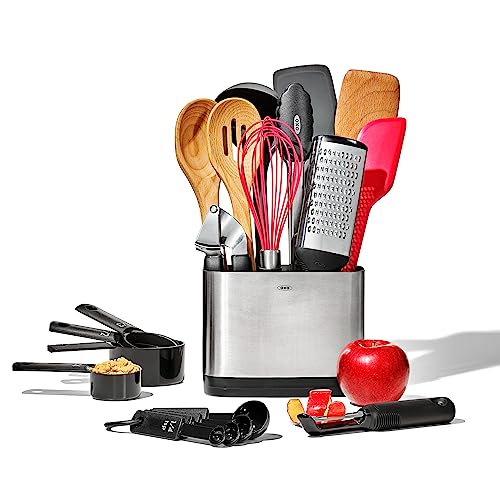
4. Ergonomic Cooking Utensils
Spatulas, spoons, ladles, whisks and other cooking utensils often have relatively narrow handles.
If you have painful or stiff fingers, gripping these handles repeatedly can become tiring.
Ergonomic cooking utensils generally use wider, cushioned, or non-slip handles that are easier to hold with a relaxed grip.
What to look for
Consider utensils with:
- Wide handles
- Cushioned surfaces
- Non-slip materials
- Lightweight construction
- Shapes that allow you to maintain a comfortable grip
You don’t necessarily need to replace every utensil in your kitchen. Start with the ones you use most often.
Popular options:
5. Non-Slip Cutting Boards
A cutting board that moves around while you’re trying to prepare food can make cooking harder and less secure.
A non-slip cutting board can help keep the work surface stable so you don’t have to use as much effort to hold everything in place.
Some adaptive cutting boards go a step further by including features such as food spikes, corner guards, or other mechanisms designed to help people who have difficulty stabilizing food with one hand.
Why it can help
A stable cutting surface can reduce the need for:
- Holding food tightly
- Stabilizing a moving board
- Using both hands for every step of preparation
Popular options:
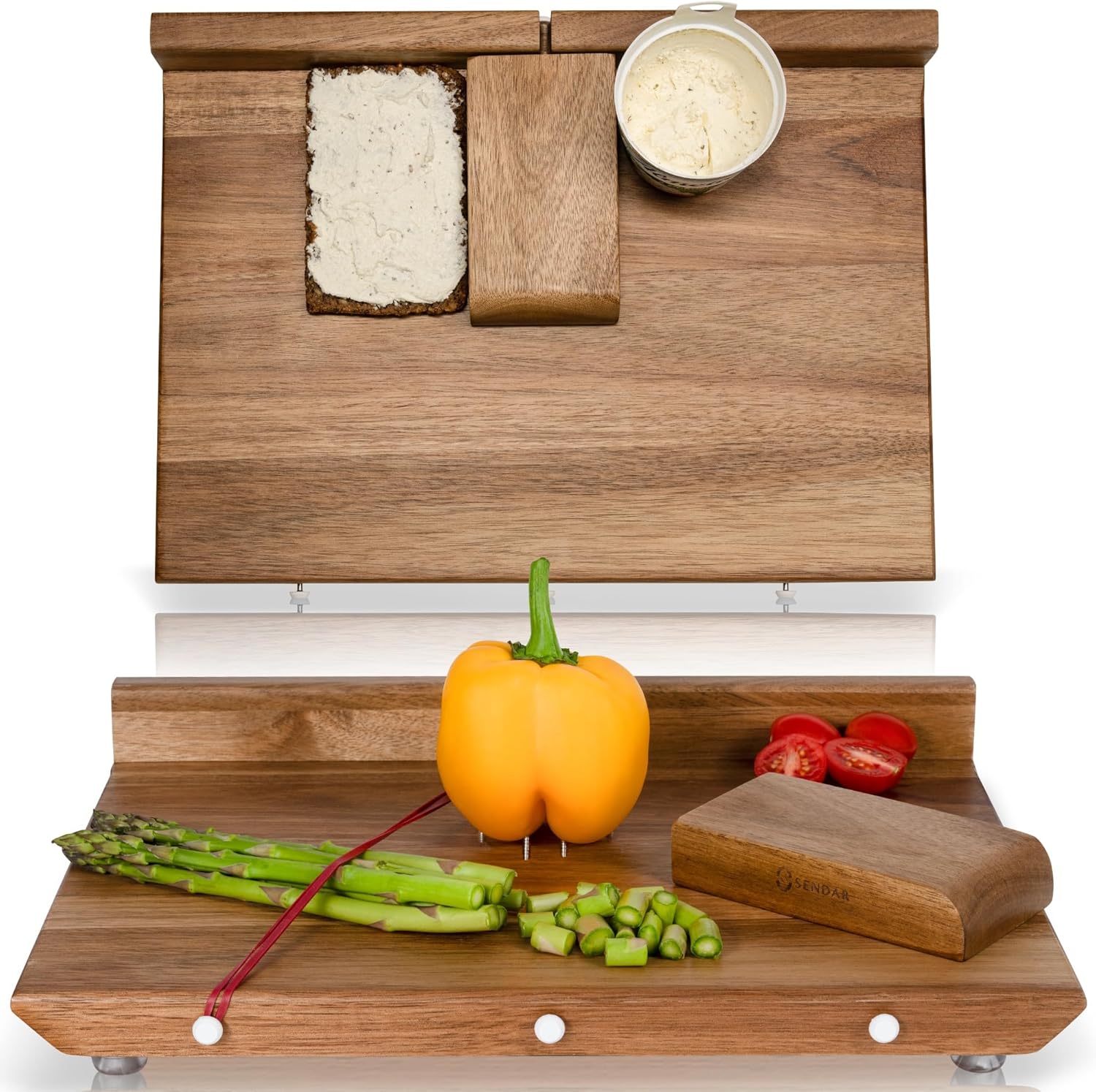
If you have significant difficulty using both hands during food preparation, an adaptive one-handed cutting board may be worth considering.
6. Food Processors and Electric Choppers
Chopping vegetables, onions, herbs and other ingredients can involve a lot of repetitive hand and wrist movement.
A food processor or electric chopper can take much of that work out of meal preparation.
Even a small countertop chopper can be useful if you regularly find knife work tiring or painful.
Why it can help
An electric food processor can reduce the need for:
- Repetitive chopping
- Sustained knife gripping
- Repeated wrist movements
- Long periods of food preparation
Look for a model with controls that are easy to press and a bowl that isn’t unnecessarily heavy.
Popular options:
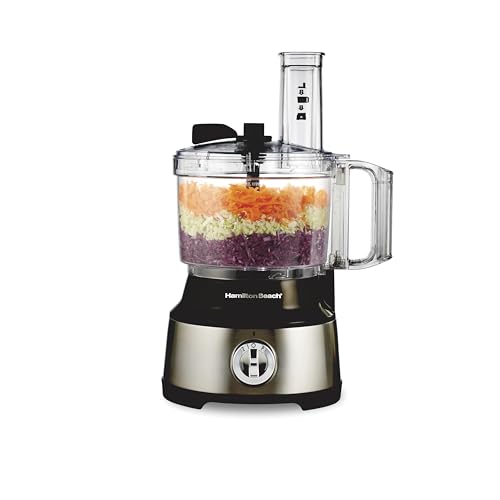
A compact food chopper can be a particularly useful choice if you cook for one or two people and don’t need a full-size food processor.
7. Electric Kettles
A full stovetop kettle can become surprisingly heavy once it is filled with water.
An electric kettle may be easier to manage because you can choose a model with a comfortable handle and a controlled pouring design.
Automatic shut-off is another useful feature.
What to look for
If hand or wrist strength is limited, consider:
- A lightweight kettle
- A comfortable, easy-grip handle
- A wide opening for filling
- An easy-to-use power switch
- Automatic shut-off
- A stable base
Popular options:
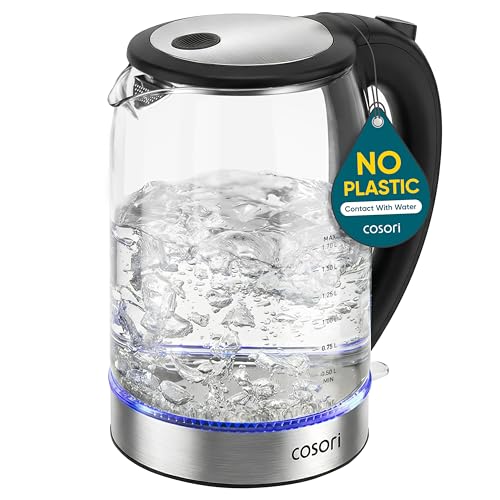
Tip: Don’t fill the kettle more than necessary. Less water means less weight when pouring.
8. Anti-Fatigue Kitchen Mats
Not every useful kitchen aid is a gadget.
If you spend a lot of time standing while cooking, an anti-fatigue kitchen mat can provide cushioning between your feet and a hard floor.
This may be particularly welcome if prolonged standing contributes to discomfort in your feet, knees, hips, or back.
What to look for
Choose a mat with:
- A non-slip backing
- Beveled edges
- Enough cushioning to feel comfortable
- A size appropriate for your main work area
- A surface that’s easy to clean
Be careful with very thick mats or mats with edges that could create a tripping hazard.
Popular options:

If standing is particularly tiring, another option is to organize your kitchen so you can sit for some preparation tasks.
9. Electric Salt and Pepper Grinders
Traditional pepper mills require repeated twisting.
For someone with arthritis in the fingers, thumbs, or wrists, that movement can become uncomfortable.
An electric salt or pepper grinder replaces the twisting motion with a button-operated mechanism.
Why it can help
This is a relatively small change, but it can eliminate a repetitive movement you perform every time you season a meal.
Look for controls that are easy to operate and a grinder that isn’t too heavy to hold.
Popular options:

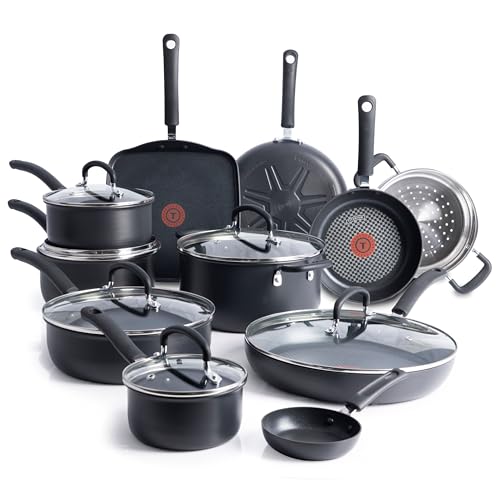
10. Lightweight Non-Stick Cookware
A heavy frying pan or pot can be difficult to lift, carry and maneuver when arthritis affects your hands, wrists, shoulders, or elbows.
Switching to lighter cookware can reduce the effort required to move pans around the kitchen.
Non-stick cookware can also reduce the amount of scrubbing required after cooking.
What to look for
Consider cookware with:
- A lighter overall weight
- Comfortable handles
- Good balance
- A surface that’s easy to clean
- Handles that don’t require a tight grip
Remember that even lightweight cookware becomes much heavier when filled. Avoid lifting a pan that feels difficult to control, particularly when it contains hot food.
Popular options:
Tips for Building an Arthritis-Friendly Kitchen
Beyond individual tools, a few simple changes to how your kitchen is organized and equipped can make a meaningful difference in your comfort and independence:
- Choose lightweight everything. Whether it’s cookware, mixing bowls, or storage containers, opt for lighter materials wherever possible.
- Reach for electric appliances. If there’s an electric version of a manual tool — can opener, grinder, chopper — it’s almost always worth it.
- Keep daily items within easy reach. Store your most-used tools at counter height so you’re not stretching or bending to retrieve them.
- Look for large, cushioned handles. This applies to everything from utensils to vegetable peelers. Larger grip diameter = less finger pressure.
- Avoid repetitive twisting whenever possible. Use lever-style can openers, electric grinders, and pump dispensers to protect your wrists.
- Use both hands and your body. Occupational therapists often recommend using your palms, forearms, or body weight to push/lift rather than relying solely on finger grip.
How to Choose the Right Kitchen Tool for Arthritis
The best kitchen tool isn’t necessarily the most expensive or the one with the most features. Start with the specific movement that’s causing you trouble.
- Gripping hurts: Look for wider, cushioned handles or powered tools.
- Twisting hurts: Consider an electric or mounted jar opener.
- Cutting is difficult: A rocker knife, adaptive cutting board, or food processor may reduce the effort required.
- Lifting is difficult: Look for lightweight cookware and smaller appliances.
- Standing is uncomfortable: An anti-fatigue mat or a way to sit while preparing food may help.
- Using both hands is difficult: Look for tools designed for one-handed use.
The goal is to find a tool that changes the task so your joints don’t have to do as much work.
Start With the Problem That Bothers You Most

You don’t need to buy a complete collection of arthritis-friendly kitchen gadgets. In fact, starting with too many products can make it harder to figure out which ones are actually helping.
Instead, choose one task that causes you the most frustration.
If opening jars is difficult, start with a jar opener. If chopping causes hand pain, consider a rocker knife or food processor. If your utensils are uncomfortable to hold, try larger, cushioned handles. If standing at the counter is tiring, consider an anti-fatigue mat or a place to sit.
Once you find a tool that genuinely makes a difference, you can gradually add other solutions as needed.
Frequently Asked Questions
What are the best kitchen tools for arthritis hands?
The most impactful arthritis kitchen tools include electric jar openers, rocker knives, ergonomic utensils with cushioned handles, electric can openers, and food processors. Each targets one of the most common pain points: gripping, twisting, and repetitive motion. The right combination depends on which tasks are most difficult for you personally.
Are electric kitchen gadgets worth it for arthritis?
Yes — and often significantly so. Electric appliances like can openers, jar openers, food processors, and salt grinders replace the most physically demanding hand motions with a button press. They’re especially valuable during flare-ups or in the mornings when joints are stiff. The upfront cost is usually modest compared to the daily relief they provide.
What utensils are easiest to grip with arthritis?
Utensils with wide, cushioned, non-slip handles are the easiest to use with arthritis. The OXO Good Grips line is the most consistently recommended by occupational therapists and people with arthritis alike. The key is a handle diameter that’s large enough to hold with a relaxed hand — not a tight grip.
Can kitchen tools actually help if I have severe arthritis?
Yes, though the impact varies by severity. For moderate arthritis, the right tools can make cooking largely pain-free. For more severe cases, adaptive tools — combined with occupational therapy advice — can help maintain kitchen independence longer than you might expect. It’s worth consulting an OT who specializes in adaptive living for personalized recommendations.
What’s the single most helpful tool to start with?
If you’re only going to start with one, an electric jar opener is often the most immediately impactful. Jar opening is one of the most universally difficult tasks for arthritic hands, and the relief of removing that frustration entirely is immediate.
Final Thoughts
You don’t need to completely redesign your kitchen to make cooking easier with arthritis.
The most useful kitchen tools are often the simplest ones. A good jar opener can eliminate painful twisting. An adaptive utensil can reduce the need for a tight grip. A lightweight pan can make lifting easier. A food processor can take over repetitive chopping.
Start with the task that gives you the most trouble, then find a tool that reduces the movement causing it.
Related Articles
- Adaptive Eating Utensils for Arthritic Hands
- How to Choose Arthritis Assistive Devices
- Best Hand Relief Tools for Arthritis
- Smart Home Gadgets for People Living With Arthritis
- Arthritis Supplies: A Complete Guide to Everyday Support & Independence
Medical Disclaimer: This article is for informational purposes only and does not constitute medical advice. Always consult your doctor, rheumatologist, or occupational therapist before making changes to how you manage your arthritis.
