
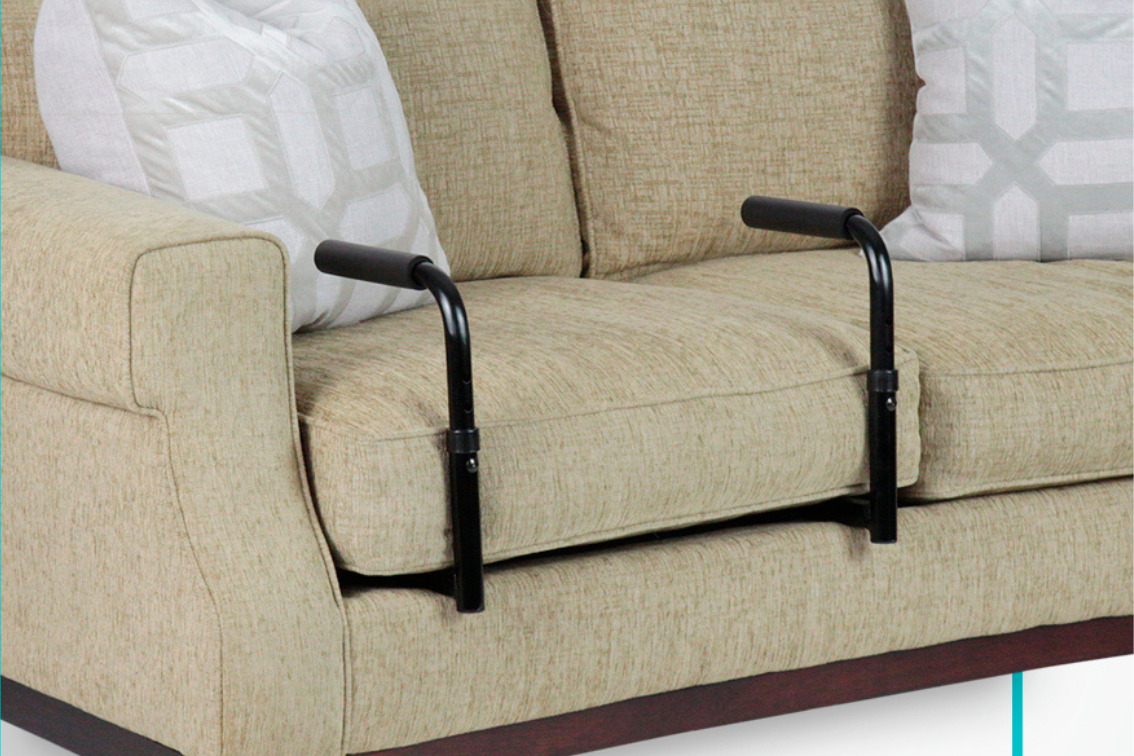
Living with arthritis can make ordinary tasks more difficult.
Opening a jar, getting dressed, preparing a meal, reaching for something on a high shelf, getting into the shower, or standing up from a chair can become frustrating when pain, stiffness, weakness, or reduced mobility gets in the way.
The right assistive device can make a difficult task easier by reducing the amount of gripping, twisting, bending, reaching, or repetitive movement required.
But choosing the right device isn’t always as simple as searching for a product labeled “arthritis-friendly.”
The best choice depends on what you’re having trouble doing, which movement causes the difficulty, how much assistance you need, and whether you can comfortably operate the device yourself.
This guide explains how to choose arthritis assistive devices based on your individual needs, what features to look for, and when professional guidance may be helpful.
For a broader overview of the different types of products available, see our Arthritis Supplies & Tools: Complete Guide to Daily Living Aids.
Quick Answer: How Do You Choose the Right Assistive Device?
Start with the task that is difficult, rather than the product.
Ask yourself:
What am I trying to do that has become difficult because of arthritis?
Then identify the movement causing the problem.
| If the difficult task is… | Look for… | The goal is to… |
|---|---|---|
| Opening jars or bottles | Jar opener | Reduce gripping and twisting |
| Opening cans | Electric can opener | Reduce or eliminate manual turning |
| Buttoning clothing | Button hook | Reduce pinching and fine finger movements |
| Putting on socks | Sock aid | Reduce bending and reaching |
| Reaching or bending | Reacher grabber | Avoid unnecessary bending or stretching |
| Preparing food | Adaptive kitchen tools | Reduce gripping, cutting, and lifting |
| Writing | Ergonomic pen | Make gripping more comfortable |
| Bathing | Bathing and safety aids | Reduce standing, reaching, and slipping risks |
| Standing from a chair | Stand-assist or transfer aid | Provide appropriate support |
| Walking | Cane, walker, or rollator | Provide the appropriate level of mobility support |
The goal isn’t to find the most expensive, most popular, or most highly rated device.
The goal is to find a tool that solves a specific problem and is easy for you to use consistently.
Step 1: Start With the Problem, Not the Product

One of the most useful changes you can make when shopping for assistive devices is to stop thinking first about what product you need.
Instead, think about what you’re trying to accomplish.
For example:
- “Opening jars hurts my thumb.”
- “I can’t bend far enough to put on my socks.”
- “Buttons are difficult because my fingers are stiff.”
- “Standing in the shower makes my knees hurt.”
- “I keep dropping things because my grip is weak.”
Those statements point toward very different solutions.
Arthritis affects people differently, and the same product won’t necessarily work equally well for everyone. A person with hand arthritis may need to reduce gripping and pinching, while someone with knee or hip arthritis may need to reduce bending, standing, or weight-bearing.
Starting with the problem also helps you avoid buying products simply because they are marketed as arthritis aids.
Identify the Movement Causing the Difficulty
Once you’ve identified the task, ask what part of the movement is causing the problem.
Is it:
- Gripping?
- Pinching?
- Twisting?
- Bending?
- Reaching?
- Standing?
- Walking?
- Maintaining balance?
- Repetitive movement?
- Holding something for an extended period?
This distinction is important.
If twisting a jar lid hurts, a product that gives you a larger handle may help. But if gripping the lid itself is the problem, you may need a device that reduces or eliminates most of the gripping.
The most useful assistive device is one that changes the difficult part of the task rather than simply asking your joints to work harder.
Think About Your Difficult Days
Your needs may also change throughout the day or from one day to another.
You might be able to open a jar on a relatively good day but struggle when your hands are particularly stiff. A tool that works under ideal conditions may not be useful when your symptoms are worse.
When comparing an assistive device, ask:
“Could I still use this on one of my difficult arthritis days?”
That can be more useful than asking whether you can operate it when you’re feeling your best.
Step 2: Match the Problem to the Right Type of Device

Once you know which task is difficult and what movement is causing the problem, look for the type of assistive device designed to address that particular challenge.
For Grip and Hand Problems
If gripping, twisting, pinching, or fine finger movements are difficult, consider tools such as:
- Jar openers
- Electric can openers
- Key turners
- Ergonomic pens
- Large-handle utensils
- Easy-grip grooming tools
Look for designs that reduce the amount of force required.
A product that is technically designed for people with arthritis but still requires you to squeeze a small trigger or grip a thin handle tightly may not be a good solution.
For additional ideas, see our Best Hand Relief Tools for Arthritis and Best Compression Gloves for Arthritis guides.
For Kitchen Tasks
Kitchen activities often combine several difficult movements: gripping, cutting, twisting, stirring, lifting, and reaching.
Depending on the task, useful options may include:
- Electric can openers
- Jar openers
- Adaptive utensils
- Easy-grip peelers
- Adaptive knives
- Lightweight cookware
- Non-slip cutting boards
The important question isn’t simply whether a product is labeled “adaptive.”
Does this design reduce the movement that is difficult for me?
Our Kitchen Tools for Arthritis guide covers these options in greater detail.
For Getting Dressed
Dressing aids can replace difficult pinching, bending, and fine finger movements with simpler movements.
Depending on your needs, options include:
- Button hooks
- Zipper pulls
- Sock aids
- Long-handled shoe horns
- Elastic shoelaces
Adaptive clothing can also eliminate some difficult fasteners altogether.
See our Adaptive Clothing and Dressing Aids for Arthritis guide for more options.
For Bending and Reaching
If bending down or reaching overhead is difficult, a reacher grabber may allow you to retrieve objects without repeatedly changing your position.
Other useful options can include:
- Long-handled shoe horns
- Sock aids
- Long-handled bathing tools
When choosing a reacher, pay particular attention to the trigger. A long reacher isn’t necessarily helpful if squeezing the trigger is difficult for your hands.
For Bathroom Tasks
The bathroom requires additional consideration because arthritis can affect both movement and stability.
Depending on the situation, assistive equipment may include:
- Shower chairs
- Grab bars
- Handheld showerheads
- Long-handled bathing tools
- Other bathroom aids
Safety should take priority over convenience. Equipment needs to be appropriate for the person using it, installed correctly, and used as intended.
See our Best Bathroom Safety Aids for Arthritis guide for more information.
For Standing and Walking
If arthritis affects standing, walking, balance, or transfers, the appropriate equipment may include:
- Canes
- Walkers
- Rollators
- Stand-assist devices
- Transfer aids
These products require more careful selection than a simple jar opener.
Fit, height, stability, and the amount of support provided all matter.
If you’re unsure which mobility device is appropriate, consider asking a physical therapist or other qualified healthcare professional rather than choosing based solely on online reviews.
See our Mobility Aids for Arthritis guide for more information.
Step 3: Make Sure You Can Operate It

An assistive device isn’t helpful if operating it is almost as difficult as performing the original task.
This is one of the easiest things to overlook when shopping online.
Before buying, consider how the product actually works.
Does it require you to:
- Squeeze a trigger?
- Pinch a small control?
- Twist a handle?
- Use both hands?
- Apply significant downward pressure?
- Hold it for a long time?
- Set up several components?
Think about how the device will feel in your hands, rather than just how it looks in a product photograph.
Pay Attention to Grip and Handle Design
For people with hand arthritis, the handle may be one of the most important parts of a product.
A highly rated product can still be uncomfortable if its handle doesn’t suit your hands.
Handle Size
Very thin handles can require more finger force to hold securely. A wider handle may be easier for some people with painful or stiff fingers.
Cushioning
A cushioned handle may be more comfortable during extended use, particularly when a tool has to be held for several minutes at a time.
Non-Slip Surfaces
A secure grip can reduce the amount of force needed to keep hold of the tool.
Handle Shape
Some ergonomic designs distribute pressure across a larger area of the hand rather than concentrating it on individual fingers.
Weight
Weight matters too. A tool that feels manageable for a few seconds may become tiring if you have to hold it for several minutes.
Don’t assume that “ergonomic” automatically means comfortable for you.
Whenever possible, check the actual dimensions, weight, handle diameter, and shape before buying.
Consider Manual vs. Electric Options
For some tasks, choosing between a manual and powered device can make a significant difference.
A manual option may make sense when:
- The task requires relatively little force
- You want something portable
- You prefer a simple design
- You don’t want batteries or charging
- Keeping the cost low is important
An electric option may make sense when:
- Grip strength is significantly reduced
- Twisting causes difficulty
- Repetitive movement is difficult
- You perform the task frequently
- You want the device to do most of the work
Consider a jar opener as an example.
Someone with mild grip difficulty may find a manual opener perfectly adequate. Someone with significant hand weakness may prefer an electric model that requires less manual effort.
Neither option is automatically better. The right choice depends on how much effort the task requires from you.
Step 4: Check Fit, Size, Weight and Your Environment

Some assistive devices need to fit your body, your furniture, or your environment.
This is particularly important with:
- Canes
- Walkers
- Rollators
- Shower chairs
- Reachers
- Dressing aids
- Braces and supports
- Bed assist devices
Before purchasing, check the manufacturer’s dimensions and sizing information.
For adjustable equipment, look at the available height range and adjustment points. For seating and mobility equipment, check weight capacity as well.
A product can be well designed and still be unsuitable if it doesn’t fit your body or your environment.
Don’t Forget Your Home
The physical environment matters too.
A mobility aid that works well in a large home may be awkward in narrow hallways. A shower chair needs to fit comfortably in the shower. A reacher needs enough room to operate without bumping into surrounding objects.
Measure before you buy when space is important.
Think About Weight and Portability
Consider where you’ll use the device.
Will you need to:
- Carry it between rooms?
- Take it when traveling?
- Store it in a drawer?
- Keep it beside your bed?
- Move it around the kitchen?
- Hold it for several minutes?
A lightweight tool may be easier to handle, particularly if you have reduced strength or fatigue.
However, lighter isn’t always better.
For equipment intended to support your body, such as a shower chair or mobility aid, stability and appropriate weight capacity are more important than simply choosing the lightest option.
Step 5: Consider Quality, Durability and Cost
Price alone doesn’t tell you whether an assistive device is a good value.
A very inexpensive tool can be a useful purchase if it solves a daily problem and lasts. Conversely, a product that breaks quickly or is uncomfortable to use may end up being money wasted.
Consider:
- Materials
- Construction
- Moving parts
- Handle durability
- Ease of cleaning
- Warranty
- Availability of replacement parts
For a simple tool you’ll use occasionally, you may not need to spend much.
For something you’ll use several times every day, comfort and durability deserve more attention.
The most expensive option isn’t automatically the best value. Consider how often you’ll use the device and how much difficulty it solves.
Ask yourself:
Will this make a task I regularly struggle with noticeably easier?
If the answer is yes, paying somewhat more for better comfort, durability, or ease of operation may be worthwhile.
If the product solves only a minor problem, a simpler and less expensive option may make more sense.
Step 6: Read Reviews for the Information You Actually Need
Customer reviews can be useful, but don’t rely solely on the overall star rating.
Instead, look for reviews that answer specific questions about the product.
For example:
- Is it easy to operate?
- Does it require much hand strength?
- Is the handle comfortable?
- Is it heavier than expected?
- Does it feel stable?
- Is the product difficult to assemble?
- Does it hold up with regular use?
- Is the actual size different from what buyers expected?
Look for Reviews From People With Similar Needs
A product that works well for someone with mild stiffness may not be suitable for someone with significant grip weakness.
When reading reviews, pay particular attention to comments from people describing limitations similar to yours.
Also remember that individual reviews are experiences, not guarantees. A product that works well for one person may not work equally well for another.
Step 7: Check the Return Policy Before You Buy
Even after researching a product carefully, you may discover that it simply doesn’t work well for your hands, body, or environment.
That’s why return policies matter.
Before purchasing, check:
- The return period
- Return shipping requirements
- Restocking fees, if applicable
- Warranty information
- Seller policies
This is particularly important for products where comfort and fit are difficult to judge from photographs.
Common Mistakes to Avoid
Buying the Product Before Identifying the Problem
A product may look useful, but if it doesn’t address the movement causing your difficulty, it may end up unused.
Start with the task, then identify the movement that makes it difficult.
Choosing a Product That Still Requires Too Much Strength
A product can be marketed as an arthritis aid and still require significant squeezing, twisting, pinching, or gripping.
Consider how much effort you’ll actually need to use it.
Ignoring Size and Fit
Check dimensions and sizing information carefully, particularly for mobility equipment, wearable products, and devices used around furniture or in the bathroom.
Choosing Based Only on Star Ratings
A high rating doesn’t necessarily mean a product is right for your particular needs.
Look for reviews that discuss the things that matter to you, such as grip, weight, comfort, ease of use, stability, and durability.
Choosing a Complicated Device
More features aren’t necessarily better.
If something is difficult to set up, operate, or maintain, you may be less likely to use it consistently. For many everyday tasks, a simple device that solves the specific problem may be more useful than a complicated product with features you don’t need.
When Should You Ask a Professional for Help?

Many simple daily living aids are straightforward to choose and use.
However, professional guidance can be especially valuable when you’re selecting equipment related to mobility, balance, transfers, or safety.
An occupational therapist can help identify ways to modify everyday activities and recommend equipment suited to your abilities and environment.
A physical therapist may be able to provide guidance related to movement and mobility.
Consider professional guidance if you’re:
- Having new or worsening difficulty walking
- Experiencing balance problems or falls
- Unsure which cane, walker, or rollator is appropriate
- Having difficulty getting in or out of a chair or bed
- Experiencing pain when using an assistive device
- Unsure how to use a mobility or safety device correctly
The right equipment can be helpful, but the right fit and proper use are just as important.
Where Can You Buy Arthritis Assistive Devices?
Simple arthritis aids are available from online retailers, pharmacies, medical supply companies, and specialty mobility stores. Online shopping can make it easier to compare dimensions, features, prices, and customer feedback.
For mobility, transfer, or safety equipment, you may benefit from seeing the equipment in person or getting professional guidance before purchasing.
When you’re ready to compare specific products, see our Best Arthritis Tools for Daily Living.
Simple Arthritis Assistive Device Buying Checklist
Before purchasing a device, ask yourself:
- What specific problem does it solve?
- Does it reduce the movement causing my difficulty?
- Could I use it on a difficult arthritis day?
- Does it require significant gripping, pinching, twisting, or squeezing?
- Is the handle comfortable for my hands?
- Is the weight manageable?
- Is the size appropriate for me and my environment?
- Is it adjustable if adjustment is necessary?
- Have I read reviews that discuss actual ease of use?
- Is it durable enough for how often I’ll use it?
- Can I return it if it doesn’t work for me?
- Would professional guidance be helpful?
If you can answer these questions before buying, you’re more likely to choose a device that fits your particular needs and daily routine.
Frequently Asked Questions
How do I know which assistive device I need for arthritis?
Start with the specific task that’s becoming difficult rather than searching for a general arthritis product. Identify the movement causing the problem — such as gripping, twisting, bending, reaching, or standing — and then look for a device that reduces that movement.
Are electric assistive devices better than manual ones?
Not necessarily. Electric devices may be useful when grip strength is significantly reduced or twisting and repetitive movements are difficult. Manual devices may be preferable when the task requires little force and portability, simplicity, or lower cost is important.
What should I look for in an arthritis assistive device?
Look for a device that addresses the specific movement causing your difficulty without requiring excessive gripping, pinching, twisting, squeezing, or bending. Also consider handle design, weight, dimensions, fit, ease of operation, durability, and whether you could use it comfortably when your symptoms are worse.
How do I choose an assistive device for difficult arthritis days?
Consider whether you could comfortably operate the device when your symptoms are worse, rather than only when you’re having a good day. Devices that require less force, squeezing, twisting, or repetitive movement may be easier to operate when hand function is reduced.
When should I ask a professional for help choosing an assistive device?
Professional guidance can be especially useful when choosing equipment related to mobility, balance, transfers, or safety. An occupational therapist or physical therapist may be able to help determine which type of equipment is appropriate and how it should be used.
Final Thoughts: Choose the Tool That Solves Your Problem
The best arthritis assistive device isn’t necessarily the most popular product or the most expensive option.
It’s the one that makes a specific task easier for you.
Start by identifying the activity that’s causing the most difficulty. Then consider the movement that’s creating the problem.
Is it gripping? Twisting? Pinching? Bending? Reaching? Standing?
Once you know that, look for a device that reduces or eliminates that movement.
Pay attention to ease of use, handle design, weight, fit, durability, and return policies. For mobility and safety equipment, don’t hesitate to seek professional guidance when you need it.
You don’t have to change everything at once.
Sometimes one simple tool that makes one frustrating daily task easier can make a meaningful difference in your daily routine.
Medical Disclaimer: This article is for informational purposes only and does not constitute medical advice. Always consult your doctor, rheumatologist, or occupational therapist before making changes to how you manage your arthritis.
