

Disclosure: As an Amazon Associate, Arthritis Wares earns from qualifying purchases at no extra cost to you. We are not paid or sponsored by any manufacturer. Affiliate links help support our work.
Neck pain associated with arthritis can make turning your head, working at a computer, sleeping, or simply getting through the day more uncomfortable.
The right device depends on what you are trying to address. A heated wrap may be useful when your neck feels stiff or tight. A cold pack may be more comfortable when an area feels sore or irritated. A cervical pillow may help if your discomfort is closely connected to sleeping. Other options, such as massage, TENS, or traction, work differently and are not appropriate for everyone.
Rather than naming one product as the “best” for everyone, this guide compares several types of neck pain relief devices and explains what each one is designed to do, what to consider before buying, and when a different approach may make more sense.
If you are trying to determine why your neck hurts when you wake up, start with our guide Why Does My Neck Hurt When I Wake Up? before buying a device.
Quick Answer: Which Neck Pain Relief Device Should You Consider?
The most useful device depends on the type of discomfort you are trying to manage.
| If you’re looking for… | Consider… |
|---|---|
| Warmth for stiffness or tightness | Heated neck or shoulder wrap |
| Cooling for a sore area | Reusable cold or ice wrap |
| Relief from muscle tension | Neck and shoulder massager |
| Better support while sleeping | Cervical pillow |
| Temporary neck support | Soft cervical support |
| An electrical pain-relief option | TENS unit |
| A stretching or traction approach | Neck traction device |
The simplest option is often the best place to start. Choose a device based on the problem you’re trying to address rather than looking for one product that does everything. If your neck pain is mainly related to sleeping, for example, a pillow may make more sense than a massager or traction device.
1. Heated Neck Wraps: Best for Stiffness and Muscle Tightness
Heat is one of the simplest options to try when your neck feels stiff or your surrounding muscles feel tight.
A warm shower, heating pad, or neck wrap may feel soothing. Heat can relax tight muscles and may make stiff joints feel more comfortable. Cleveland Clinic lists heat as one of the home-care options for common neck pain and notes that heating pads should be used at a comfortable setting rather than excessive heat.
What to Look For in a Heated Neck Wrap
For someone with arthritis, convenience matters.
Look for:
- Easy-to-use controls
- Multiple heat settings
- Automatic shutoff on electric models
- A shape that stays around the neck and shoulders
- A washable or removable cover
- Enough coverage for the upper shoulders
- A design that does not require frequent gripping or repositioning
Microwavable Heated Neck Wrap
A microwavable wrap is an inexpensive alternative to an electric heating pad.
Pros:
- No cord
- No batteries
- Easy to store
- Can cover the neck and shoulders
- Useful when you want warmth without complicated controls
Cons:
- Must be reheated
- Temperature can vary
- It is important not to overheat the wrap

Safety: Do not use excessive heat or fall asleep with a heating device in place. Stop if the heat becomes uncomfortable.
For a broader discussion of heat and cold, see Heat vs. Cold Therapy for Arthritis: Which One Works Best?.
2. Cold and Ice Neck Wraps: Best for Cooling Sore Areas
Heat is not the only option.
Some people prefer cold when a neck or shoulder area feels particularly sore or irritated. Cold therapy can temporarily numb discomfort and reduce swelling associated with some types of pain. Cleveland Clinic recommends protecting the skin with a cloth or towel rather than placing frozen material directly against the skin.
A neck-specific cold wrap can be more convenient than holding a standard ice pack against the area.
What to Look For
A useful cold neck wrap should:
- Cover the neck or upper shoulders comfortably
- Stay in position without constant hand pressure
- Be reusable
- Have a protective cover between the cold pack and skin
- Be flexible enough to conform to the neck
Pros:
- Reusable
- Does not require electricity
- Relatively simple to use
- Can be kept ready in the freezer
Cons:
- Some people find cold uncomfortable
- It requires freezer space
- Excessive cold can injure skin

You don’t necessarily need a specialized arthritis product. A reusable gel pack or appropriately designed neck wrap can accomplish the basic purpose.
Tip: If you have reduced sensation in the area, ask a healthcare professional before using cold therapy because you may not notice excessive cold as easily.
3. Neck and Shoulder Massagers: Best for Muscle Tension
A neck and shoulder massager is designed to work on the muscles around the neck and shoulders rather than directly treating arthritis in the cervical joints.
This distinction matters.
If your neck discomfort includes a significant muscle-tension component, a massager may feel soothing. Cleveland Clinic also lists massage among approaches that may help loosen tightened muscles contributing to neck discomfort.
Recommended: Nekteck Shiatsu Neck Massager with Heat
The Nekteck-style wraparound design combines kneading massage with optional heat and is designed to cover the neck and shoulders.
Best for: People who prefer mechanical massage for tight neck and shoulder muscles.
Pros:
- Covers the neck and shoulders
- Combines massage and heat
- Simple controls
- Can also be used on other areas of the body
Cons:
- The pressure may feel too strong for some people
- Requires access to power
- A massager may not be appropriate for every neck condition

Important: A massager should not be used to forcefully manipulate the neck. Stop if it increases your pain, causes dizziness, numbness, tingling, or other unusual symptoms.
4. Cervical Pillows: Best for Sleep-Related Neck Discomfort
If your neck pain is most noticeable when you wake up, a device that you use during the day may not address the underlying problem.
Your pillow can influence how your head and neck are positioned for several hours.
Rather than duplicating our pillow reviews here, we’ve covered this category separately.
Best for Sleep: Cervical Pillow
A cervical pillow is designed to provide more structured support for the head and neck than a conventional pillow.
However, there is no universal pillow shape or height that works for everyone.
Your sleeping position, shoulder width, mattress, preferred firmness, and personal comfort all matter.
See our complete guide:
Best Cervical Pillows for Neck Pain and Arthritis
You can also read Why Does My Neck Hurt When I Wake Up? for help troubleshooting pillow height, sleep position, and other possible causes.
5. Soft Cervical Supports: Best for Temporary Support
A soft cervical support is different from a rigid medical neck brace.
It provides light support around the neck and may be useful in certain situations, but it should not be viewed as a treatment for arthritis itself.
Sammons Preston Universal Contour Cervical Brace
This type of soft cervical support is designed to provide gentle support while allowing some movement.
Best for: People who have been advised that temporary cervical support may be appropriate.
Pros:
- Lightweight
- Relatively simple to put on
- Provides additional support
- Can be useful for short periods in appropriate situations
Cons:
- May feel restrictive
- Not appropriate for prolonged routine use without guidance
- Does not address the underlying cause of neck pain
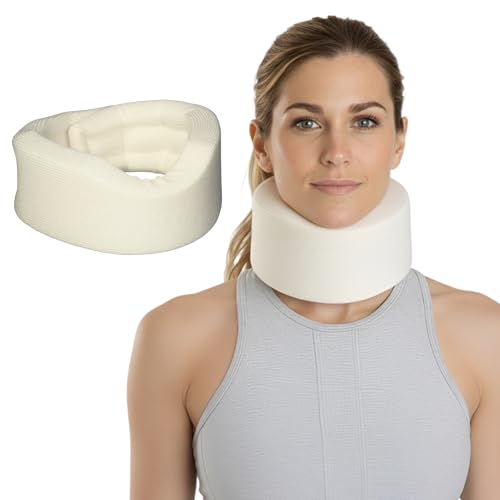
If you are considering a neck brace because of significant pain, injury, weakness, numbness, or a diagnosed cervical spine condition, ask your healthcare professional whether one is appropriate.
6. TENS Units: A Specialized Electrical Pain-Relief Option
TENS stands for transcutaneous electrical nerve stimulation.
A TENS unit sends low-level electrical impulses through electrodes placed on the skin. Healthcare professionals use TENS for several types of pain, including osteoarthritis, although the amount of relief varies from person to person. Cleveland Clinic recommends discussing TENS with a healthcare provider before using it.
Why Consider TENS?
TENS may appeal to people who want a portable, non-drug approach to pain management.
Potential advantages:
- Small and portable
- Noninvasive
- Adjustable intensity
- Does not require massage or pressure
- Can be used for some types of chronic pain
Important limitation for neck pain: TENS should not be treated as a simple neck-pain gadget where you place electrodes wherever the pain occurs.
Cleveland Clinic specifically advises against placing TENS electrodes on or near the front or side of the neck, head, and several other areas. It also recommends discussing appropriate placement with a healthcare professional.
For that reason, I would consider TENS a specialized pain-management option, rather than one of the first devices to try for ordinary morning neck stiffness.

Who Should Be Especially Cautious?
Talk with a healthcare professional before using TENS, particularly if you have an implanted electrical device, heart condition, epilepsy, pregnancy, or other relevant medical conditions.
If you choose a TENS unit, look for:
- Simple controls
- Adjustable intensity
- Easy-to-read display
- Large buttons
- Replacement electrode pads that are easy to find
- Clear instructions about electrode placement
For Arthritis Wares readers, ease of operation is important. A device with tiny buttons and complicated menus may not be a good choice for someone whose hands are also affected by arthritis.
7. Neck Traction Devices: A Specialized Option
Traction devices are among the more specialized products in this guide.
They are designed to apply a gentle stretching force to the cervical area. Some people seek them out because they want a stretching or decompression approach rather than heat or massage.
However, traction should not be treated as a universal remedy for arthritis-related neck pain.
The cause of neck pain matters. Neck pain can result from osteoarthritis, muscle strain, spinal stenosis, disc problems, nerve irritation, injury, and other conditions.
Featured Option: RESTCLOUD Neck & Shoulder Relaxer
The RESTCLOUD device is a simple, non-powered design intended to position the neck over a curved support.
Best for: People interested in trying a simple neck-stretching device after determining that this type of approach is appropriate for them.
Pros:
- No electricity required
- Compact
- Simple design
- Easy to store
- Less expensive than powered traction equipment
Cons:
- May feel uncomfortable if the stretch is too strong
- Not appropriate for every neck condition
- May require an adjustment period
- Should not be used to push through pain

Important: If you have significant neck pain, an injury, neurological symptoms, a diagnosed cervical spine condition, or uncertainty about whether traction is appropriate, talk with a healthcare professional before using a traction device.
Which Neck Pain Device Is Best for Your Situation?
Instead of asking which device is “best” overall, start with the problem you are trying to address.
| Your situation | Device worth considering first |
|---|---|
| Neck feels stiff when you wake up | Check pillow and sleeping position first; consider gentle heat |
| Muscles feel tight after sitting at a computer | Heat or a neck/shoulder massager |
| Area feels sore or irritated | Cold wrap may be more comfortable |
| Neck discomfort seems connected to sleeping | Cervical pillow |
| You want temporary support | Soft cervical support, if appropriate |
| You want to try electrical pain relief | TENS, with appropriate professional guidance |
| You are specifically interested in traction | Discuss whether traction is appropriate before using a device |
This approach is more useful than choosing a product based solely on its marketing claims.
What Makes a Neck Relief Device Arthritis-Friendly?
A device can be useful in theory but frustrating to use if arthritis makes the controls, straps, or positioning difficult.
When comparing products, look for:
- Large controls that are easy to see and press
- Simple operation without complicated menus
- Lightweight construction
- Easy-to-adjust straps
- Minimal gripping or twisting
- Easy cleaning
- Automatic shutoff for products that produce heat
- Clear instructions
- Easy positioning without requiring excessive reaching
For someone with arthritis in the hands, a product that requires strong gripping or fiddling with tiny controls may create a new problem while trying to solve another.
How to Choose a Neck Pain Relief Device
Start With the Symptom
Don’t begin with the product.
Begin with the problem.
Ask yourself:
- Is my neck mainly stiff?
- Are the surrounding muscles tight?
- Is the discomfort worse after sleeping?
- Does sitting at a computer make it worse?
- Would I prefer heat or cold?
- Am I looking for support?
- Am I specifically interested in electrical stimulation?
- Has a healthcare professional recommended traction?
Your answers can narrow the choices considerably.
Consider How Often You’ll Use It
A complicated device may not be worth buying if you will only use it occasionally.
For regular use, look for something that is:
- Easy to set up
- Easy to clean
- Easy to store
- Quick to use
- Comfortable enough that you actually want to use it
Think About Your Hands
This is particularly important if you have hand arthritis.
Before buying, look at:
- Button size
- Strap closures
- Zippers
- Battery compartments
- Plug connections
- Adjustment mechanisms
A simple wrap may be easier to manage than a device with several small controls.
Common Buying Mistakes
Buying the Most Complicated Device
More settings do not automatically mean better results.
If a simple heat wrap provides the comfort you need, you may not need a multi-function device.
Assuming “Deep Tissue” Is Better
A stronger massage isn’t necessarily better for a painful or sensitive neck.
Start with a comfortable intensity rather than assuming more pressure will produce better results.
Buying Traction Without Considering the Cause
Traction is a specialized approach. Neck pain has many possible causes, and a device designed to stretch the cervical area isn’t appropriate for everyone.
Ignoring the Rest of Your Day
A device may provide temporary comfort without addressing what is repeatedly aggravating your neck.
If computer work, phone use, reading, driving, or prolonged sitting contributes to your discomfort, changing the activity or workstation may be just as important as buying a device.
Buying a Pillow Without Checking Its Height
A cervical pillow isn’t automatically better simply because it is marketed for neck pain.
Your sleeping position and body size matter.
For help evaluating your current sleep setup, see Why Does My Neck Hurt When I Wake Up?.
Heat vs. Cold for Neck Discomfort
Heat and cold serve different purposes, and personal response matters.
Heat may be worth trying when:
- Your neck feels stiff
- Your muscles feel tight
- You prefer warmth
- Your discomfort is associated with chronic stiffness
Cold may be worth trying when:
- The area feels particularly sore
- You prefer cooling
- You are dealing with a recent aggravation or injury and have been advised that cold is appropriate
Cleveland Clinic notes that both heat and cold can be useful depending on the situation, while also emphasizing skin protection and reasonable treatment times.
For a more detailed comparison, see Heat vs. Cold Therapy for Arthritis: Which One Works Best?.
When a Neck Pain Device May Not Be the Right Answer
A product guide should not be a substitute for evaluating unusual or worsening symptoms.
Seek medical advice if you have:
- Severe or worsening neck pain
- Pain following an injury
- Numbness or tingling
- Weakness in an arm or hand
- Pain that travels into an arm
- Significant or worsening loss of neck movement
- Symptoms that persist despite reasonable self-care
- Other unusual symptoms occurring with the neck pain
Neck pain can have many causes, including muscle strain, osteoarthritis, spinal stenosis, disc problems, nerve irritation, and injury.
Frequently Asked Questions
What is the best device for arthritis-related neck pain?
There isn’t one best device for everyone.
A heated neck wrap may make sense for stiffness, a cold wrap for cooling a sore area, a massager for muscle tension, and a cervical pillow when sleep positioning appears to be contributing.
Traction and TENS are more specialized options and deserve additional caution.
What is the best device for morning neck stiffness?
Before buying anything, check your pillow height and sleeping position.
If your neck simply feels stiff when you wake up, gentle movement and comfortable warmth may be useful. A heated neck wrap is one option, but persistent morning pain should not automatically be blamed on a pillow or arthritis.
See Why Does My Neck Hurt When I Wake Up? for a more detailed troubleshooting guide.
Do neck massagers help arthritis?
A neck massager does not treat the underlying arthritis, but some people find massage soothing when muscle tension contributes to their discomfort.
Use a comfortable setting and avoid aggressive pressure or forceful manipulation of the neck.
Are heated neck wraps good for arthritis?
They can be a convenient way to apply warmth when stiffness or muscle tightness is the main problem.
Heat does not work equally well for everyone, so use a comfortable temperature and follow the product’s safety instructions.
Is cold therapy useful for neck arthritis?
Cold therapy may provide temporary relief when an area feels sore or irritated. Some people with chronic arthritis also find cold helpful, although others prefer heat.
Protect your skin and avoid excessive cold exposure.
Are TENS units good for neck arthritis?
TENS can be used for pain management for several conditions, including osteoarthritis, but it is not simply a matter of placing electrodes directly over the painful part of your neck.
Cleveland Clinic recommends discussing TENS with a healthcare professional and specifically advises against placing electrodes on or near the front or side of the neck or head.
Are neck traction devices good for arthritis?
Traction may be appropriate for some people, but it is not a universal treatment for neck arthritis.
Because neck pain can have many different causes, ask a healthcare professional whether traction is appropriate for your particular situation before using a home traction device.
Should I use a neck brace for arthritis?
A soft cervical support may provide temporary support in some situations, but it should not be treated as a long-term solution or substitute for evaluating the cause of persistent neck pain.
If you are considering a brace because of significant pain, injury, numbness, weakness, or a diagnosed cervical condition, ask a healthcare professional first.
Can a cervical pillow help neck pain?
It can help some people when sleep positioning contributes to their discomfort.
The important factors include pillow height, sleeping position, firmness, and personal comfort. A cervical pillow is not automatically better simply because it has a contoured shape.
See our Best Cervical Pillows for Neck Pain and Arthritis guide for specific options.
Final Thoughts
The best neck pain relief device depends less on the marketing label and more on what you are actually trying to address.
For simple stiffness, a heated wrap may be enough. If you prefer cooling, a reusable cold wrap is another inexpensive option. A neck and shoulder massager may appeal to people dealing with muscle tension, while a cervical pillow may make more sense when sleep positioning appears to be contributing.
TENS and traction are more specialized choices and deserve additional caution rather than being treated as universal arthritis remedies.
Start with the simplest option that matches your symptoms. Consider ease of use, particularly if arthritis affects your hands, and don’t assume that a more expensive or complicated device will necessarily provide better results.
Most importantly, if neck pain is persistent, worsening, follows an injury, or occurs with numbness, tingling, weakness, or significant loss of movement, look beyond products and seek appropriate medical evaluation.
Related Reading
- Why Does My Neck Hurt When I Wake Up?
- Best Cervical Pillows for Neck Pain and Arthritis
- Best Sleeping Positions for Arthritis Pain
- Sleep With Arthritis: A Complete Guide to Better Rest and Less Night Pain
- How to Reduce Morning Joint Stiffness from Arthritis
- Heat vs. Cold Therapy for Arthritis: Which One Works Best?
Medical Disclaimer: This article is for informational purposes only and does not constitute medical advice. Always consult your doctor, rheumatologist, or occupational therapist before making changes to how you manage your arthritis.
