
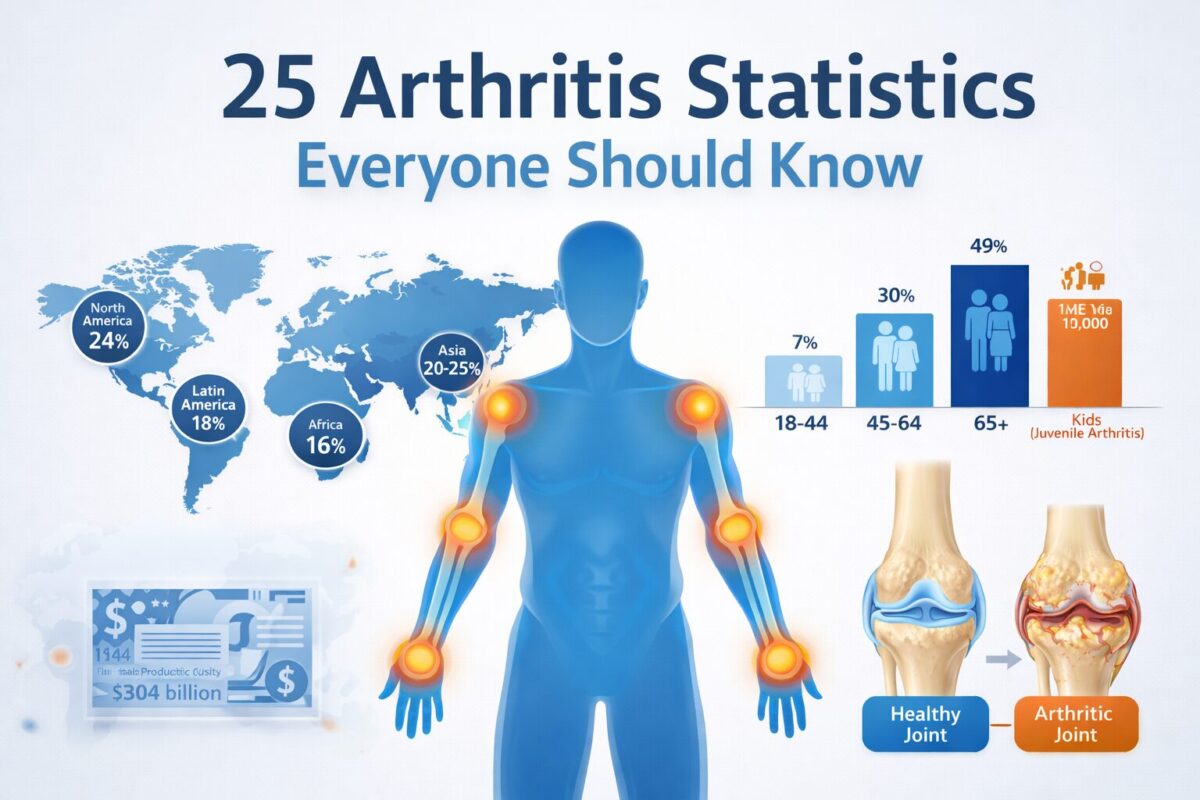
Arthritis is one of the most prevalent causes of chronic pain and physical disability worldwide, altering everything from daily mobility and sleep to career longevity. Understanding the numbers behind arthritis underscores exactly why adaptive tools, proactive lifestyle adjustments, and targeted joint care can make such a profound difference.
Journalist & Writer Tip: Need to reference these verified statistics for an article or report? Use the pre-formatted citation snippets provided under our primary data points below.
How We Compiled These Statistics
Each figure here is attributed to its original source — primarily the CDC and the Global Burden of Disease Study — rather than presented as a generic claim, since this page is built specifically for other writers and readers to cite accurately.
Quick Arthritis Facts: At a Glance
- Global Prevalence: Over 350 million individuals live with arthritis worldwide.
- U.S. Impact: Approximately 1 in 4 adults has received a clinical diagnosis.
- Disability Status: Arthritis remains a primary driver of adult disability across the globe.
- Primary Type: Osteoarthritis (OA) comprises the vast majority of cases.
- Economic Burden: Total annual healthcare expenditures for arthritis exceed $300 billion in the U.S. alone.
Global Arthritis Prevalence & Types
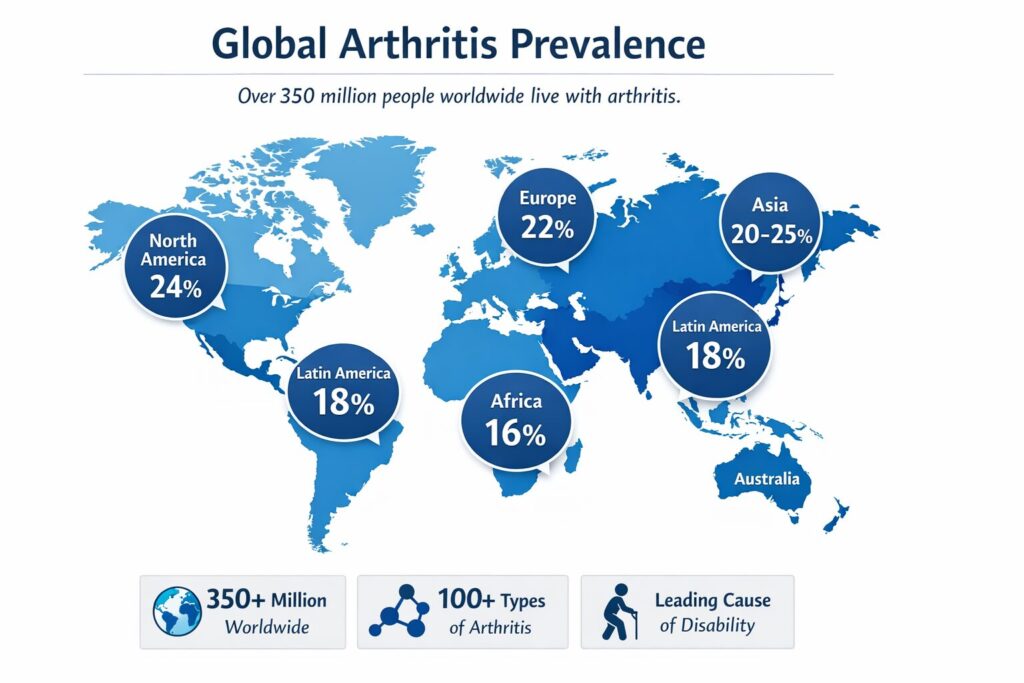
1. Over 350 million people worldwide live with arthritis.
As a global health burden, arthritis stands as one of the most widespread chronic conditions on Earth, impacting hundreds of millions across every continent. (Source: Global Burden of Disease Study)
✏️ Link & Cite This:
"Over 350 million people worldwide live with arthritis. Source: https://arthritiswares.com/arthritis-statistics/"
2. There are more than 100 distinct variations of arthritis.
While often discussed as a single illness, “arthritis” is an umbrella term for over 100 unique joint diseases. Common forms include osteoarthritis, rheumatoid arthritis, gout, lupus, and psoriatic arthritis.
3. Osteoarthritis (OA) is the most widespread form globally.
Often referred to as degenerative joint disease or “wear-and-tear” arthritis, OA accounts for the significant majority of diagnosed joint conditions worldwide.
4. Rheumatoid arthritis (RA) impacts roughly 1% of the global population.
Unlike mechanical joint wear, RA is a systemic autoimmune disease where the body’s immune system mistakenly attacks healthy, protective joint linings.
5. Global prevalence is rising rapidly due to aging populations.
As global life expectancy increases, the cumulative incidence of joint degeneration and age-related arthritic conditions continues a steady upward trajectory.
Arthritis Statistics in North America
6. Approximately 1 in 4 adults in the United States has arthritis.
According to clinical data, more than 58 million American adults live with doctor-diagnosed arthritis, representing roughly 25% of the adult population. (Source: U.S. Centers for Disease Control and Prevention)
✏️ Link & Cite This:
"Over 58 million adults in the United States have arthritis. Source: https://arthritiswares.com/arthritis-statistics/"
7. Chronic arthritis affects more than 6 million Canadians.
The condition doesn’t stop at the border; arthritis remains one of the most common chronic conditions recorded by health authorities across Canada.
8. Arthritis is the leading cause of adult disability in the U.S.
An estimated 24 million American adults face severe activity limitations due to joint symptoms, making daily tasks like gripping objects, walking, or climbing stairs immensely difficult. (Source: CDC)
✏️ Link & Cite This:
"Arthritis is the leading cause of disability among adults in the United States. Source: https://arthritiswares.com/arthritis-statistics/"
💡 Ergonomic Insight: Swapping standard tools for supportive mobility aids and ergonomic items can drastically minimize everyday joint strain.
9. U.S. arthritis cases are projected to approach 80 million by 2040.
Driven by the aging Baby Boomer demographic and longer lifespans, the absolute number of people managing chronic joint conditions is expected to spike over the next two decades.
10. Women experience significantly higher rates of arthritis than men.
Biological factors, hormonal differences, and joint anatomy contribute to a higher incidence in women. Autoimmune variants like rheumatoid arthritis are up to three times more common in biological females.
Arthritis Age Demographics: Who Is Affected?
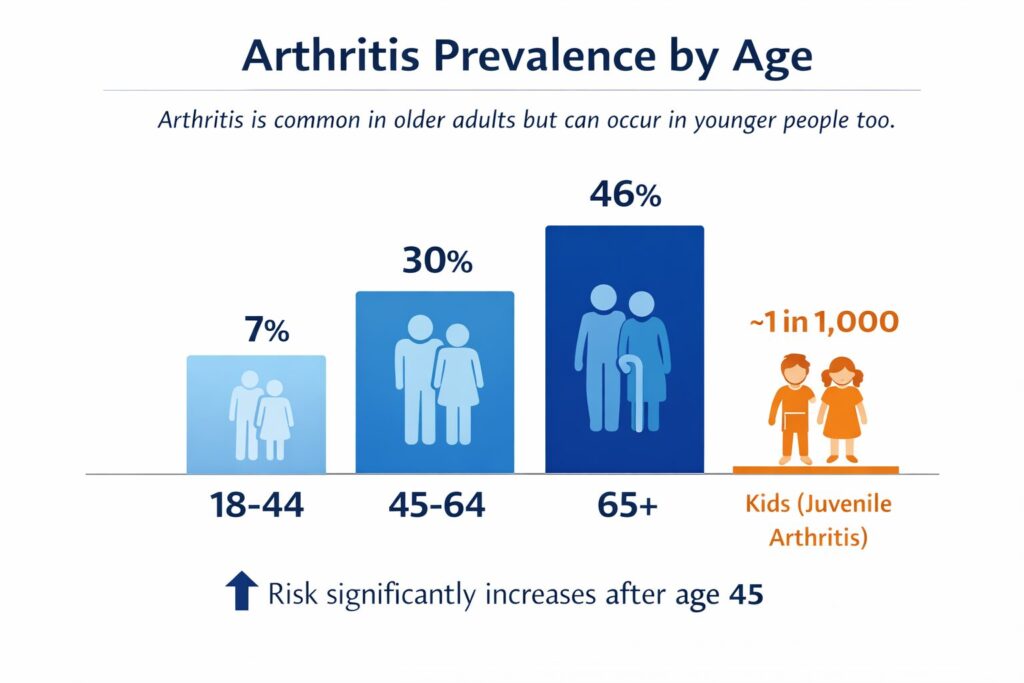
11. Risk factors and diagnosis rates scale dramatically after age 45.
While joint wear accumulates silently over time, clinical presentation and symptomatic pain issues begin peaking sharply during middle age.
12. Nearly 50% of seniors aged 65 and older live with diagnosed arthritis.
Close to half of the entire elderly population manages some tier of arthritis pain, making it a primary focus of geriatric care and independent living adjustments. (Source: CDC National Center for Chronic Disease Prevention)
✏️ Link & Cite This:
"Nearly half of adults age 65 and older have arthritis. Source: https://arthritiswares.com/arthritis-statistics/"
📌 Related Resource: Looking to retain everyday comfort as you age? Check out our curated list of the Best Daily Living Aids for Arthritis to reduce stress on your hands and knees.
13. Millions of diagnoses occur in young adults under the age of 45.
It is a common misconception that arthritis only affects seniors. Post-traumatic arthritis (following sports injuries) and autoimmune strains frequently impact people in their 20s and 30s.
14. Juvenile arthritis affects roughly 1 in every 1,000 children.
Pediatric autoimmune variants cause severe joint swelling, persistent pain, and developmental growth stiffness in young children and teenagers.
15. Early clinical diagnosis significantly alters long-term outcomes.
Catching inflammatory arthritis early allows for modern joint-preservation strategies, physical therapy, and medication regimens that can slow down permanent structural damage.
Impact on Daily Living & Symptom Management
16. The knees, hips, hands, and spine are the most common sites of pain.
These specific areas absorb the highest levels of mechanical weight-bearing stress and complex fine-motor movement over a lifetime.
📌 Related Resource: Hand stiffness making it tough to write or open doors? Explore our expert-tested tools designed specifically to Reduce Hand Strain and Improve Grip Strength.
17. Chronic joint pain and morning stiffness are the most frequently reported symptoms.
A high percentage of individuals suffer from the “gelling phenomenon,” where joints feel locked or incredibly stiff after prolonged periods of rest or upon waking up.
📌 Related Resource: Don’t let morning aches disrupt your routine. Discover soothing options like deep heat wraps and massagers in our comprehensive Guide to Arthritis Pain Relief Tools.
18. Everyday motor tasks become major daily obstacles.
Simple structural tasks like breaking the seal on a vacuum jar, lifting groceries, or walking up a flight of stairs can cause severe flare-ups without daily living aids.
19. Systemic fatigue affects the majority of inflammatory arthritis patients.
Conditions like psoriatic and rheumatoid arthritis trigger systemic, full-body inflammation, leaving patients battling severe, chronic exhaustion alongside localized joint swelling.
20. Arthritis severely disrupts healthy sleep architectures.
A painful feedback loop exists where nighttime throbbing prevents deep REM cycles, and sleep deprivation subsequently lowers an individual’s daytime pain threshold.
📌 Related Resource: Tossing and turning from joint throbbing? Create a restful sleep environment with these doctor-backed Sleep Strategies and Supportive Products for Arthritis Relief.
The Socioeconomic & Economic Impact
21. Arthritis drains the U.S. economy of over $300 billion annually.
This massive annual figure accounts for direct clinical medical expenditures alongside hidden indirect costs like lost corporate productivity and disability payouts. (Source: CDC)
✏️ Link & Cite This:
"Arthritis costs the U.S. economy over $300 billion annually. Source: https://arthritiswares.com/arthritis-statistics/"
22. Millions of corporate workdays are lost every year.
Severe physical flare-ups prevent consistent attendance, limiting employment consistency and causing significant absenteeism across multiple industries.
23. It is a leading driver of premature retirement and early workforce exit.
When tasks require intensive standing, repetitive typing, or manual labor, progressive joint damage frequently forces individuals to leave their careers early.
24. Progression often necessitates the use of targeted mobility assistance.
Rather than indicating a loss of independence, utilizing customized tools like canes, walkers, or rolling carts protects vulnerable joints from additional unnecessary wear.
25. Proactive lifestyle modifications yield massive symptomatic improvements.
Clinical studies regularly prove that a combination of low-impact physical exercise, joint-friendly home modifications, and ergonomic tracking allows people to stay mobile far longer.

Why These Statistics Matter
The data paints a clear picture: arthritis is a widespread issue that alters lives daily. However, these statistics also highlight a massive opportunity for proactive care. Millions of people manage their symptoms effectively by focusing on:
- Targeted, joint-friendly lifestyle habits
- Gentle, low-impact conditioning exercises
- Ergonomic home modifications and daily living aids
- Optimized sleep architectures and nightly pain-relief setups
Helpful Resources for Managing Arthritis
Take proactive control of your joint comfort today with our step-by-step guides:
- Best Tools That Make Daily Life Easier with Arthritis
- Gentle Exercises That Improve Joint Mobility
- Sleep Strategies for Nighttime Arthritis Pain Relief
- Arthritis-Friendly Hobbies That Protect Your Joints
Frequently Asked Questions
What is the most common type of arthritis?
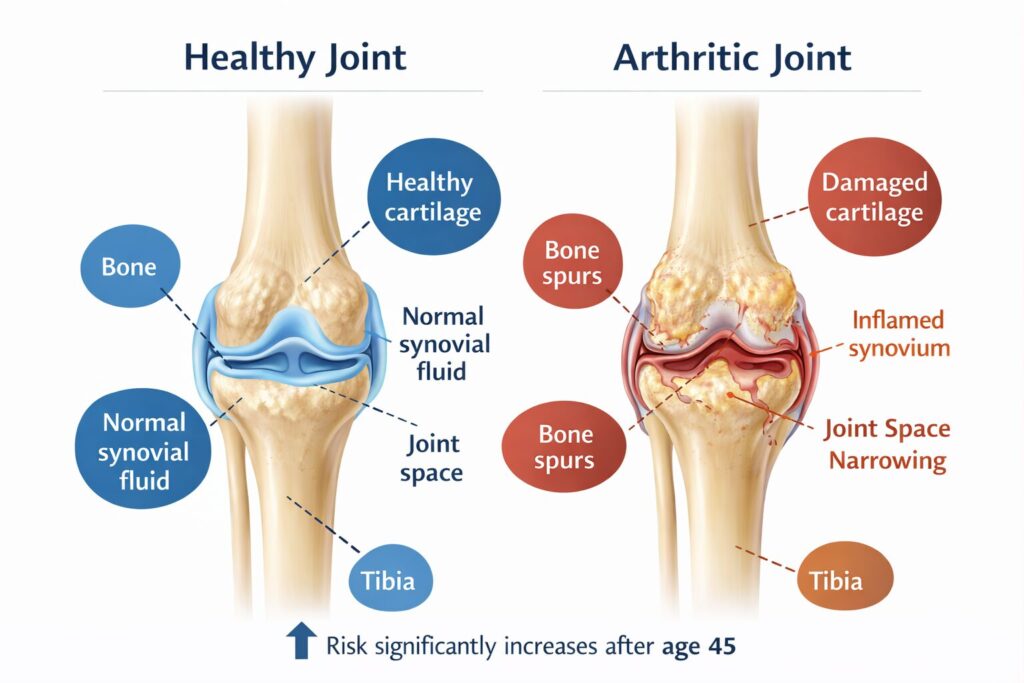
Osteoarthritis (OA) is the most widespread variant. It develops as protective cartilage inside your joints gradually wears down over decades of movement.
Can arthritis develop in children and young adults?
Yes. While aging increases your statistical risk, autoimmune types like juvenile idiopathic arthritis (JIA) and post-injury joint wear regularly impact younger demographics.
Which human joints are most frequently affected?
The joints subjected to daily mechanical load or complex movement—specifically the knees, hips, hands, fingers, and lower lumbar spine—are the most common sites of discomfort.
Can simple lifestyle shifts really improve chronic arthritis pain?
Absolutely. Integrating low-impact movement (like swimming or walking), maintaining a healthy weight, and using ergonomic tools to reduce joint load can dramatically cut down on daily flare-ups.
Conclusion
While the numbers reveal that arthritis is a major global health challenge, they also remind us that no one has to navigate it alone. With early management, protective tools, and smart lifestyle choices, it is entirely possible to reduce joint stress, preserve your independence, and maintain an excellent quality of life.
Ready to discover practical ways to make everyday life more comfortable? Explore our Ultimate Guide to Living Well With Arthritis for proven daily strategies and assistive product recommendations.
Medical Disclaimer: This article is for informational purposes only and does not constitute medical advice. Always consult your doctor, rheumatologist, or occupational therapist before making changes to how you manage your arthritis.
