
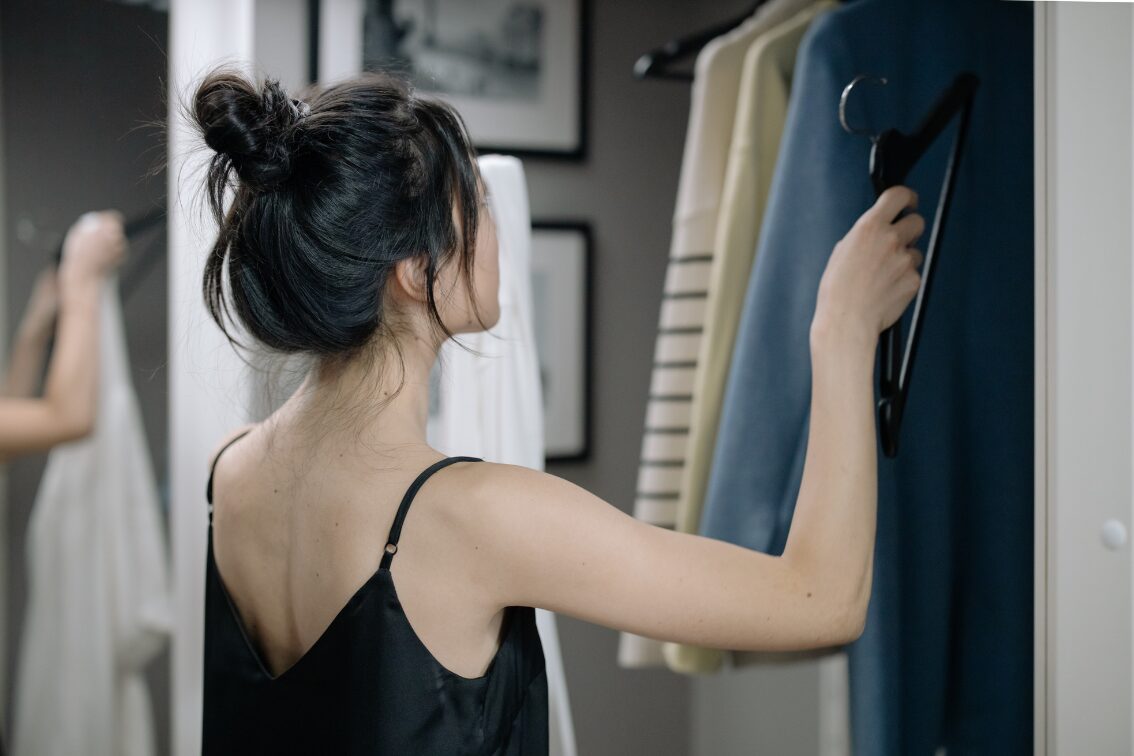
Getting dressed can become surprisingly difficult when arthritis affects your hands, fingers, wrists, shoulders, hips, knees, or feet.
A shirt button may require more finger strength than you have first thing in the morning. Pulling up pants may involve uncomfortable bending. Tying shoes can be frustrating when your fingers are stiff. Even reaching into a closet can become a problem when your shoulders or back are painful.
The good news is that you do not necessarily need a completely different wardrobe or a house full of specialized equipment.
Often, the easiest solution is to identify the specific part of dressing that is difficult and change that one step.
This guide explains practical ways to make dressing easier with arthritis, including clothing choices, positioning, simple dressing aids, organization, and strategies for difficult mornings.
Quick Answer: How Can You Make Dressing Easier With Arthritis?
Start by identifying the part of dressing that causes the most difficulty. Then look for the simplest change that removes that movement.
| Dressing problem | Practical solution |
|---|---|
| Buttons are difficult | Button hook or easier closures |
| Zippers are hard to grasp | Larger zipper pull or zipper loop |
| Bending to reach your feet hurts | Long-handled shoehorn or dressing stick |
| Pulling on socks is difficult | Sock aid |
| Tying shoelaces is frustrating | Elastic no-tie laces or slip-on shoes |
| Reaching behind your body hurts | Front-opening clothing |
| Standing while dressing is uncomfortable | Sit in a stable chair |
| Fingers are stiff in the morning | Give yourself extra time and start with easier clothing |
| Clothing is difficult to reach | Keep frequently worn items between waist and shoulder height |
| Some days are much worse than others | Keep a small collection of easy-to-wear clothing available |
The goal is not to buy a device for every problem. Reduce the amount of gripping, twisting, bending, reaching, and fine finger movement required to get dressed.
Why Arthritis Can Make Getting Dressed Difficult
Dressing involves many small movements that are easy to overlook until a joint becomes painful or stiff.
Depending on the joints affected, you may have difficulty with:
- Gripping buttons, zippers, or small fasteners
- Pinching fabric between your fingers
- Pulling clothing over your head
- Reaching behind your back
- Bending toward your feet
- Standing on one leg while putting on pants or shoes
- Pulling socks over your feet
- Tying shoelaces
- Opening drawers or closet doors
- Carrying clothing from one room to another
Morning stiffness can make these tasks especially frustrating.
Rather than trying to push through every difficult movement, look for ways to change the task itself.
The Arthritis Foundation similarly recommends choosing clothing and everyday products that are easier to put on, take off, grasp, and operate, including choosing zippers over buttons when buttons are difficult.
Start With the Part of Dressing That Causes the Most Trouble
One of the most useful approaches is to work backward from the problem.
Ask yourself:
“Which part of getting dressed causes me to stop, struggle, or ask for help?”
That answer usually points toward the solution.
If buttons are the problem
Small buttons require repeated pinching and finger coordination.
You could try:
- A button hook
- Shirts with larger buttons
- Shirts with fewer buttons
- Zippered or pull-on clothing
- Magnetic or hook-and-loop closures when appropriate
You do not have to replace every buttoned shirt. Keep the clothing you like and use an assistive tool when it solves a specific problem.
If zippers are difficult
Zippers can be easier than buttons, but the small pull may still be difficult to grasp.
A larger zipper pull or zipper loop can give you something easier to hold.
A zipper pull may be particularly useful when the problem is not the zipper itself but the small amount of finger strength and precision needed to grasp it.
If bending to your feet hurts
Putting on shoes and socks can become one of the most difficult parts of dressing when arthritis affects your knees, hips, back, or hands.
Possible solutions include:
- A long-handled shoehorn
- A sock aid
- Elastic no-tie shoelaces
- Slip-on shoes
- Sitting in a stable chair while dressing
The objective is to reduce the amount of bending and reaching rather than forcing yourself to reach your feet in the same way every day.
If reaching behind you is painful
Consider clothing that can be opened and closed from the front.
Front-opening shirts, cardigans, jackets, and similar garments may be easier than clothing that requires you to reach behind your body.
This can be particularly helpful when shoulder movement is limited.
If tying shoelaces is difficult
Traditional shoelaces require repeated finger movements that can be frustrating when your hands are stiff or painful.
Elastic no-tie laces can turn many lace-up shoes into shoes that can be slipped on and off more easily.
Another option is choosing shoes with adjustable straps or slip-on designs.
Choose Clothing That Requires Less Effort

You do not necessarily need clothing marketed specifically as “arthritis clothing” to make dressing easier.
Look at the clothing you already own and ask:
“How much work does this garment require?”
Clothing may be easier to manage when it has:
- Larger or easier-to-grasp fasteners
- Stretch in the fabric
- Comfortable, non-restrictive construction
- Elastic or adjustable waistbands
- Front openings
- Fewer small closures
- Easy-to-manage zippers
- Comfortable slip-on footwear
Loose or comfortable clothing that is easy to put on and remove can also reduce unnecessary effort.
The Arthritis Foundation recommends looking for clothing that is comfortable and easy to put on and take off, particularly when standard garments require difficult gripping or twisting.
You do not have to replace your wardrobe
Before buying new clothing, look at what you already have.
You may discover that three or four garments are much easier to put on than the rest.
Those can become your everyday choices on difficult days.
You can also have a tailor or alteration service modify some existing clothing rather than replacing it entirely.
Sit Down While Getting Dressed
If standing while dressing is uncomfortable or makes you feel unsteady, consider sitting down for tasks that do not require standing.
A stable chair can make it easier to:
- Put on socks
- Put on shoes
- Pull up pants
- Put on lower-body clothing
- Handle fasteners
- Sort clothing before putting it on
Avoid using an unstable stool or lightweight chair that can slide or tip.
If you have significant balance or mobility problems, consider asking a healthcare professional about the safest way for you to dress.
Make Shoes Easier to Put On and Take Off

Shoes can create several different arthritis challenges at once: bending, reaching, gripping, tying, and maintaining balance.
Try to separate those problems.
For difficult bending
A long-handled shoehorn can reduce the need to reach down to your heel.
For difficult laces
Elastic no-tie laces can reduce the repeated finger movements involved in tying and untying shoes.
For difficult gripping
Look for shoes with larger, easier-to-grasp tabs or adjustable closures.
For difficult balance
Sit down to put on your shoes instead of standing on one foot.
If foot swelling is an issue, make sure shoes have enough room and can be adjusted rather than simply choosing a larger size.
For more information about choosing adaptive footwear and clothing features, see our related guides:
Adaptive Clothing for Arthritis: A Buyer’s Guide
How to Choose Shoes for Arthritis: 10 Features to Look For
Use Dressing Aids When They Solve a Real Problem
Dressing aids can be helpful, but you do not need every device available.
The best dressing aid is usually the one that removes a movement you consistently struggle with.
Button hook
A button hook can help when pinching and manipulating small buttons is difficult.
Best for: shirts and other garments with traditional buttons.
Zipper pull
A larger zipper pull can make a small zipper easier to grasp.
Best for: jackets, pants, bags, and other zippered items.
Long-handled shoehorn
A long shoehorn can reduce bending and reaching when putting on shoes.
Best for: people who have difficulty reaching their feet.
Sock aid
A sock aid can help reduce bending and the amount of hand manipulation needed to put on socks.
Best for: people who struggle to reach or grip their feet and socks.
Dressing stick
A dressing stick can help with certain reaching and pulling tasks, such as positioning clothing or retrieving garments.
Best for: people who have difficulty reaching or moving clothing into position.
The American Occupational Therapy Association recognizes tools such as button hooks and dressing sticks as examples of adaptive equipment that can support dressing.
Think About the Movement, Not Just the Product
It is easy to start shopping for “arthritis dressing aids” and end up with a collection of devices you rarely use.
A better approach is:
Problem → movement → solution
For example:
Problem: I cannot comfortably button my shirt.
Movement causing the problem: Repeated pinching and manipulation with my fingers.
Possible solution: Button hook, larger buttons, or an easier closure.
Or:
Problem: Putting on shoes causes hip and back discomfort.
Movement causing the problem: Bending and reaching toward my feet.
Possible solution: Long-handled shoehorn, elastic laces, or slip-on shoes.
This approach helps you spend money only where a product actually solves a problem.
Organize Your Clothes for Easier Access

Sometimes the problem is not putting clothing on. It is getting the clothing out of the closet or drawer.
If reaching, bending, or lifting is difficult, reorganize frequently worn clothing.
Keep everyday clothing where it is easiest to reach.
For example:
- Put frequently worn shirts at a comfortable height.
- Avoid storing everyday clothing on the floor.
- Keep commonly used shoes somewhere easy to access.
- Use drawers that open easily.
- Keep a small selection of favorite outfits together.
- Move rarely used clothing to less accessible storage.
You can also prepare an outfit before you need it, especially when mornings are difficult.
This reduces the number of decisions and movements required when you are already stiff.
Give Yourself More Time on Stiff Mornings
Trying to dress quickly can make an already difficult task more frustrating.
If mornings are consistently your hardest time of day, consider changing the routine rather than trying to move faster.
You might:
- Allow extra time for dressing.
- Start with clothing that requires the least effort.
- Sit down for tasks involving your feet.
- Use warmth or your usual morning routine if it helps you feel more comfortable.
- Keep dressing aids within easy reach.
- Avoid saving difficult fasteners for the last minute.
You can also prepare clothing the night before.
The goal is not to eliminate every bit of morning stiffness. It is to avoid turning that stiffness into a long series of difficult movements.
Create a “Difficult Day” Wardrobe
Your easiest clothing does not have to be your everyday clothing.
Keep a few outfits available for days when your hands, knees, hips, or shoulders are particularly uncomfortable.
These might include:
- Pull-on pants
- Stretch fabrics
- Slip-on shoes
- Shirts with easy closures
- Cardigans or front-opening layers
- Comfortable tops that do not require difficult overhead movement
Having these clothes ready means you do not have to rethink your entire wardrobe during a flare or particularly stiff morning.
Make Dressing Easier Without Buying Anything
Before purchasing an adaptive product, look for changes you can make for free.
For example:
Move the chair closer.
If you are repeatedly walking back and forth to collect clothing, put everything you need beside you before you start.
Change the order.
Put on the easiest clothing first if that helps you get moving.
Sit down.
A stable seated position can make lower-body dressing easier.
Prepare clothing in advance.
Lay out your outfit before a difficult morning.
Use easier clothing on difficult days.
There is no reason to struggle with a complicated outfit when a simpler option is available.
Stop fighting a garment that does not work for you.
If one particular shirt requires painful movements every time you wear it, it may simply not be the right shirt for your current needs.
When Adaptive Clothing May Be Worth Considering
Sometimes changing the way you dress is enough.
Other times, the clothing itself is the problem.
Adaptive clothing can be worth considering when ordinary garments consistently require movements that are difficult because of limited hand function, reduced range of motion, mobility limitations, or other physical challenges.
Common adaptive features include:
- Magnetic closures
- Hook-and-loop closures
- Easy-access openings
- Stretch fabrics
- Elastic or adjustable waistbands
- Larger zipper pulls
- Designs that reduce difficult reaching
Adaptive clothing does not necessarily have to look medical or noticeably different from ordinary clothing.
For detailed information about these features and what to look for when shopping, see:
Adaptive Clothing for Arthritis: A Buyer’s Guide
That article is focused specifically on choosing adaptive clothing, while this guide focuses on making the overall dressing process easier.
When an Occupational Therapist May Help
If dressing has become difficult enough that you regularly need help, an occupational therapist may be worth discussing with your healthcare provider.
Occupational therapy can address activities of daily living such as dressing and can include recommendations for adaptive equipment, positioning, routines, and ways to modify tasks.
An occupational therapist can look at how you perform the task, rather than simply recommending a product.
That can be particularly useful when several problems are occurring at once—for example, painful hands combined with difficulty bending or reaching.
When Dressing Difficulty May Need Medical Attention
Difficulty getting dressed is not necessarily just a matter of needing better equipment.
If a new or rapidly worsening problem is interfering with basic daily activities, talk with your healthcare professional.
Seek medical attention promptly for symptoms such as:
- Sudden or severe joint swelling
- A joint that is very red or hot
- Severe or rapidly worsening pain
- New weakness or loss of function
- Numbness or loss of sensation
- A significant injury
- Problems with balance that are causing falls
The right dressing aid can make a task easier, but it should not be used to ignore a significant change in your health.
Frequently Asked Questions
What is the easiest way to get dressed with arthritis?
Start by identifying the part of dressing that is hardest. Then reduce the amount of gripping, bending, reaching, twisting, or fine finger movement required. Sitting down, choosing easier clothing, and using one targeted dressing aid can often make a bigger difference than buying many products.
What clothing is easiest to put on with arthritis?
Clothing with stretch, comfortable fits, easy closures, elastic or adjustable waistbands, and front openings can be easier to manage. Slip-on shoes or shoes with elastic laces may also reduce the effort required.
What dressing aids are useful for arthritis?
Common options include button hooks, zipper pulls, long-handled shoehorns, sock aids, and dressing sticks. The right choice depends on which movement is difficult for you.
Are adaptive clothing and dressing aids the same thing?
No. Adaptive clothing is clothing designed or modified with features that make dressing easier. Dressing aids are tools that help you put on or adjust ordinary clothing.
Do I need special arthritis clothing?
Not necessarily. You may be able to make dressing easier simply by changing how you organize clothing, sitting down, choosing easier garments, or using one or two dressing aids. Adaptive clothing becomes more useful when ordinary clothing continues to create a specific problem.
Is it better to use a button hook or buy shirts without buttons?
It depends on your needs and wardrobe. A button hook can let you continue wearing shirts you already own, while shirts with easier closures may be more convenient for everyday use.
Can an occupational therapist help with dressing?
Yes. Occupational therapists can help people with daily activities such as dressing and may recommend adaptive equipment, task modifications, positioning strategies, and changes to daily routines.
Related Reading
Adaptive Clothing for Arthritis: A Buyer’s Guide
A closer look at adaptive clothing features, including easier closures, stretch fabrics, waistbands, footwear, and ways to modify existing clothing.
Personal Care Tools for Arthritis: Grip and Reach Aids
Practical tools for personal-care tasks that become difficult because of limited grip, reach, or hand function.
Choose Arthritis Assistive Devices: A Practical Guide
How to decide when an assistive device is worth buying and which type of tool may solve a particular daily-living problem.
The Bottom Line
Getting dressed with arthritis does not have to mean replacing your entire wardrobe.
Start with the movement that causes the most trouble. Then look for the simplest way to remove or reduce that movement.
A button hook may solve a button problem. A long-handled shoehorn may reduce painful bending. Elastic laces may eliminate repeated tying. Sitting down may make lower-body dressing easier. And choosing a few comfortable, easy-to-manage garments can make difficult mornings less frustrating.
The goal is not to find a gadget for every task. It is to make the tasks you do every day require less effort.
Medical Disclaimer: This article is for informational purposes only and does not constitute medical advice. Always consult your doctor, rheumatologist, or occupational therapist before making changes to how you manage your arthritis.
