
When arthritis affects your hands, wrists, shoulders, hips or knees, everyday personal care can become surprisingly difficult. Brushing your teeth, trimming your toenails, washing your back and styling your hair may require more grip strength, bending or reaching than your joints comfortably allow.
The right personal care tools can reduce some of that effort. Wider handles may make objects easier to hold, powered tools can reduce repetitive hand movements, and long-handled aids can help you reach areas that are otherwise difficult to manage.
Quick Answer: Which Personal Care Tools Help Most?
- For weak or painful grip: Consider an electric toothbrush, wide-handled hairbrush, ergonomic nail clippers or electric razor.
- For difficulty bending or reaching: Consider a long-handled toenail clipper, extended-reach comb, bath brush or lotion applicator.
- For difficulty squeezing: Try a toothpaste tube squeezer or pump-top dispenser.
- For several daily tasks becoming difficult: An occupational therapist can help identify tools and techniques suited to your individual needs.
The best choice depends on which movement causes difficulty. A longer handle may improve reach but feel awkward on a painful shoulder, while an electric tool may reduce repetitive movements but still require precise positioning.
Disclosure: As an Amazon Associate, Arthritis Wares earns from qualifying purchases at no extra cost to you. We are not paid or sponsored by any manufacturer. Affiliate links help support our work.
1. Tools for Cutting Toenails and Reaching Your Feet
Bending forward to trim toenails can be difficult for people with arthritis in the hips, knees, back or hands. The challenge may involve several things at once: limited flexibility, difficulty holding nail clippers, reduced visibility or trouble maintaining a comfortable position.
Long-handled toenail clippers
A pole-style or extended-handle toenail clipper allows you to position the cutting head farther from your hand. Depending on the design, it may let you trim your toenails while seated without bending as far forward.
What to look for:
- A cutting head that can be positioned accurately against the nail.
- A handle long enough to improve reach without becoming unwieldy.
- A lever or cutting mechanism that does not require excessive squeezing.
- A design that allows you to see the nail clearly while seated.
- A manageable weight and a grip you can control.
The angle of the cutting head matters. If you cannot see the nail or control the clipper accurately, a longer handle alone will not solve the problem.

Safety note: If you have reduced foot sensation, circulation problems, diabetes-related foot concerns, or difficulty seeing or controlling the cutting head, ask a healthcare professional or podiatrist about appropriate nail care. Do not risk cutting the surrounding skin just to manage the task independently.
Foot and leg inspection mirror
A mirror with a stand or extended handle can help you inspect your feet without bending as far. This may be useful for checking the skin, looking for areas of irritation or seeing whether a nail needs attention.
Choose a mirror that provides a clear view and can be positioned securely. If you cannot inspect your feet adequately, ask someone you trust or a healthcare professional for help.
2. Toothbrushes and Toothpaste Aids
Small toothbrush handles and stiff toothpaste tubes can be frustrating when finger joints are painful or pinch strength is reduced.
Electric toothbrush with a comfortable handle
An electric toothbrush can reduce the repetitive brushing movements required from your hand. Many models also have thicker handles than manual toothbrushes, which may make them easier to grasp.
The Oral-B iO Series is one option to compare, but the best model is the one you can hold and operate comfortably.
What to look for:
- A handle that fits your hand without requiring a tight grip.
- A manageable weight.
- Controls that are easy to press.
- A brush head that can reach the teeth without awkward wrist movements.
- A pressure sensor or timer if those features would be useful to you.
A pressure sensor may help discourage excessive brushing force, but it is not essential for everyone. If a powered toothbrush feels too heavy or its controls are difficult to operate, a manual toothbrush with a built-up handle may be a better fit.

Toothpaste tube squeezer
A tube squeezer helps push toothpaste toward the opening, reducing the need to pinch and squeeze a tube repeatedly.
For some people, a pump-style toothpaste dispenser may be another option. Check how much force is required to dispense the toothpaste and whether the container can be loaded easily.
Practical tip: Store toothpaste and toothbrushes where you can reach them without stretching, bending or gripping around awkwardly placed containers.
3. Hair Care Tools for Limited Grip or Shoulder Movement
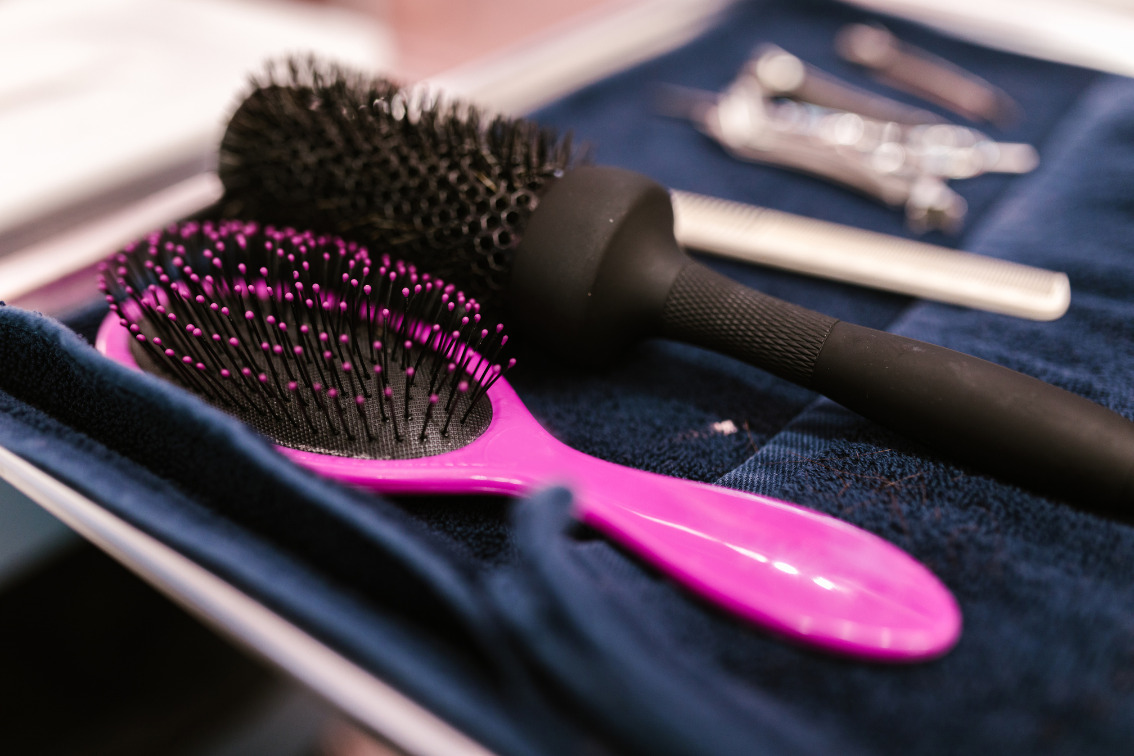
Hair care can involve holding a brush, repeating wrist movements and raising an arm for several minutes. If arthritis affects your fingers, wrists or shoulders, the weight and shape of your tools can make a noticeable difference.
Wide-handled hairbrush
A wide, cushioned or non-slip handle can be easier to hold than a thin handle that requires your fingers to close tightly around it.
The Conair Velvet Touch hairbrush is one option to compare.
Look for a brush that is light enough to lift comfortably and has a handle that fits your hand. A soft grip can help, but the overall shape and balance matter too.

Long-handled comb
An extended-reach comb may help if you have difficulty reaching the back of your head or raising your arm fully. Wide teeth can also help detangle hair with less pulling, depending on your hair type.
A longer handle is not automatically better: it can increase leverage on the shoulder or wrist. Choose a length that provides enough reach while allowing controlled movement.

Hands-free hair dryer stand
A hair dryer stand holds the dryer in position so you do not have to keep lifting and aiming it by hand. This may be helpful when holding a dryer causes wrist fatigue or shoulder discomfort.
Check that the stand is stable, can be positioned at a comfortable height and holds your particular dryer securely. Keep the dryer and electrical connections away from water, and follow the manufacturer’s instructions.
A simple way to reduce hair-care effort
A leave-in conditioner or detangling spray may help reduce tugging when brushing, depending on your hair type. You can also try shorter grooming sessions or sit down while brushing and drying your hair.
4. Nail Care Tools for Sore or Stiff Fingers
Nail care requires grip strength, controlled pressure and precise positioning. When finger joints are painful or stiff, a different tool may make the task easier—but the tool must still be controllable.
Wide-jaw nail clippers
Wide-handled nail clippers provide a larger gripping surface than many standard clippers. Some designs also have a wider cutting jaw, which may be useful for thicker nails.
The Vepkuso nail clippers listed below are an option to compare.
What to look for:
- A handle that is easy to press without a tight pinch grip.
- A cutting jaw suited to your nail thickness.
- A stable cutting head that is easy to position.
- A design that allows you to see the nail while cutting.
A wide jaw does not necessarily mean the clipper is easier to control. If you cannot position the cutting edge accurately, consider an alternative.

Electric nail trimmer
An electric nail trimmer or filing device may be an alternative if pressing manual clippers is painful. Some devices gradually file the nail rather than cutting it in one movement.
They still require you to position the device accurately and control its movement. Check the instructions, cleaning requirements and suitability for your nail type before use.
Soft-handled nail file
A nail file with a thick or cushioned handle may be easier to hold than a thin file. Some people can also adapt a suitable file with a built-up grip, provided the modification does not make it unstable.
Safety tip: Do not rush nail care when your hands are stiff or painful. If you cannot see the nail clearly or control the tool safely, ask for assistance rather than forcing the movement.
5. Shaving and Beard Care
Shaving involves holding a tool steadily while making repeated movements across the skin. Painful finger joints or limited wrist movement can make this difficult.
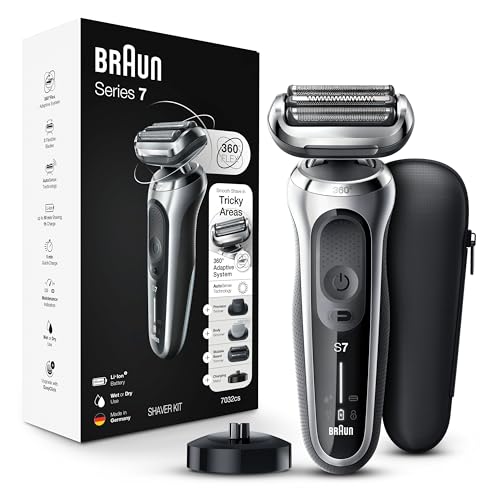
Electric razor
An electric razor may reduce the pressure and hand movements needed compared with some manual shaving methods. Many models have contoured handles, and some have textured surfaces that may help with grip.
The Braun electric razor linked below is one option to compare.
What to look for:
- A handle that fits your hand comfortably.
- A weight you can manage without wrist fatigue.
- Controls that are easy to operate.
- A head that can reach the areas you need to shave.
- Straightforward cleaning and charging.
An electric razor can still cause irritation and requires controlled movement. It is not automatically easier for everyone.
Razor handle extender or grip cuff
If you prefer a manual razor, a grip cuff or enlarged handle attachment may make it easier to hold. This can be particularly useful if a thin handle forces your fingers into a painful pinch grip.
Check that the attachment fits securely and does not interfere with your ability to control the razor. Do not use a loose or unstable modification around a sharp blade.
Lightweight beard trimmer
A lightweight trimmer with accessible controls may reduce the effort needed to groom a beard. Look for a balanced design that does not require a firm grip or prolonged wrist positioning.
Practical tip: Sit down if standing while grooming causes fatigue or balance concerns. Use good lighting and allow enough time to avoid rushed movements.
6. Bathing, Washing and Applying Lotion
Washing your back, reaching your lower legs and applying lotion can be difficult when arthritis affects your shoulders, hips, knees or hands.
Long-handled bath brush or back scrubber
A long-handled bath brush extends your reach for washing areas that are difficult to access by hand. Some have different surfaces or bristles for different washing preferences.
The dual-sided bath brush listed below is one option to compare.
What to look for:
- A handle long enough to reach the area comfortably.
- A manageable weight, especially when wet.
- A grip that remains secure when your hand is wet.
- A brush surface that is suitable for your skin.
- A design that is easy to rinse and dry.
If you have sensitive skin, reduced sensation or difficulty controlling the brush, use gentle pressure. Avoid scrubbing irritated or damaged skin.

Long-handled lotion applicator
A lotion applicator helps spread creams over areas such as the back or lower legs that may be difficult to reach. The extended handle can reduce the need to twist or stretch your shoulder.
Look for an applicator that spreads lotion evenly, is comfortable to hold and can be cleaned easily. If raising your arm is painful, choose a handle angle that allows you to work within a comfortable range of motion.
Pump-top soap and lotion dispensers
Pump-top bottles can reduce the need to grip and squeeze flexible containers. They are a simple first option to try before buying a powered dispenser.
Choose a pump that can be pressed with manageable force and placed on a stable surface. If pressing with your fingers is painful, test whether the pump can be operated comfortably with the heel of your hand.
Automatic soap or lotion dispensers
Motion-activated dispensers may reduce the need to squeeze a bottle or press a pump. However, they may require batteries, refilling, cleaning or precise positioning of your hand.
Compare the effort needed to use the dispenser with that of a simple pump bottle. The more complicated device is not necessarily the easier choice.
Make the bathroom easier to use
Keep frequently used grooming and bathing products at a comfortable height. Avoid placing essential items on the floor or on high shelves that require bending, twisting or stretching.
If standing in the shower is tiring or affects your balance, a properly fitted shower seat and suitable non-slip equipment may help. A shower seat does not replace appropriate fall-prevention measures, and any equipment should be used according to its instructions.
Comparison: Personal Care Tools for Arthritis
| Personal care task | Tool to consider | What to check | Example |
|---|---|---|---|
| Cutting toenails | Long-handled toenail clipper | Cutting-head angle, reach and control | Foldable long-handle clippers |
| Brushing teeth | Electric toothbrush | Grip, weight and controls | Oral-B iO Series |
| Squeezing toothpaste | Tube squeezer or pump dispenser | Required pressure and ease of use | Choose a design you can operate comfortably |
| Brushing hair | Wide-handled hairbrush | Handle diameter, grip and weight | Conair Velvet Touch |
| Reaching hair | Long-handled comb | Reach and shoulder comfort | Good Grips comb |
| Trimming fingernails | Wide-jaw nail clippers | Cutting force and precision | Vepkuso nail clippers |
| Shaving | Electric razor | Weight, grip and controls | Braun electric razor |
| Washing the back | Long-handled bath brush | Reach, grip when wet and weight | Dual-sided bath brush |
| Applying lotion | Long-handled lotion applicator | Handle angle and ease of cleaning | Compare extended-reach designs |
| Dispensing soap | Pump-top or automatic dispenser | Operating force and refill access | Choose a manageable pump or dispenser |
How to Choose the Right Personal Care Aid
Before buying a tool, identify the movement that causes the most difficulty. The goal is to make the task easier—not to purchase a gadget for every activity.
Consider handle size and grip
If your fingers hurt when gripping thin objects, try a wider handle or a suitable grip attachment. The handle should feel secure without forcing your fingers into a tight position.
Check weight and balance
A heavy tool may increase fatigue, especially when held at shoulder height or used for several minutes. A lighter tool can help, but it must still feel stable and easy to control.
Think about reach and movement
A long handle may reduce bending but can make a tool harder to maneuver. Choose a length and angle that allow you to reach the target without excessive shoulder or wrist movement.
Check how much force is required
Powered tools, pump dispensers and wide-handled devices can reduce some types of effort, but controls and mechanisms vary. Consider whether you can activate the device comfortably and consistently.
Try simple adaptations first
A built-up handle, pump-top bottle or change in storage height may solve the problem without a specialized purchase. If the difficulty continues, a dedicated personal care aid may be worth considering.
Know when to seek help
If you struggle with several personal care tasks, an occupational therapist can assess how you perform them and recommend suitable equipment or alternative techniques. The Arthritis Society Canada’s assistive devices resource provides additional examples of aids for daily activities.
Quick Daily Tips for Easier Personal Care
- Choose a comfortable time: Some people find grooming easier when their joints feel less stiff. Avoid rushing through tasks when your hands are painful or fatigued.
- Sit when practical: Sitting for grooming or nail care may reduce fatigue and make it easier to position your body.
- Keep products within reach: Store frequently used items where you can reach them without bending or stretching.
- Use stable surfaces: Place bottles and tools on a secure surface. Use appropriate non-slip equipment in the bathroom.
- Break tasks into shorter sessions: You do not need to complete every grooming task at once.
- Keep essentials in convenient locations: A second grooming kit may reduce unnecessary trips between rooms.
- Do not force a painful movement: Try a different handle, position or tool instead of gripping harder or stretching farther.
Frequently Asked Questions
What is the easiest way to cut toenails if I cannot reach them?
A long-handled toenail clipper may help if bending is difficult and you can see and control the cutting head accurately. A seated position and good lighting can also help. If you have reduced foot sensation, circulation problems, diabetes-related foot concerns or difficulty controlling the tool, ask a healthcare professional about appropriate nail care.
What is the easiest toothbrush to use with arthritic hands?
An electric toothbrush with a comfortable, easy-to-hold handle may reduce repetitive hand movements. A manual toothbrush with a built-up handle can also be useful. Choose based on grip comfort, weight and control rather than assuming one brand or model will work for everyone.
How can I make shaving easier with arthritis?
Consider an electric razor with a manageable weight and comfortable grip, or a securely fitted grip attachment for a manual razor. Good lighting, a comfortable seated position and taking your time can also help. Avoid using a sharp blade if you cannot control it reliably.
Are pump dispensers easier than squeeze bottles?
They can be. Pump dispensers often require a short downward press instead of a sustained squeeze. However, some pumps need considerable force, so choose one you can operate comfortably. A small, easy-to-handle container may also work better for some people.
Do I need an occupational therapist to choose personal care tools?
Not necessarily. You can start by identifying the task that is difficult and trying a suitable adaptation. An occupational therapist can be particularly helpful when several activities are affected, when a tool feels awkward to use, or when you need guidance on reducing strain and performing tasks more safely.
What if no personal care tool feels comfortable?
The problem may involve more than grip or reach. Pain, fatigue, limited joint movement, balance or difficulty seeing the task can all affect how well a tool works. Try a different position or simpler adaptation, and consider discussing the problem with an occupational therapist or other healthcare professional.
Related Reading
- Dressing with Ease: Tips for Arthritis-Friendly Wardrobe Mastery
- Effective Self-Massage Routines for Arthritis Pain Relief
- Best Arthritis Tools for Daily Living
- Bathing Tips for Arthritis Relief: Safe Routines That Ease Pain
Medical Disclaimer: This article is for informational purposes only and does not constitute medical advice. Always consult your doctor, rheumatologist, or occupational therapist before making changes to how you manage your arthritis.
