
Disclosure: As an Amazon Associate, Arthritis Wares earns from qualifying purchases at no extra cost to you. We are not paid or sponsored by any manufacturer. Affiliate links help support our work.
Red light therapy has become increasingly popular as a drug-free option for people looking for relief from joint pain and stiffness.
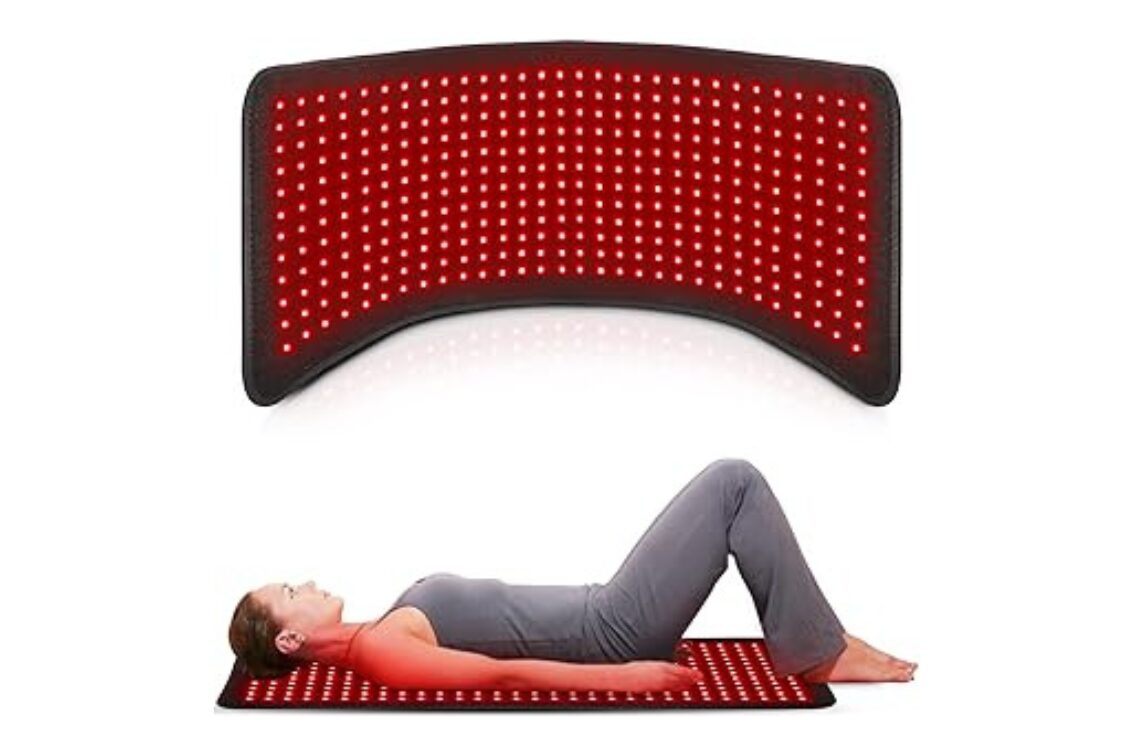
You may see it called red light therapy (RLT), near-infrared light therapy, low-level light therapy (LLLT), or photobiomodulation (PBM). Devices range from small handheld units and flexible wraps to larger LED panels.
But popularity and promising laboratory explanations do not necessarily mean that every red light device will help arthritis.
So does red light therapy actually work?
The most honest answer is: possibly, but the evidence is still limited.
Research suggests that photobiomodulation may reduce pain in some people with osteoarthritis, particularly knee osteoarthritis. However, studies have used different wavelengths, treatment doses, light sources, and treatment schedules. The evidence is not strong enough to say that every red light device will provide meaningful arthritis relief.
This guide looks at what the research actually suggests, what remains uncertain, and how to avoid wasting money on a poorly specified device.
Does Red Light Therapy Help Arthritis? Quick Answer
Red light therapy may help reduce arthritis pain for some people, but it should be considered an optional complementary approach rather than a proven arthritis treatment.
The evidence is most interesting for knee osteoarthritis pain. Some controlled studies and reviews have found better pain outcomes with photobiomodulation than with sham treatment.
However, the evidence has important limitations:
| What the evidence suggests | What it does not prove |
|---|---|
| Photobiomodulation may reduce pain in some people with knee osteoarthritis | That every red light device will work |
| Some studies have found a benefit compared with sham treatment | That red light therapy cures arthritis |
| Different wavelengths and treatment protocols have been studied | That 660 nm or 850 nm is automatically the best choice |
| It may be useful as an addition to other arthritis strategies | That it should replace medication, exercise, or medical care |
| Results vary considerably between studies | That an expensive device is necessarily more effective |
The most important distinction is between evidence for photobiomodulation as a treatment approach and evidence for a particular consumer product.
Those are not the same thing.
What Is Red Light Therapy?
Red light therapy uses specific wavelengths of non-ionizing light to expose an area of the body for a prescribed period.
The term can refer to several related approaches, including:
- Red light therapy
- Near-infrared light therapy
- Low-level light therapy
- Low-level laser therapy
- Photobiomodulation
These terms overlap, but the treatments are not necessarily identical.
A clinical study using a specific laser, wavelength, dose, and treatment schedule does not automatically prove that a consumer LED panel using different specifications will produce the same result.
That is one of the biggest things to understand before buying a home device.
Red Light vs. Near-Infrared Light
Red and near-infrared light are different portions of the light spectrum.
Red Light
Red light is visible to the human eye.
Consumer devices commonly use wavelengths somewhere around the mid-600-nanometer range, although the exact wavelength varies between products.
Red light is generally associated with more superficial tissue exposure.
Near-Infrared Light
Near-infrared light cannot be seen by the human eye.
Consumer devices commonly advertise wavelengths around 800–900 nm, although there is considerable variation.
Near-infrared light interacts with tissue differently from visible red light and is often included in devices marketed for muscles and joints.
However, “penetrates deeper” does not automatically mean “works better for arthritis.”
How much light reaches a particular tissue depends on wavelength, power density, distance, treatment time, tissue thickness, and other factors.
Therefore, don’t assume that buying a device with the highest advertised power or the longest wavelength will produce better arthritis relief.
How Might Photobiomodulation Work?
Researchers have proposed several biological mechanisms for photobiomodulation.
One area of interest is the interaction between light and cellular structures, including mitochondria, which are involved in cellular energy production.
Researchers have also investigated possible effects involving:
- Cellular signaling
- Oxidative stress
- Inflammatory processes
- Tissue responses
- Pain signaling
These mechanisms are scientifically interesting, but they should not be confused with proof that a consumer red light device will relieve arthritis.
A proposed mechanism explains how a treatment might work.
A well-designed clinical trial helps determine whether the treatment actually produces a meaningful benefit in people.
For someone deciding whether to spend money on a device, the second question matters more.
What Does the Research Say About Arthritis?
The research is promising enough to be interesting, but not strong enough to justify calling red light therapy a proven arthritis treatment.
One 2024 systematic review examined 10 placebo-controlled studies involving 542 people with knee osteoarthritis. The review found a statistically significant reduction in pain at rest compared with placebo treatment.
Research source: Oliveira et al., 2024, Physical Therapy — [PubMed]
PubMed: Effectiveness of Photobiomodulation in Knee Osteoarthritis
However, the researchers rated the certainty of the evidence as very low because the studies had important limitations and differences in treatment protocols.
Their conclusion was essentially that photobiomodulation may have a role as a complementary treatment, but the evidence was not strong enough to recommend it as a stand-alone therapy.
Another 2024 review looked at 13 studies involving 673 people with knee osteoarthritis. It also found a benefit for pain compared with sham treatment, but did not find significant improvements in stiffness or physical function.
Research source: Fan et al., 2024, Aging Clinical and Experimental Research — [PubMed]
PubMed: Low-Level Light Therapy and Knee Osteoarthritis
That is an important distinction.
The evidence gives us a reason to be interested in photobiomodulation, particularly for pain, but it does not justify broad claims that red light therapy will improve every arthritis symptom.
What May Red Light Therapy Help With?
Pain
Pain is the main reason red light therapy is worth considering.
Some research involving knee osteoarthritis has found lower pain scores following photobiomodulation compared with sham treatment.
The size and reliability of the benefit are less certain than marketing claims often suggest, however.
It is better to think of red light therapy as something that may provide additional symptom relief rather than something that is expected to eliminate arthritis pain.
Stiffness
The evidence for stiffness is less convincing.
Although it is common for red light therapy advertisements to mention stiffness, a 2024 review did not find a significant improvement in knee osteoarthritis stiffness compared with sham treatment.
That doesn’t prove that nobody will feel less stiff after using a device.
It simply means there isn’t enough reliable evidence to promise stiffness relief.
Mobility and Function
Similarly, don’t buy a red light device because a manufacturer promises that it will restore joint mobility or function.
If someone experiences less pain, they may find movement easier as a result.
That would be an indirect benefit rather than proof that the light therapy has repaired the joint or restored its function.
What Red Light Therapy Cannot Do
It Does Not Cure Arthritis
There is no good basis for describing red light therapy as a cure for osteoarthritis or autoimmune forms of arthritis.
It should not be promoted as something that reverses the underlying disease.
It Does Not Rebuild Cartilage
Be particularly skeptical of products claiming that red light therapy will rebuild damaged cartilage.
A consumer LED device should not be purchased with the expectation that it will restore cartilage that has been lost to osteoarthritis.
It Does Not Replace Arthritis Treatment
Red light therapy should not be used as a reason to stop prescribed medication, avoid recommended exercise, or delay medical evaluation.
If you already have an arthritis treatment plan, light therapy should be considered an optional addition rather than a replacement.
It Is Not Guaranteed to Work
Some people may notice a meaningful difference.
Others may notice little or nothing.
The research itself shows enough variation that a guaranteed result would be unrealistic.
Why Consumer Red Light Devices Are Difficult to Compare
This is one of the biggest problems with shopping for red light therapy.
Two products may both say:
660 nm + 850 nm
but that does not mean they deliver the same treatment.
They can differ in:
- Light output
- Irradiance
- Treatment distance
- Treatment area
- Number and type of LEDs
- Session duration
- Pulsing
- Device design
- Recommended treatment schedule
- Quality control
- Accuracy of the manufacturer’s specifications
The number of LEDs is also not enough to determine whether a device is effective.
A device with 200 LEDs is not automatically better than one with 100.
Likewise, a device advertised as “300 watts” is not necessarily delivering 300 watts of useful optical energy to your skin.
What Should You Look for in a Red Light Therapy Device?
If you decide that you want to experiment with red light therapy, focus on transparent specifications rather than impressive marketing language.
1. Clearly Listed Wavelengths
The manufacturer should tell you exactly which wavelengths the device produces.
Avoid products that simply say “red infrared technology” without providing useful specifications.
2. Irradiance Information
Irradiance refers to the amount of optical power delivered over a particular area, generally expressed in mW/cm².
This is more useful than simply knowing how many LEDs are in the device.
Ideally, the manufacturer should explain:
- The irradiance
- The distance at which it was measured
- Whether the measurement applies to the whole treatment area
Be cautious with numbers that have no measurement distance attached.
3. Clear Treatment Instructions
A reputable product should provide specific instructions for:
- Distance from the body
- Session duration
- Frequency of use
- Treatment area
- Eye protection when applicable
If the instructions are vague, that’s a reason to keep looking.
4. Reasonable Treatment Area
Think about the joint you actually want to treat.
A small device may make sense for a hand or wrist.
A larger panel may be more practical for a knee or shoulder.
A flexible wrap may be convenient because it can sit against a curved joint without requiring you to hold it.
Convenience matters because a treatment you don’t want to use is unlikely to become part of a consistent routine.
5. Easy Controls
Arthritis-friendly design matters here too.
Look for:
- Large, easy-to-use controls
- Simple timers
- Clear instructions
- Hands-free positioning
- Lightweight construction when appropriate
- Easy-to-adjust straps
- Minimal gripping or twisting
A technically impressive device can still be a poor choice if it is difficult to operate with painful hands.
One Red Light Therapy Panel Worth a Look
If you decide to try red light therapy, I would look for a device that clearly states its wavelengths and provides practical treatment instructions rather than choosing solely on price, LED count, or marketing claims.
One example worth a look is the BestQool Red Light Therapy Panel. It combines red and near-infrared wavelengths and is designed as a larger panel rather than a small handheld device, making it more practical for areas such as the knee, shoulder, or back.
Important: This is not a claim that the BestQool panel has been proven to treat arthritis, or that it is the best red light therapy device available. The clinical research on photobiomodulation uses a variety of devices and treatment parameters, and those results cannot automatically be applied to a particular consumer product.
I like this type of product primarily because the specifications are more clearly presented than many generic red-light listings. If you’re considering one, it’s worth having a look at the current specifications and instructions before deciding whether it makes sense for you.

Why we’re recommending an example rather than naming a “best” device: There is currently no consumer red light therapy device that we can point to as clinically proven to be the best choice for arthritis. We’re more comfortable showing readers what a reasonably specified product looks like and letting them make an informed decision.
Is There a “Best” Red Light Therapy Wavelength for Arthritis?
No universally established best wavelength exists.
Research has tested a range of wavelengths and treatment protocols.
One 2024 review found that certain wavelengths appeared more promising for knee osteoarthritis pain than others, but the researchers also rated the certainty of the evidence as low or very low.
That means it would be a mistake to turn the findings into a simple statement such as:
“850 nm is the best wavelength for arthritis.”
Or:
“660 nm is proven to work.”
The wavelength is only one part of the treatment.
Dose, irradiance, treatment time, distance, treatment area, and the actual device all matter.
Are Cheap Red Light Devices Worth Buying?
This is where I would be cautious.
There are many inexpensive red light products on Amazon with impressive descriptions, large LED counts, and claims about pain relief, inflammation, healing, circulation, tissue repair, and other benefits.
Some may be perfectly functional light sources.
But a low price and a large number of LEDs do not establish that a product delivers a clinically useful treatment dose.
Before buying a cheap device, look for actual specifications rather than relying on the product title.
If a listing gives you no useful information about wavelength, irradiance, treatment distance, or recommended exposure, I would skip it.
What About FDA Clearance?
FDA status can be useful information, but it should not be treated as proof that a particular red light device is effective for arthritis.
Also be careful with the phrase “FDA registered.”
A manufacturer’s registration or device listing is not the same thing as proof that the FDA has established that a particular product treats arthritis effectively.
Don’t buy a device simply because an Amazon listing uses the words “FDA registered,” “FDA approved,” or “medical grade.”
Look at the actual regulatory information and the intended use of the specific device.
Should You Buy a Red Light Therapy Device for Arthritis?
This is ultimately a personal decision.
Red light therapy may be reasonable to consider if:
- You understand that the evidence is still limited
- You are primarily interested in trying it for pain
- The cost is acceptable even if the benefit is small
- You are willing to use it consistently according to the manufacturer’s instructions
- The product provides clear technical specifications
- You are not expecting it to cure or reverse arthritis
I would be more cautious if:
- The seller promises to cure arthritis
- The product claims to rebuild cartilage
- The listing guarantees pain relief
- Technical specifications are missing
- The device is extremely expensive
- You are considering it instead of established treatment
- The product makes many unrelated health claims
What Type of Red Light Device Makes the Most Sense?
There is no single design that is best for everyone.
| Your situation | Device format to consider | Main advantage |
|---|---|---|
| Hands or fingers | Small handheld or compact wrap | Easy to target a small area |
| Wrist or elbow | Handheld or flexible wrap | Targeted coverage |
| Knee | Flexible wrap or panel | Easier coverage of a larger joint |
| Shoulder | Wrap or panel | Larger treatment area |
| Several joints | Larger panel | Can cover broader areas |
| Occasional travel | Small handheld device | Easier to store and transport |
This is a convenience comparison, not a claim that one format produces better medical results.
How Long Should You Use Red Light Therapy?
There is no universal treatment schedule for every red light device.
Consumer products can have very different output levels and instructions.
Rather than copying a treatment schedule from another product, follow the instructions for the specific device you are using.
More exposure is not automatically better.
The goal is to use the device according to its intended treatment parameters rather than assuming that longer sessions will produce better results.
How Long Before You Know Whether It Helps?
Don’t judge the therapy solely on how you feel after one session.
If you decide to try it, give yourself a reasonable period of consistent use according to the manufacturer’s instructions.
You can make the experiment more useful by tracking one or two specific symptoms.
For example:
- Morning knee pain
- Pain while walking
- Hand discomfort during a particular activity
- Stiffness after sitting
- Comfort during a normal daily task
A simple 0-to-10 rating can help you determine whether there is a consistent difference.
If there is no meaningful improvement after a reasonable trial, continuing indefinitely simply because the product claims that it “works” may not make sense.
Can Red Light Therapy Be Combined With Other Arthritis Strategies?
If you decide to use photobiomodulation, it can be treated as one optional part of a broader arthritis-management routine.
Depending on your circumstances, that may include:
- Appropriate physical activity
- Strengthening or mobility exercises
- Heat or cold therapy
- Activity modification
- Assistive devices
- Weight management when appropriate
- Medications recommended by your healthcare professional
- Other treatments recommended for your specific type of arthritis
The goal is not to replace these approaches with a light panel.
Red Light Therapy Safety
Red light therapy is non-invasive, but that doesn’t mean every device is appropriate for every person.
Follow the manufacturer’s instructions regarding treatment time, distance, and eye protection.
Use particular caution if you:
- Take medications that increase sensitivity to light
- Have a condition that makes you unusually sensitive to light
- Have an active skin problem in the treatment area
- Have concerns about exposing a particular body area to light
- Are unsure whether the device is appropriate for you
Do not look directly into bright LEDs unless the device is specifically designed and approved for that type of eye exposure.
If you are taking a medication that can cause photosensitivity or have a medical condition that could affect your response to light, ask a healthcare professional before using a red light therapy device.
Red Light Therapy Myths to Avoid
“Red light therapy cures arthritis.”
No. There is not good evidence to support describing it as a cure.
“Red light therapy rebuilds cartilage.”
Don’t rely on this claim when evaluating consumer products.
The evidence does not justify telling someone that an inexpensive home LED device will rebuild arthritic cartilage.
“850 nm is proven to be the best wavelength.”
No single wavelength has been established as the universal best choice for arthritis.
“More LEDs means better treatment.”
Not necessarily.
The number of LEDs does not tell you how much useful light reaches the treatment area.
“A higher wattage means a better device.”
Not necessarily.
Electrical wattage and the amount of therapeutic light delivered to the treatment area are not the same thing.
“FDA registered means proven for arthritis.”
No.
Regulatory terminology needs to be checked carefully rather than treated as proof of effectiveness.
“If it feels warm, it must be working.”
No.
Some devices produce noticeable warmth, but warmth itself is not evidence that photobiomodulation is producing an arthritis benefit.
Is Red Light Therapy Worth Trying for Arthritis?
For some people, it may be.
But I would put it in the “promising but uncertain” category rather than the “proven arthritis treatment” category.
The research gives us a legitimate reason to investigate photobiomodulation, particularly for pain associated with knee osteoarthritis. At the same time, the evidence has important limitations, and different studies use different light sources, wavelengths and treatment protocols.
That means a consumer should not assume that every inexpensive red light panel on Amazon has been proven to work for arthritis.
If you decide to try one, choose based on transparent specifications, sensible treatment instructions, ease of use and a reasonable price, not on dramatic health claims.
And give yourself permission to stop using it if you do not notice a meaningful difference.
Frequently Asked Questions
Does red light therapy help arthritis pain?
It may help some people, particularly with knee osteoarthritis pain. However, the evidence is still limited and the benefit is not guaranteed.
Is red light therapy proven for arthritis?
No. Research has found promising results for pain in some osteoarthritis studies, but the overall certainty of evidence remains limited.
Is red light therapy good for knee arthritis?
Knee osteoarthritis is one of the better-studied applications of photobiomodulation. Some studies have found reduced pain compared with sham treatment, but the evidence is not strong enough to guarantee a benefit from a consumer device.
Does red light therapy help arthritis stiffness?
The evidence is less convincing for stiffness than for pain. A 2024 review did not find a significant improvement in knee osteoarthritis stiffness compared with sham treatment.
What wavelength is best for arthritis?
There is no universally established best wavelength. Studies have used different wavelengths and treatment protocols, so wavelength alone should not determine which device you buy.
Is 660 nm or 850 nm better for arthritis?
Neither can be called universally better based on current evidence. Both wavelengths are commonly found in consumer devices, but treatment results depend on more than wavelength alone.
How long should you use red light therapy for arthritis?
Follow the instructions for the specific device. There is no single treatment time that applies to every red light product because output and treatment parameters vary.
Can red light therapy replace arthritis medication?
No. It should not be used as a replacement for prescribed medication or other recommended arthritis treatment without guidance from your healthcare professional.
Are cheap red light therapy devices effective?
Some inexpensive devices may provide the advertised wavelengths, but price alone does not tell you whether a device delivers an appropriate treatment dose. Look for clear wavelength, irradiance, distance and treatment instructions.
Is an expensive red light therapy device better?
Not necessarily. A higher price does not prove greater effectiveness. What matters is whether the device provides appropriate and clearly documented treatment parameters and is practical to use.
Is red light therapy safe for people with arthritis?
It is non-invasive, but individual safety depends on the person and the device. Follow the manufacturer’s instructions and ask a healthcare professional if you have photosensitivity, take photosensitizing medication, or have other concerns.
What is the difference between red light therapy and cold laser therapy?
Red light therapy commonly uses LEDs, while cold laser therapy uses a laser source. Both may be described as forms of photobiomodulation, but they can use different wavelengths, doses and treatment methods.
For a more detailed comparison, see:
Cold Laser Therapy vs Red Light Therapy for Arthritis: Key Differences Explained


Final Thoughts
Red light therapy isn’t simply a useless gimmick, but it isn’t a proven cure for arthritis either.
The most reasonable conclusion from the current evidence is that photobiomodulation may provide some pain relief for certain people, particularly those with knee osteoarthritis, but the evidence is not strong enough to promise a meaningful result from every consumer device.
That distinction matters.
If you want to try red light therapy, don’t choose a product simply because it has hundreds of LEDs, a high wattage number, or impressive claims about healing.
Look for clear specifications, appropriate treatment instructions, reasonable construction, and a price you can accept even if the benefit turns out to be modest.
For Arthritis Wares, that’s the approach worth taking:
Practical tools. No hype.
Related Reading
📌 Cold Laser Therapy vs Red Light Therapy for Arthritis: Key Differences Explained
📌 Heat vs Cold Therapy for Arthritis: Which One Works Best?
📌 Home Remedies for Arthritis: What Really Works (and What to Avoid)
📌 Living Well With Arthritis: Practical Relief, Tools & Daily Strategies
Medical Disclaimer: This article is for informational purposes only and does not constitute medical advice. Always consult your doctor, rheumatologist, or occupational therapist before making changes to how you manage your arthritis.
