

Disclosure: As an Amazon Associate, Arthritis Wares earns from qualifying purchases at no extra cost to you. We are not paid or sponsored by any manufacturer. Affiliate links help support our work.
When arthritis makes a joint stiff, sore, swollen, or tender, heat and cold are two simple options that may provide temporary symptom relief. But which one should you use?
A useful starting point is:
Heat is generally better for stiffness and tight muscles, while cold is often more useful for acute pain, swelling, or a joint that feels hot and tender.
However, this is a guideline rather than a hard rule. Both heat and cold can help relieve pain, and your symptoms may change throughout the day. What feels helpful during morning stiffness may not be the best choice after an activity that leaves a joint swollen or irritated.
Thermal treatments are considered a reasonable symptom-management option for some people with arthritis. The American College of Rheumatology and Arthritis Foundation conditionally recommend locally applied heat or cold for osteoarthritis of the hand, hip, and knee, although the evidence varies and the benefits are generally considered modest or short-term.
American College of Rheumatology: Osteoarthritis Guideline
Quick Answer: Should You Use Heat or Cold for Arthritis?
Use heat when your main problem is stiffness, tightness, or difficulty getting moving.
Use cold when a joint is acutely painful, swollen, hot, or tender, particularly after activity or during a flare.
| If your main symptom is… | Consider… |
|---|---|
| Morning stiffness | Heat |
| Stiff joints before activity | Heat |
| Tight or sore muscles around a joint | Heat |
| A hot or swollen joint | Cold |
| Sudden or acute pain | Cold |
| Pain or soreness after activity | Cold |
| General chronic joint discomfort | Either may help |
| Stiffness after swelling has settled | Heat may be more comfortable |
These aren’t absolute rules. If one approach consistently makes your symptoms worse, stop using it and consider another option.
Heat vs Cold: What’s the Difference?
Heat and cold affect the body in different ways.
Heat can relax muscles, increase local blood flow, and make stiff joints feel more comfortable. A warm shower, heating pad, warm compress, or paraffin treatment can be useful when stiffness is making movement difficult.
Cold can numb an area and reduce blood flow temporarily, which can help with acute pain and swelling. Cold packs are often useful after physical activity or when a joint becomes swollen or particularly tender.
Neither treatment fixes the underlying arthritis. Think of heat and cold as symptom-management tools, not treatments that reverse joint damage.
The Arthritis Foundation also describes heat as useful for stiff joints and tight muscles, while cold can be useful for acute pain and swollen joints. Arthritis Foundation: Finding the Best Joint Pain Relief for You.
Heat Therapy for Arthritis
Heat can be especially useful when stiffness is the problem you are trying to solve.
How Heat May Help

Applying comfortable warmth to an area can relax surrounding muscles and make a stiff joint feel easier to move.
Heat may be particularly helpful:
- In the morning when joints feel stiff
- Before gentle stretching or activity
- When muscles around a joint feel tight
- For ongoing, non-swollen joint discomfort
- When cold weather makes stiffness more noticeable
- Before activities that are difficult because of stiffness
The Arthritis Foundation specifically recommends options such as warm showers, heating pads, warm compresses, and warm water for helping ease arthritis-related stiffness and preparing the body for activity.
When Heat May Be the Better Choice
Consider heat when your joint feels:
- Stiff rather than swollen
- Tight rather than hot
- Difficult to move when you first get up
- Uncomfortable after remaining in one position
For example, if your knees or hands feel stiff when you wake up but aren’t visibly swollen or unusually hot, a warm shower or heating pad may be more comfortable than an ice pack.
Ways to Apply Heat
You don’t necessarily need a specialized arthritis product.
Options include:
- Electric heating pads
- Microwavable moist heat packs
- Warm compresses
- Hot-water bottles
- Warm showers
- Warm baths
- Warm-water exercise or pools
- Paraffin treatments for some hand and foot symptoms
Choose the method that is easiest for the joint you are treating.
For example, a heating pad may be practical for a knee or back, while warm water may be easier for stiff hands.
How Long Should You Use Heat?
A common guideline is approximately 15–20 minutes at a time, with a protective layer between the heat source and your skin. The Arthritis Foundation and Mayo Clinic both recommend limiting heat applications rather than leaving a heating pad on indefinitely.
Heat should feel comfortably warm, not painfully hot.
Do not fall asleep with an electric heating pad operating unless the specific product is designed and approved for that use.
When to Be Careful With Heat
Heat is not appropriate for every situation.
Avoid applying strong heat over:
- Open wounds
- Damaged or irritated skin
- Areas with significantly reduced sensation
- A joint that is acutely swollen or feels unusually hot, particularly if heat makes it feel worse
People with reduced sensation or certain circulation problems may have difficulty recognizing excessive heat and should ask a healthcare professional about safe use.
The goal is comfortable warmth—not maximum temperature.
Cold Therapy for Arthritis
Cold can be useful when pain and swelling are more prominent than stiffness.
How Cold May Help
Cold temporarily reduces sensation in the treated area and can reduce local blood flow. This can make an acutely painful or swollen joint feel more comfortable.
Cold may be particularly useful:
- After physical activity
- When a joint becomes swollen
- When a joint feels hot or tender
- During an arthritis flare
- Following an activity that leaves a joint unusually sore
The Arthritis Foundation describes cold as particularly useful for acute pain, swelling, flares, and soreness after activity.
When Cold May Be the Better Choice
Consider cold when a joint feels:
- Hot
- Swollen
- Tender
- Acutely painful
- More irritated after activity
For example, if your knee feels noticeably swollen after spending several hours on your feet, a cold pack may be more comfortable than applying heat immediately afterward.
Ways to Apply Cold
Common options include:
- Reusable gel cold packs
- Cold therapy wraps
- A bag of frozen vegetables wrapped in a towel
- Instant cold packs
- Cold compresses
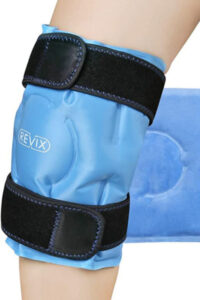
A wrap with straps can be convenient when treating a knee, elbow, or other joint because it can stay positioned without requiring you to hold the pack in place.
How Long Should You Use Cold?
Keep cold applications relatively short. About 10–20 minutes is a common range, depending on the method and guidance for the particular product or condition.
Always place a thin cloth or other barrier between an ice or frozen pack and your skin. Do not apply ice directly to bare skin.
The Arthritis Foundation recommends limiting hot or cold applications to roughly 15–20 minutes at a time.
Stop if the skin becomes painful, excessively numb, unusually pale, or otherwise uncomfortable.
Heat or Cold for a Flare?
This is where the simple “heat versus cold” rule becomes less useful.
An arthritis flare can involve several symptoms at once, including pain, stiffness, swelling, and tenderness.
If the affected joint is hot and swollen, cold may be more comfortable.
If the main problem is stiffness without noticeable swelling, gentle heat may feel better.
Some people may find that different approaches are useful at different stages of a flare. The important point is to respond to the symptom you are experiencing rather than assuming every flare requires the same treatment.
For rheumatoid arthritis, the Arthritis Foundation similarly describes heat as useful for stiff joints and tired muscles, while cold may be useful for acute pain and swollen joints.
Best Heat Therapy Products for Arthritis
The best heat therapy product depends on the joint you want to treat, how often you use heat, and whether you prefer hands-free or portable warmth.
Electric Heating Pads
Best for: Knees, back, hips, shoulders, and larger areas
An electric heating pad is one of the simplest options for regular heat therapy at home.
Useful features include:
- Multiple temperature settings
- Automatic shut-off
- A washable or removable cover
- A size that covers the area you want to treat
- A controller that is easy to operate if you have hand arthritis
For someone with limited hand strength or finger dexterity, a controller with large, easy-to-press buttons can be more practical than a small or complicated control panel.
Hot Water Bottles
Best for: Simple, inexpensive, portable warmth
A hot-water bottle can provide gentle warmth without requiring electricity. It can be useful for hands, knees, the lower back, or other areas where you can comfortably position it.
The main advantages are simplicity and portability.
However, it requires filling and handling hot water, which may be inconvenient for someone with significant hand stiffness or reduced grip strength.
Wearable Heat Wraps
Best for: Hands-free warmth and targeted areas
Wearable heat wraps can be useful when you want to move around while using heat.
Depending on the design, they may be available for areas such as the neck, shoulders, lower back, knees, or hands.
For arthritis, look for a wrap that is easy to put on and adjust. Velcro-style closures or large fastening areas can be easier to manage than small straps or buckles if your fingers are stiff.
Microwavable Moist Heat Packs
Best for: Portable heat without an electrical cord
Microwavable heat packs are another option when you want reusable warmth without plugging in an electric heating pad.
They can be convenient for targeted areas such as the neck, shoulder, hands, or knees.
Follow the manufacturer’s heating instructions carefully. Overheating a microwavable pack can cause burns or damage the product.
Best Cold Therapy Products for Arthritis
Cold therapy products range from simple reusable gel packs to wraps and more elaborate cold-therapy systems.
For most people, a simple reusable cold pack is enough to try cold therapy before investing in more specialized equipment.
Reusable Gel Cold Packs
Best for: General-purpose cold therapy
Gel packs are flexible and reusable. Depending on the product, they can be shaped around joints such as the knee, wrist, ankle, or elbow.
A useful feature for arthritis is flexibility. A pack that conforms to the joint may be easier to position than a rigid frozen pack.
Keep a cloth barrier between the cold pack and your skin.
Cold Therapy Wraps
Best for: Knees, wrists, elbows, and other joints where you want the pack to stay in place
Cold wraps combine a cold pack with a sleeve or adjustable fastening system.
This can be particularly convenient when you don’t want to hold the pack against the joint.
For people with arthritis in their hands, look for fastening systems that are easy to operate. Large straps or simple hook-and-loop closures may be easier than small buckles.
Cold Therapy Machines
Best for: People who want a more structured cold-therapy setup
Cold therapy machines circulate chilled water through a pad or wrap placed around the affected area.
They can provide a more continuous cooling setup than a conventional gel pack, but they are larger, more expensive, and require more equipment.
For occasional arthritis discomfort, a basic reusable cold pack may be all you need. A cold-therapy machine makes more sense for someone who specifically wants this type of setup.
Instant Cold Packs
Best for: Emergencies, travel, or situations without a freezer
Instant cold packs activate when squeezed or otherwise prepared according to the manufacturer’s instructions.
Their main advantage is convenience. You can keep one available for situations when a reusable pack isn’t frozen.
They are generally single-use, so they are less economical for frequent home use.
Heat vs. Cold Therapy: Quick Comparison
If you’re deciding between the two, start with the symptom rather than the product.
| Situation | Heat | Cold |
|---|---|---|
| Morning stiffness | Often useful | Usually less useful |
| Stiff joints before activity | Often useful | Usually less useful |
| Tight muscles around a joint | Often useful | May help soreness |
| Hot or swollen joint | Usually avoid | Often useful |
| Acute tenderness | May help | Often useful |
| Soreness after activity | May help later | Often useful |
| Long-standing joint discomfort | May help | May also help |
| Arthritis flare with swelling | Usually not first choice | Often useful |
| Want temporary pain relief | May help | May help |
The table is a starting point, not a prescription. Arthritis symptoms vary, and some people find one approach more comfortable than another.
Heat Pads vs. Gel Packs: Which Should You Buy?
If you’re buying your first thermal therapy product, you don’t necessarily need both.

Choose a Heat Pad If:
- Stiffness is your main problem.
- You want warmth before getting moving in the morning.
- You regularly treat a larger area such as your back, knee, or shoulder.
- You want adjustable temperature settings.
- You plan to use heat frequently at home.
An electric heating pad is particularly convenient if you want repeatable warmth without reheating water or preparing a microwavable pack.
Choose a Gel Cold Pack If:
- Swelling is your main concern.
- A joint feels hot or unusually tender.
- You want something reusable.
- You want to treat smaller joints such as a wrist, hand, elbow, or ankle.
- You want something that can also be used for occasional injuries or other types of soreness.
Gel packs are also relatively inexpensive, making them a practical way to try cold therapy without buying specialized equipment.
Consider Having Both
If your arthritis symptoms change from day to day, having one heat product and one cold product gives you more flexibility.
For example:
- Morning: Heat may be useful if stiffness is making it difficult to get moving.
- After activity: Cold may be useful if a joint becomes swollen or unusually tender.
- Later in the day: Heat may again feel comfortable if stiffness becomes the main problem.
You do not have to alternate heat and cold on a fixed schedule. Match the therapy to what your joint is doing at that moment.
Can You Use Heat and Cold on the Same Day?
Yes. Using both on the same day can be reasonable when your symptoms change.
For example, someone might use heat in the morning because their joints feel stiff and later use cold after an activity that leaves one joint swollen or tender.
The important distinction is that using both does not mean you need to alternate them continuously.
There is no need to follow a complicated heat-cold schedule simply because both products are available.
Instead, ask:
What is bothering me right now—stiffness or swelling/acute tenderness?
Then choose the option that fits that symptom.
What About Contrast Therapy?
Contrast therapy involves alternating heat and cold.
It is sometimes used in rehabilitation and sports settings, but you do not need to use contrast therapy to benefit from simple heat or cold applications.
For everyday arthritis symptom management, it is usually more practical to use the therapy that matches your current symptoms.
If you are considering repeated hot-and-cold treatments for a particular condition or injury, ask a healthcare professional whether that approach is appropriate for you.
Common Heat and Cold Therapy Mistakes

Heat and cold are simple treatments, but using them incorrectly can cause skin irritation, burns, or cold injury.
Using Heat on a Hot or Swollen Joint
If a joint is already hot, swollen, and tender, adding heat may make it feel worse.
If swelling is the main problem, cold may be the more comfortable option.
However, don’t assume that every painful joint needs cold. If the joint is primarily stiff without noticeable swelling, gentle warmth may be more appropriate.
Applying Ice Directly to the Skin
Never put ice or a frozen gel pack directly against bare skin.
Use a cloth or other appropriate barrier between the cold source and your skin.
Making Heat Too Hot
More heat does not mean more relief.
A heating pad should feel comfortably warm rather than painfully hot. Check your skin periodically, particularly if you are using heat for an extended period.
Leaving Heat or Cold on Too Long
Longer sessions are not necessarily better.
Follow the instructions for the particular product and keep applications within the recommended time. A common approach is approximately 15–20 minutes for heat and 10–20 minutes for cold, but specific instructions can vary.
Falling Asleep With a Heating Pad
Avoid falling asleep while using a heating pad unless the specific product is designed and approved for that type of use.
If you are tired or likely to fall asleep, use another method of warmth or stop the treatment before going to sleep.
Ignoring Reduced Sensation
Be particularly careful if you have reduced sensation in the area being treated.
You may not notice excessive heat or cold as quickly, increasing the risk of skin injury.
People with neuropathy, reduced circulation, or other conditions affecting sensation should ask a healthcare professional about the safest way to use thermal therapy.
Assuming Heat or Cold Will Work the Same Way Every Time
Arthritis symptoms can change.
A heating pad that feels helpful for morning stiffness may be uncomfortable when a joint becomes swollen later in the day. Similarly, cold may feel useful during a flare but not particularly helpful when stiffness is the main problem.
Use your current symptoms as your guide.
When Should You Talk to a Healthcare Professional?
Heat and cold can be useful comfort measures, but they should not be used to explain away symptoms that need medical attention.
Seek professional advice if:
- Your joint pain is severe or worsening.
- A joint becomes significantly swollen without an obvious explanation.
- You have persistent redness or warmth around a joint.
- Your symptoms continue despite your usual self-care measures.
- You have new symptoms that are unusual for you.
- You have an injury and are unsure whether heat or cold is appropriate.
- You have significant circulation problems or reduced sensation.
A healthcare professional can also help if you are unsure whether your symptoms are caused by arthritis or another condition.
Frequently Asked Questions
Is heat or cold better for arthritis pain?
Neither is universally better.
Heat is often more useful when stiffness or muscle tightness is the main problem. Cold may be more useful when a joint is acutely painful, swollen, hot, or tender.
Some people find that either treatment provides temporary pain relief, so comfort and symptom response matter.
Should I use heat or cold in the morning?
If morning stiffness is your main problem, heat is often a reasonable choice.
A warm shower, bath, heating pad, or warm compress may make stiff joints feel more comfortable before you begin your normal activities.
If you wake with a joint that is unusually swollen or hot rather than simply stiff, cold may be more appropriate.
Should I use heat or cold after exercise?
If an arthritic joint becomes swollen, hot, or particularly tender after activity, cold may provide temporary relief.
If you are mainly experiencing stiffness or muscle tightness without swelling, heat may feel better.
The goal is not to automatically use one treatment after every workout or activity. Pay attention to how the joint responds.
Is heat or cold better for rheumatoid arthritis?
It depends on the symptoms.
Heat may help with stiffness, particularly when joints are stiff without significant swelling. Cold may be more comfortable when a joint is acutely painful, swollen, or hot.
Because rheumatoid arthritis involves inflammation and can affect multiple joints, persistent or significant flares should be discussed with the healthcare professional managing your condition.
Can I use heat and cold on the same day?
Yes.
For example, you might use heat in the morning for stiffness and cold later if activity causes a joint to become swollen or tender.
There is no requirement to alternate them on a particular schedule. Use the approach that fits your symptoms at the time.
How long should I use a heating pad?
Follow the manufacturer’s instructions.
For many home heat applications, approximately 15–20 minutes is a reasonable starting point. The heat should be comfortably warm rather than very hot.
Do not sleep with a heating pad unless the product is specifically designed for safe use while sleeping.
How long should I use a cold pack?
Follow the instructions for the particular cold pack.
A common application period is approximately 10–20 minutes, with a protective layer between the cold source and your skin.
Stop if the skin becomes painful, excessively numb, unusually pale, or otherwise uncomfortable.
Can I use heat or cold every day?
Some people use thermal therapy regularly for symptom relief, but there is no need to follow a fixed daily schedule.
Use it when it is helpful, follow the product’s instructions, and protect your skin.
If you find yourself needing heat or cold frequently because of persistent or worsening pain, it is worth discussing the underlying symptoms with a healthcare professional.
Can heat or cold replace arthritis medication?
No.
Heat and cold are symptom-management tools. They do not cure arthritis or replace treatments prescribed for the underlying condition.
If you take medication for arthritis, continue following your healthcare professional’s instructions unless they advise you otherwise.
Final Thoughts: Match the Therapy to the Symptom
Heat and cold are inexpensive and accessible tools that can be useful additions to an arthritis self-care routine.
A simple rule of thumb is:
Try heat when stiffness is the main problem. Consider cold when swelling, heat, or acute tenderness is the main problem.
But don’t treat that rule as absolute.
Your symptoms may change throughout the day, and the same joint may respond differently depending on what you have been doing. You may find that heat works well in the morning while cold is more comfortable after an activity that leaves a joint swollen.
The most important thing is to use either therapy safely and pay attention to how your body responds.
Neither heat nor cold treats the underlying cause of arthritis. Their value is in helping you manage symptoms and make movement or daily activities more comfortable.
Related Reading
- Best Heating Pads and Wraps for Arthritis Relief — Compare heating products for hands, knees, back, and other areas affected by arthritis.
- Topical Pain Relief for Arthritis — Compare creams, gels, patches, heat, cold, and other topical approaches to managing localized discomfort.
- Hydrotherapy for Arthritis: Warm Water Relief That Works — Learn how warm water may provide a comfortable way to move and exercise when joints are stiff.
- Best Knee Massagers for Arthritis & Knee Pain — Explore another category of at-home tools for people dealing with knee discomfort.
- Arthritis Supplies & Tools: Complete Guide to Daily Living Aids — Browse practical tools and assistive devices that can make everyday tasks easier.
Medical Disclaimer: This article is for informational purposes only and does not constitute medical advice. Always consult your doctor, rheumatologist, or occupational therapist before making changes to how you manage your arthritis.
