

Disclosure: As an Amazon Associate, Arthritis Wares earns from qualifying purchases at no extra cost to you. We are not paid or sponsored by any manufacturer. Affiliate links help support our work.
Finding a comfortable mattress can be challenging when you live with arthritis. Pressure around the hips and shoulders, discomfort in the back, and difficulty turning over or getting out of bed can all affect your sleep.
A mattress cannot treat arthritis, and there is no single mattress firmness that works for everyone. However, choosing a sleeping surface that suits your preferred sleeping position, comfort needs, and ability to move around in bed may help make nighttime rest more manageable.
This guide compares four memory foam mattresses and one mattress topper worth considering. It explains the features to look at, the differences between the options, and what to check before ordering.
Quick Answer: Which Mattress Should You Consider?
The best starting point depends on what matters most to you. These recommendations are based on the product specifications provided in the listings, not hands-on testing.
- For balanced cushioning and support: Signature Design by Ashley Chime 12-Inch Memory Foam Mattress.
- For people interested in gel memory foam: Novilla Bliss 12-Inch Gel Memory Foam Mattress.
- For a low-profile, firm mattress: LUCID 5-Inch Firm Gel Memory Foam Mattress, particularly for suitable bunk beds, trundle beds, or other low-profile setups.
- For a medium-firm mattress with zoned pressure relief: Zinus Green Tea 12-Inch Memory Foam Mattress.
- For adjusting an existing mattress: ELEMUSE Dual-Layer 3-Inch Memory Foam Mattress Topper, provided your current mattress is still supportive.
These are starting points, not guarantees of pain relief. Comfort depends on your body, sleeping position, mattress configuration, and personal preferences.
Quick Comparison: Mattresses for Arthritis
| Mattress | Main feature | Listed feel or profile | Worth considering if… |
|---|---|---|---|
| Ashley Chime Memory Foam | Multi-layer foam and motion isolation | Medium-firm; 12-inch version | You want a conventional memory foam mattress with balanced cushioning and support |
| Novilla Bliss Gel Memory Foam | Gel memory foam and three-layer construction | 12-inch version | You want to compare a gel foam design and features intended to limit motion transfer |
| LUCID Firm Gel Memory Foam | Firm feel and low-profile design | 5-inch version; other thicknesses available | You need a firm, low-profile mattress for a compatible bed setup |
| Zinus Green Tea Memory Foam | Zoned pressure-relief design | Medium-firm; 12-inch version | You prefer a medium-firm mattress with zoned cushioning |
| ELEMUSE Dual-Layer Topper | Gel memory foam plus a quilted pillow-top layer | 3-inch topper | Your existing mattress is sound but feels too firm |
Important: Several products are sold in different thicknesses, sizes, and sometimes firmness options. The descriptions below refer to the specific configurations in the product information supplied. Always confirm the selected version before purchasing.
What to Look for in a Mattress When You Have Arthritis

Before comparing individual models, consider how you sleep and which parts of your current bed cause the most difficulty.
1. A Comfortable Balance of Firmness and Cushioning
A mattress should support your body without creating uncomfortable pressure points. Medium-firm mattresses are one option to consider, but they are not automatically best for everyone with arthritis.
Side sleepers may prefer enough cushioning for the shoulders and hips. Back sleepers may want a surface that feels supportive without excessive sinking. Some people prefer a firmer mattress, while others are more comfortable on a softer one.
Mattress firmness labels also vary by manufacturer, so do not rely on the label alone.
2. Pressure Relief for Hips, Shoulders, and Back
Memory foam contours around the body and may help some sleepers feel more evenly supported. However, the amount of cushioning varies with the foam layers, mattress thickness, body weight, and sleeping position.
If you wake with discomfort around your hips or shoulders, look for a mattress that allows those areas to settle comfortably without making the rest of your body feel unsupported.
3. Ease of Turning Over and Getting Out of Bed
A mattress that feels comfortable when lying still may not be as convenient when you need to change positions.
Consider whether you can roll over without excessive effort and whether the mattress edge feels stable when sitting down or standing up. These factors can be particularly important if arthritis affects your hands, hips, knees, or shoulders.
The height of the entire bed also matters. A mattress that is too high or too low for you may make getting in and out more difficult.
4. Temperature and Breathability
If you tend to sleep hot, pay attention to the mattress cover, foam construction, and any ventilation features.
Gel-infused foam is marketed as a cooling feature, but its presence does not guarantee that you will sleep cool. Your room temperature, bedding, and personal preferences also influence comfort.
5. Mattress Thickness, Size, and Bed Compatibility
A mattress may be available in several thicknesses, but the different versions should not be assumed to feel or perform identically.
Check the actual height, dimensions, recommended foundation, and compatibility with your bed frame. A low-profile mattress may be appropriate for a bunk bed or trundle, for example, but may not provide the height or cushioning you want for a primary bed.
6. Trial Periods and Return Conditions
Before ordering, check the current trial period, return policy, warranty, and any applicable conditions or fees. These terms can differ by seller and product.
A return policy is especially worth reviewing when you cannot try the mattress in person. Confirm the terms for the exact configuration you plan to buy.
1. Signature Design by Ashley Chime 12-Inch Memory Foam Mattress
Best for: People looking for a conventional memory foam mattress with a medium-firm feel.
The Ashley Chime mattress is a reasonable starting point for shoppers who want a multi-layer foam design rather than a traditional spring mattress.
The supplied listing describes a 12-inch version with a stretch-knit cover, a memory foam comfort layer, and a supportive foam base. Ashley also describes the design as providing motion isolation, which may be worth considering if you share a bed and are disturbed by a partner’s movements.
The mattress uses CertiPUR-US certified foam, according to the listing. It arrives compressed in a box for setup at home.
Features to consider
- Medium-firm feel in the listed configuration.
- Memory foam comfort layer and supportive foam base.
- Designed to limit motion transfer.
- CertiPUR-US certified foam, according to the product listing.
- Available in multiple sizes and thicknesses.
Potential limitations
A medium-firm feel will not suit everyone. If you prefer a very soft sleeping surface or need a firmer edge for getting out of bed, check whether this particular design meets those needs.
The Chime line includes different thicknesses, so confirm that you are selecting the 12-inch version if that is the configuration you want.

2. Novilla Bliss 12-Inch Gel Memory Foam Mattress
Best for: People interested in a layered gel memory foam mattress.
The Novilla Bliss uses a three-layer foam design in the supplied 12-inch listing. The manufacturer describes the mattress as combining gel memory foam with comfort and support foam layers.
The listing also identifies motion isolation, a knitted cover, and reinforced edge support as product features. These may be useful points to compare if you share a bed or want to consider how stable the mattress feels near its edges.
Novilla states that the foam is CertiPUR-US certified. The supplied listing describes the mattress as arriving compressed and gives a 100-day trial and a 10-year protection period; check the current terms and eligibility before ordering.
Features to consider
- Gel memory foam in a three-layer construction.
- Designed to contour to the body.
- Manufacturer-described motion isolation.
- Reinforced edge support, according to the listing.
- Multiple sizes and thicknesses available.
Potential limitations
Gel-infused foam does not guarantee a cool sleeping surface, and individual experiences can differ. If you tend to sleep hot, consider the full construction and cover rather than choosing on the basis of the word “gel” alone.
Check the firmness and thickness of your selected version, as other configurations may feel different from the 12-inch model.

3. LUCID 5-Inch Firm Gel Memory Foam Mattress
Best for: People who specifically need a firm, low-profile mattress for a compatible bed setup.
The supplied LUCID listing describes a 5-inch mattress with a firm feel. Its construction consists of one inch of gel- and bamboo-charcoal-infused memory foam over four inches of supportive base foam.
LUCID identifies bunk beds, trundle beds, and recreational vehicle setups as potential uses for this low-profile design. The listing also states that the foam is CertiPUR-US certified and that the mattress comes with a 10-year limited warranty.
Features to consider
- Firm feel in the listed 5-inch version.
- Low-profile construction.
- Gel and bamboo charcoal infusions, according to the listing.
- CertiPUR-US certified foam.
- Other thicknesses and firmness options are listed.
Potential limitations
The 5-inch version is substantially thinner than the 12-inch mattresses in this comparison. It may not provide the height or cushioning you want for a main bedroom mattress, particularly if you prefer a more substantial comfort layer.
The listing offers other thicknesses and firmness options, but you should not assume their construction or feel is identical to the 5-inch firm version. Review the selected configuration carefully.
I would not choose this model solely because you have back arthritis or because a firmer mattress sounds more supportive. The right firmness is a personal comfort decision.

4. Zinus Green Tea 12-Inch Memory Foam Mattress
Best for: People who prefer a medium-firm feel and want a mattress with zoned pressure-relief features.
The supplied Zinus listing describes a 12-inch Green Tea memory foam mattress with a medium-firm feel, a knitted cover, and a supportive foam base. It also identifies zoned pressure-relief technology as a feature intended to provide different levels of cushioning and support across the mattress.
The product listing says the foam is CertiPUR-US certified and the cover meets OEKO-TEX Standard 100 requirements. These are material-related certifications, not evidence that the mattress treats arthritis or guarantees a particular health outcome.
Zinus also states that the mattress is designed to absorb movement and that the selected Queen configuration contains no fiberglass. If these details are important to you, verify them for the exact model you order.
Features to consider
- Medium-firm feel in the listed 12-inch version.
- Zoned pressure-relief design, according to the manufacturer.
- Memory foam construction intended to contour to the body.
- CertiPUR-US certified foam and an OEKO-TEX Standard 100 cover, according to the listing.
- Multiple sizes and thicknesses available.
Potential limitations
Zoned pressure relief may not feel the same to every sleeper. If possible, look for information about the zones and consider the return conditions before buying.
The Green Tea range includes different thicknesses and product variants. Make sure the selected listing matches the version you have researched rather than assuming all Zinus mattresses use identical materials and features.

5. ELEMUSE Dual-Layer 3-Inch Memory Foam Mattress Topper
Best for: People whose existing mattress is still supportive but feels too firm.
Replacing a mattress can be expensive and inconvenient. If your current mattress is in good condition but needs a softer surface, a topper may be worth considering before buying an entirely new bed.
The supplied ELEMUSE listing describes a 3-inch dual-layer design. It combines a 2-inch gel memory foam layer with a 1-inch quilted pillow-top cover filled with down-alternative fiber.
The foam layer is intended to contour to the body, while the quilted top adds softness. This changes the feel of the existing mattress rather than replacing its underlying support.
Features to consider
- Two-layer construction with a combined listed thickness of 3 inches.
- Gel memory foam base layer.
- Quilted, down-alternative pillow-top cover.
- Multiple mattress sizes listed.
- A potential way to change surface comfort without replacing the mattress.
Potential limitations
A topper cannot correct a mattress that is sagging, dipping, or no longer supportive. It may also make a bed harder to get into or out of by increasing its overall height.
The softer feel may not suit everyone, and a topper cannot guarantee reduced pain or morning stiffness. Check the dimensions and attachment or fit details for your mattress before ordering.
The listing recommends allowing up to 72 hours for the topper to air out and regain its shape after unpacking. Follow the current product instructions.

Mattress or Topper: Which Makes More Sense?
A new mattress and a topper solve different problems.
Consider a new mattress if your current one is sagging, uneven, uncomfortable throughout the night, or no longer offers the support you need.
Consider a topper if your mattress remains in good condition but its surface feels too firm or needs additional cushioning.
Neither option is guaranteed to improve arthritis symptoms. If your mattress is already too soft or makes changing position difficult, adding another layer may not help.
Tips for Making Your Bed More Comfortable With Arthritis
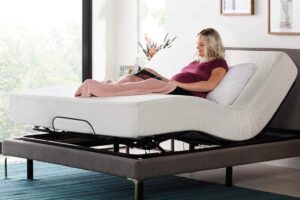
A mattress is only one part of your sleeping setup. A few practical adjustments may be worth considering alongside your choice of mattress.
- Review your pillow: The pillow should suit your sleeping position and help keep your neck comfortable. See our guide to Best Pillows for Arthritis Support.
- Consider your bed height: Check whether your feet can reach the floor comfortably when sitting on the edge and whether standing up feels manageable.
- Make bedding easier to handle: Lightweight bedding or easier-to-manage covers may help if gripping, lifting, or pulling heavy blankets is difficult.
- Keep essential items within reach: Place items you regularly use near the bed without obstructing your path.
- Allow time to assess comfort: Pay attention to how the mattress feels in your normal sleeping position and whether turning over or getting up is manageable.
For additional ideas, read our guide to Sleeping with Arthritis: Better Rest, Less Night Pain.
Frequently Asked Questions
Is a firm or soft mattress better for arthritis?
Neither is universally best. A mattress should feel comfortable and provide suitable support for your body and sleeping position. Medium-firm is one option to consider, but personal comfort, pressure points, and ease of movement matter more than the label alone.
Can a memory foam mattress help with hip or shoulder discomfort?
Memory foam contours around the body and may make the sleeping surface more comfortable for some people. Whether it helps with hip or shoulder discomfort depends on the mattress design, your sleeping position, and your individual needs. No mattress can be guaranteed to relieve arthritis pain.
Are gel memory foam mattresses cooler?
Gel-infused foam is often marketed for cooling, but the actual sleeping temperature depends on the entire mattress construction, cover, bedding, room temperature, and individual preferences. A gel label alone does not guarantee that a mattress will sleep cool.
Is a mattress topper worth trying before replacing a mattress?
It may be worth considering if your existing mattress is still supportive but feels too firm. A topper is unlikely to solve sagging or a lack of underlying support, and it can change the overall height of the bed.
Does mattress thickness matter?
It can. Thickness affects the mattress’s overall height and may influence how the bed feels, but thicker does not automatically mean more comfortable or supportive. Compare the materials, construction, and suitability for your bed rather than relying on thickness alone.
What should I check before buying a mattress online?
Confirm the exact size, thickness, firmness, materials, bed-frame compatibility, trial and return conditions, warranty, and delivery arrangements. Where a listing offers several configurations, check the details for the version you intend to order.
Final Thoughts
Choosing a mattress when you have arthritis is about finding a sleeping surface that suits your comfort needs, preferred sleeping position, and ability to move around in bed.
The Ashley Chime and Zinus Green Tea offer medium-firm options in the listed 12-inch configurations. The Novilla Bliss is another layered foam design to compare, while the LUCID 5-inch version is a more specialized low-profile option. If your existing mattress is still in good condition, the ELEMUSE topper may be worth considering as an alternative to replacing it.
Before buying, confirm the exact configuration and return terms. A mattress that works well for one person may not be comfortable for another, so prioritize your own needs over broad claims about arthritis relief.
Related Reading
- Sleeping with Arthritis: Better Rest, Less Night Pain
- Best Pillows for Arthritis Support
- Best Adjustable Beds for Arthritis Pain Relief
- Living Well With Arthritis: Practical Relief, Tools & Daily Strategies
Medical Disclaimer: This article is for informational purposes only and does not constitute medical advice. Always consult your doctor, rheumatologist, or occupational therapist before making changes to how you manage your arthritis.
