

Disclosure: As an Amazon Associate, Arthritis Wares earns from qualifying purchases at no extra cost to you. We are not paid or sponsored by any manufacturer. Affiliate links help support our work.
Smart rings can track sleep, activity, heart rate and other wellness measures in a small wearable device. For people living with arthritis, this information may help reveal patterns in sleep, fatigue and daily activity—but smart rings do not directly relieve arthritis pain or diagnose joint inflammation.
The biggest question for someone with arthritis may not be which ring has the most features. It may be whether a ring is comfortable on painful or swollen fingers, easy to remove, simple to use and worth its purchase price and any ongoing subscription fees.
This guide compares three popular smart rings—the Oura Ring 5, Samsung Galaxy Ring and RingConn Gen 3—and explains what to consider before buying one.
Quick Answer: Are Smart Rings Useful for People With Arthritis?
A smart ring may be useful if you want to monitor sleep, activity and general wellness without wearing a larger device on your wrist. The information can help you notice patterns over time and, if useful, discuss them with a healthcare professional.
However, smart rings are not designed specifically for arthritis. They do not measure joint pain directly, and their temperature readings cannot reliably determine whether an arthritic joint is inflamed.
Consider these three options:
- Oura Ring 5: Worth considering if detailed sleep and wellness insights are your priority and you are comfortable paying a membership fee.
- Samsung Galaxy Ring: Worth considering if you use a compatible Android phone, particularly within the Samsung ecosystem, and prefer a ring without a separate subscription.
- RingConn Gen 3: Worth considering if you want a broad range of wellness tracking without an ongoing app subscription.
If your fingers swell frequently, your knuckles are painful, or you have difficulty removing jewellery, a smart ring may not be the right wearable for you. A wrist-based tracker could be a more practical alternative.
How Can a Smart Ring Help Someone With Arthritis?
A smart ring does not treat arthritis. Its potential value is in the information it collects and whether that information helps you understand your everyday habits.
1. Monitor sleep and fatigue
Some smart rings estimate sleep duration, sleep stages and nighttime patterns. Reviewing this information may help you notice whether poor sleep coincides with greater fatigue or more difficult days.
The data is an estimate rather than a medical assessment. It cannot establish that arthritis caused a change in sleep or that a particular night’s sleep will determine tomorrow’s symptoms.
2. Notice changes in daily activity
Activity tracking may help you see whether you have been moving more or less than usual. Some people use this information to reflect on their routines, balance activity with rest and avoid making sudden changes to their exercise habits.
A ring’s activity estimates are not a substitute for listening to your body. If an activity increases pain, you should not push through it simply to reach a daily target.
3. Review general wellness trends
Depending on the model, smart rings can estimate resting heart rate, heart rate variability (HRV), blood oxygen levels or skin-temperature trends.
These measurements can be influenced by many factors, including sleep, stress, illness, medication, exercise and individual variation. They do not identify the cause of a change.
Important: Skin-temperature readings are not the same as measuring the temperature of an inflamed joint. A smart ring should not be used to diagnose an arthritis flare, monitor disease activity or decide whether medication is working.
4. Share useful observations with your healthcare professional
If you already keep a symptom diary, wearable information may provide additional context about sleep or activity. You could record your symptoms alongside your observations and discuss any recurring patterns at an appointment.
The ring’s data should be treated as supplementary information, not proof that a particular factor caused your symptoms.
Best Smart Rings to Consider
The three rings below serve different buying priorities. None is specifically designed to relieve arthritis, and the best choice depends on your phone, budget, comfort and the information you actually want to track.
1. Oura Ring 5 — Best for Detailed Wellness Insights
Best for: People who want a broad range of sleep, activity and wellness information.
The Oura Ring 5 is a titanium smart ring designed to track sleep, activity, heart rate, temperature trends and other wellness measures through its companion app.
Potential advantages
- A broad selection of sleep and wellness insights.
- A titanium design with recessed interior sensors.
- Compatibility with supported iOS and Android devices.
- Long-term trends that may help you reflect on sleep and activity habits.
- The Ring 5 is dramatically slimmer and lighter, making it feel more like regular jewelry.
Things to consider
- Full access to many insights requires an ongoing Oura membership.
- The purchase price may be higher than some alternatives.
- Detailed charts and scores may be more information than you need.
- A comfortable fit is essential, especially if your fingers are sensitive or prone to swelling.
Is it suitable for arthritis?
It may be worth considering if you value detailed wellness tracking and are comfortable wearing a ring throughout the day and night. Its design does not guarantee comfort for painful knuckles, and the data does not directly measure arthritis pain or inflammation.
Check the current membership fee, sizing options and product specifications before purchasing.

2. Samsung Galaxy Ring — Best for Compatible Samsung Phone Users
Best for: People who already use a compatible Android phone, particularly a Samsung Galaxy phone.
The Samsung Galaxy Ring tracks several health and wellness measures, including sleep, heart rate and activity-related information through Samsung’s health ecosystem.
Potential advantages
- No separate ongoing subscription fee for its core Samsung Health experience.
- A charging case for storing and charging the ring.
- Integration with compatible Samsung health features.
- A discreet wearable for people who prefer not to wear a watch.
Things to consider
- It requires a compatible Android phone; it is not an option for iPhone users.
- Some features work best with compatible Samsung devices.
- It still requires a suitable finger fit and may be uncomfortable on swollen or tender joints.
- Its usefulness depends on whether you like and regularly use the Samsung Health app.
Is it suitable for arthritis?
It may suit someone who already uses a compatible Samsung phone and wants to review sleep and general activity without paying a separate ring membership. It does not provide arthritis-specific monitoring or pain relief.
Check phone compatibility and the current feature requirements before ordering.
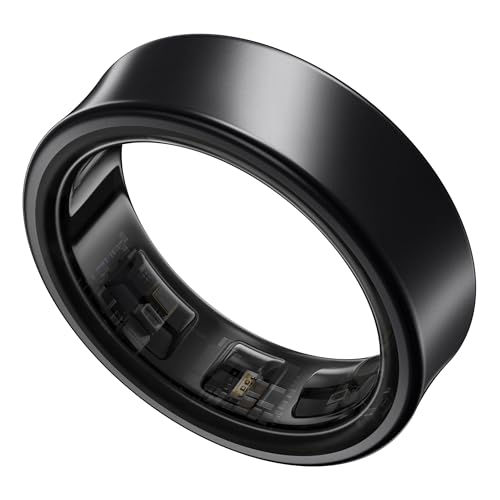
3. RingConn Gen 3 — Best for Subscription-Free Tracking
Best for: People who want a range of wellness measurements without a recurring app subscription.
RingConn Gen 3 offers sleep and activity tracking alongside measures such as heart rate, HRV and blood oxygen. The manufacturer also promotes sleep-apnea-related monitoring features; check the current product documentation to understand exactly what is offered and whether it is intended for screening or general wellness rather than diagnosis.
Potential advantages
- No ongoing app subscription is required for its standard tracking experience.
- A broad selection of wellness data.
- A charging case and a battery-life claim of up to approximately 14 days, depending on use and settings.
- Vibration alerts – Gen 3 can nudge you for health reminders and inactivity
- Vascular health trends are exclusive to Gen 3, offering insights into blood pressure patterns over time.
- Compatibility with supported iOS and Android devices.
- Value: Gen 2 Air is $150 less and still covers core sleep, HR, and wellness tracking with no subscription — making it the stronger pick if those basics are all you need.
Things to consider
- The app’s layout and presentation may not suit everyone’s preferences.
- A ring that fits one brand may not fit another, so use the correct sizing kit.
- Some health-related features should not be treated as a substitute for medical testing.
- A longer battery life does not make a ring easier to remove or more comfortable on swollen fingers.
Is it suitable for arthritis?
It is worth considering if you want sleep and wellness tracking without another monthly fee. As with other smart rings, the key question is whether it fits comfortably and whether its information is useful to you.

Smart Ring Comparison: Which Features Matter Most?
| Feature | Oura Ring 5 | Samsung Galaxy Ring | RingConn Gen 3 |
|---|---|---|---|
| Main appeal | Detailed wellness insights | Samsung ecosystem integration | Tracking without an ongoing subscription |
| Sleep tracking | Yes | Yes | Yes |
| Heart-rate and wellness trends | Yes | Yes | Yes |
| Ongoing subscription | Required for many insights | No separate core subscription | No ongoing app subscription |
| Phone compatibility | Supported iOS and Android | Compatible Android phones only | Supported iOS and Android |
| Battery life | Advertised up to about 8 days | Advertised up to about 7 days | Advertised up to about 14 days |
| Important trade-off | Membership cost | Android and ecosystem limitations | Fit and app preferences |
Specifications are based on the models described in this guide and may change. Battery life varies with settings and use. Confirm current compatibility, subscription terms and features on the manufacturer’s website before buying.
No ring in this table is proven to be better for arthritis pain. The differences are primarily about the tracking experience, phone compatibility, ongoing costs and convenience.
Are Smart Rings Comfortable for People With Arthritis?
This deserves special attention. A ring may be lightweight yet still uncomfortable if it presses on a tender knuckle or becomes tight when your fingers swell.
Finger swelling can make sizing difficult
Finger size can vary during the day and may change during an arthritis flare. A ring that feels comfortable at one time may feel tight later.
Before buying:
- Use the manufacturer’s sizing kit and instructions.
- Try the sample ring for the recommended trial period.
- Check comfort at different times of day, not just once.
- Make sure you can remove the ring without pain or excessive effort.
- Consider whether you can comfortably wear it while sleeping, when some tracking is most useful.
Do not assume your ordinary jewellery size will match a smart ring’s size. Different brands use different sizing systems.
Painful knuckles may make a ring impractical
If your knuckles are enlarged, tender or difficult to move, putting on and removing a ring may be uncomfortable. The ring may also press against a painful joint when you grip a handle, use a mobility aid or perform everyday tasks.
If a ring causes pain, tightness, numbness or difficulty removing it, stop wearing it. Do not force it over a swollen joint.
If your finger swelling is unpredictable, a smart ring may be less practical than a wrist-worn device.
Consider charging and app usability
A smart ring still needs charging, pairing and occasional app interaction. Consider whether the charging case is easy for you to handle and whether the app’s text, charts and controls are comfortable to use.
If small controls or detailed graphs are difficult to navigate, a simpler tracker or a device with a larger screen may be a better fit.
Smart Ring or Smartwatch: Which Is Better for Arthritis?
A smart ring is not automatically the better wearable for someone with arthritis. Each has trade-offs.
| Consideration | Smart ring | Smartwatch or wrist tracker |
|---|---|---|
| Size and appearance | Small and discreet | Larger and more visible |
| Finger comfort | Can be uncomfortable with swelling or painful knuckles | Avoids pressure on finger joints, but the band may bother a sensitive wrist |
| Reading data | Usually through a phone app | Some models show information on a larger screen |
| Everyday interaction | Little direct interaction with the ring itself | May require buttons, a touchscreen or gestures |
| Removing and putting on | May be difficult with swollen fingers | Clasp or strap may be difficult for painful hands |
| Tracking | Often focused on sleep and wellness trends | Varies by model; some offer more exercise features and direct notifications |
If you already have a smartwatch or fitness tracker that meets your needs, buying a smart ring may add cost without providing enough extra value.
If you want to compare more wearable options, consider whether you would benefit more from a device with an easy-to-adjust strap, a readable display or simpler controls than from the smaller size of a ring.
How to Choose a Smart Ring When You Have Arthritis
Before making a purchase, work through these priorities.
1. Start with fit and comfort
This matters more than having the most advanced sensors. If you cannot wear the ring comfortably, you will not benefit from its tracking features.
2. Choose data you will actually use
If your main interest is sleep, look closely at sleep reporting and app clarity. If you want to review daily activity, consider how the app presents movement and trends. More measurements do not necessarily mean more useful information.
3. Check the total cost
Compare the initial ring price with any membership fee. A subscription-free ring may cost more upfront but be less expensive over time. Confirm current prices and terms before buying.
4. Check phone compatibility
Make sure the ring works with your phone and the features you want to use. This is particularly important for Samsung Galaxy Ring buyers.
5. Think about ease of use
Consider charging, pairing, app navigation and whether you will be comfortable reviewing the data. A wearable should simplify your routine rather than create another frustrating task.
6. Avoid treating wellness scores as medical advice
Readings such as HRV, sleep scores and skin-temperature trends can vary for many reasons. They are not diagnoses, and they should not replace medical assessment or your own observations about pain and function.
Frequently Asked Questions
Can a smart ring detect an arthritis flare?
A consumer smart ring cannot reliably diagnose or predict an arthritis flare. It may record changes in general wellness measures, but those changes have many possible causes. Do not use a ring’s readings to decide whether a flare is occurring or whether treatment should change.
Can a smart ring measure inflammation?
Smart rings may record skin-temperature trends, but they do not directly measure inflammation inside a joint. A temperature change alone cannot tell you whether arthritis inflammation is increasing or decreasing.
Do smart rings help with arthritis pain?
Smart rings do not directly reduce joint pain. Their potential benefit is indirect: some people may find sleep or activity information useful when reflecting on their routines and discussing symptoms with a healthcare professional.
Should I wear a smart ring overnight?
Overnight wear is useful for many sleep-tracking features, but only if the ring is comfortable and safe to wear. If your fingers swell overnight or the ring becomes difficult to remove, do not force yourself to wear it.
What if my fingers swell during an arthritis flare?
Avoid wearing a ring that feels tight or becomes difficult to remove. If swelling is frequent or unpredictable, a wrist-based tracker may be a more practical choice. If a ring becomes stuck on a swollen finger, seek prompt assistance rather than forcing it off.
Are smart rings better than fitness trackers for arthritis?
Not necessarily. Smart rings are discreet and often focus on sleep and wellness tracking. Wrist-based devices may offer a larger display and avoid putting pressure on finger joints. Choose based on comfort, accessibility, features and cost.
Final Thoughts: Are Smart Rings Worth Buying?
Smart rings can provide convenient information about sleep, activity and general wellness. For some people with arthritis, those trends may help them reflect on daily routines and discuss observations with a healthcare professional.
But they are not arthritis treatments, and they cannot reliably diagnose joint inflammation or predict flares. Their value depends on whether the data is useful to you—and whether the ring is comfortable enough to wear.
If you decide to buy one, compare the Oura Ring 5 for detailed insights, the Samsung Galaxy Ring for compatible Samsung users, and the RingConn Gen 3 for subscription-free tracking. Most importantly, make sure the ring fits comfortably, can be removed easily and does not aggravate painful or swollen fingers.
If wearing a ring is uncomfortable, a wrist tracker may be a better investment.
Related Reading
- How to Sleep With Arthritis: Positions, Bedding, and Nighttime Relief Tips
- Smart Home Gadgets for Arthritis: Reduce Strain and Make Home Life Easier
- Arthritis Supplies & Tools: Complete Guide to Daily Living Aids
Medical Disclaimer: This article is for informational purposes only and does not constitute medical advice. Always consult your doctor, rheumatologist, or occupational therapist before making changes to how you manage your arthritis.
