
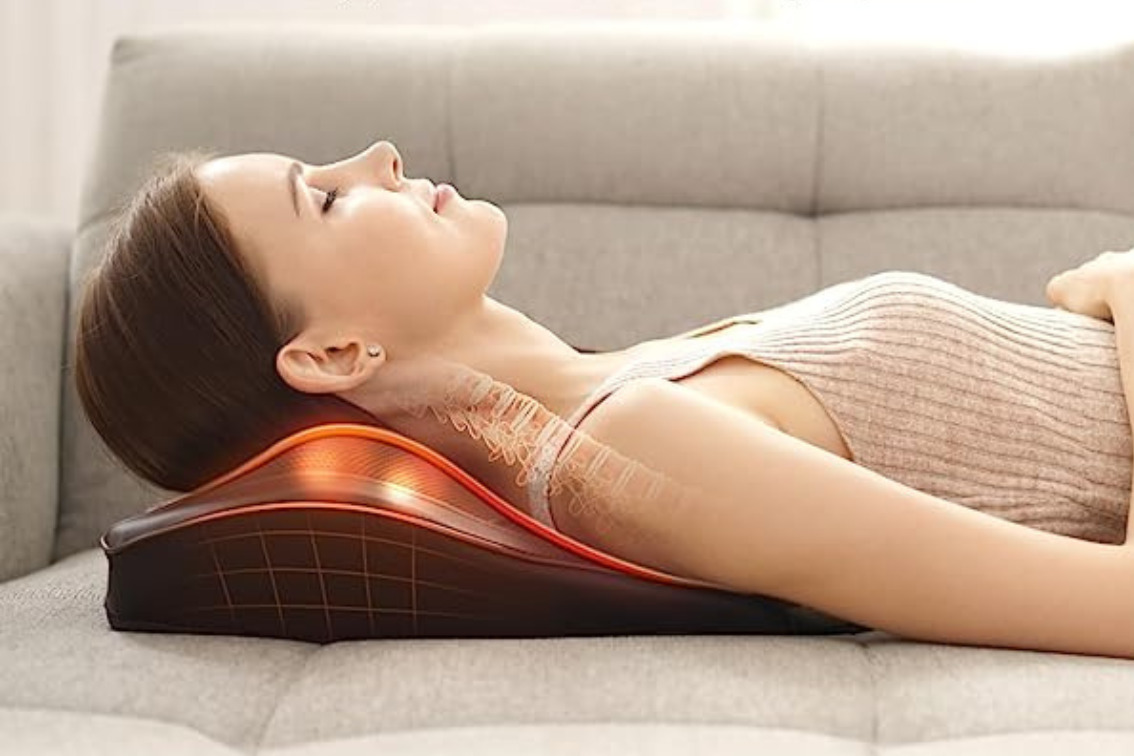
Disclosure: As an Amazon Associate, Arthritis Wares earns from qualifying purchases at no extra cost to you. We are not paid or sponsored by any manufacturer. Affiliate links help support our work.
If arthritis affects your hands, feet, knees, neck, back, or other joints, a massager may be a useful comfort tool. But different massagers do very different things.
A hand massager with air compression is designed very differently from a percussion massage gun. A heated foot massager serves a different purpose from a knee wrap, while a leg compression device is designed around the lower legs rather than individual joints.
The key is not finding one massager that does everything. It is choosing the type of device that matches the area you want to work on, the kind of discomfort you experience, and how comfortable you are with heat, vibration, or compression.
This guide compares several types of massagers commonly used for arthritis-related stiffness and muscle tension, then points you to our more detailed guides for specific areas.
Quick Answer: What Type of Massager Is Best for Arthritis?
There is no single best massager for every person or every type of arthritis.
As a starting point:
| If your main concern is… | Consider… | Why |
|---|---|---|
| Hand or finger stiffness | Hand massager | Designed around the fingers, palm, and hand |
| Foot or ankle discomfort | Foot massager | Targets the soles, feet, and sometimes ankles |
| Knee stiffness | Knee massager | Wraps around the knee and may combine heat, vibration, or compression |
| Leg heaviness or swelling | Leg compression massager | Uses inflatable chambers around the legs |
| Neck and shoulder muscle tension | Shiatsu neck/shoulder massager | Targets surrounding muscles rather than the joint itself |
| Hip or large-muscle tightness | Massage gun or foam roller | Designed primarily for larger muscle groups |
| General gentle massage | Handheld massager | Flexible and can be used on several body areas |
Important: A massager is a comfort tool, not a treatment for the underlying cause of arthritis. If a particular device causes pain, increased swelling, numbness, or other unusual symptoms, stop using it.
How Massagers May Help With Arthritis Discomfort
Massage devices can provide warmth, pressure, vibration, or kneading depending on the design. These sensations may temporarily make stiff or tense areas feel more comfortable.
The potential benefit depends heavily on the device and the area being treated.
For example:
- Heat may feel comfortable when stiffness is the main problem.
- Gentle vibration may provide a relaxing sensation and can be easier to tolerate than deep pressure for some people.
- Air compression produces rhythmic squeezing and releasing and is commonly used in leg and hand devices.
- Kneading or rolling targets muscles and soft tissues rather than directly treating an arthritic joint.
- Percussion is intended primarily for muscle tissue and should not be applied aggressively over painful or swollen joints.
The effect is generally temporary. A massager does not repair damaged cartilage, reverse arthritis, or replace treatments recommended by your healthcare professional.
Is a Massager Right for You?
A massager may be worth considering if you:
- Experience stiffness after sleeping or sitting for a while
- Have muscle tightness around an uncomfortable joint
- Like the sensation of warmth or gentle massage
- Want a non-drug comfort option to use at home
- Find that gentle massage helps you relax
- Have difficulty using tools that require a lot of hand strength or dexterity
A massager may not be appropriate for everyone.
Use particular caution if you have:
- Significant or unexplained swelling
- Reduced sensation or nerve damage
- A recent surgery or injury
- A joint replacement
- An active skin problem or open wound in the area
- A condition for which compression, heat, or vibration has been restricted by your healthcare professional
When in doubt, check with your doctor, rheumatologist, physical therapist, or occupational therapist before using a new device.
Quick Picks: Massagers for Different Arthritis Needs
These are not ranked from best to worst. Each is included because it represents a different type of massager or body area.
| Type | Current Pick | Best suited to | Main features |
|---|---|---|---|
| Massage gun | AERLANG Massage Gun | Larger muscles around hips, thighs, and shoulders | Multiple speeds and interchangeable heads |
| Hand massager | Lunix LX3 | Hand and finger stiffness | Air compression + heat |
| Foot massager | CuPiLo Foot Massager | Feet and ankles | Kneading, compression, vibration, and heat |
| Knee massager | COMFIER Cordless Knee Massager | Knee comfort | Vibration, compression, and heat |
| Handheld | HoMedics Mini Hand-Held Massager | Gentle, flexible massage | Compact and battery powered |
| Leg massager | CINCOM Heated Leg Massager | Leg fatigue, calf and ankle comfort | Air compression + heat, 3 modes, 3 intensity levels |
| Neck/shoulder | MoCuishle Shiatsu Massager | Neck and shoulder muscle tension | Kneading nodes + optional heat |
| Back massager | ALLJOY Heated Back Massager | Back and larger muscle groups | Kneading + heat |
| Foam roller | BORNEW Foam Roller Set | Hips, thighs, and larger muscles | Roller, massage ball, and stretch strap |
1. AERLANG Massage Gun — For Larger Muscle Groups
Best for: Muscle tightness around larger areas such as the hips, thighs, and shoulders.
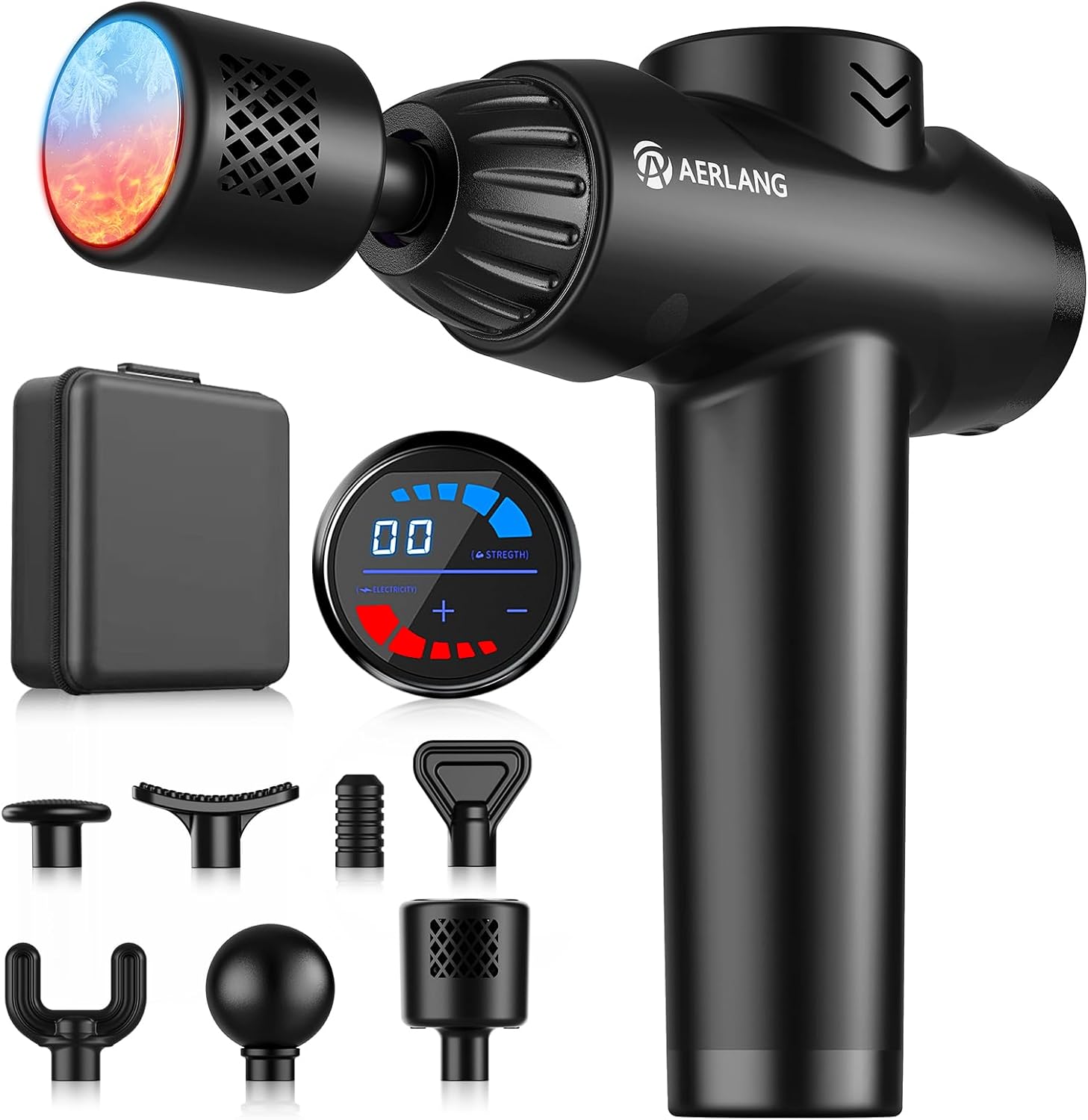
A percussion massage gun is different from the wearable arthritis massagers elsewhere in this guide. Instead of wrapping around a joint, it delivers rapid pulses through an attachment head.
That makes it more appropriate for muscle tissue around a joint than for directly treating an arthritic joint.
The AERLANG model in this guide offers multiple speeds and interchangeable heads, along with heat and cooling functions.
Key features:
- Multiple adjustable speed settings
- Interchangeable massage heads
- Rechargeable design
- Portable
- Heat and cooling functions
Use carefully: Keep percussion devices on the surrounding muscles rather than directly over a painful, swollen, or inflamed joint. Start at a low intensity.
2. MoCuishle Shiatsu Massager — For Neck and Shoulder Muscle Tension
Best for: Muscle tension in the neck, shoulders, and upper back.
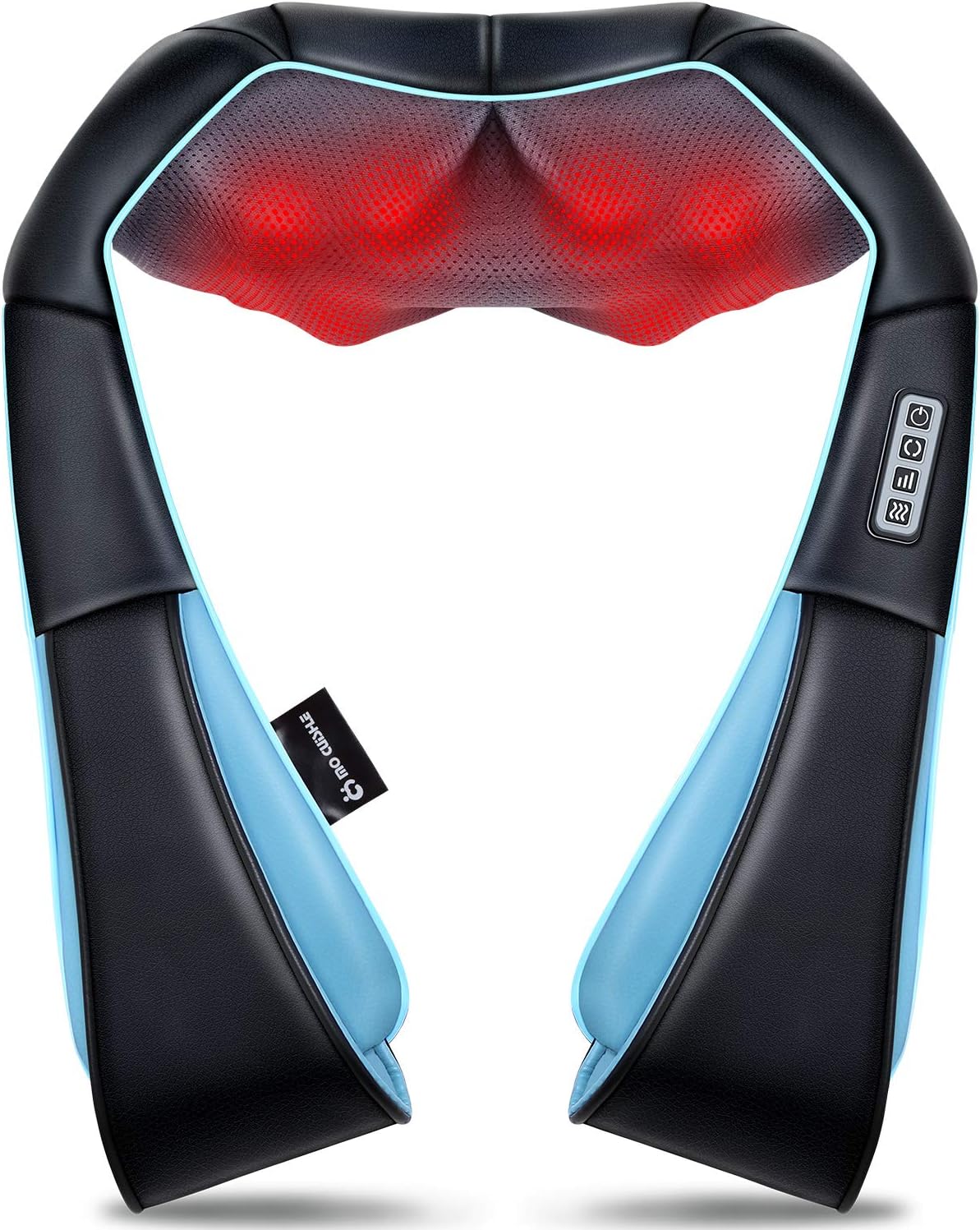
Shiatsu-style massagers use rotating kneading nodes rather than air compression. The sensation can be quite different from a hand, knee, or leg massager.
The MoCuishle model uses multiple kneading nodes and optional heat. For someone whose neck discomfort includes a significant muscle-tension component, this type of device may be more relevant than a percussion gun.
Key features:
- Multiple kneading nodes
- Adjustable massage settings
- Optional heat
- Designed for neck, shoulders, and upper back
Keep in mind: A massager can address surrounding muscle tension, but it does not treat the underlying arthritis of the cervical spine.
3. HoMedics Mini Hand-Held Massager — For Gentle, Flexible Use
Best for: People who want a small handheld device that can be used on several areas.
A handheld massager gives you more control over where the device is applied. It can be useful if you do not want a large device dedicated to one joint.
Its small size can also make it convenient for travel or occasional use.
Key features:
- Compact design
- Battery powered
- Lightweight
- Can be used on areas such as the hands, arms, and shoulders
One limitation: Holding and moving a handheld massager still requires some grip strength. If your hands are particularly painful or weak, a wearable device may be easier to use independently.

4. CuPiLo Foot Massager — For Foot and Ankle Comfort
Best for: People looking for a dedicated foot massager rather than a general-purpose device.
Foot massagers can combine several sensations, including kneading, rolling, compression, vibration, and heat.
The CuPiLo model in this guide combines several of these features and is designed to accommodate larger feet.
However, foot massagers are a broad category. Some are primarily kneading devices, while others emphasize compression, vibration, or electrical stimulation.
If your main concern is foot swelling, neuropathy, or circulation rather than massage, a different type of device may be more appropriate.
Key features:
- Multiple massage settings
- Heat
- Compression
- Vibration
- Designed for both feet simultaneously

Also see: Best Foot Massagers on Amazon for a more detailed comparison of foot-massager types and price ranges.
5. Lunix LX3 Cordless Hand Massager — For Hand and Finger Stiffness
Best for: People who want a dedicated hand massager with compression and heat.
Hand massagers are considerably more specialized than handheld massage devices. They are designed to surround the hand and, depending on the model, apply pressure to the fingers, palm, or wrist.
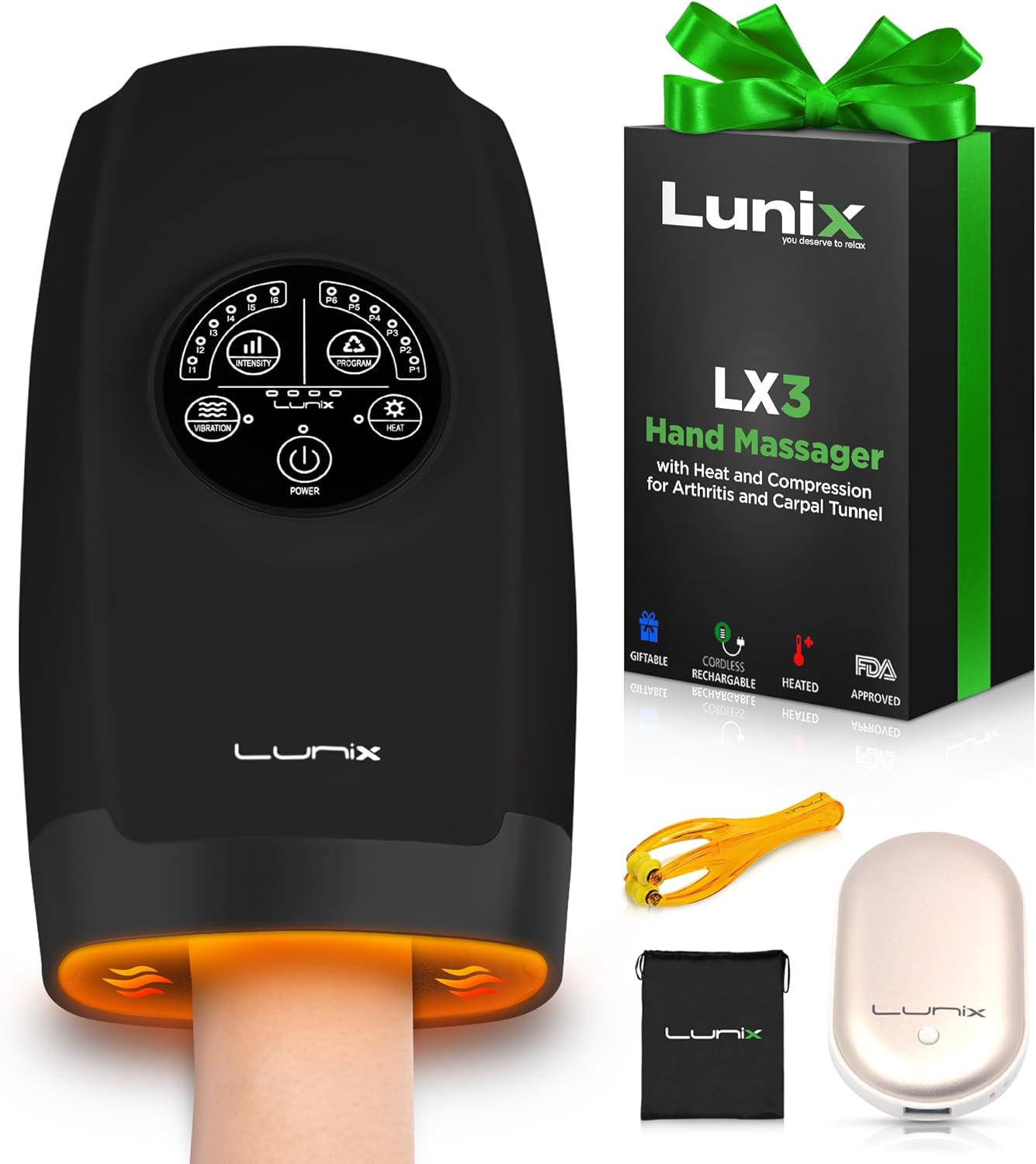
The Lunix LX3 uses air compression and heat in a cordless design.
Because finger coverage and fit can make a major difference, a dedicated hand-massager comparison is more useful than trying to evaluate hand devices alongside full-body massagers.
Key features:
- Air compression
- Heat
- Multiple intensity settings
- Cordless design
- Designed specifically for the hand
Also see: 7 Best Hand Massagers for Arthritis Pain Relief for a full comparison of hand-specific models.
6. ALLJOY Heated Back Massager — For Back Muscle Tension
Best for: Larger areas of back muscle tension and general massage.
Back massagers are another category where it is important to distinguish muscle comfort from treatment of spinal arthritis.
The ALLJOY model uses kneading nodes and heat and can be used while seated.
For someone with arthritis affecting the spine, the device may provide a comfortable massage sensation in the surrounding muscles. It should not be treated as a device that corrects spinal arthritis or structural problems.
Key features:
- Kneading massage
- Heat
- Multiple intensity settings
- Designed for use while seated
- Can also be used on some larger muscle groups

7. BORNEW Foam Roller Set — For Larger Muscle Groups
Best for: People who want a non-electric option for larger muscle groups.
A foam roller is not technically the same thing as an electronic massager, but it belongs in this broader category because it is often used for self-massage.
The BORNEW set includes a foam roller, massage ball, and stretch strap.
This type of tool may be useful for someone who wants to work on muscle tightness around the hips, thighs, or other larger areas without using heat, vibration, or electricity.
Key features:
- Full-length foam roller
- Massage ball
- Stretch strap
- No batteries or electrical connection required
Important: Foam rolling can place considerable pressure on tissues. Avoid rolling directly over painful or swollen joints.

8. COMFIER Cordless Knee Massager — For Knee Arthritis Comfort
Best for: People looking for a wearable device specifically designed around the knee.
Knee massagers are different from general-purpose massage devices because the device is shaped to fit around the joint.
The COMFIER model combines vibration, air compression, and heat in a cordless wrap-style design.
Because there are many knee-specific options, including models with different combinations of heat, vibration, compression, and other features, it makes sense to compare them separately rather than choosing a knee massager simply because it appears on a general list.
Key features:
- Wraparound knee design
- Vibration
- Compression
- Adjustable heat
- Cordless operation

Also see: Best Knee Massagers for Arthritis & Knee Pain for a dedicated comparison of knee-specific devices.
9. CINCOM Heated Leg Massager — For Leg and Calf Compression
Best for: People looking for a wearable leg massager that combines air compression with optional heat.
The CINCOM uses four air chambers to provide sequential compression around the feet, ankles, calves, and legs. This makes it different from a kneading foot massager or a knee-specific wrap.
According to the manufacturer’s Amazon listing, it has three massage modes, three intensity levels, two heat levels, and a 20-minute automatic shutoff.
Key features:
- Air compression around the feet, ankles, calves, and legs
- Four sequential air chambers
- Two heat levels
- Three massage modes
- Three compression intensity levels
- 20-minute automatic shutoff
- Adjustable Velcro fit
- Calf circumference up to 28.5 inches according to the listing
- Two extension pieces for additional sizing flexibility
- Removable inner lining for cleaning
- Corded electric power
The manufacturer also states that the device is FSA/HSA eligible and recommends consulting a physician for serious leg conditions.
One thing to consider: This is a larger wearable device than a handheld or foot massager. Check the sizing information carefully before ordering, particularly if you have larger calves or significant swelling.

For more leg-specific options: See Best Leg Massagers for Arthritis Pain Relief: Quinear vs Cincom vs Fit King for a comparison of leg-compression models.
How to Choose the Right Arthritis Massager
The most important decision is not the brand. It is the type of device.
1. Start with the body area
Choose the device designed for the area you actually want to treat.
A few examples:
- Fingers → hand massager
- Feet → foot massager
- Knee → knee massager
- Lower legs → leg compression massager
- Neck and shoulders → neck/shoulder massager
- Large muscles → massage gun or foam roller
A device designed for one area may be awkward or ineffective when used somewhere else.
2. Decide whether you want heat, compression, vibration, or kneading
These features produce different sensations.
Heat: Often chosen for comfort when stiffness is the main concern.
Compression: Uses pressure around the body part. Hand and leg devices commonly use this approach.
Vibration: Produces a gentle or stronger vibrating sensation and may be preferred by people who do not like sustained pressure.
Kneading: Rotating nodes simulate a kneading-style massage and are common in neck, back, and foot devices.
Percussion: Rapid pulses are primarily intended for muscle tissue and require more care around painful joints.
You do not necessarily need every feature. More features do not automatically mean a better choice.
3. Look for adjustable intensity
Arthritis symptoms can vary from day to day.
A device that only has one intensity may feel fine on one day and too aggressive on another.
Adjustable pressure, vibration, or heat gives you more control.
4. Think about your hand strength
This is easy to overlook.
If arthritis affects your hands, a massager with complicated controls or a device that requires significant force to position may be frustrating.
Look for:
- Large, simple controls
- Easy-to-adjust straps
- Cordless operation when useful
- Lightweight construction
- Automatic shutoff
- A design you can put on without assistance
5. Consider fit carefully
For wearable devices, fit is particularly important.
A hand, knee, or leg massager that is too tight may be uncomfortable. One that is too loose may not sit where the manufacturer intended.
Check the manufacturer’s sizing information before ordering, particularly if you have swollen hands or larger legs.
6. Don’t assume stronger is better
More pressure or more vibration is not automatically more therapeutic.
If a device causes pain, excessive pressure, numbness, or increased discomfort, turn it down or stop using it.
The goal is comfortable use—not seeing how much intensity you can tolerate.
Heat, Compression, and Massage: Which Should You Choose?
It depends on what you are trying to accomplish.
| Feature | May be useful when… | Keep in mind |
|---|---|---|
| Heat | Stiffness or a preference for warmth | Heat is not appropriate for every situation |
| Gentle vibration | You prefer a lighter massage sensation | Avoid aggressive use over painful joints |
| Compression | You like rhythmic pressure or want a compression-style device | Certain circulation problems require medical advice first |
| Kneading | Muscle tension is part of your discomfort | Primarily affects soft tissue |
| Percussion | Larger muscle groups feel tight | Use around—not directly on—painful joints |
You can also use non-massager approaches such as gentle movement, stretching, heat or cold therapy, and other strategies recommended for your particular condition.
When Should You Avoid a Massager?
Do not use a massager simply because an advertisement says it is suitable for arthritis.
Be cautious if you have:
- A hot, acutely swollen joint
- Recent surgery or an injury
- Reduced sensation or significant nerve damage
- An unexplained change in swelling
- Open wounds or irritated skin where the device will be used
- A joint replacement or other implanted device that may affect which type of device is appropriate
Some electrical stimulation devices also have specific precautions and contraindications. Always check the manufacturer’s instructions for the particular device rather than assuming every massager has the same safety requirements.
If you have a diagnosed vascular condition, history of blood clots, or another condition that affects circulation, ask your healthcare professional before using a compression device.
Frequently Asked Questions
What type of massager is best for arthritis?
It depends on the affected area and the type of discomfort you are trying to address. Hand massagers are designed for hands and fingers, foot massagers for the feet, knee massagers for the knee, and leg compression devices for larger portions of the legs. Massage guns and foam rollers are primarily intended for surrounding muscle tissue.
Can a massager reduce arthritis pain?
A massager may provide temporary comfort for some people, particularly when stiffness or surrounding muscle tension is contributing to discomfort. It does not treat the underlying arthritis or repair joint damage.
Are massage guns safe to use with arthritis?
They require more care than many wearable massagers. If you use one, keep the intensity low at first and generally work on the surrounding muscles rather than directly over a painful, swollen, or inflamed joint. Follow the manufacturer’s instructions and ask a healthcare professional if you are unsure whether percussion massage is appropriate for you.
Is heat good for arthritis stiffness?
Heat can feel helpful when stiffness is the main issue, and heat therapy is commonly used as a comfort measure for stiff joints and muscles. However, heat is not appropriate for every situation. If a joint is acutely hot or swollen, or if you have reduced heat sensation, use particular caution and follow medical advice.
How long should I use a massager?
There is no single session length that applies to every type of massager. Follow the instructions for the specific device. Start with a short, comfortable session rather than assuming longer or more intense use will produce better results.
Can I use a massager during an arthritis flare?
It depends on what is causing the flare and what the device does. A hot, swollen, or highly sensitive joint may not tolerate pressure, vibration, or heat well. If symptoms are significantly different from your usual arthritis symptoms, or you are unsure whether a device is appropriate, check with a healthcare professional before using it.
Are hand massagers and compression gloves the same thing?
No. A hand massager is an active device that applies powered pressure, heat, vibration, or a combination during a session. Compression gloves provide passive compression while you wear them.
If hand symptoms are your main concern, compare the two based on whether you want short, targeted sessions or something you can wear while doing everyday activities.
What is the difference between a foot massager and a foot circulation device?
They are not necessarily the same type of product.
A traditional foot massager may use kneading, rolling, vibration, or heat. A circulation-focused device may use electrical stimulation or another technology intended for a different purpose.
If your main concern is neuropathy, swelling, or circulation rather than general foot comfort, look at the specific technology before buying.
Bottom Line
The best massager for arthritis is usually the one that matches your affected body area, your preferred type of sensation, and how easy the device is for you to use.
You do not need the most expensive device or the one with the most features.
For hands, look at dedicated hand massagers. For knees, compare knee-specific designs. For feet, decide whether you want traditional massage or another type of foot device. For leg heaviness or swelling, look at compression leg massagers. And for larger muscle groups, a massage gun or foam roller may make more sense.
Start gently, follow the manufacturer’s instructions, and stop if a device causes pain or unusual symptoms.
Related Reading
- 7 Best Hand Massagers for Arthritis Pain Relief
- Best Knee Massagers for Arthritis & Knee Pain
- Best Leg Massagers for Arthritis Pain Relief: Quinear vs Cincom vs Fit King
- Best Foot Massagers on Amazon
- Best Foot Circulation Devices for Neuropathy, Swelling & Leg Pain
- Effective Self-Massage Routines for Arthritis Pain Relief
- Heat vs Cold Therapy for Arthritis: Which One Works Best and When
Medical Disclaimer: This article is for informational purposes only and does not constitute medical advice. Always consult your doctor, rheumatologist, or occupational therapist before making changes to how you manage your arthritis.
