
Disclosure: As an Amazon Associate, Arthritis Wares earns from qualifying purchases at no extra cost to you. We are not paid or sponsored by any manufacturer. Affiliate links help support our work.
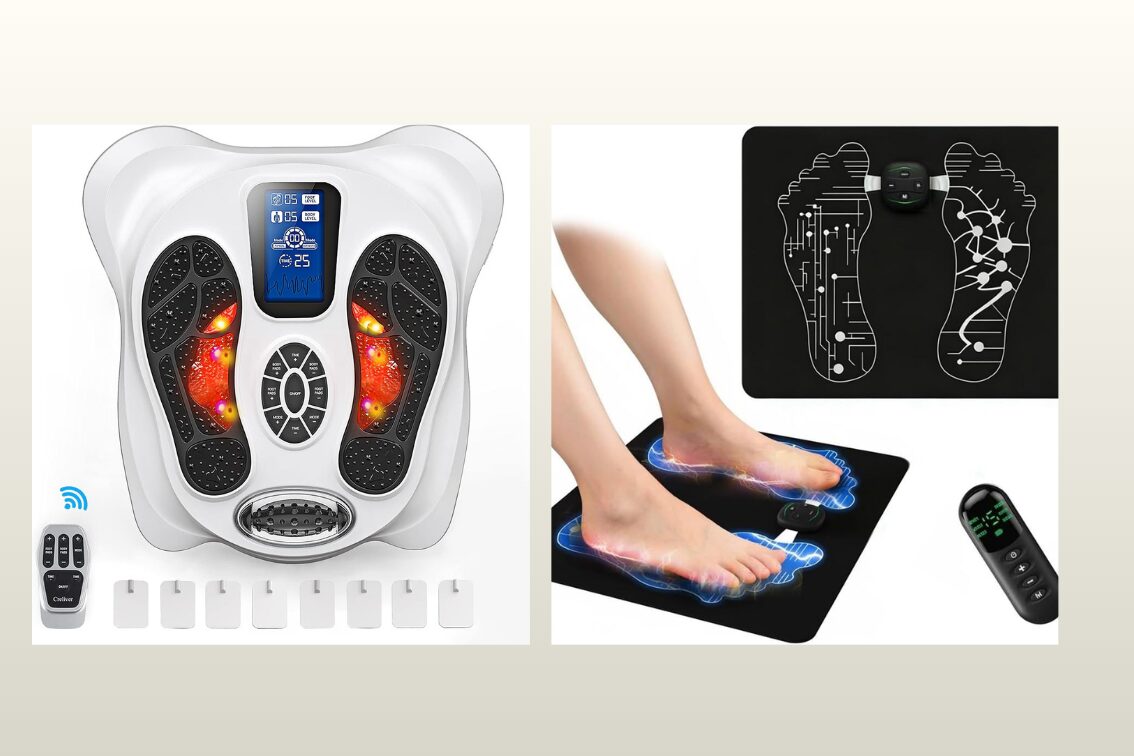
If you’re looking for a foot device marketed for circulation, neuropathy, foot discomfort, or leg stimulation, you’ll find a confusing mix of EMS, NMES, TENS, electrical foot stimulators, and conventional foot massagers on Amazon.
They are not all doing the same thing.
This guide focuses specifically on electrical stimulation foot devices that use electrical impulses through the feet or external electrode pads. The six options below include EMS and TENS-style devices with foot platforms, remote controls, adjustable intensity levels, and/or separate electrode pads.
That makes this article different from our guide to mechanical foot massagers, which focuses on shiatsu, kneading, rolling, vibration, heat, and other forms of physical massage.
Quick Answer
If you’re specifically looking for an electrical foot stimulation device, these six current Amazon options offer different combinations of EMS/TENS stimulation, intensity controls, electrode pads, portability, and extra features.
| Device | What stands out | Approx. weight | Main features |
|---|---|---|---|
| Dancespot NMES Foot Stimulator | Straightforward all-in-one platform | 3.64 lb | EMS + TENS, 10 modes, 20 intensities, 4 electrode pads |
| Uoboo NMES Foot Stimulator | Current Uoboo platform design | 3.68 lb | EMS/TENS, 10 modes, 20 intensities, 4 electrode pads |
| EULEYAW EMS Foot Muscle Stimulator | Platform, gel pads and timer | 3.59 lb | EMS + TENS, 10 modes, 20 levels, 4 gel pads |
| Gleamo EMS & TENS Foot Massager | Adds LED light feature | 3.85 lb | EMS + TENS, 10 modes, 20 intensities, LED |
| NURSAL F100 | Largest stated program selection | 4 lb | TENS/EMS, 25 modes, intensity 0–90, external pads |
| Siseca S1 | Very lightweight portable design | 11.7 oz | TENS/PMS, external foot electrode pads |
Important: These products should not automatically be considered treatments for neuropathy, poor circulation, swelling, or arthritis. Their Amazon listings make a variety of health-related claims, but those claims are not necessarily evidence that a particular device will treat an underlying condition.
If your main goal is foot massage and relaxation, rather than electrical stimulation, see our guide to the best foot massagers for arthritis instead.
What Are Foot Circulation Devices?
“Foot circulation device” is a broad term used in online shopping.
Many products marketed this way use electrical stimulation rather than physically massaging your feet.
An electrical stimulation device sends controlled electrical impulses through electrodes or a conductive foot platform. Depending on the device and its settings, the stimulation may be intended to affect nerves, muscles, or the sensation of pain.
The terminology can be confusing because manufacturers sometimes use EMS, NMES, TENS, and “muscle stimulator” in the same product listing.
What Is TENS?
TENS stands for transcutaneous electrical nerve stimulation.
TENS uses electrical impulses delivered through electrodes on the skin. It is commonly used as a noninvasive approach to pain management.
The effect is not the same as having your foot physically kneaded or rolled. TENS works through electrical stimulation of nerves and can change how pain is perceived.
TENS may help some people with pain, but results vary. It should not be assumed that a TENS device will treat the underlying cause of foot pain or neuropathy.
What Is EMS?
EMS stands for electrical muscle stimulation.
EMS uses electrical impulses to stimulate muscles, causing them to contract.
NMES, or neuromuscular electrical stimulation, is a related term used for electrical stimulation intended to activate muscles.
Many consumer foot stimulators combine EMS and TENS functions in the same device.
Why Do Some Devices Say “Circulation”?
Electrical stimulation devices are frequently marketed with terms such as:
- Circulation
- Blood flow
- Neuropathy
- Nerve stimulation
- Muscle stimulation
- Leg pain
- Foot pain
- Swelling
- Recovery
These terms can describe the intended marketing use of a product, but they shouldn’t be interpreted as proof that the device will improve circulation or treat a medical condition.
If you have persistent swelling, unexplained leg pain, numbness, burning, or changes in sensation, it’s important to determine the cause rather than simply treating the symptom with a consumer device.
Electrical Stimulation vs. a Foot Massager
This distinction is important when shopping.
A mechanical foot massager physically moves against your feet using features such as:
- Kneading
- Shiatsu rollers
- Vibration
- Rolling
- Compression
- Heat
An electrical stimulation device instead uses electrical impulses delivered through a foot platform, electrode pads, or both.
Some products combine electrical stimulation with mechanical features, but the six products in this guide are primarily being considered for their electrical stimulation functions.
If what you really want is a relaxing foot massage, an electrical stimulator may not be the type of product you’re looking for.
What to Look for in an Electrical Foot Stimulator
The most useful differences between these devices are often practical rather than dramatic.
1. Type of stimulation
Look at whether the device offers:
- TENS
- EMS
- NMES
- A combination of TENS and EMS
Don’t assume that two devices with the same label deliver identical stimulation. Programs, pulse patterns, intensity ranges, electrode placement, and controls can vary.
2. Number of intensity levels
More intensity settings can give you more opportunity to find a comfortable setting, but more intensity is not automatically better.
For electrical stimulation, the goal should be a setting that is appropriate and comfortable for the intended use.
3. Number of programs
Some devices provide 10 programs while others provide 25 or more.
A large number of programs can be useful if you like experimenting with different stimulation patterns, but it shouldn’t by itself determine which device you buy.
4. Foot platform vs. electrode pads
This is one of the most important design differences.
A foot platform allows you to place both bare feet on the device.
Separate electrode pads can be positioned on other areas of the body, depending on the device’s instructions.
Some devices provide both options.
5. Remote control
A remote can be useful if bending down to reach a control panel is difficult.
For someone with arthritis, limited mobility, or difficulty gripping small controls, the usability of the remote may matter more than having dozens of extra settings.
6. Rechargeable battery
A rechargeable device can be convenient if you don’t want to remain near an outlet.
Check whether the device can be used while charging. Some models specifically require the device to be disconnected from the charger before use.
7. Weight and portability
These devices vary considerably in weight.
If you plan to keep the device beside your favorite chair, weight may not matter much.
If you want to move it between rooms or take it with you, a lighter unit can make a substantial difference.
6 Electrical Foot Stimulation Devices to Consider
Rather than declaring one device the “best” for everyone, we’ve highlighted what distinguishes each model and what type of shopper may want to consider it.
1. Dancespot NMES Foot Stimulator
The Dancespot uses a conventional electrical foot stimulation design, combining a foot platform with four separate electrode pads.
Key features:
- EMS + TENS
- 10 modes
- 20 intensity levels
- Four electrode pads
- Remote control
- Rechargeable battery
- 30-minute automatic shutoff
- Approximately 3.64 lb
- Bare-foot platform use
Why you might choose it:
This is a straightforward option if you want the familiar combination of a two-foot platform, external electrode pads, remote control, and multiple stimulation settings.
For someone who has difficulty bending down, the remote may be a practical feature rather than just an accessory.
Considerations:
Several Amazon products in this category have very similar specifications. Don’t assume that a product is substantially different simply because the listing uses terms such as “neuropathy,” “circulation,” or “professional.”
Focus on the actual controls, electrode arrangement, instructions, fit, and safety information.

2. Uoboo NMES Foot Stimulator
The current Uoboo listing offers another combination EMS/TENS platform with four external electrode pads.
Key features:
- EMS/TENS stimulation
- 10 modes
- 20 intensity levels
- Four TENS electrode pads
- Rechargeable/cordless design
- LCD display
- Remote control
- 30-minute automatic shutoff
- Approximately 3.68 lb
- Designed for use with bare feet on the platform
Why you might choose it:
The Uoboo is worth considering if you want a current platform-plus-electrode design with cordless operation, a display, and remote control.
The external pads also give you a different application option from the foot platform, subject to the manufacturer’s instructions.
Considerations:
The Uoboo shares many specifications with other inexpensive EMS/TENS foot platforms.
Don’t assume that 10 modes or 20 intensity levels means it will provide better results than a device with fewer settings. More choices aren’t necessarily more useful.

3. EULEYAW EMS Foot Muscle Stimulator
The EULEYAW is another rechargeable foot-platform design with separate gel electrode pads.
Key features:
- EMS + TENS
- 10 modes
- 20 intensity levels
- LCD display
- Timer
- Remote control
- Four reusable gel electrode pads
- Rechargeable design
- Approximately 3.59 lb
Why you might choose it:
The EULEYAW may appeal to someone who wants a conventional EMS/TENS platform with a rechargeable battery, remote control, timer, and reusable gel pads.
The combination of a platform and separate pads gives you more flexibility than a foot platform by itself.
Considerations:
Replacement electrode pads are a consumable item to consider when comparing electrical stimulation devices.
The main device may continue working for a long time, but electrode pads and conductive materials can eventually need replacement.

4. Gleamo EMS & TENS Foot Massager
The Gleamo stands out primarily because it adds an LED light feature to its EMS/TENS platform.
Key features:
- EMS + TENS
- 10 modes
- 20 intensity levels
- LED light feature
- LCD display
- Remote control
- Rechargeable battery
- 30-minute automatic shutoff
- Approximately 3.85 lb
- Foot and leg use
The listing specifies red and near-infrared LED wavelengths of 660 nm and 850 nm.
Why you might choose it:
The main reason to consider the Gleamo is that it combines electrical stimulation with an additional LED feature.
If you’re interested in trying a device with more than electrical stimulation alone, this gives you that option.
Considerations:
Don’t buy the device simply because it includes LED lights.
The presence of 660 nm or 850 nm LEDs does not by itself establish that the product will treat neuropathy, improve circulation, reduce inflammation, or relieve arthritis pain.
If the LED feature is important to you, look for evidence specifically related to the intended use rather than assuming that the technology automatically provides a medical benefit.

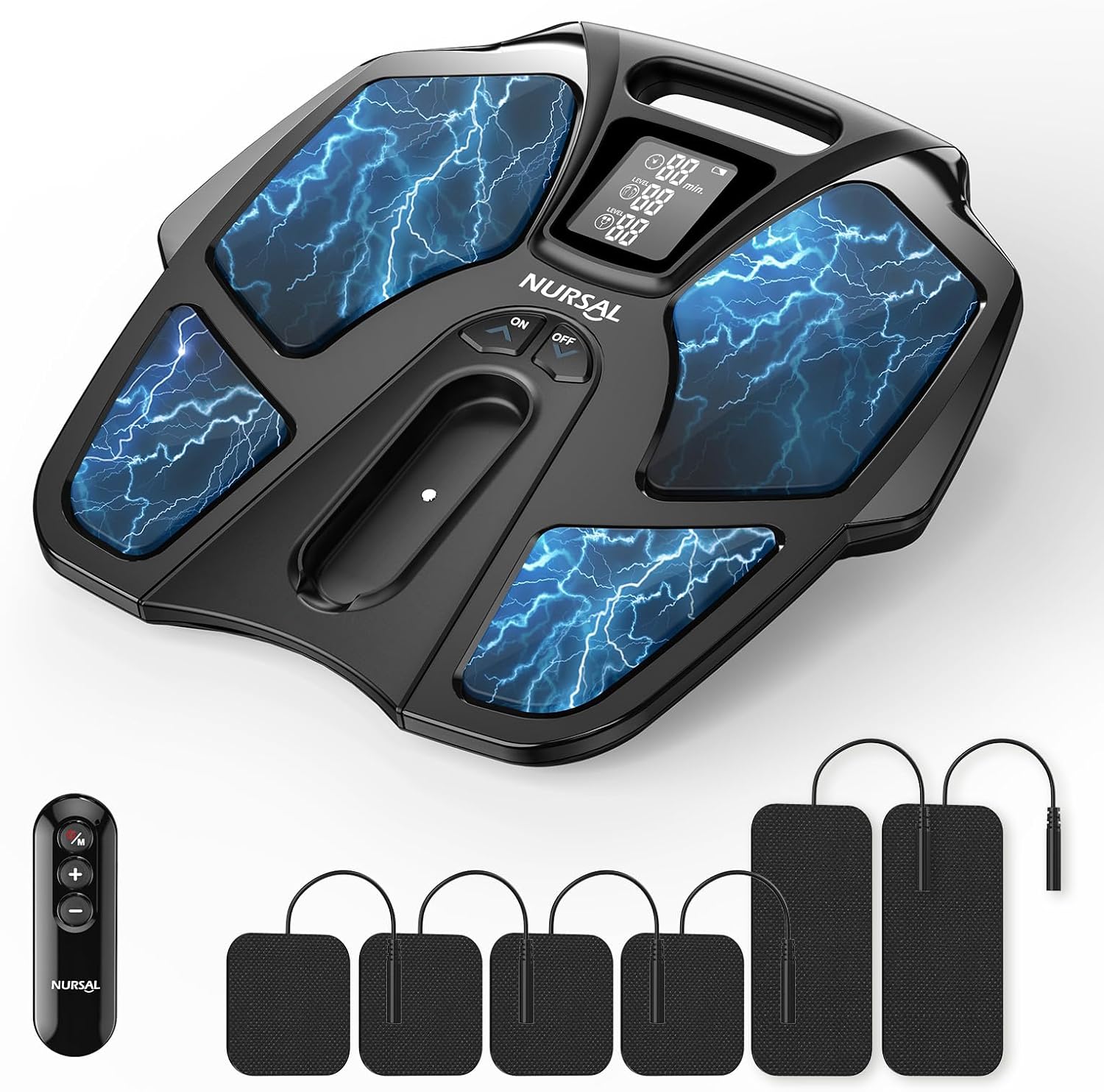
5. NURSAL F100 TENS EMS Foot Massager
The NURSAL F100 stands out from the other platform models because it offers a much larger stated selection of programs and a wide intensity range.
Key features:
- TENS + EMS
- 25 treatment modes
- Intensity range listed as 0–90
- Rechargeable/battery powered
- Remote control
- Timer
- Curved foot platform
- External TENS electrode pads
- Approximately 4 lb
- Designed for feet and legs
- External pads can also be used on other body areas according to the device instructions
Why you might choose it:
The F100 is worth considering if having a broad selection of programs and a large intensity range is more important to you than having the lightest possible device.
The separate electrode pads also make it more versatile than a foot-platform-only design.
Considerations:
More settings don’t necessarily mean better results.
If you are new to electrical stimulation, having 25 modes and a 0–90 intensity scale may actually make the device feel more complicated than a simpler model.
Start with the manufacturer’s recommended settings rather than immediately turning the intensity up.
6. Siseca S1 Portable Foot Stimulator
The Siseca S1 is the major lightweight alternative in this group.
While the foot-platform devices above weigh around 3–4 pounds, this model is listed at only about 11.7 ounces.
Key features:
- TENS and PMS stimulation listed by the manufacturer
- Rechargeable
- LCD display
- Remote control
- External foot electrode pads
- Portable design
- Approximately 11.7 oz
Why you might choose it:
The biggest advantage is portability.
If you don’t want a relatively heavy foot platform sitting beside your chair, a lightweight electrode-based design may be easier to store and move around.
It may also make sense for someone who prefers external electrode pads rather than placing both feet on a platform.
Considerations:
The product listing uses “PMS” and does not provide enough information for us to treat that term as interchangeable with EMS without qualification.
Because the device is fundamentally different from the larger foot-platform designs, make sure you understand exactly how its stimulation is intended to work before purchasing.

Siseca TENS and PMS, Portable Massager with Foot Electrodes Pad and Remote Control
Check Price on AmazonWhich Type of Foot Stimulator Makes Sense for You?
There isn’t one electrical stimulation design that makes sense for everyone.
If you want a conventional foot-platform design
Look at:
- Dancespot
- Uoboo
- EULEYAW
These are broadly similar in their overall approach: a foot platform, multiple stimulation programs, adjustable intensity, and separate electrode pads.
When choosing between similar products, practical factors such as controls, included accessories, instructions, warranty, and current availability may matter more than small differences in marketing language.
If you want the most program options
The NURSAL F100 has the largest stated number of programs in this group, with 25 modes and an intensity range of 0–90.
That doesn’t mean it will provide better results. It simply gives you more settings to work with.
If you want an additional technology
The Gleamo adds LED lighting to its EMS/TENS functions.
Consider this only if the additional feature is actually useful to you rather than assuming that more technology means better results.
If portability matters most
The Siseca S1 is dramatically lighter than the foot-platform models.
That’s its clearest practical advantage.
If you want both a foot platform and electrode pads
The Dancespot, Uoboo, EULEYAW, Gleamo, and NURSAL all combine foot-platform stimulation with external electrode pads.
This can give you more flexibility than a foot-platform-only design, but always follow the manufacturer’s electrode-placement instructions.
Are These Devices Actually for Poor Circulation?
This is where it is important to separate marketing terminology from medical evidence.
Many Amazon listings use phrases such as “improve circulation,” “blood flow,” “neuropathy relief,” or “leg pain relief.”
That doesn’t mean the device has been established as a treatment for the underlying medical condition.
Electrical stimulation is a legitimate category of medical technology, and TENS and EMS are recognized types of electrical stimulation. However, the intended use and evidence for one device cannot automatically be transferred to every consumer product using similar terminology.
In other words:
EMS and TENS are real technologies. That doesn’t make every EMS/TENS foot massager a treatment for poor circulation or neuropathy.
If you have persistent swelling, numbness, burning, significant foot pain, color changes, or unexplained changes in your legs or feet, consider getting the underlying problem evaluated rather than relying on a consumer electrical stimulator.
Can These Devices Help Neuropathy?
Neuropathy is a medical condition with many possible causes.
TENS is sometimes used as part of pain management, including for certain types of neuropathic pain. However, response varies considerably between people, and electrical stimulation should not be confused with treating the underlying cause of neuropathy.
A device marketed specifically for “neuropathy” therefore deserves some scrutiny.
Before buying, ask:
- What type of stimulation does it actually provide?
- Where are the electrodes supposed to be placed?
- Is the product intended for pain management, muscle stimulation, or both?
- Does the manufacturer provide clear instructions?
- Is there a clear safety and contraindication section?
- Do you have reduced sensation that could make electrical stimulation inappropriate or harder to monitor?
If your feet have substantially reduced sensation, be particularly cautious. You may not be able to accurately judge whether the stimulation is becoming too strong or irritating your skin.
Electrical Stimulation Safety
Electrical stimulation is not appropriate for everyone.
Follow the manufacturer’s instructions and pay particular attention to the contraindications and warnings supplied with the specific device.
Talk with a healthcare professional before using an electrical stimulation device if you have a medical condition that could make electrical stimulation unsafe or uncertain for you.
Particular caution is warranted if you:
- Have a pacemaker, implanted defibrillator, or another implanted electronic device
- Have known or suspected deep vein thrombosis
- Are pregnant
- Have significant heart or circulation problems
- Have epilepsy or a seizure disorder
- Have substantially reduced sensation
- Have damaged, irritated, infected, or fragile skin where electrodes will be placed
- Have unexplained or sudden swelling or pain in one leg
- Are unsure whether electrical stimulation is appropriate for your condition
Do not place electrodes wherever the device instructions prohibit them.
Don’t use electrical stimulation over damaged skin, and stop if you experience significant pain, burning, unusual discomfort, dizziness, or skin irritation.
Start conservatively
If the device is appropriate for you:
- Read the instructions before the first session.
- Check the electrode placement instructions.
- Start at a low intensity.
- Increase gradually only if the sensation remains comfortable and appropriate.
- Don’t assume that a stronger electrical sensation means a better result.
- Check your skin after using adhesive or gel electrodes.
- Stop if you experience pain, burning, significant irritation, or an unusual reaction.
Electrical Stimulation vs. Compression vs. Massage
These three categories are often mixed together in Amazon searches.
| Type | What it does | Typical features |
|---|---|---|
| Electrical stimulation | Sends electrical impulses through electrodes or a conductive platform | TENS, EMS, NMES |
| Mechanical massage | Physically moves or presses against the feet | Shiatsu, rollers, kneading, vibration |
| Compression | Uses air pressure to squeeze parts of the foot or leg | Air chambers, compression boots, wraps |
Choose based on what you actually want the device to do.
If you want electrical stimulation, this article is the relevant category.
If you want massage, an EMS device may not provide the experience you’re expecting.
If you want air compression around your feet and legs, look at our guide to leg compression massagers.
Frequently Asked Questions
Do foot circulation machines really improve circulation?
That depends on the specific device, its intended use, and the underlying medical problem.
The term “circulation device” is widely used in consumer marketing, but it should not be treated as proof that a particular product will improve circulation or treat a circulation disorder.
If you have persistent swelling, cold feet, skin-color changes, leg pain when walking, or other circulation concerns, seek medical advice rather than relying solely on an Amazon device.
Is EMS the same as TENS?
No.
EMS generally refers to electrical muscle stimulation, while TENS refers to transcutaneous electrical nerve stimulation.
Some consumer devices combine both functions.
What is NMES?
NMES stands for neuromuscular electrical stimulation.
It refers to electrical stimulation intended to activate muscles.
You will often see NMES used alongside EMS in consumer product descriptions, although the exact programs and intended uses vary by device.
Can I use a TENS device on my feet?
Some TENS devices are designed for use on the feet, but electrode placement and intended use vary by product.
Always follow the specific device’s instructions.
TENS isn’t appropriate for everyone, particularly people with certain implanted electronic devices or medical conditions.
Are EMS foot massagers good for arthritis?
They may be useful to some people for comfort or pain management, but that doesn’t mean they treat arthritis itself.
If your primary goal is simply to massage stiff or sore feet, a conventional mechanical foot massager may be a better match for what you’re looking for.
Can I use an electrical foot stimulator if I have neuropathy?
Don’t assume that a device marketed for neuropathy is automatically appropriate for everyone with neuropathy.
Reduced sensation can make it more difficult to recognize excessive stimulation or skin irritation.
If you have significant neuropathy, ask your healthcare professional whether electrical stimulation is appropriate for you and where it should be applied.
Can I use a foot stimulator if I have a pacemaker?
You should not assume that an electrical stimulation device is safe with a pacemaker or other implanted electronic device.
Electrical stimulation can interfere with some implanted devices. Check with your healthcare professional and the device manufacturer before using one.
How strong should a TENS or EMS device feel?
Follow the manufacturer’s instructions and begin at a low setting.
The goal is not to find the strongest possible sensation.
If stimulation becomes painful, causes burning, or produces an unusual reaction, stop using the device.
Do I need to use the electrode pads?
It depends on the device.
Many of the foot platforms in this guide include separate electrode pads in addition to the foot platform.
Other products rely primarily on external electrodes.
Read the instructions to determine where and how the pads are intended to be used.
Are foot circulation devices the same as foot massagers?
No.
A traditional foot massager physically kneads, rolls, vibrates, or compresses the foot.
An electrical stimulation device uses electrical impulses.
Some products combine technologies, but they are fundamentally different approaches.
Bottom Line
The phrase “foot circulation device” covers a wide range of products, and Amazon listings don’t always make the differences clear.
The six products in this guide are primarily electrical stimulation devices, using combinations of EMS, NMES, TENS, foot-platform stimulation, and external electrode pads.
The practical differences are mainly in:
- Number of programs
- Intensity controls
- Electrode configuration
- Foot-platform design
- Portability
- Battery operation
- Remote controls
- Additional features such as LED lighting
The Dancespot, Uoboo, and EULEYAW are broadly similar platform-plus-electrode options.
The NURSAL F100 stands apart with its larger stated number of programs and wider intensity range.
The Gleamo adds an LED feature.
The Siseca S1 takes a different approach with a much lighter, electrode-focused design.
Most importantly, don’t choose one simply because an Amazon listing says it will “improve circulation” or “treat neuropathy.” Those are medical claims that require more evidence than a product description alone provides.
If your goal is foot massage rather than electrical stimulation, choose a mechanical foot massager instead.
Related Reading
- Best Foot Massagers for Arthritis — Mechanical foot massagers using shiatsu, kneading, rolling, vibration, heat, and other physical massage features.
- Best Leg Massagers for Arthritis Pain Relief — Air-compression options for the feet, calves, and legs.
- Best Massagers for Arthritis Pain Relief — Our broader guide covering hand, knee, foot, leg, and other types of massagers.
- Best Topical Pain Relief for Arthritis — A guide to creams, gels, heat, cold, and other topical approaches.
- Heat vs. Cold Therapy for Arthritis — When heat or cold may be more appropriate for different types of discomfort.
Medical Disclaimer: This article is for informational purposes only and does not constitute medical advice. Always consult your doctor, rheumatologist, or occupational therapist before making changes to how you manage your arthritis.
