
Knee arthritis changes the way you move — and the way you think about moving. Walking to the kitchen, getting out of the car, climbing stairs, even standing up from a chair can feel like a negotiation between pain, stiffness, and stability.
The right knee support can make those moments easier. A well‑chosen brace or sleeve can reduce pain during movement, improve stability, and help you stay active — which is one of the most important things you can do for long‑term joint health. But with hundreds of options online, choosing the right one can feel overwhelming.
This guide breaks everything down clearly. You’ll learn which type of knee support matches your symptoms, how to choose the right level of support, and which Amazon‑available braces offer the best value and performance for arthritis relief.
Jump to a Section
Knee Sleeves vs. Knee Braces: Which Do You Need?
Before choosing a product, you need to decide whether you need a compression sleeve or a structural brace. These two categories serve very different purposes — and choosing the wrong one is the #1 reason people don’t get relief.
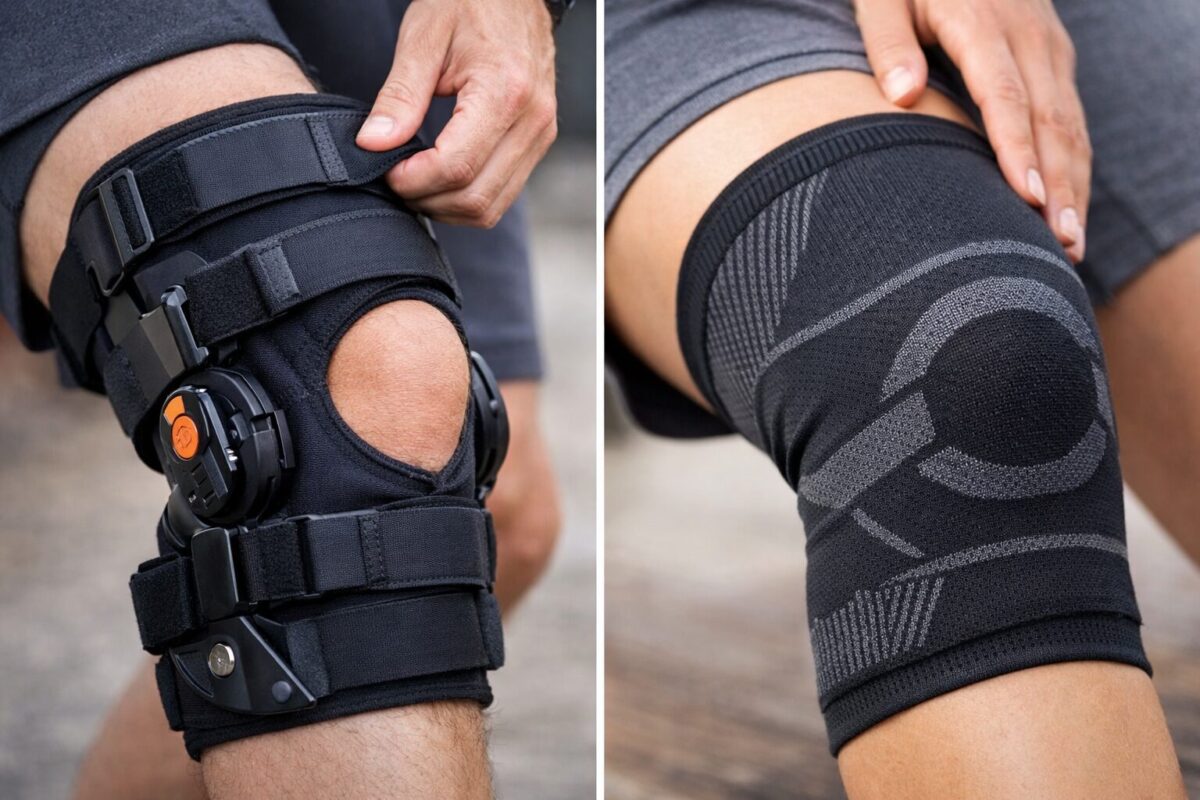
Knee Sleeves (Light Support)
Knee sleeves are soft, pull‑on supports made from elastic or neoprene. They provide gentle compression, warmth, and proprioceptive feedback — meaning they help your brain sense the position of your knee, which can improve movement confidence.
Best for:
- Mild arthritis with manageable pain
- Swelling or stiffness that improves with warmth
- Daily comfort during walking or standing
- People who want something slim and discreet under clothing
Important limitation: Sleeves do not stabilize the joint. If your knee feels loose, gives way, or buckles, a sleeve will not solve the problem — you need a brace.
Knee Braces (Moderate to High Support)
Knee braces include hinged supports, wraparound designs, and OA unloader braces. These are more structured devices designed to improve stability, reduce painful movement patterns, and support weakened ligaments.
Best for:
- Moderate to severe arthritis
- Instability — knee giving way, buckling, or shifting
- Osteoarthritis affecting one side of the knee
- Higher activity levels where protection is needed
Rule of thumb: If your knee hurts but feels stable, start with a sleeve. If your knee feels unstable, wobbly, or gives way — you need a brace. When in doubt, a physiotherapist can help you choose the right type.
Types of Knee Supports for Arthritis
Within the sleeve/brace categories, there are several specific types. Understanding these helps you choose the right tool for your symptoms.
- Compression Sleeves — Pull‑on elastic supports that provide warmth and mild compression. Best for mild arthritis and swelling.
- Hinged Knee Braces — Braces with metal or reinforced hinges on the sides. They guide the knee through its natural range of motion and prevent sideways movement. Best for instability and moderate to severe arthritis.
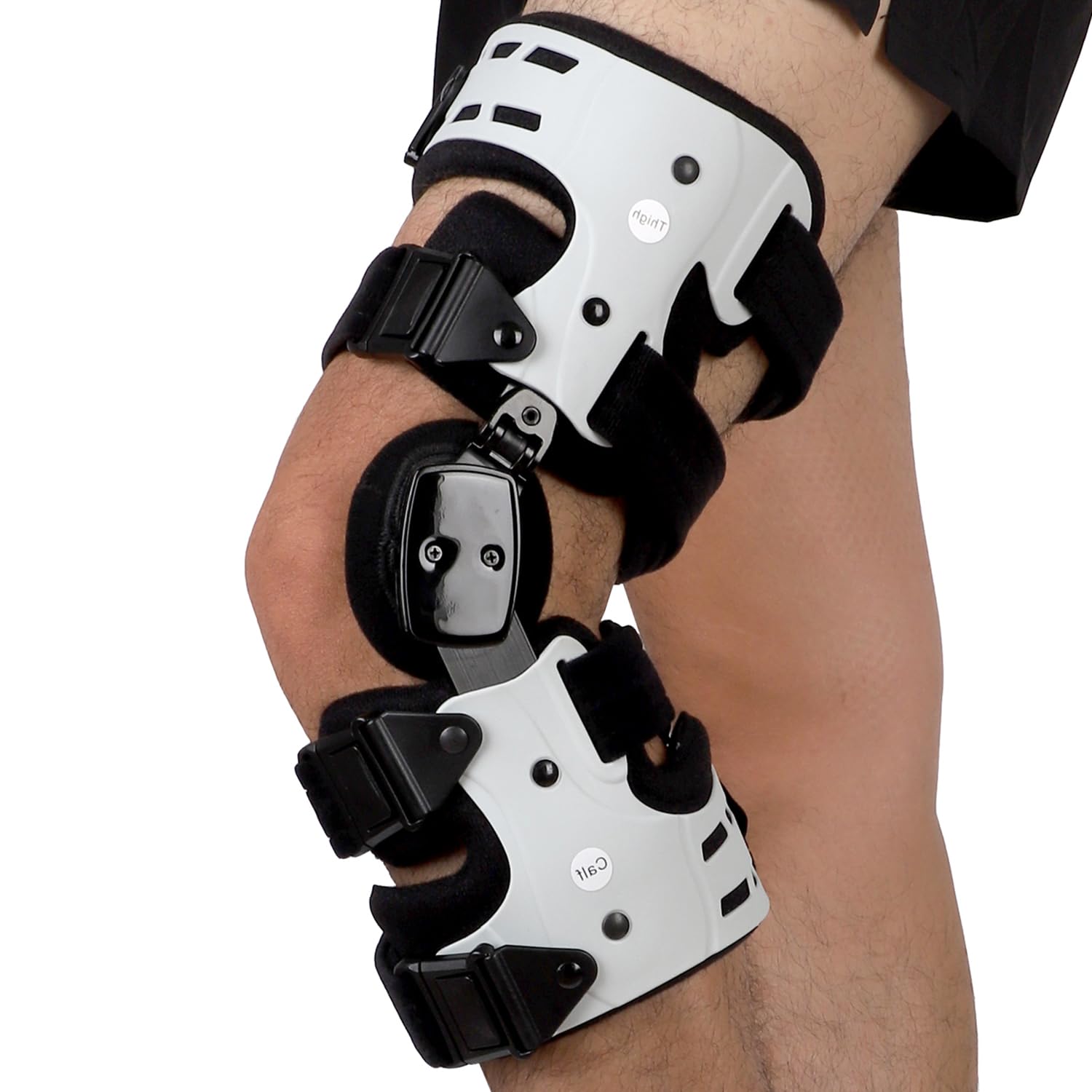
- OA Unloader Braces — Designed for osteoarthritis affecting one side of the knee. They shift weight away from the damaged compartment using a three‑point leverage system. Best for medial or lateral compartment OA.
- Patellar Support Braces — Braces with a gel or foam ring around the kneecap. Best for front‑of‑knee pain, patellofemoral arthritis, or pain during stairs.
- Wraparound Braces — Velcro‑based designs that don’t require pulling over the foot. Easier for people with limited mobility or hand arthritis.
What to Look for When Buying a Knee Brace for Arthritis
Choosing the right knee support isn’t just about picking the most expensive or most popular option. The best brace is the one that matches your symptoms, mobility level, and daily routine. Here’s what matters most:
- Support Level — Match the brace to your symptoms. Too little support won’t help; too much support can weaken muscles over time.
- Fit & Sizing — A poorly fitted brace is ineffective. Always measure your knee circumference and follow the brand’s sizing chart. If between sizes, sleeves usually fit better when you size up.
- Ease of Use — If you have hand arthritis or limited mobility, wraparound or velcro‑closure braces are easier than pull‑on sleeves.
- Breathability — Neoprene is warm but can trap heat. For all‑day wear, look for perforated or moisture‑wicking materials.
- Bulk Under Clothing — Hinged braces are bulkier. If you need something discreet for work, a sleeve or slim wraparound brace may be more practical.
- Open vs. Closed Patella — Open‑patella designs reduce pressure on the kneecap and help with front‑of‑knee pain. Closed designs offer more uniform compression.
- Activity Level — For walking, hiking, or active use, choose a brace designed to stay in place during movement.
Comparison Table: Best Knee Braces for Arthritis
This table gives you a quick overview of the top knee supports for arthritis, based on support level, brace type, and best use case.
| Product | Type | Support Level | Best For | Hinged |
|---|---|---|---|---|
| Orthomen OA Unloader Knee Brace | OA Unloader Brace | High | Single‑compartment osteoarthritis | ✅ |
| Shock Doctor Ultra Hinged Knee Brace | Hinged Wraparound Brace | Moderate–High | Active use, moderate instability | ✅ |
| Z1 K2 Hinged Knee Brace | Heavy‑Duty Hinged Brace | High | Severe instability, ligament weakness | ✅ |
| McDavid 429X Knee Brace | Hinged Brace | Moderate–High | Instability, sports, daily support | ✅ |
| Vive Hinged Knee Brace | Budget Hinged Brace | Moderate | Everyday support on a budget | ✅ |
| Dr. Arthritis Compression Sleeve | Compression Sleeve | Mild | Mild arthritis, all‑day comfort | ❌ |
| CAMBIVO Compression Sleeve (2‑Pack) | Compression Sleeve | Mild | Budget option, sleeve rotation | ❌ |
How to Choose the Right Knee Support for Your Symptoms
Use this quick guide to match your symptoms with the right type of support. This is the same decision framework physiotherapists use when recommending braces for arthritis.
- Mild pain, knee feels stable → Compression sleeve
Best picks: Dr. Arthritis, CAMBIVO - Moderate pain, occasional instability → Hinged wraparound brace
Best pick: Shock Doctor Ultra Hinged - Significant instability or ligament weakness → Heavy‑duty hinged brace
Best pick: Z1 K2 Hinged - Arthritis on one side of the knee (medial or lateral) → OA unloader brace
Best pick: Orthomen OA Unloader - Budget priority → Affordable hinged or sleeve
Best picks: Vive Hinged, CAMBIVO Sleeve - Difficulty pulling sleeves over the foot → Wraparound or velcro‑closure brace
Best picks: Shock Doctor Ultra Hinged, Vive Hinged
If your knee frequently gives way, locks, or swells significantly, or if pain is worsening, it’s wise to consult a physiotherapist or orthopaedic specialist. They can assess alignment, ligament stability, and whether an unloader brace is appropriate.
Full Reviews: Best Knee Braces & Supports for Arthritis
Below you’ll find detailed reviews of the best knee braces and sleeves for arthritis, based on support level, comfort, ease of use, and real‑world performance. Each product serves a different type of arthritis need — from mild swelling to severe instability.
1. Orthomen OA Unloader Knee Brace — Best for Single‑Compartment Osteoarthritis
The Orthomen OA Unloader is specifically engineered for people with osteoarthritis affecting one side of the knee — usually the medial (inner) compartment. Unlike standard braces, this design uses a three‑point leverage system to shift weight away from the damaged side, reducing pressure and pain during walking.
This brace is more structured than a sleeve or basic hinged brace, but it’s also one of the most effective non‑surgical tools for managing single‑compartment OA. If your pain is concentrated on one side of the knee and worsens with walking, stairs, or standing, an unloader brace like this can make a dramatic difference.
Best for: Medial or lateral compartment OA, moderate–severe arthritis, people waiting for knee replacement
Pros:
- Shifts load away from the damaged compartment
- Can significantly reduce pain during walking
- Adjustable for a customized fit
- Durable construction suitable for daily use
Cons:
- Bulkier than standard braces
- Requires correct fitting for best results
- Not ideal for arthritis affecting both compartments equally
2. Shock Doctor Ultra Hinged Knee Brace — Best for Active Use & Moderate Instability
The Shock Doctor Ultra Hinged Brace is a strong choice for people who want to stay active — walking, hiking, cycling, or light sport — while managing arthritis pain or instability. The wraparound design makes it easier to put on than pull‑on sleeves, especially if you have hand stiffness.
The bilateral hinges provide real lateral stability without the bulk of heavy‑duty orthopaedic braces. It stays in place better than most mid‑range hinged braces, making it ideal for people who want support that won’t slide down during movement.
Best for: Active arthritis sufferers, moderate instability, people who need a brace that stays put during movement
Pros:
- Wraparound design is easier to put on
- Stays in place during activity
- Strong hinged support without excessive bulk
- Great middle‑ground between sleeve and heavy brace
Cons:
- Warmer than sleeves
- Velcro straps require some hand dexterity
- More expensive than basic supports

3. Z1 K2 Hinged Knee Brace — Best for Severe Instability & Ligament Weakness
The Z1 K2 is a heavy‑duty hinged brace designed for people who need maximum structural support. If your knee feels loose, gives way, or has significant ligament weakness, this brace provides the stability that sleeves and lighter braces cannot.
The metal hinges guide the knee through its natural range of motion while preventing sideways movement. It’s not the most discreet brace, but it’s one of the most supportive options available without a prescription.
Best for: Severe instability, ligament weakness, advanced arthritis with give‑way episodes
Pros:
- Maximum structural support
- Adjustable hinges for controlled movement
- Durable and long‑lasting
- Excellent for people with significant instability
Cons:
- Bulky under clothing
- Less comfortable for long periods of sitting
- More complex to put on

4. McDavid 429X Hinged Knee Brace — Best for Sports & Daily Stability
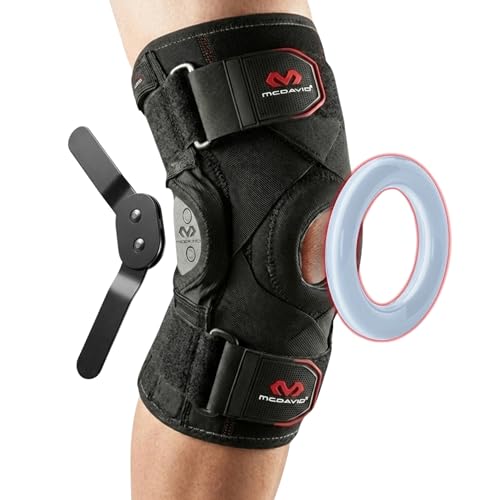
The McDavid 429X is a well‑balanced hinged brace that offers strong support without feeling overly restrictive. It’s a popular choice among people who want a brace that works for both daily activities and light sports.
The dual hinges provide reliable stability, while the adjustable straps help secure the brace in place. It’s not as heavy‑duty as the Z1 K2, but it’s more comfortable for everyday wear and easier to manage.
Best for: Moderate instability, sports, daily support
Pros:
- Strong hinged support
- Comfortable for daily wear
- Adjustable straps improve fit
- Good balance of support and mobility
Cons:
- Not as supportive as heavy‑duty braces
- Can feel warm during extended wear
5. Vive Hinged Knee Brace — Best Budget Hinged Brace
The Vive Hinged Knee Brace is a great option for people who need moderate support but don’t want to spend a lot. It offers real hinged stability at a budget‑friendly price, making it ideal for everyday use.
The wraparound design is easier to put on than pull‑on sleeves, and the hinges provide enough support for mild to moderate instability. It’s not as durable as premium braces, but it’s excellent value for the price.
Best for: Budget‑friendly support, mild–moderate instability, daily use
Pros:
- Affordable hinged support
- Easy to put on
- Good for daily activities
- Lightweight and comfortable
Cons:
- Not suitable for severe instability
- Velcro may wear over time

6. Dr. Arthritis Compression Sleeve — Best for Mild Arthritis & All‑Day Comfort
The Dr. Arthritis Compression Sleeve is a lightweight, breathable sleeve designed for people with mild arthritis, swelling, or stiffness. It provides gentle compression and warmth without bulk, making it ideal for all‑day wear under clothing.
The open‑patella design reduces pressure on the kneecap, which is helpful for people with front‑of‑knee pain. It’s easy to put on, machine washable, and comes with a booklet written by medical professionals.
Best for: Mild arthritis, swelling, all‑day comfort
Pros:
- Lightweight and breathable
- Open‑patella design reduces kneecap pressure
- Easy to put on and take off
- Comfortable under clothing
Cons:
- Not suitable for instability
- Lighter compression than neoprene sleeves

7. CAMBIVO Compression Sleeve (2‑Pack) — Best Budget Sleeve
The CAMBIVO Compression Sleeve is one of the best budget options for people who want mild support without spending much. The two‑pack format is ideal for rotation — one for home, one for work, or one to wear while the other is washing.
The compression is lighter than premium sleeves, but it’s comfortable, breathable, and effective for mild arthritis or swelling. It’s not the right choice for instability, but it’s excellent value for everyday comfort.
Best for: Budget buyers, mild arthritis, sleeve rotation
Pros:
- Excellent value (2‑pack)
- Comfortable and breathable
- Good for mild symptoms
- Easy to wear under clothing
Cons:
- Not suitable for moderate or severe arthritis
- Less durable than premium sleeves

Can You Wear a Knee Brace Too Much?
Yes — and it’s something many people aren’t warned about. Knee braces and sleeves are helpful tools, but wearing them constantly can create new problems over time. Physiotherapists generally recommend using supports during activities that cause pain or instability, and removing them during rest.
Wearing a brace too often can lead to:
- Muscle weakening — If the brace is doing all the stabilizing, the muscles around the knee may gradually weaken, which can worsen arthritis symptoms.
- Skin irritation — Neoprene and elastic materials can cause irritation, especially in warm weather or during long wear.
- Dependency — Your knee needs periods of unassisted movement to maintain strength and proprioception.
Use your brace as a tool — not a replacement for strengthening exercises. If you’re unsure how often to wear your brace, a physiotherapist can help you build a safe routine.
Frequently Asked Questions
Does wearing a knee brace help arthritis?
Yes — many people with knee arthritis experience meaningful pain relief and improved stability when using the right brace. Compression sleeves help with swelling and mild pain, while hinged braces support instability. OA unloader braces can reduce pressure on the most damaged part of the joint. A healthcare professional can help you determine which type is appropriate for your symptoms.
Should I wear a knee brace all day?
Not usually. Most physiotherapists recommend wearing a brace during activities that cause pain or instability, and removing it during rest. Wearing a brace constantly can weaken the muscles that support the knee. If you’re unsure how long to wear your brace, a physiotherapist can provide guidance based on your mobility and symptoms.
What’s the difference between a knee sleeve and a knee brace?
A knee sleeve provides gentle compression and warmth — helpful for mild arthritis, swelling, and stiffness. A knee brace includes structural components (like hinges) that physically support the joint and prevent unwanted movement. Sleeves are best for mild symptoms; braces are best for instability or more advanced arthritis.
Can I use a knee brace while waiting for knee replacement surgery?
Yes — many people use knee supports to manage pain and maintain mobility while waiting for surgery. OA unloader braces can be especially helpful for single‑compartment osteoarthritis. Always let your orthopaedic specialist know you’re using a brace so they can advise you appropriately.
Which knee brace is best for arthritis on the inside of the knee?
Medial (inner) knee arthritis is the most common pattern. For mild symptoms, a compression sleeve may help. For more significant medial compartment OA, an OA unloader brace like the Orthomen OA Unloader is specifically designed to shift weight away from the inner knee, reducing pain during walking.
How do I measure my knee for a brace?
Measure the circumference around the center of your kneecap while standing. Some brands also require a measurement 6 inches above the knee. Always follow the brand’s sizing chart — sizing varies widely between manufacturers. If your knee is swollen, measure when swelling is at its typical level.
Final Thoughts
The right knee support can make everyday movement more comfortable — but only if it matches your symptoms, activity level, and comfort needs. A brace that’s too bulky, too weak, or too difficult to put on won’t help, no matter how well‑designed it is.
Start with the simplest option that addresses your primary issue. For many people with mild arthritis, a well‑fitting compression sleeve worn during activity provides meaningful relief. If instability is the problem, step up to a hinged brace. If you have single‑compartment osteoarthritis and standard supports haven’t helped, an OA unloader brace may be worth exploring with a physiotherapist.
Remember: knee supports work best as part of a broader arthritis management plan. Strengthening the muscles around the knee — especially the quadriceps — reduces joint load and is one of the most effective long‑term strategies for managing arthritis. A brace helps you move more comfortably today; exercise helps protect your knee for the future.
Related Reading
- Low‑Impact Exercises for Knee Arthritis
- Best Knee Massagers for Arthritis & Knee Pain: 2026 Buyer’s Guide
- Arthritis Pain Relief: Therapies & Products That Work
- Best Hand Relief Tools for Arthritis: Complete Guide
- Ultimate Guide to Living Well with Arthritis