

Living with arthritis can make ordinary tasks surprisingly difficult. Opening a jar, turning a doorknob, pulling a zipper, reaching something from the floor, or carrying items around the house can require more gripping, twisting, pinching, bending, or lifting than your joints comfortably tolerate.
The solution isn’t always a specialized arthritis product.
Often, the most useful change is simply finding an easier way to do the task.
A larger grip can make a thin handle easier to hold. A pump dispenser can eliminate squeezing. Moving frequently used items to a more convenient shelf can reduce bending. A reacher can eliminate repeated trips to the floor.
These practical arthritis hacks focus on one simple idea:
Reduce the movements that bother your joints instead of forcing yourself to keep doing them the same way.
Quick Answer: What Are the Best Arthritis Hacks?
The most useful arthritis hacks usually reduce gripping, pinching, twisting, bending, reaching, lifting, or repetitive hand movements.
| Everyday problem | Simple arthritis hack | Movement it can reduce |
|---|---|---|
| Opening jars | Use a non-slip grip or jar opener | Twisting and gripping |
| Small zipper tabs | Add a larger loop or zipper pull | Pinching |
| Squeezing bottles | Use pump dispensers | Hand pressure |
| Picking things up | Keep a reacher nearby | Bending |
| Carrying several items | Use a lightweight cart or basket | Lifting and carrying |
| Thin handles | Add a built-up grip | Tight gripping |
| Round door knobs | Consider lever-style handles | Twisting |
| Frequently used items | Store them between waist and shoulder height | Bending and reaching |
| Difficult typing | Use voice-to-text when practical | Repetitive finger movement |
| Sliding kitchen items | Use an appropriate non-slip surface | Stabilizing and gripping |
You don’t need to try all of these.
Start with the two or three everyday tasks that cause you the most frustration and look for a way to reduce the difficult movement.
1. Make Handles Larger Instead of Gripping Harder
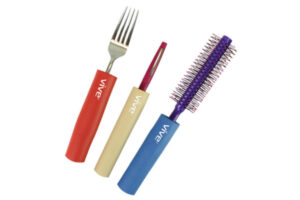
Small handles often require a tighter grip than larger ones.
Pens, toothbrushes, utensils, craft tools, makeup brushes, and other thin objects can become uncomfortable when arthritis affects the fingers or hands.
One simple solution is to increase the diameter of the handle.
You can sometimes use foam tubing or a purpose-made built-up grip to make an appropriate lightweight object easier to hold.
A larger handle may allow you to hold the object with less finger pressure.
Before modifying anything, make sure the added grip is secure and doesn’t interfere with safe operation or cleaning.
The basic principle: if pinching a thin object hurts, try making the object easier to hold rather than gripping it harder.
Related reading: Best Hand Therapy Tools for Arthritis
2. Make Jar Opening Easier

Opening a tightly sealed jar combines several movements that can be difficult with hand arthritis: gripping, twisting, and maintaining pressure.
Start by identifying which part of the task causes the problem.
If your hand slips on the lid, a silicone grip or non-slip material may provide enough traction to make opening easier.
If twisting itself is painful or your grip strength is limited, a mounted or electric jar opener may be a better solution because it reduces the amount of force your hands need to provide.
The goal isn’t to find the strongest grip you can manage.
The goal is to reduce the amount of twisting and force required.
Related reading: Kitchen Tools for Arthritis
3. Replace Squeeze Bottles With Pump Dispensers
Squeezing a bottle repeatedly can be uncomfortable when arthritis affects the fingers, thumb, or hand.
Look around your bathroom and kitchen for products that require repeated squeezing.
Depending on the product, you may be able to use a pump dispenser instead.
This can work particularly well for:
- Hand soap
- Lotion
- Shampoo
- Conditioner
- Other household products sold in squeeze containers
A pump won’t solve every hand problem, but it can eliminate one unnecessary squeezing motion from your daily routine.
4. Give Small Zippers a Larger Pull
Small zipper tabs can be surprisingly difficult to grasp when your fingers are stiff or painful.
A simple fabric loop, cord, or appropriately sized zipper pull can create a larger surface that’s easier to grab.
Instead of trying to pinch a tiny metal tab between your fingertips, you can hook a finger through the larger loop.
This can be useful for:
- Jackets
- Handbags
- Backpacks
- Luggage
- Pouches
- Clothing
If buttons and zippers are regularly difficult, you may also benefit from dressing aids or adaptive clothing.
Related reading: Adaptive Clothing and Dressing Aids for Arthritis
5. Keep a Reacher Where You Actually Need It

A reacher can reduce the need to repeatedly bend down to pick up lightweight objects.
But where you keep it matters.
If you regularly drop things in the kitchen, keep a reacher nearby. If bending to the floor is difficult in the bedroom, having one there may be more useful than keeping it in a closet across the house.
When choosing a reacher, pay attention to the trigger.
A reacher that requires substantial squeezing may replace one difficult movement with another.
Look for a model that is lightweight and easy for you to operate.
Related reading: How to Choose Arthritis Assistive Devices
6. Move Frequently Used Items to Easier Locations
One of the simplest arthritis hacks costs nothing:
Change where you keep things.
Frequently used objects are often stored in places that require unnecessary bending, reaching, or stretching.
For everyday items, consider keeping them between approximately waist and shoulder height when practical.
For example:
- Keep frequently used cookware within easy reach.
- Store toiletries where you don’t have to stretch overhead.
- Move commonly used cleaning supplies out of low cabinets.
- Keep everyday items toward the front of shelves.
- Avoid storing heavy objects above shoulder height.
You don’t have to reorganize your entire home.
Start with the items you use every day.
7. Reduce Bending Instead of Finding a Better Way to Bend
If bending repeatedly causes discomfort, ask whether you can eliminate some of the bending altogether.
A reacher can help with objects on the floor, but changing storage can be even more effective.
For example, you might:
- Move laundry supplies to a more convenient height.
- Store frequently used kitchen items in accessible cabinets.
- Use a rolling cart to move items between rooms.
- Keep frequently used pet supplies somewhere easy to reach.
- Place commonly used household products where they don’t require repeated bending.
A useful question is:
“How many times do I have to bend down to do this?”
If the answer is several times a day, changing the setup may be more helpful than simply trying to bend more carefully.
8. Use Lever Handles Instead of Round Knobs When Practical
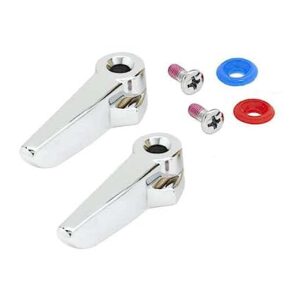
Round doorknobs require a twisting grip.
Lever-style handles can often be operated with a downward push instead.
This can be useful when arthritis makes twisting difficult.
You don’t necessarily need to replace every handle in your home. If changing hardware is practical, start with the doors you use most frequently.
The same principle applies to other household controls.
Whenever possible, look for designs that require less twisting, pinching, or gripping.
9. Put Non-Slip Material Under Things That Move
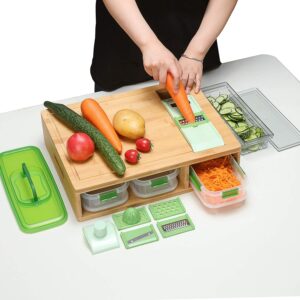
Sometimes the problem isn’t that you can’t grip an object.
It’s that the object keeps moving while you’re trying to use it.
An appropriate non-slip mat or piece of shelf liner can sometimes help stabilize lightweight household items.
This can be useful for:
- Mixing bowls
- Cutting boards
- Containers
- Small household objects
- Items that slide across smooth countertops
This is particularly helpful when the main problem is lack of traction rather than significant loss of hand strength.
Make sure the material is appropriate for the surface and doesn’t create a tripping or other safety hazard.
10. Reduce Repetitive Cutting and Squeezing
Some everyday tasks require dozens of small hand movements.
Cutting packaging, opening containers, squeezing cleaning bottles, and repeatedly using scissors can become tiring when arthritis affects the hands.
When a particular movement consistently causes discomfort, ask whether you can reduce the number of repetitions.
For example:
- Choose packaging that’s easier to open.
- Use a tool that provides better leverage.
- Use an electric or powered option when appropriate.
- Break a repetitive task into shorter periods.
- Change your grip or position if that reduces discomfort.
The principle is more important than the particular tool:
If a movement repeatedly bothers your joints, look for a way to do less of it.
11. Use Voice-to-Text to Give Your Hands a Break
Phones, tablets, and computers can require a lot of repetitive finger movement.
When typing becomes uncomfortable, voice-to-text may provide a simple alternative.
Depending on the device and software you already use, dictation can help with:
- Text messages
- Emails
- Notes
- Searches
- Longer documents
Voice commands can also reduce some repetitive movements when using compatible smart-home devices.
This isn’t an arthritis treatment. It’s simply another way to reduce unnecessary hand use when your joints need a break.
12. Use a Cart Instead of Carrying Everything
Carrying several objects at once can put extra stress on your hands, wrists, shoulders, and back.
A small rolling cart can sometimes eliminate much of that carrying.
You might use one for:
- Laundry
- Cleaning supplies
- Groceries
- Craft materials
- Items that need to move between rooms
For lighter loads, a basket with comfortable handles may be enough.
The goal is to change how the load moves, rather than making your hands carry everything.
13. Sit Down for Tasks That Don’t Require Standing

Standing for long periods can become tiring when arthritis affects the knees, hips, feet, or back.
Some household activities can be done while sitting instead.
Depending on the task, consider sitting while:
- Preparing vegetables
- Folding laundry
- Sorting small objects
- Performing crafts
- Getting dressed
- Completing certain grooming tasks
This isn’t about avoiding movement altogether.
It’s about deciding which movements and positions are necessary and which ones simply add fatigue.
14. Make Your Kitchen Easier to Use

The kitchen combines many movements that can challenge arthritic joints:
- Gripping
- Twisting
- Lifting
- Reaching
- Cutting
- Standing
Small changes can make the routine easier.
Consider:
- Keeping frequently used cookware within easy reach.
- Choosing lighter cookware when practical.
- Using non-slip surfaces to stabilize items.
- Using appliances that reduce repetitive hand movements.
- Keeping commonly used ingredients where you don’t have to reach overhead.
- Sitting for preparation tasks when appropriate.
You don’t need to replace your entire kitchen.
Start with the one task that causes the most difficulty.
Related reading: Kitchen Tools for Arthritis
15. Make Dressing Easier by Changing the Fastener

Clothing can require a surprising amount of pinching, pulling, twisting, and fine finger movement.
If a particular garment is difficult to manage, changing the fastener may be easier than fighting with it every morning.
Possible options include:
- Larger zipper pulls
- Elastic shoelaces
- Elastic waistbands
- Larger buttons
- Magnetic closures
- Looser-fitting clothing
- Dressing aids
Sometimes the simplest arthritis hack is choosing clothing that doesn’t require the movement that’s causing the problem.
Related reading: Adaptive Clothing and Dressing Aids for Arthritis
16. Make Your Workspace Easier on Your Hands

If you spend significant time at a desk, look at the movements you repeat most often.
You may be able to reduce hand and wrist strain by:
- Using voice-to-text
- Choosing a larger-grip pen
- Positioning frequently used items within easy reach
- Using equipment that feels comfortable in your hands
- Taking regular movement breaks
- Avoiding unnecessary reaching across the desk
You don’t necessarily need an expensive ergonomic setup.
Start by identifying the movement that bothers you most and change that first.
For more extensive workspace improvements, see Best Ergonomic Office Chairs for Arthritis.
17. Change the Way You Carry Things
Carrying several objects at once can create unnecessary gripping and lifting.
Instead of carrying everything by hand, consider whether you can:
- Make two lighter trips.
- Use a rolling cart.
- Use a lightweight basket.
- Keep supplies closer to where they’re used.
- Divide heavy loads into smaller ones.
The “best” solution isn’t always the one that lets you carry the most.
Sometimes it’s the one that requires less effort from your joints.
18. Keep Helpful Tools Where the Problem Happens
An assistive device is not much help if it’s stored somewhere inconvenient.
If you use a reacher, keep it where you actually need it.
If you regularly struggle with jars, keep the jar opener in the kitchen.
If getting dressed is difficult, keep dressing aids with your clothing.
If you use a built-up grip for a particular activity, store it with the equipment.
Convenience matters because you’re more likely to use a tool that’s immediately available.
19. Don’t Force Yourself to Do a Difficult Task the Same Way

One of the most useful arthritis hacks is changing your approach.
If twisting a jar hurts, don’t keep trying to grip it harder.
If bending to the floor is difficult, don’t repeatedly bend down when a reacher could do the job.
If squeezing a bottle hurts, consider a pump dispenser.
If a tiny zipper tab is difficult to pinch, make the pull larger.
The question isn’t:
“How can I force myself to do this?”
Try asking:
“What part of this movement is causing the problem, and can I eliminate or reduce it?”
That question often leads to a better solution.
20. Solve Your Biggest Problems First
It’s easy to become overwhelmed when you start looking for ways to make your home more arthritis-friendly.
You don’t need to change everything at once.
Start with two or three activities that cause you the most frustration.
For example:
- Opening jars
- Getting dressed
- Picking things up
- Preparing meals
- Carrying laundry
- Using a computer
Then find a solution for those specific problems.
Once you know what works, move on to the next challenge.
This approach can also save money because you’re less likely to buy products simply because they’re marketed as “arthritis aids.”
A Simple Arthritis Hack Checklist
When an everyday task becomes difficult, ask yourself:
- Can I eliminate this task or do it less often?
- Can I change how I perform it?
- Can I reduce gripping?
- Can I reduce pinching?
- Can I avoid twisting?
- Can I reduce bending?
- Can I move the item somewhere easier to reach?
- Can I sit instead of stand?
- Can I use a larger grip?
- Can I use a reacher or another simple tool?
- Can I use a cart instead of carrying?
- Can voice-to-text or another automatic feature replace repetitive hand movements?
- Would a purpose-designed tool make the task substantially easier?
These questions can help you solve the actual problem instead of automatically buying another product.
When an Arthritis Hack Isn’t the Right Solution
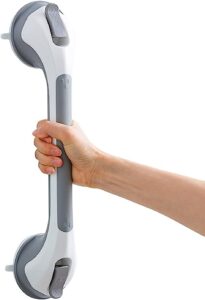
Simple adaptations can make many everyday activities easier, but they aren’t appropriate for every situation.
Be particularly cautious with anything involving balance, falls, mobility, transfers, or weight-bearing.
For example, don’t improvise modifications to:
- Canes
- Walkers
- Grab bars
- Shower chairs
- Transfer equipment
- Other devices that support your body
A homemade modification that seems clever could make equipment unstable or unsafe.
If you’re having significant difficulty walking, transferring, standing, or maintaining your balance, professional guidance may be more appropriate than trying to solve the problem with a DIY hack.
An occupational therapist can help identify ways to make everyday activities easier and safer. A physical therapist can provide guidance related to movement, strength, and mobility.
Related reading: Mobility Aids for Arthritis
When Is a Specialized Arthritis Tool Worth Buying?
Not every problem can be solved with something you already own.
A purpose-designed tool may be worth considering when:
- You perform the task every day.
- The movement requires substantial force.
- A simple adaptation hasn’t worked.
- The task is becoming increasingly difficult.
- A specialized tool significantly reduces the movement causing discomfort.
- A DIY solution would be unstable or unsafe.
- The equipment needs to support your body weight.
For example, foam tubing may be all you need to make a pen easier to hold.
But if you regularly struggle to open jars, a well-designed jar opener may be worth the investment.
The goal isn’t to avoid buying arthritis tools.
It’s to buy the tool that solves the problem you actually have.
Related reading: How to Choose Arthritis Assistive Devices
Arthritis Hacks vs. Arthritis Tools
There’s a useful distinction between an arthritis hack and a specialized arthritis tool.
An arthritis hack changes the way you perform a task or adapts something you already have.
An arthritis tool is a product specifically designed to make a particular task easier.
For example:
- Adding foam to a pen handle → hack
- Buying a built-up ergonomic pen → tool
- Moving a frequently used item to a lower shelf → hack
- Using a reacher to pick it up → tool
- Adding a larger zipper pull → hack
- Buying a dressing aid → tool
Neither approach is automatically better.
Use the simplest solution that safely solves the problem.
If a free change works, there’s no reason to buy something else.
If the simple solution isn’t enough, a purpose-designed tool may be worthwhile.
Build Your Arthritis-Friendly Home One Problem at a Time
You don’t need to redesign your home overnight.
Instead, pay attention to the tasks that repeatedly cause difficulty.
When you notice a problem, identify the movement behind it:
Grip → Can the handle be made larger?
Pinch → Can the object have a larger pull or easier closure?
Twist → Can you use leverage or a different type of handle?
Bend → Can the item be moved higher or retrieved with a reacher?
Carry → Can you use a cart or make the load lighter?
Repeat → Can you eliminate some of the repetitive movement?
This way of thinking can help you find practical solutions without automatically turning to expensive products.
Final Thoughts: Look for an Easier Way
Living with arthritis often means finding new ways to do familiar things.
The most useful arthritis hack isn’t necessarily clever or complicated.
It may be as simple as:
- Adding a larger grip to a pen
- Using a pump bottle
- Making a zipper easier to grab
- Moving everyday items to a more convenient shelf
- Keeping a reacher nearby
- Using a cart instead of carrying several items
- Changing a task so it requires less twisting or gripping
The goal isn’t to prove that you can keep doing everything exactly as you did before.
The goal is to find a way that works better for your joints and your daily routine.
Start with the tasks that frustrate you most. Try one simple change at a time, keep the solutions that genuinely help, and don’t feel that every problem requires a specialized product.
Sometimes the best arthritis aid is simply a better way of doing the task.
Related Reading
- Best Arthritis Tools for Daily Living — Explore practical tools designed to make common everyday tasks easier.
- Arthritis Supplies & Tools: Complete Guide to Daily Living Aids — Explore different types of arthritis aids, tools, and supportive products.
- How to Choose Arthritis Assistive Devices — Learn how to match an assistive device to the problem you’re trying to solve.
- Kitchen Tools for Arthritis — Find practical ways to make cooking and food preparation easier.
- Adaptive Clothing and Dressing Aids for Arthritis — Discover ways to make dressing easier when buttons, zippers, and bending are difficult.
- Mobility Aids for Arthritis — Learn about canes, walkers, rollators, and other mobility solutions.
- Best Bathroom Safety Aids for Arthritis — Explore ways to make bathing and bathroom routines easier and safer.
Medical Disclaimer: This article is for informational purposes only and does not constitute medical advice. Always consult your doctor, rheumatologist, or occupational therapist before making changes to how you manage your arthritis.
