

Disclosure: As an Amazon Associate, Arthritis Wares earns from qualifying purchases at no extra cost to you. We are not paid or sponsored by any manufacturer. Affiliate links help support our work.
Cleaning the house can become surprisingly difficult when arthritis makes gripping, bending, reaching, squeezing, or lifting uncomfortable. Tasks that once took only a few minutes can leave your hands, wrists, knees, hips, or back feeling tired and sore.
The good news is that you don’t necessarily need expensive equipment or a completely different cleaning routine. A few arthritis-friendly cleaning tools, combined with some changes to the way you approach household chores, can make everyday cleaning easier and more manageable.
The key is to clean smarter rather than harder. Look for ways to reduce the gripping, twisting, bending, lifting, and repetitive movements that cause you the most trouble.
How We Chose These Tools and Tips
We organized this guide around specific chore movements — wringing, gripping a handle, bending to reach the floor — rather than listing cleaning gadgets generally. Each product recommendation was checked against whether it actually removes that movement, not just whether it’s marketed as ergonomic.
Start by Identifying What Makes Cleaning Difficult
Before buying another cleaning gadget, think about which part of cleaning causes you the most difficulty.
If gripping a broom or scrub brush hurts, look for a larger or cushioned handle. If squeezing spray bottles bothers your fingers, consider a different type of dispenser. If bending is difficult, a long-handled reacher may help. If wringing a mop or cloth causes wrist pain, look for a tool that does the wringing for you.
The best arthritis-friendly cleaning tools aren’t necessarily the most expensive ones. They’re the ones that remove or reduce the movement that causes you problems.
Use a Long-Handled Reacher to Reduce Bending and Stretching
Picking things up from the floor or reaching into awkward spaces can be difficult when arthritis affects your knees, hips, back, or hands. A long-handled reacher can extend your reach without requiring you to bend as far or stretch overhead.
When choosing a reacher, look for a lightweight design, a comfortable trigger, and a non-slip handle. A rotating or adjustable head can also be useful if you need to reach objects from different angles.
A reacher isn’t just useful for cleaning. Keep one handy for picking up clothing, retrieving dropped items, or reaching objects that are difficult to access without bending.
Tip: If you use a reacher frequently, keep it somewhere convenient rather than storing it in a closet where you have to retrieve it every time.
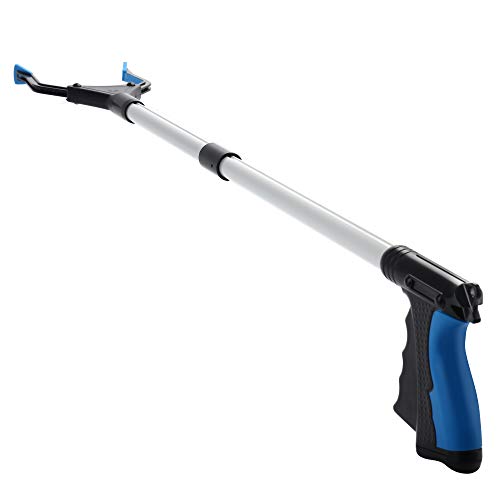
Reacher Grabber Tool (31”)
Lightweight, foldable, and designed for pain-free gripping. Ideal for picking up clutter, retrieving items, or reaching difficult spots.
Choose Cleaning Tools with Comfortable Handles
Thin handles can force your fingers into a tight grip, which may become uncomfortable when your hands are stiff or painful. Cleaning tools with larger, cushioned, or non-slip handles can make them easier to control without squeezing as tightly.
This can make a difference with brooms, mops, dusters, scrub brushes, squeegees, and other frequently used tools. You don’t always have to replace the tool, either. Foam tubing or a grip sleeve can sometimes make an existing handle larger and more comfortable.
When choosing a handle, don’t assume the softest one is automatically the best. What matters is finding a grip that feels secure while allowing you to use less hand strength.
Avoid Excessive Wringing and Twisting
Wringing a wet cloth or mop can be especially difficult when arthritis affects your fingers or wrists. Repeatedly twisting and squeezing can put unnecessary stress on already painful joints.
Instead, consider a self-wringing mop, spin mop, or flat mop with washable microfiber pads. These tools can reduce the amount of manual twisting required during cleaning.
If you still need to wring a cloth by hand, avoid trying to remove every last drop of water. Using a tool or method that requires less force is generally more practical than repeatedly forcing your hands through a painful movement.
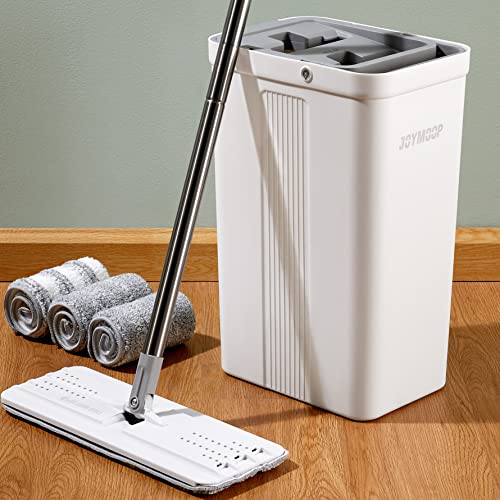
JOYMOOP Hands-Free Mop & Bucket Set
Self-wringing, 360° rotation, adjustable handle, and reusable microfiber pads for joint-friendly cleaning.
Make Cleaning Easier with Microfiber
Microfiber cloths can be useful for everyday cleaning because they can pick up dust and dirt without requiring as much aggressive scrubbing. They’re also washable and reusable, making them a practical choice for routine household chores.
Use microfiber cloths for countertops, tables, shelves, appliances, mirrors, and other surfaces. Microfiber mop pads can also reduce the amount of pressure and repetitive movement needed when cleaning floors.
Keeping several cloths available can make things easier, too. You won’t have to stop repeatedly to rinse the same cloth while moving from one cleaning task to another.
Choose a Vacuum You Can Maneuver Comfortably
A heavy vacuum can be difficult to push, pull, carry, and maneuver around furniture. When shopping for a vacuum that is easier to use with arthritis, don’t focus solely on suction power. Weight, steering, controls, and ease of emptying can be just as important.
Look for features such as lightweight construction, swivel steering, a comfortable handle, and an easy-to-empty dirt container. Cordless models can eliminate the need to repeatedly plug and unplug the vacuum, although battery weight and runtime are also worth considering.
If a full-size vacuum is difficult to maneuver, a lightweight stick vacuum may be a better choice for quick cleanups.
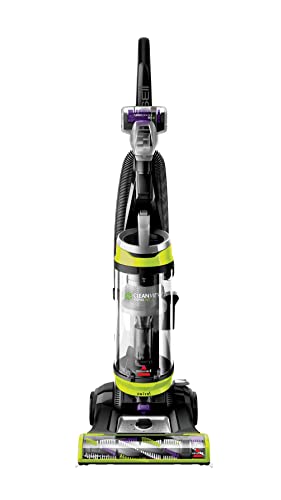
BISSELL 2252 CleanView Swivel Upright Vacuum
Powerful suction, swivel steering, triple-action brush roll, and easy-empty dirt tank—all designed for effortless cleaning with minimal strain.
Let a Robot Vacuum Handle Routine Floor Cleaning
A robot vacuum can be particularly useful when pushing and pulling a traditional vacuum is tiring or uncomfortable. Once set up, it can handle routine floor cleaning while you concentrate on other tasks.
Depending on the model, features may include scheduled cleaning, automatic charging, smartphone controls, and voice commands. A robot vacuum won’t replace every type of cleaning, but it can reduce how often you need to do routine floor cleaning yourself.
For best results, keep cords, clothing, and small objects off the floor so the robot can move around without constantly getting stuck.
iRobot Roomba 694 Robot Vacuum
Wi-Fi connectivity, voice control (Alexa compatible), and adaptive navigation for easy, hands-free cleaning.

Look for Alternatives to Difficult Spray Bottles
Repeatedly squeezing a spray-bottle trigger can be uncomfortable for people with painful or stiff fingers. If you find yourself struggling with cleaning sprays, look for products with pump dispensers, easier triggers, or other dispensing systems that require less hand pressure.
You may also find that choosing cleaning products with larger handles or grips makes them easier to control.
Always follow the manufacturer’s directions for cleaning products and keep chemicals in their original, properly labeled containers whenever possible.
Use a Rolling Cart Instead of Carrying Supplies
Carrying a bucket, cleaning products, cloths, and tools from room to room can add unnecessary lifting to your cleaning routine. A small rolling utility cart can eliminate much of that carrying.
Load the cart with the supplies you use regularly and move it from room to room as you clean. A lightweight cleaning caddy can serve the same purpose if you don’t need a full-size cart.
This simple change can be particularly helpful if lifting and carrying are among the tasks that aggravate your joints.
Keep Cleaning Supplies Within Easy Reach
Where you store your cleaning supplies can make a surprising difference.
If you regularly have to bend down, stretch overhead, or climb to retrieve cleaning products, consider reorganizing your storage. Keep frequently used items at a comfortable height and avoid putting heavy containers on high shelves or directly on the floor.
You don’t have to reorganize your entire home. Start with the supplies you use most often and place them somewhere that requires fewer awkward movements.
Sit Down When You Can

Cleaning doesn’t always have to be done standing up. If standing for long periods is uncomfortable or tiring, look for tasks that can safely be completed while sitting.
Folding laundry, sorting items, dusting smaller objects, organizing drawers, and cleaning some lower surfaces can often be done from a stable chair.
Taking a seat can conserve energy and reduce the amount of time your joints spend under load. Just make sure you are positioned securely and don’t have to reach too far from the chair.
Break Cleaning Into Smaller Sessions
One of the simplest ways to make household chores more manageable is to stop trying to finish everything at once.
Instead of spending an entire day cleaning, divide larger jobs into smaller sessions throughout the week. For example, you might dust and wipe surfaces on Monday, vacuum on Wednesday, clean the bathroom and kitchen on Friday, and handle laundry or decluttering over the weekend.
Your schedule doesn’t have to look like this. The important thing is to spread demanding tasks out rather than exhausting yourself in one session.
Short 10- or 15-minute cleaning periods can still accomplish a lot, especially when you focus on one area at a time.
Simple Grip Aids Can Make a Big Difference
Some of the most useful arthritis-friendly cleaning solutions are inexpensive. Foam handle grips, non-slip shelf liner, rubberized gloves, silicone grip pads, and larger-handled brushes can all make everyday tasks easier.
Non-slip material can also help stabilize objects while you’re cleaning. For example, placing a piece of non-slip liner underneath a bowl or container can prevent it from sliding while you’re wiping it.
Before buying a specialized gadget, look around your home for simple ways to make the tools you already own easier to use.
Use the Right Tool Instead of More Force
When something is difficult to clean, the instinct may be to grip harder, push harder, or work faster.
Instead, ask yourself whether a different tool could eliminate some of that effort.
A difficult-to-reach area may call for a reacher. A mop that requires painful wringing may be better replaced with a self-wringing model. If vacuuming is exhausting, a lighter vacuum or robot vacuum may help. If carrying supplies is the problem, a rolling cart can do the work for you.
This is one of the most useful principles for an arthritis-friendly home:
Don’t make your joints compensate for a tool that isn’t working for you.
Create a Gentle Arthritis-Friendly Cleaning Routine
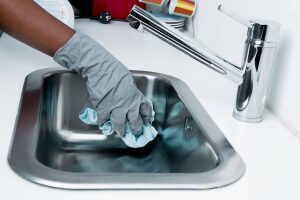
A good cleaning routine should work with your energy and mobility rather than forcing you to push through discomfort.
Before you start, gather the supplies you’ll need so you aren’t constantly walking back and forth. A cleaning caddy or rolling cart can help. While you’re working, alternate between different types of tasks rather than repeating the same hand or wrist movement for a long period.
Take breaks before you’re completely exhausted, and pay attention to which chores cause the most difficulty. Those are the tasks where changing your technique or investing in an adaptive tool is most likely to make a noticeable difference.
You can also make cleaning easier by keeping frequently used supplies accessible, sitting for tasks that don’t require standing, and working in shorter sessions instead of trying to complete everything in one day.
What Should You Buy First?
You don’t need a house full of specialized arthritis gadgets. Start with the cleaning problem that bothers you most and choose a tool that addresses that specific movement.
If bending is difficult, a long-handled reacher can reduce the need to bend down repeatedly. If mopping or wringing hurts, consider a self-wringing or hands-free mop. If gripping is the problem, look for larger, cushioned handles and simple grip aids. A lightweight or robotic vacuum may help if vacuuming is exhausting, while a rolling cart can reduce the amount of lifting and carrying involved in cleaning.
Starting with one problem also helps prevent unnecessary spending. If a particular tool makes a noticeable difference, you can gradually add other solutions as you discover what you actually need.
Don’t Forget About Safety
Making cleaning easier shouldn’t create new hazards.
Avoid standing on chairs or unstable furniture to reach high areas, and be especially careful when floors are wet. Don’t attempt to lift containers that are too heavy for you, and follow the manufacturer’s instructions when using cleaning chemicals.
If a task consistently causes significant discomfort, requires awkward positioning, or feels unsafe, consider asking someone else to handle it. Getting help with a difficult chore isn’t a failure of independence—it can be a smart way to protect your joints and conserve your energy.
Final Thoughts: Clean Smarter, Not Harder
Cleaning your home with arthritis doesn’t mean giving up your independence or spending a fortune on specialized equipment.
Start by identifying the movements that cause the most trouble. Maybe it’s gripping a broom, squeezing a spray bottle, bending to pick things up, wringing a mop, pushing a heavy vacuum, or carrying supplies from room to room.
Then look for ways to reduce those movements.
A reacher can reduce bending. A self-wringing mop can reduce twisting. A lightweight vacuum can make floors easier to manage. A rolling cart can eliminate unnecessary carrying. Even something as simple as a larger handle or piece of non-slip material can make an everyday task more comfortable.
You don’t need to change everything at once.
Start with the one cleaning task you find most difficult, make that task easier, and build from there.
The best arthritis-friendly cleaning tool isn’t necessarily the most expensive or sophisticated option. It’s the one that helps you get the job done with less strain, less frustration, and more independence.
Related Reading
- Arthritis-Friendly Home Modifications: A Room-by-Room Guide
- Best Kitchen Tools for Arthritis Hands
- Best Arthritis Tools for Daily Living
- How to Choose Arthritis Assistive Devices: A Practical Buyer’s Guide
Medical Disclaimer: This article is for informational purposes only and does not constitute medical advice. Always consult your doctor, rheumatologist, or occupational therapist before making changes to how you manage your arthritis.
