

Living with arthritis can make everyday tasks harder—and the cost of specialized products can add another frustration.
An adaptive kitchen tool, ergonomic writing aid, reacher, jar opener, or mobility device may make life easier, but not every arthritis-friendly product needs to be expensive.
In many cases, you can adapt something you already own, choose a simpler version of a specialized product, or find an inexpensive alternative that solves the same basic problem.
The key is knowing where you can safely save money and where spending more is worthwhile.
This guide looks at affordable arthritis tools, simple adaptations, budget-friendly shopping strategies, and situations where choosing the cheapest option may not be the best decision.
Quick Answer: You can often save money on arthritis tools by adapting everyday household items, choosing simple products instead of specialized versions, buying used items when appropriate, and comparing prices. However, safety-related equipment such as walkers, rollators, grab bars, and other weight-bearing devices deserves extra care rather than simply choosing the cheapest option.
Where Can You Save Money on Arthritis Tools?
Before buying an expensive product marketed specifically for arthritis, ask yourself what problem you’re actually trying to solve.
If the problem is gripping, twisting, reaching, bending, pinching, or carrying, there may be a simpler solution.
For example, you might not need a specialized arthritis pen if adding a larger foam grip to a pen you already own makes it comfortable. Likewise, a rubber grip pad may solve a mild jar-opening problem without requiring an electric opener.
Here are some common examples:
| Everyday problem | Lower-cost alternative | When a specialized product may be better |
|---|---|---|
| Opening jars | Rubber grip pad, silicone mat, shelf liner | Severe grip weakness or frequent difficulty |
| Holding utensils | Foam tubing or built-up handles | Significant hand weakness or dexterity problems |
| Writing | Foam pen grip | Frequent writing or persistent hand discomfort |
| Reaching objects | Inexpensive reacher | Frequent use or need for specialized features |
| Carrying household items | Lightweight basket or rolling cart | Significant mobility or strength limitations |
| Reading or holding a tablet | Existing tablet stand or book stand | Frequent use or need for adjustable positioning |
| Opening cans | Manual opener with leverage | Reduced grip strength may make electric easier |
| Dressing | Larger zipper pulls or elastic laces | Significant fine-motor limitations |
| Cleaning | Lightweight household tools | Frequent bending, reaching, or repetitive movements |
The goal isn’t to avoid spending money altogether. It’s to spend where it makes the biggest difference.
Start With the Problem, Not the Product
One of the easiest ways to overspend is to start shopping before identifying exactly what you need help with.
Instead of searching for “arthritis products,” identify the task that is causing difficulty.
For example:
- Opening jars hurts because you have difficulty twisting.
- Writing is uncomfortable because you have to maintain a tight grip.
- Cooking is tiring because your utensils are difficult to hold.
- Picking things up requires painful bending.
- Getting dressed is difficult because buttons require fine finger movements.
- Standing in the shower is uncomfortable or tiring.
Once you understand the movement causing the problem, you can look for the simplest way to reduce that movement.
Sometimes that means buying a purpose-built assistive device. Other times, a low-cost adaptation is enough.
Affordable Kitchen Solutions for Arthritis

The kitchen is one of the easiest places to find inexpensive alternatives because many common household products can improve grip, leverage, or stability.
Jar Openers
If opening jars is difficult because your hands slip or you can’t get enough traction, you may not need an expensive electric opener.
A rubber grip pad, silicone jar opener, or piece of non-slip shelf liner can provide additional traction between your hand and the lid.
These options are inexpensive and easy to store.
However, if twisting itself is painful or your grip strength is significantly reduced, a mounted or electric jar opener may be a better long-term solution.
The lesson: try improving grip first if that is the problem. If the task still requires too much force, consider a tool that removes the twisting motion altogether.
Built-Up Handles for Kitchen Utensils
Thin utensil handles can be difficult to hold when your fingers are stiff or painful.
Instead of immediately replacing every utensil with specialized adaptive versions, consider adding foam tubing or another appropriate built-up grip to utensils you already own.
A larger handle can reduce the need for a tight finger grip.
Make sure any modification remains secure and doesn’t make the utensil difficult to control or clean.
Non-Slip Surfaces
A cutting board that slides around the counter can create unnecessary frustration.
Before buying a specialized non-slip cutting board, try placing an appropriate non-slip mat or shelf liner underneath an existing board.
The same principle can sometimes be used with bowls, containers, and other kitchen items that slide during use.
Lightweight Kitchen Equipment
Sometimes the cheapest solution is simply changing what you use.
A heavy pot may be difficult to lift regardless of how comfortable its handle is. A lighter pot, smaller container, or two-handled option may reduce the effort required.
You can also reduce lifting by keeping frequently used items between waist and shoulder height rather than storing them in very low or high cabinets.
Related reading: Kitchen Tools for Arthritis
Low-Cost Solutions for Writing and Office Tasks
Writing, typing, reading, and using a computer can become uncomfortable when arthritis affects your fingers, hands, or wrists.
Fortunately, many inexpensive adaptations can make these activities easier.
Add a Grip to an Ordinary Pen
You don’t necessarily need a specialized arthritis pen.
A foam grip or other built-up material can make a thin pen easier to hold by increasing the diameter of the handle.
This may be particularly useful if maintaining a tight pinch grip is uncomfortable.
If you write frequently, however, it may be worth investing in a pen specifically designed around comfortable grip and reduced hand strain.
Use Voice-to-Text
If typing or handwriting is painful, take advantage of voice-to-text features already available on many phones, tablets, and computers.
Dictating a message or document can reduce the amount of repetitive finger movement required.
For occasional use, this can be a completely free alternative to purchasing specialized writing equipment.
Repurpose a Tablet or Book Stand
If holding a book or tablet causes hand fatigue, you may already have a solution around the house.
A tablet stand, cookbook holder, or appropriately positioned book stand can hold the item for you rather than requiring you to grip it continuously.
The best option depends on the size and weight of the item and where you plan to use it.
Affordable Dressing Aids

Getting dressed can involve a surprising amount of pinching, pulling, bending, and fine finger movement.
Some simple adaptations cost very little.
Larger Zipper Pulls
Small zipper tabs can be difficult to grasp.
Adding a larger pull or loop can give you something easier to hold without requiring precise finger control.
Elastic Shoelaces
If tying shoelaces is difficult, elastic laces can turn traditional shoes into slip-on footwear without requiring you to repeatedly tie and untie the laces.
They’re a relatively inexpensive change that can make a daily task easier.
Button Hooks
If buttons are difficult because of finger stiffness or reduced dexterity, a button hook can be more practical than trying to modify every piece of clothing.
A button hook is also a good example of when a relatively inexpensive purpose-built tool may be worth buying because it performs a specific task that’s difficult to replicate with ordinary household items.
Consider the Clothing Itself
You don’t always need an assistive device.
Clothing with elastic waistbands, larger fasteners, looser fits, magnetic closures, or fewer small buttons may be easier to manage.
Changing the clothing can sometimes be a simpler solution than trying to make a difficult garment easier to use.
Related reading: Adaptive Clothing and Dressing Aids for Arthritis
Reachers and Grabbers: When a Budget Option Makes Sense
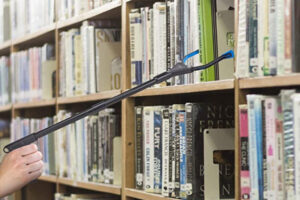
A reacher can be one of the most useful tools for reducing bending and stretching.
You don’t necessarily need a premium model, particularly if you only use one occasionally.
When comparing inexpensive reachers, pay attention to:
- Overall weight
- Length
- Trigger resistance
- Grip design
- Jaw strength
- Ease of operation
A very inexpensive reacher isn’t necessarily a bargain if the trigger is difficult to squeeze or the tool is awkward to control.
For someone who uses a reacher several times a day, spending a little more for a lightweight design with an easy trigger may provide better long-term value.
Budget-Friendly Bathroom Improvements
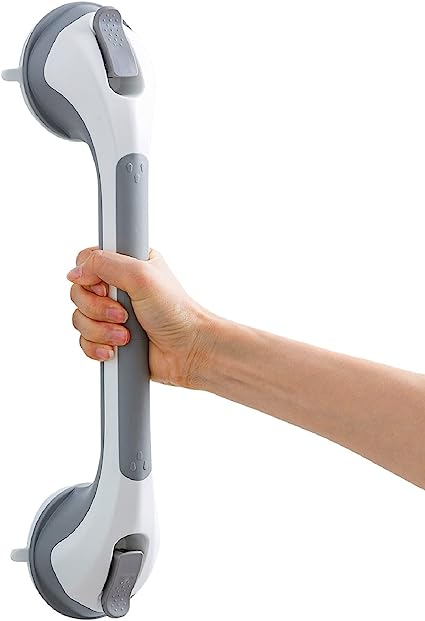
The bathroom deserves special attention because a low-cost solution isn’t necessarily a safe solution.
Non-Slip Surfaces
A properly designed bath or shower mat may be an inexpensive way to improve traction on wet surfaces.
Keep in mind that the mat itself should remain securely in place and shouldn’t create a tripping hazard.
Long-Handled Bath Tools
A long-handled sponge or brush can reduce the amount of bending and reaching required for bathing.
You don’t necessarily need the most expensive version. Look for an appropriate length, comfortable handle, and secure attachment.
Grab Bars: Don’t Choose Based on Price Alone
Grab bars are one area where I would not recommend simply looking for the cheapest alternative.
A properly installed grab bar can provide meaningful support when entering or exiting a shower or standing near a toilet. It needs to be securely attached to appropriate structural support and installed according to the manufacturer’s instructions.
Do not assume a suction-mounted product can replace a properly installed grab bar for weight-bearing support.
If you need a grab bar primarily for balance or transferring your body weight, safety should take priority over saving a few dollars.
Related reading: Best Bathroom Safety Aids for Arthritis
Saving Money on Mobility Aids

Mobility equipment can be expensive, and used equipment can sometimes provide an opportunity to save money.
However, mobility aids are also one of the categories where you should be more careful about buying based solely on price.
Canes
A used cane may be perfectly serviceable, but check the height adjustment, rubber tip, handle, and overall condition before using it.
The cane should also be properly sized for the person using it.
Walkers and Rollators
A secondhand walker or rollator can sometimes be a good value, particularly if it’s in excellent condition.
Before buying, inspect the frame, wheels, brakes, seat if included, adjustment mechanisms, and any signs of damage or excessive wear.
For rollators, make sure the brakes operate correctly and that the height and overall design are appropriate for the user.
If you’re unsure which mobility device you need, getting professional guidance may be more important than finding the lowest price.
Related reading: Walkers and Rollators for Arthritis
Consider Secondhand and Community Resources
Buying new isn’t your only option.
Depending on where you live, you may be able to find affordable or donated equipment through:
- Thrift stores
- Community organizations
- Local medical-equipment reuse programs
- Senior centers
- Community groups
- Local marketplaces
- Friends or family members
- Healthcare or rehabilitation organizations
Secondhand shopping makes the most sense for products that are easy to inspect and don’t depend heavily on precise fit or safety.
For example, a gently used reacher or kitchen aid may be a reasonable purchase.
For equipment that supports your body or affects your safety, inspect it carefully and consider whether professional guidance is appropriate before using it.
Simple DIY Arthritis Adaptations
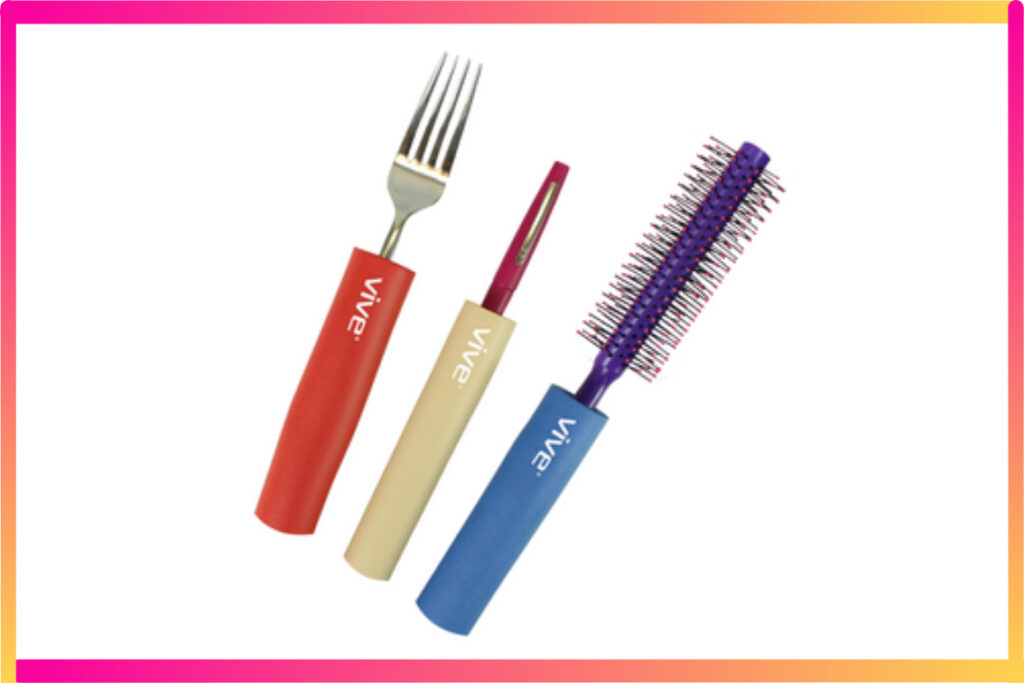
Some of the most useful arthritis adaptations don’t require buying a specialized product at all.
Make Handles Larger
Foam tubing can sometimes be used to increase the diameter of handles on appropriate lightweight objects.
This can make pens, utensils, brushes, and similar items easier to hold.
The modification should be secure and shouldn’t interfere with safe operation or cleaning.
Improve Traction
A non-slip material can sometimes make a lid, container, or household object easier to hold.
This is particularly useful when the problem is that your hands slip rather than a lack of strength.
Reduce Reaching
Instead of buying an expensive storage solution, consider moving frequently used items to locations that are easier to reach.
Keeping everyday objects between waist and shoulder height can reduce unnecessary bending and overhead reaching.
Reduce Carrying
A lightweight basket, rolling cart, or small wheeled carrier can sometimes eliminate the need to carry several objects at once.
The best solution may be changing how you move an item rather than changing the item itself.
Be Careful With DIY Pain-Relief Products
DIY solutions can be useful for simple adaptations, but pain-relief methods deserve more caution.
For example, homemade heat or cold packs may seem inexpensive, but temperature-related injuries are possible if they become too hot or cold or are applied for too long.
If you use heat or cold for comfort, follow appropriate safety precautions and protect your skin.
A purpose-designed heat or cold pack may be worth the modest cost because it is easier to control and use consistently.
This is another example of the difference between saving money and cutting corners.
When Spending More Is Worth It

The goal of a budget isn’t to spend as little as possible.
It’s to get the most useful solution for your money.
There are situations where spending more can make sense.
Consider investing in a better-quality product when:
- You use it every day.
- It significantly reduces pain or effort.
- A cheaper version is difficult to operate.
- The product needs to support your body.
- Safety depends on its construction.
- The product will receive heavy, repeated use.
- A poor-quality version could break at an inconvenient or unsafe time.
For example, a basic jar opener may be perfectly adequate for occasional use. But if you struggle with jars several times a day, an electric or mounted opener may provide much greater value.
Likewise, a cheap rollator isn’t necessarily a bargain if the brakes, wheels, frame, or fit aren’t appropriate.
A Simple Save-or-Spend Guide
| Product or situation | Save or spend? | What to consider |
|---|---|---|
| Jar opener | Usually save | Start with a simple grip aid if it solves the problem |
| Pen grip | Save | A basic foam grip may be all you need |
| Kitchen utensil grips | Save | Adapt existing utensils before replacing them |
| Reacher | Either | Spend more if you use it frequently or need an easy trigger |
| Dressing aids | Usually save | Simple tools can solve very specific problems |
| Non-slip kitchen materials | Save | Basic non-slip materials may work well |
| Shower chair | Spend carefully | Stability, fit, weight capacity, and construction matter |
| Grab bars | Spend for safety | Proper installation and secure support are essential |
| Cane | Either | Proper height, condition, and fit matter more than price |
| Walker or rollator | Spend carefully | Brakes, wheels, frame, fit, and stability are important |
| Ergonomic office equipment | Either | Higher quality may be worthwhile with frequent use |
The most important question isn’t “What’s the cheapest option?”
It’s “What’s the least expensive option that safely solves my problem?”
How to Find Arthritis Tools at a Lower Price

Once you’ve decided what you actually need, comparison shopping can make a significant difference.
Compare Similar Products
Don’t assume the first product you find is the best value.
Compare dimensions, materials, features, reviews, warranty information, and return policies—not just the price.
Two products may look almost identical while having significant differences in quality or ease of use.
Look Beyond Products Marketed for Arthritis
A product doesn’t have to have the word “arthritis” in its name to be useful.
Kitchen, gardening, office, household, and accessibility products may contain the same features you’re looking for.
Instead of searching only for “arthritis pen,” for example, you might look for:
- Large-grip pen
- Ergonomic pen
- Cushioned writing grip
- Built-up handle
This can reveal more choices at different price points.
Check Sales and Discounts
If you know you need a particular product but don’t need it immediately, waiting for a sale can make sense.
Compare prices between retailers and check whether the same product is available elsewhere for less.
You can also look for manufacturer promotions, seasonal sales, coupons, and retailer discounts.
Related reading: How to Find the Best Deals on Arthritis Products
Consider the Cost Per Use
A $10 product isn’t necessarily cheaper in the long run if you replace it repeatedly.
Likewise, a $40 product isn’t necessarily expensive if you use it every day for several years.
Think about how often you’ll use the product and how long you expect it to last.
A simple calculation can help:
Cost per use = purchase price ÷ estimated number of uses
You don’t need an exact number. The exercise simply helps put the purchase into perspective.
Read Reviews for Value, Not Just Ratings
Customer reviews can help you determine whether an inexpensive product is actually a good value.
Don’t focus only on the star rating.
Look for comments about:
- Ease of use
- Grip strength required
- Weight
- Durability
- Trigger resistance
- Handle comfort
- Size
- Stability
- Whether the product broke
- Whether the product worked as expected
Pay particular attention to negative reviews.
A product with a 4.5-star rating may still have a common problem that makes it unsuitable for you.
For example, if several reviewers say that a reacher’s trigger is difficult to squeeze, that could be important if hand strength is one of your main concerns.
Don’t Forget Return Policies
A product can look perfect online and still not work well for your hands.
Before buying, check:
- Return period
- Return shipping requirements
- Restocking fees
- Warranty
- Seller reputation
- Product sizing information
This is particularly important when you’re trying an unfamiliar product for the first time.
A slightly more expensive product with a reasonable return policy may actually be the better value if you’re uncertain whether it will work for you.
Where to Look for Affordable Arthritis Tools
You don’t have to limit your search to specialty medical stores.
Depending on the type of product, you may find useful options at:
- Online retailers
- Pharmacies
- Big-box stores
- Home improvement stores
- Thrift stores
- Local marketplaces
- Community organizations
- Medical-equipment reuse programs
For simple products such as grip aids, kitchen tools, dressing aids, and household adaptations, mainstream retailers can offer plenty of affordable choices.
For mobility and safety equipment, however, consider the product’s quality and suitability rather than simply choosing the lowest-priced option.
A Budget-Friendly Way to Build Your Arthritis Toolkit

You don’t need to buy a house full of assistive devices at once.
In fact, I think it’s better to build your toolkit gradually.
Start by identifying three tasks that cause you the most frustration.
Then ask:
- Can I change the way I perform the task?
- Can I move the item to make it easier to reach?
- Can I adapt something I already own?
- Is there an inexpensive product that solves the problem?
- Would a more specialized tool save significantly more effort?
- Does this involve safety, weight-bearing, or mobility?
This approach keeps you from spending money on products that end up sitting unused in a drawer.
When You Shouldn’t Try to Save Money
There are some situations where getting the right equipment matters more than getting the cheapest equipment.
Consider professional guidance when you’re dealing with:
- Significant balance problems
- Repeated falls
- Difficulty walking
- Difficulty transferring from a bed or chair
- Uncertainty about whether you need a cane, walker, or rollator
- Bathroom safety concerns
- Equipment that supports your body weight
- A device that causes pain or feels unstable
An occupational therapist or physical therapist can help determine what type of equipment is appropriate and how it should be used.
A bargain isn’t a bargain if the product isn’t appropriate for you.
The Best Budget Strategy: Spend Where It Matters
Saving money on arthritis products doesn’t mean buying the cheapest version of everything.
It’s about recognizing which problems can be solved with a simple adaptation and which ones justify a purpose-built product.
A foam grip may be all you need for a pen. A rubber grip pad may solve an occasional jar-opening problem. Moving frequently used items to a more accessible location may eliminate the need for a reacher.
But if you rely on a mobility aid every day, spend more attention on fit, quality, stability, and safety.
The same principle applies throughout your home:
Save on convenience. Spend on safety.
Final Thoughts: You Don’t Have to Buy Everything
Living with arthritis doesn’t mean you need a specialized product for every difficult task.
Some of the best solutions are surprisingly simple.
A larger handle, a non-slip surface, a better storage location, a rolling cart, or a basic dressing aid may be enough to make an everyday activity easier.
Start with the problems that affect you most often. Look for simple solutions first, compare prices, and consider adapting things you already own.
And when a product affects your safety, supports your body, or needs to withstand frequent use, don’t let price be your only consideration.
The goal isn’t to spend less on everything. It’s to spend wisely on the things that genuinely make your life easier.
Frequently Asked Questions
What are the cheapest arthritis tools that can make a difference?
Some inexpensive options include rubber grip pads, non-slip shelf liner, foam handle grips, zipper pulls, elastic shoelaces, basic reachers, and simple dressing aids. The best choice depends on the specific task that’s difficult for you.
Can I make my own arthritis aids?
You can sometimes adapt everyday objects to make them easier to grip, reach, or handle. Foam tubing can increase handle diameter, while non-slip materials can improve traction. However, avoid homemade modifications to equipment that supports your body or is important for safety unless you’re confident the modification is appropriate.
Are cheap arthritis tools worth buying?
Sometimes. A simple inexpensive product can be an excellent solution when it safely solves a specific problem. The cheapest option isn’t always the best choice if it is uncomfortable, difficult to operate, poorly made, or unsuitable for the task.
How can I save money on mobility aids?
Depending on where you live, you may be able to find used or donated canes, walkers, and other equipment through community programs, medical-equipment reuse organizations, or local marketplaces. Inspect used equipment carefully and make sure it is appropriate for you before using it.
Should I buy used arthritis equipment?
Used equipment can make sense for some products, particularly simple tools that are easy to inspect. Be more cautious with mobility and safety equipment. Check for damage, wear, missing parts, and proper operation before using it.
What arthritis products are worth spending more money on?
Products used frequently or related to safety may justify spending more. Examples include quality mobility aids, properly installed bathroom safety equipment, and tools that significantly reduce the effort required for an activity you perform every day.
How do I know whether I need an expensive arthritis aid?
Ask whether a simple, inexpensive solution adequately solves the problem. If it doesn’t, consider whether a more specialized product would significantly reduce the force, movement, or effort required. The value comes from how much useful work the product does for you—not from its price.
Our Approach to Affordable Arthritis Tools
At Arthritis Wares, we focus on practical solutions that can make everyday activities easier for people living with arthritis.
For budget-friendly recommendations, we consider the task a product is designed to address, the amount of grip strength or movement it requires, ease of use, durability, and overall value.
We don’t believe a product needs to be expensive to be useful. We also don’t recommend choosing the cheapest option when quality, fit, or safety could be compromised.
Explore More Arthritis Resources
- How to Choose Arthritis Assistive Devices — Learn how to evaluate assistive devices based on your specific needs.
- Best Arthritis Tools for Daily Living — Explore practical tools that can make common everyday tasks easier.
- Arthritis Supplies: A Complete Guide to Everyday Support & Independence — Explore different types of arthritis aids, tools, and supportive products.
- Kitchen Tools for Arthritis — Find practical ways to make cooking and food preparation easier.
- Mobility Aids for Arthritis — Learn more about canes, walkers, rollators, and other mobility solutions.
- Best Bathroom Safety Aids for Arthritis — Explore ways to make bathing and bathroom routines easier and safer.
- Adaptive Clothing and Dressing Aids for Arthritis — Discover ways to make dressing easier when buttons, zippers, and bending are difficult.
- How to Find the Best Deals on Arthritis Products — Find more strategies for saving money when shopping for arthritis products.