
Disclosure: As an Amazon Associate, Arthritis Wares earns from qualifying purchases at no extra cost to you. We are not paid or sponsored by any manufacturer. Affiliate links help support our work.
When arthritis symptoms suddenly become worse, everyday tasks can take more effort. Having a few useful supplies ready may make it easier to manage discomfort, reduce strain, and get through essential activities while you adjust your routine.
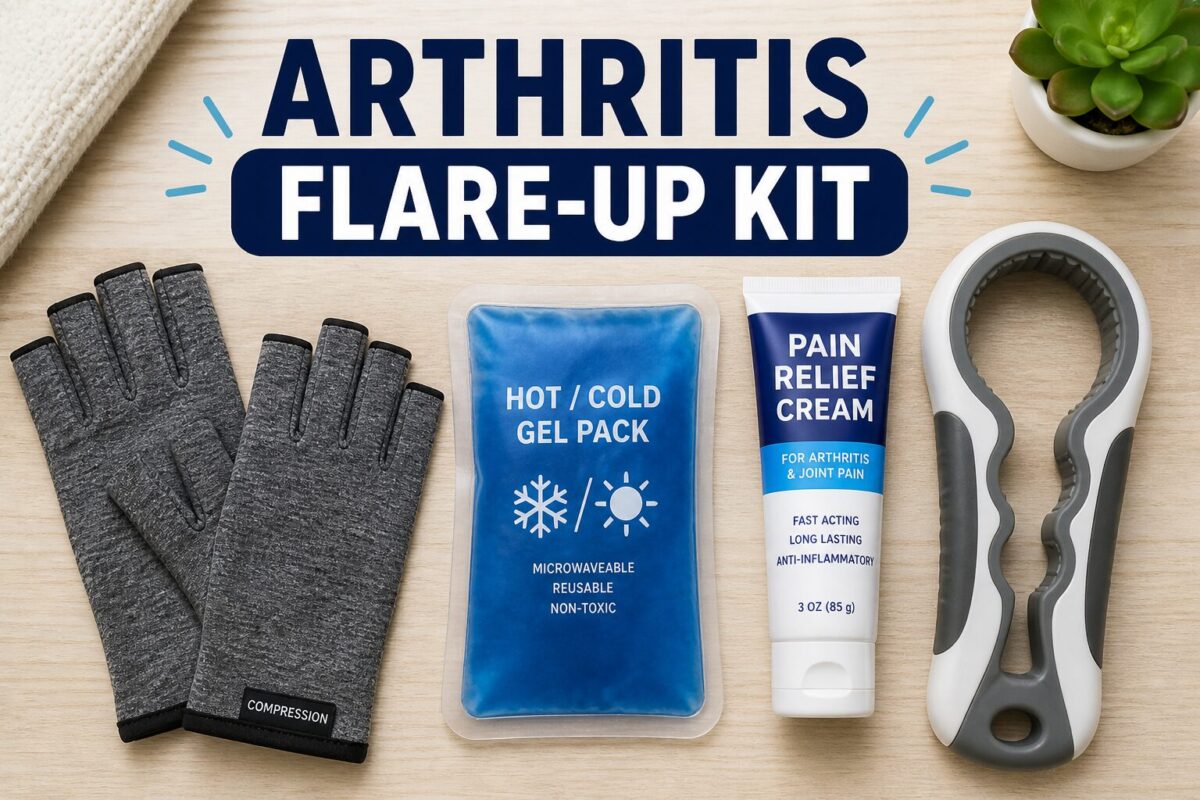
An arthritis flare-up kit does not need to contain dozens of products. A reusable hot or cold pack, a suitable pain-relief option, and a practical daily living aid may be more useful than a collection of gadgets you rarely use.
The right choices depend on your type of arthritis, the joints affected, your existing treatment plan, and which tasks become difficult when symptoms increase.
Quick Picks: What to Include in an Arthritis Flare-Up Kit
| Essential | What it may help with | What to consider |
|---|---|---|
| Reusable hot/cold pack | Temporary relief of discomfort or stiffness | Choose a flexible pack that is easy to position and use safely. |
| One suitable topical pain-relief product | Localized joint discomfort for some people | Check the active ingredient, directions, precautions, and suitability for your health circumstances. |
| One useful daily living aid | Reducing strain during a difficult day | Choose a tool that solves a task you regularly struggle with. |
| Optional compression glove or joint support | Support or comfort for a particular joint | Choose only if it suits the affected joint and does not cause discomfort or restrict circulation. |
You do not need every item on this list. Start with the things that address your most common difficulties.
1. A Reusable Hot or Cold Pack
A reusable hot/cold pack is a versatile item to keep available because different people find different temperatures helpful.
Cold may feel helpful when a joint is hot or swollen. Gentle heat may be more comfortable when stiffness or muscle tension is the main problem. The most appropriate choice depends on your symptoms and individual circumstances.
What to Look For
- A flexible pack that can fit around the affected area
- A size suitable for your hands, knees, wrists, or other commonly affected joints
- A cover or an easy way to place a protective layer between the pack and your skin
- Instructions for safe heating, cooling, and application
A single versatile pack may be sufficient. You generally do not need several different packs simply to build a flare-up kit.
How to Use It Safely
Follow the manufacturer’s instructions and avoid placing ice or a very hot pack directly against your skin. Check your skin regularly, and take extra care if you have reduced sensation or circulation problems.
Avoid applying heat to a joint that is already hot or markedly swollen without appropriate guidance. A suddenly hot, red, or very swollen joint may need urgent medical assessment rather than home treatment.
For more guidance, read Heat vs. Cold Therapy for Arthritis.

2. One Suitable Topical Pain-Relief Product
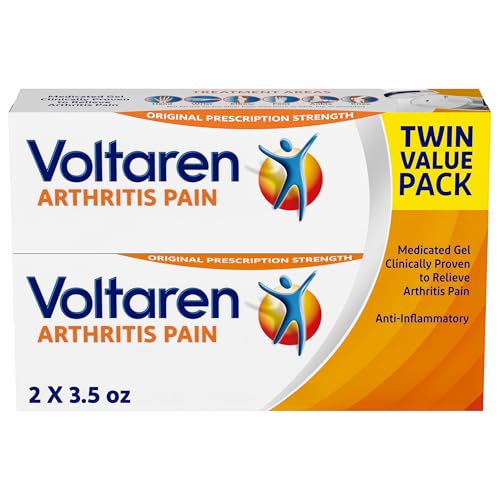
Some topical products may temporarily relieve certain types of joint pain. The best choice depends on the active ingredient, the type of arthritis, the location of the pain, and your medical circumstances.
There is no need to stock several similar gels and creams unless you have a specific reason to use them.
What Are the Main Options?
Topical diclofenac: This is a topical nonsteroidal anti-inflammatory drug (NSAID) that may help some people with osteoarthritis, particularly in joints such as the hands and knees. It is not suitable for everyone, and precautions apply even though it is applied to the skin. Check the label and ask a pharmacist or healthcare professional if you take other medicines, have relevant medical conditions, or are unsure whether it is appropriate for you.
Counterirritant products: Some topical products create cooling or warming sensations that may temporarily change how discomfort feels. Their ingredients and evidence differ, so check the label rather than assuming that all pain-relief gels work in the same way.
What to Look For
- A clearly identified active ingredient
- Directions for the affected area and frequency of use
- Warnings about skin irritation and other precautions
- Compatibility with your existing medicines and treatment plan
Do not apply multiple topical products to the same area without checking their instructions. Do not exceed recommended use, and never apply products to broken or irritated skin unless the product instructions specifically allow it.
For a fuller comparison, see Topical Pain Relief for Arthritis.
3. A Daily Living Aid That Reduces Strain
A flare-up can make ordinary tasks unexpectedly difficult. A practical aid that reduces gripping, twisting, lifting, or reaching may be more valuable than another product marketed specifically for arthritis.
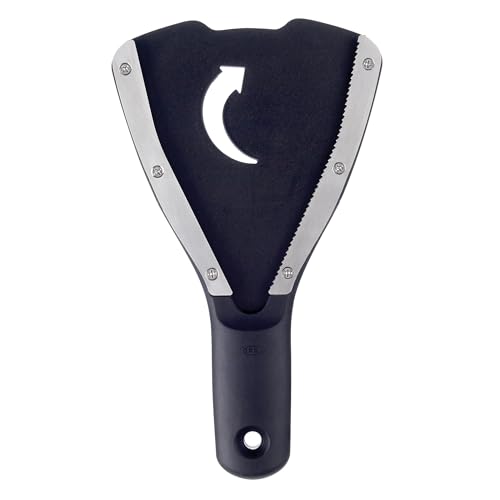
For example, an OXO Good Grips jar opener may be worth considering if opening jars is a recurring problem for your hands.
What to Look For
- A design that reduces the grip strength or twisting force required
- Handles that are comfortable to hold
- Simple operation without complicated adjustments
- A clear use for a task you regularly find difficult
Think about what causes the most trouble during your flare-ups. If opening containers is the problem, a jar opener may be useful. If dressing or preparing meals is more difficult, a different daily living aid may be a better choice.
You do not need to buy a general collection of assistive devices. Choose one that addresses a real problem in your routine.
Explore more options in the Arthritis Supplies & Tools Guide.
4. Optional: Compression Gloves or a Joint Support
Some people find compression gloves or a suitable joint support helpful for comfort during particular activities. However, these products are not necessary for every flare-up, and their usefulness depends on the joint, the condition being treated, and the fit.
Compression Gloves
Compression gloves may provide warmth and a sense of support for some people with hand arthritis. They do not work for everyone, and they should not be expected to stop a flare or treat its underlying cause.
If you try a pair, look for a comfortable fit that allows normal finger movement. Gloves should not cause tingling, numbness, increased pain, skin colour changes, or excessive pressure.
Braces and Joint Supports
A brace or support may be useful for a particular joint or activity when appropriately selected. The right design depends on the joint involved and the amount of support needed.
Avoid buying a brace simply because you are experiencing a flare. If you are unsure which type is appropriate, ask a healthcare professional or qualified therapist for advice.
Choose one option only if it addresses a specific need. You do not automatically need both compression gloves and a brace in your kit.

5. Organize Your Kit So It Is Ready to Use
A flare-up kit is most useful when you can find what you need without searching through cupboards.
Keep your selected supplies together in a small, easy-to-reach container or drawer. Store products according to their instructions, particularly items that need refrigeration or have specific temperature requirements.
A simple kit might contain:
- One reusable hot/cold pack
- One topical pain-relief product you can use safely
- One daily living aid for a task that becomes difficult
- One optional compression glove or joint support, if appropriate
- Your personal flare-up action plan
Keep medicines in their original packaging so that directions and warnings remain available. Store them safely and check expiry dates periodically.
You do not need separate kits for the bedroom, office, car, and travel unless your circumstances make that genuinely useful. Start with one accessible set of essentials and add items only when you have a clear need.
6. What You Do Not Need in Your Kit
It is easy to accumulate products when you are looking for relief. However, more products do not necessarily mean better symptom management.
Consider skipping:
- Multiple hot/cold packs that serve essentially the same purpose
- Several topical gels with overlapping uses
- Massage guns or other devices bought on the assumption that they will stop a flare
- Compression products that do not fit properly or address a specific need
- Expensive gadgets without a clear role in your routine
There is no universally effective sequence of cold packs, pain-relief gels, compression, massage, and heat. These methods are not interchangeable, and combining them does not automatically provide better results.
Choose products individually, follow their instructions, and stop using anything that causes problems.
7. A Flare-Up Kit Is Only One Part of Your Plan
Supplies can make certain tasks easier, but they cannot identify the cause of a flare or replace appropriate medical care.
When symptoms worsen, consider scaling back activities that aggravate your joints, allowing time for rest, and using gentle movement when tolerated. Follow your existing treatment plan and seek medical advice if symptoms are unusual, persistent, or worsening.
A suddenly hot, red, or markedly swollen joint—particularly when accompanied by fever or feeling unwell—requires urgent medical assessment. Do not assume that these symptoms are simply a routine arthritis flare.
Get the Free Arthritis Flare-Up Action Plan
Preparing a plan in advance can help you remember your usual warning signs, the strategies that are appropriate for you, and when to contact your healthcare team.
Download the Free Arthritis Flare-Up Action Plan (PDF)
The printable is free and requires no sign-up.
For a step-by-step guide to recognizing symptoms, adjusting activities, and knowing when to seek help, read Navigating Arthritis Flare-Ups: What to Do and When to Get Help.
Frequently Asked Questions
What should I put in an arthritis flare-up kit?
Start with a reusable hot/cold pack, one suitable pain-relief option, and a daily living aid that helps with a task you find difficult. A compression glove or joint support may be useful for some people, but it is optional.
Do I need special products for an arthritis flare-up?
No. You may already have useful supplies at home. The purpose of a kit is to keep a few appropriate items accessible, not to encourage you to purchase a large number of products.
Should I use heat or cold during a flare?
It depends on your symptoms and circumstances. Some people find cold helpful for a hot or swollen joint, while gentle heat may ease stiffness. Use either safely and seek advice about symptoms that are new, severe, or unusual.
Can I use more than one pain-relief product?
Do not combine topical products or add medicines without checking their active ingredients, directions, and precautions. Ask a pharmacist or healthcare professional if you are uncertain about possible interactions or whether a product is suitable for you.
Will an arthritis flare-up kit stop a flare?
No kit can guarantee that a flare will stop or resolve more quickly. Selected products may make discomfort or daily activities easier to manage, but they do not replace your treatment plan or medical assessment when needed.
Related Reading
- Navigating Arthritis Flare-Ups: What to Do and When to Get Help
- Heat vs. Cold Therapy for Arthritis
- Topical Pain Relief for Arthritis
- Arthritis Supplies & Tools: Complete Guide to Daily Living Aids
Medical Disclaimer: This article is for informational purposes only and does not constitute medical advice. Always consult your doctor, rheumatologist, or occupational therapist before making changes to how you manage your arthritis.
