

Disclosure: As an Amazon Associate, Arthritis Wares earns from qualifying purchases at no extra cost to you. We are not paid or sponsored by any manufacturer. Affiliate links help support our work.
Walking with arthritis can be different from one day to the next. Joint pain, stiffness, fatigue, reduced balance, or painful hands and wrists can make a short walk considerably more demanding.
A walker or rollator can provide support and make everyday movement easier, but the right choice depends on why you need it, where you will use it, and which parts of your body are affected by arthritis.
A lightweight folding walker may make more sense for someone who needs stability indoors. A four-wheel rollator can be more practical for longer outings because it rolls continuously and provides a seat. Someone whose hand or wrist arthritis makes gripping difficult may prefer a walker with minimal brake demands—or an upright rollator with forearm supports.
This guide explains the major walker and rollator types, what each one is designed to do, and several specific models to consider.
Quick Answer: Which Walker Type Is Right for Arthritis?
There is no single walker that is right for everyone with arthritis. Start with the situation that most closely matches yours:
| If you need… | Consider… |
|---|---|
| The most stable type of walking aid | Standard walker |
| Stability with less lifting | Front-wheeled folding walker |
| Easy maneuverability in tight indoor spaces | Three-wheel rollator |
| A seat and easier movement over longer distances | Four-wheel rollator |
| Less reliance on your hands and wrists | Upright rollator with forearm supports |
| A lightweight walker that is easier to transport | Lightweight folding walker |
The most important question is not which walker is most popular. It is which type matches your balance, strength, hand function, walking environment, and need for rest.
Walker vs. Rollator: What’s the Difference?
The terms walker and rollator are sometimes used interchangeably, but they describe somewhat different designs.
A traditional walker has four legs and usually requires you to lift or reposition the frame as you move. Some versions have wheels on the front legs, reducing the amount of lifting.
A rollator has wheels on all of its legs, allowing you to push it continuously as you walk. Most four-wheel rollators also have hand brakes and a built-in seat.
That difference matters for arthritis.
If lifting a walker repeatedly is difficult because of shoulder, wrist, or arm problems, a wheeled design may require less lifting. On the other hand, the freely rolling design of a rollator requires you to control the walker as it moves and use its brakes when stopping.
Walker and Rollator Types
Standard Walker
A standard walker has four non-wheeled legs with rubber tips. You lift or reposition the frame before taking the next step.
Its main advantage is stability. Because the walker does not roll freely, it can provide a substantial amount of support when standing and walking.
The tradeoff is that you need enough upper-body strength and coordination to reposition it repeatedly.
May suit you if:
- Stability is your primary concern
- You mainly walk indoors
- You need substantial support while walking
- You do not want to manage rollator brakes
May not suit you if:
- Lifting the frame is difficult
- You have significant shoulder or wrist pain
- You need to walk longer distances
- You frequently need to sit and rest
Folding Walker With Front Wheels
A front-wheeled walker combines the basic frame of a traditional walker with wheels on the front legs.
Instead of lifting the entire walker for every step, you can push the front forward and then step into it.
This can be a useful middle ground for someone who wants substantial support but finds a completely non-wheeled walker tiring to reposition.
Three-Wheel Rollator
A three-wheel rollator has a single wheel at the front and two wheels at the rear. Its narrower design can make it easier to turn in tight spaces.
This can be particularly useful in apartments, narrow hallways, and crowded indoor areas.
The tradeoff is that three-wheel rollators generally do not provide the same configuration or stability characteristics as larger four-wheel models. They also commonly lack a built-in seat.
May suit you if:
- You primarily use a mobility aid indoors
- Your home has narrow spaces
- Easy turning is important
- You want something relatively lightweight
Consider another design if:
- You need frequent rest breaks
- You have substantial balance concerns
- You regularly walk over uneven outdoor surfaces
Four-Wheel Rollator
A four-wheel rollator allows you to walk continuously without lifting the frame.
Many models include:
- Hand brakes
- A seat
- A backrest
- Storage
- Adjustable handles
- Folding mechanisms for transportation
For someone with arthritis who has difficulty walking long distances because of pain or fatigue, the built-in seat can be particularly useful.
The tradeoff is that a rollator requires you to control a moving frame and operate its brakes.
Upright Rollator
An upright rollator uses forearm supports rather than requiring you to place all of your weight through conventional hand grips.
This creates a different walking position and may be worth considering if gripping standard rollator handles is uncomfortable because of hand or wrist arthritis.
Upright rollators are generally larger and heavier than basic walkers, so the benefits need to be weighed against their size and transport requirements.
Comparing Walker and Rollator Types
| Feature | Standard Walker | Front-Wheeled Walker | 3-Wheel Rollator | 4-Wheel Rollator | Upright Rollator |
|---|---|---|---|---|---|
| Wheels | None | 2 front | 3 | 4 | 4 |
| Movement | Lift/reposition | Push forward | Rolls | Rolls | Rolls |
| Stability | High | High | Moderate | Good | Good |
| Built-in seat | No | No | Usually no | Usually yes | Usually yes |
| Storage | Usually no | Usually no | Often pouch | Often basket | Often basket |
| Hand brakes | No | No | Yes | Yes | Yes |
| Tight-space maneuverability | Good | Good | Very good | Good | Moderate |
| Hand/wrist considerations | No brake squeezing | No brake squeezing | Brake operation required | Brake operation required | Forearm support option |
| Transport | Often easy | Usually easy | Usually easier | More substantial | Often bulky/heavy |
These categories are general design differences. Individual models vary, so check the specifications of the particular walker you are considering.
How to Choose a Walker for Arthritis
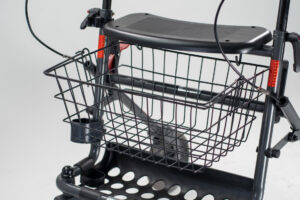
1. Where Will You Use It?
Think about your actual environment rather than where you might use the walker someday.
Mostly indoors: A standard walker, front-wheeled walker, or compact three-wheel rollator may be easier to maneuver through doorways and around furniture.
Indoors and outdoors: A four-wheel rollator may provide more useful versatility, particularly if you want a seat.
Regular outdoor walking: Look at wheel size, frame design, brake operation, and how easily the walker handles the surfaces you encounter.
Uneven outdoor surfaces: Larger wheels can make it easier to move over cracks and changes in pavement, although no rollator should be assumed to be suitable for every type of terrain.
2. How Much Stability Do You Need?
This is one of the most important decisions.
A standard walker provides a stationary frame to hold onto rather than rolling freely.
A rollator, by contrast, moves on wheels. That can make walking easier, but it also means you need to control the movement of the device.
If you have significant balance problems, have recently fallen, or are recovering from surgery or an injury, a healthcare professional such as a physical or occupational therapist can help determine what type of mobility aid is appropriate.
3. How Are Your Hands and Wrists?
This is especially important for people with arthritis.
A four-wheel rollator usually requires you to:
- Hold the handles while walking
- Operate hand brakes
- Release and apply the brakes when stopping
- Maintain enough grip to control the device
If finger stiffness or wrist pain makes these tasks difficult, look closely at the brake design and grip shape before purchasing.
A standard walker has an important advantage here: there are no rollator hand brakes to operate.
An upright rollator is another possibility because its forearm supports provide an alternative to relying entirely on the hands for support.
4. Do You Need a Seat?
If you regularly become tired or need to stop because of joint discomfort, a four-wheel or upright rollator with a seat may be more practical than a basic walker.
A seat can also be useful when shopping, waiting outdoors, or walking through larger buildings.
However, do not assume that every rollator seat is suitable for prolonged sitting. Check the seat dimensions, padding, weight capacity, and manufacturer’s instructions.
5. Will You Need to Lift It?
Weight matters more than many people realize.
A walker may need to be:
- Lifted into a vehicle
- Moved between rooms
- Folded for storage
- Loaded into a trunk
- Lifted over a small threshold
A lightweight folding walker can be much easier to handle than a larger rollator.
If someone else will always transport the walker, weight may matter less. If you live alone and regularly need to lift it yourself, weight should be a major part of the decision.
6. Does the Walker Fit Your Height?
A properly adjusted walker should allow you to stand naturally rather than reaching downward or shrugging your shoulders upward.
When holding the handles in your normal standing position, your elbows should have a slight bend and your shoulders should remain relaxed.
Do not rely on a particular degree measurement as a substitute for proper fitting. Walker designs and individual body proportions vary.
If you are unsure about the correct height, a physical or occupational therapist can help you adjust and use the device properly.
Features That Matter Most for Arthritis

Comfortable Handles
Hard or narrow handles can be uncomfortable when your fingers, thumbs, or wrists are already sensitive.
Look for grips that feel comfortable in your hands and allow you to maintain control without excessive squeezing.
If you already have hand arthritis, consider whether you can comfortably grip the handles for the length of time you expect to use the walker.
Easy-to-Operate Brakes
Rollator brakes deserve special attention if you have hand arthritis.
Different brake systems require different hand movements and amounts of force. A brake that seems easy to operate in a product description may not feel easy if your fingers are stiff or painful.
If possible, try the brake mechanism before purchasing. If buying online, pay particular attention to product specifications and reviews discussing brake operation.
Appropriate Weight
A lightweight walker can be easier to lift and transport.
But lighter is not automatically better.
A heavier rollator may provide features such as a larger frame, seat, basket, or larger wheels that are useful for your situation.
The goal is to find a weight you can realistically handle.
Wheel Size
Larger wheels can generally make it easier to move across small cracks, thresholds, and uneven surfaces.
For primarily indoor use, a compact design may be more useful than very large wheels.
For outdoor use, consider both wheel size and the actual surfaces you will encounter.
Seat Design
If you expect to use the seat regularly, look beyond the fact that a product simply has one.
Consider:
- Seat width
- Seat depth
- Padding
- Backrest
- Weight capacity
- How easy it is to sit down and stand up
A seat is useful only if you can use it safely and comfortably.
Folding and Storage
A folding walker can be easier to store in a closet or vehicle.
However, check how the folding mechanism works. If your fingers are stiff or painful, a mechanism that requires small buttons or significant hand force may be frustrating.
Four Walkers and Rollators to Consider
These products represent different designs rather than a ranking from best to worst. The right choice depends on your particular mobility needs.
Drive Medical 4-Wheel Rollator With 7.5-Inch Casters
Best for: Everyday indoor and outdoor mobility with a built-in seat
The Drive Medical four-wheel rollator is a conventional rollator design with four wheels, hand brakes, a seat, and storage.
Its continuous rolling design can be useful for people who find repeatedly lifting a standard walker tiring. The seat also provides an option for rest breaks during longer outings.
Why it may work well for arthritis:
- Four-wheel design allows continuous movement
- Built-in seat provides a place to rest
- Storage basket reduces the need to carry belongings by hand
- Adjustable handles allow the height to be fitted to the user
- Larger casters can be useful across common indoor and outdoor surfaces
Considerations:
- Heavier than a basic folding walker
- Requires the user to control the rolling frame
- Hand brakes may be difficult for some people with significant hand arthritis
- Takes up more storage space than a basic walker
May not be the best match if: You need maximum stability, have difficulty operating rollator brakes, or need to lift the walker into a vehicle frequently.

VIVE Mobility 3-Wheel Rollator Walker
Best for: Tight indoor spaces and maneuverability
The VIVE Mobility three-wheel rollator has a compact design that can be useful in apartments, hallways, bathrooms, and other areas where a larger four-wheel rollator may be awkward.
Its lighter, narrower design is particularly relevant for people who need a mobility aid that is easier to maneuver around furniture.
Why it may work well for arthritis:
- Compact design can make turning easier
- Lighter construction can make transport more manageable
- Storage pouch can reduce the need to carry small items
- Three-wheel configuration works well in tighter spaces
Considerations:
- No built-in seat
- Different stability characteristics from a four-wheel rollator
- Less suited to people who need frequent rest breaks
- Outdoor performance depends on the surfaces you encounter
May not be the best match if: You need a seat, require substantial stability, or regularly walk on uneven outdoor surfaces.

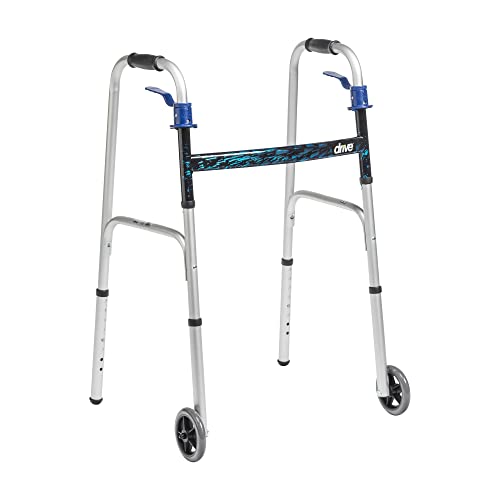
Drive Medical Trigger Release Folding Walker
Best for: Lightweight indoor support and easier transport
The Drive Medical Trigger Release Folding Walker is a simple alternative to a rolling walker.
Its lightweight frame and trigger-release mechanism make it particularly interesting for people who want a walker that is relatively easy to fold and transport.
Because it does not use rollator brakes, it also avoids one of the hand-control issues that can matter to people with significant finger or wrist arthritis.
Why it may work well for arthritis:
- Lightweight design is easier to lift than many rollators
- Trigger-release mechanism can be useful for people who find conventional folding mechanisms difficult
- No rollator brake levers to operate
- Compact design works well indoors
Considerations:
- Requires repositioning the walker as you move
- No seat
- No storage basket
- Less convenient for longer outdoor walks
May not be the best match if: You need a seat, want continuous rolling movement, or regularly walk long distances.
ELENKER All-Terrain Upright Rollator Walker
Best for: People who want forearm support and a more upright walking position
The ELENKER upright rollator takes a different approach from a conventional rollator. Instead of resting your hands directly on standard handles for support, it provides padded forearm supports.
That design may be worth considering if gripping conventional rollator handles is uncomfortable because of hand or wrist arthritis.
The larger wheels can also be useful for everyday outdoor surfaces.
Why it may work well for arthritis:
- Forearm supports provide an alternative to relying entirely on the hands
- Upright design may be more comfortable for some users than conventional handle positioning
- Larger wheels can make common outdoor surfaces easier to navigate
- Built-in seat provides a place to rest
- Storage features reduce the need to carry items by hand
Considerations:
- Significantly heavier and bulkier than a basic folding walker
- May be awkward in small indoor spaces
- Takes more effort to transport
- Not intended as a substitute for an all-terrain mobility device designed for rugged trails
May not be the best match if: You need something lightweight, have limited storage space, or frequently need to lift the walker into a vehicle.

When a Rollator May Not Be the Right Choice
Rollators are useful for many people, but a rolling walker is not automatically the right choice simply because it requires less lifting.
Consider another type of mobility aid if:
- You have substantial difficulty controlling a rolling device
- You cannot reliably operate the brakes
- Your balance is significantly impaired
- You need a stationary frame to support yourself when standing
- The rollator is too heavy for you to transport safely
- Your home is too narrow for the model you are considering
If you are uncertain about which mobility aid you need, a physical or occupational therapist can evaluate your walking, balance, strength, and environment.
Common Mistakes When Buying a Walker for Arthritis
Choosing Mainly by Price
A cheaper walker is not necessarily the more practical choice if its weight, grips, brakes, or dimensions make it difficult for you to use.
The goal is not simply to spend less. It is to choose something you can comfortably and safely use.
Ignoring Hand and Wrist Problems
A rollator may be comfortable for your legs but difficult for your hands.
Before purchasing, think about whether you can comfortably grip the handles and operate the brakes repeatedly.
Buying a Walker That Is Too Heavy
Remember that you may have to lift the walker into a vehicle or move it around your home.
If the walker is too heavy for you to handle independently, an otherwise useful design may become impractical.
Choosing a Walker Without Considering Your Home
Measure narrow doorways and consider the space around toilets, beds, kitchen counters, and furniture.
A walker that works beautifully outdoors may be frustrating inside a small home.
Assuming Bigger Wheels Solve Every Outdoor Problem
Larger wheels can help with some uneven surfaces, but they do not make a rollator suitable for every type of terrain.
Think about where you actually walk before paying extra for an all-terrain design.
Skipping Height Adjustment
Do not simply use a walker at the height at which it arrives.
Adjust it so you can stand naturally with relaxed shoulders and a slight bend in your elbows while holding the handles.
Frequently Asked Questions
Can walkers and rollators help people with arthritis?
They can provide additional support while walking and may make everyday movement less demanding. Depending on the design, they can also reduce the amount of lifting required, provide a place to rest, or provide an alternative support position for people with hand or wrist problems.
A walker does not treat arthritis itself, but the right mobility aid can make certain activities easier.
What type of walker is best for hand arthritis?
There is no single answer.
A standard or front-wheeled walker avoids the need to repeatedly squeeze rollator brake levers. A four-wheel rollator may still work well if its brakes are comfortable for you to operate.
An upright rollator with forearm supports is another option when gripping conventional handles is particularly uncomfortable.
Is a rollator better than a standard walker for arthritis?
It depends on your needs.
A standard walker generally emphasizes stability and does not roll freely. A rollator emphasizes continuous movement and often adds features such as a seat and storage.
If balance is your primary concern, a standard walker may be more appropriate. If fatigue, longer walking distances, or the need for rest breaks are bigger concerns, a rollator may be more practical.
Do walkers help with arthritis fatigue?
A mobility aid may make walking less demanding by providing support and reducing some of the physical effort involved in maintaining balance.
A rollator with a seat can also make it easier to take rest breaks during an outing.
However, persistent or unusual fatigue should not automatically be attributed to arthritis. Discuss significant changes in fatigue with your healthcare professional.
How do I know if a walker is the right height?
When standing naturally and holding the handles, your shoulders should remain relaxed and your elbows should have a slight bend.
You should not need to hunch over the walker or reach upward to hold the handles.
If you are unsure, ask a physical or occupational therapist to check the fit.
What is an upright rollator?
An upright rollator is a wheeled mobility aid that uses forearm supports rather than conventional hand grips.
The forearm supports change where you place your weight and can be useful for some people who find standard rollator handles uncomfortable.
They are generally larger and heavier than basic walkers, so transport and storage should be considered.
Should I use a cane instead of a walker?
A cane provides less support than a walker and is often used when someone needs a smaller amount of assistance with balance or stability.
A walker provides support on both sides and may be more appropriate when walking difficulty is greater or affects both sides of the body.
If you are deciding between a cane and walker, see our Best Walking Canes for Arthritis guide for a closer look at the differences.
Final Thoughts
The right walker or rollator can make everyday movement more manageable when arthritis affects walking, balance, stamina, or hand function.
But the best choice depends on your particular situation, not on a universal ranking.
Start by asking:
- How much stability do I need?
- Where will I use the walker?
- Can I comfortably grip and operate the brakes?
- Do I need a seat?
- Can I lift and transport it myself?
- Would forearm support be more comfortable than standard handles?
- Does the walker fit my home and daily routine?
Once you answer those questions, the choice becomes much easier.
For a broader look at mobility aids and adaptive tools for independent living with arthritis, see our Mobility Aids for Arthritis: Complete Guide.
Related Reading
- Mobility Aid Fit & Adjustment Checklist (Free Printable)
- Best Walking Canes for Arthritis
- Mobility Aids for Arthritis: Complete Guide
- Stand Assist Aids for Arthritis: Vive vs. HEPO vs. Stander Compared
Medical Disclaimer: This article is for informational purposes only and does not constitute medical advice. Always consult your doctor, rheumatologist, or occupational therapist before making changes to how you manage your arthritis.
