

*This post may contain affiliate links, from which we may earn a small commission at no extra cost to you.*
For people living with arthritis, bathing can be physically demanding or unsafe without the right support. Painful joints, balance challenges, and limited mobility can turn standing in the shower or stepping into a tub into a fall risk. A well-chosen shower seat can reduce strain, improve stability, and help you bathe more safely and independently.
This guide reviews five arthritis-friendly shower seats and benches, highlighting who each option is best for, key safety features, and important considerations before buying.
How We Chose These Shower Seats
These shower seats were selected based on:
- Stability and slip resistance
- Adjustability and ease of setup
- Weight capacity and durability
- Suitability for common arthritis challenges (joint pain, balance issues, limited mobility)
- Overall usability and user feedback
This list includes standard shower chairs, shower stools, and transfer benches, as each serves a different mobility need.
Shower Chair vs. Transfer Bench: What’s the Difference?
- Shower chairs or stools are designed for seated showering inside a tub or walk-in shower.
- Transfer benches extend over the tub wall, allowing you to sit down outside the tub and slide across safely.
If stepping over the tub wall is difficult or painful, a transfer bench is usually the safer option.
Quick Comparison: Top Shower Seats for Arthritis
| Product | Best For | Weight Capacity | Key Feature |
|---|---|---|---|
| Medline Shower Chair | All-around support | 350 lbs | Armrests + backrest |
| Drive Medical Transfer Bench | Safe tub entry | 400 lbs | Sliding transfer design |
| SOUHEILO Shower Chair | Budget-friendly setup | 300 lbs | Includes grab bar |
| Drive Medical RTL12203KDR | Simple, lightweight use | 300 lbs | Compact, no armrests |
| Dr. Kay’s Bath Chair | Taller users | 350 lbs | Higher seat height |
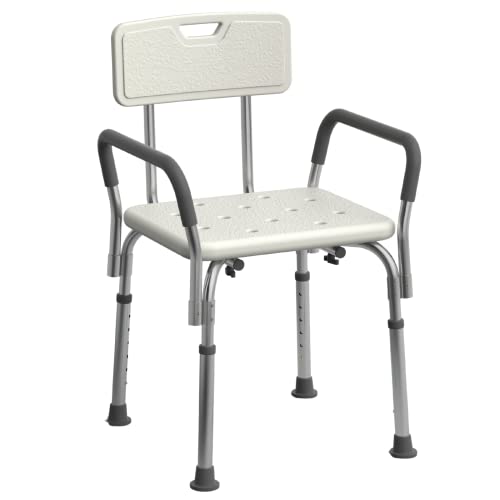
1. Medline Shower Chair with Padded Armrests and Backrest
A reliable, well-balanced option that prioritizes comfort and stability.
Pros
- Padded armrests and backrest for extra support
- Rust-resistant aluminum frame
- Adjustable height
- Tool-free assembly
Cons
- Users near the weight limit should confirm proper sizing
Best for: Individuals who need arm support and back stability for seated showering.
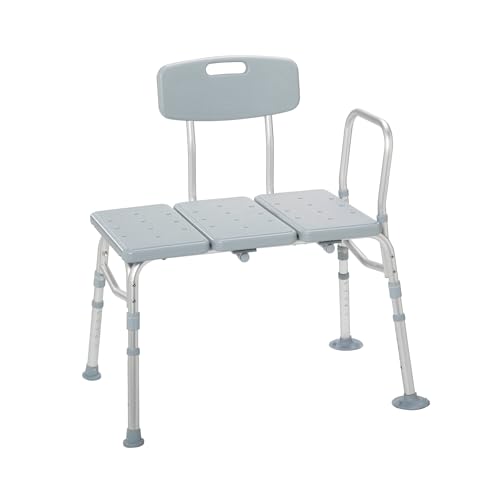
2. Drive Medical 12011KD-1 Tub Transfer Bench
Designed for users who have difficulty stepping over the tub wall.
Pros
- Allows seated transfer into the tub
- Sturdy A-frame construction
- Reversible backrest for different layouts
- High 400-lb weight capacity
Cons
- Larger footprint may not suit small bathrooms
Best for: Moderate to severe mobility limitations or post-surgery recovery.
3. SOUHEILO Adjustable Shower Chair with Grab Bar
A budget-conscious option that includes helpful starter features.
Pros
- Anti-slip EVA seat surface
- Lightweight aluminum frame
- Multiple height settings
- Tool-free assembly
Cons
- Lower weight capacity than some alternatives
Best for: Users looking for a simple, affordable shower chair setup.

4. Drive Medical RTL12203KDR Shower Chair
A straightforward chair that focuses on function and simplicity.
Pros
- Reinforced crossbar for stability
- Drainage holes reduce water pooling
- Push-button height adjustment
- Lightweight and easy to move
Cons
- No armrests
Best for: Users who prefer a minimal, no-frills shower seat.
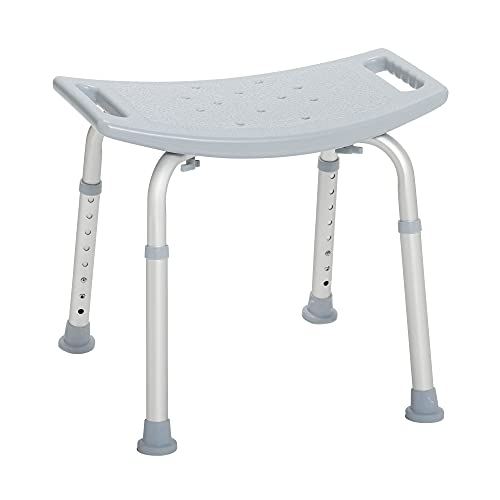
5. Dr. Kay’s Adjustable Bath Chair
Built for added height and structural reinforcement.
Pros
- Reinforced crossbar design
- Wide base with non-slip feet
- 350-lb weight capacity
- Fast, tool-free setup
Cons
- Slightly heavier than basic chairs
Best for: Taller users or those who need a higher seat to make sitting and standing easier.

Overall Recommendation
Each shower seat on this list addresses a different need:
- Best overall support: Medline Shower Chair
- Best for tub entry: Drive Medical Transfer Bench
- Best budget option: SOUHEILO Shower Chair
- Best minimalist choice: Drive Medical RTL12203KDR
- Best for taller users: Dr. Kay’s Bath Chair
The right choice depends on your mobility level, bathroom layout, and whether tub entry is a concern.
Safety Notes
Always ensure shower seats are:
- Properly adjusted to the correct height
- Placed on a level, non-slip surface
- Checked regularly for loosened parts
If you’re unsure which option is safest for your needs, consult a healthcare professional or occupational therapist.
Frequently Asked Questions
What type of shower seat is best for arthritis?
For mild to moderate arthritis, a standard shower chair or stool may be sufficient. For more severe mobility issues or difficulty stepping into a tub, a transfer bench is often the safer choice.
Are shower seats safe for daily use?
Yes, when properly installed and used on a stable surface. Regularly check rubber feet, height adjustments, and fasteners to ensure continued safety.
Can shower seats support heavier users?
Many models support 300–400 lbs, but it’s important to check the manufacturer’s weight rating and choose a seat with a reinforced frame if needed.
Do shower seats require professional installation?
Most shower chairs and benches are designed for tool-free assembly and do not require permanent installation.
Should I use a shower seat with other bathroom safety tools?
Yes. Shower seats work best when combined with non-slip mats, grab bars, and handheld shower heads for overall bathroom safety.
Related Reading
- Arthritis Tools for Safe Bathing and Showering
- Bathing and Showering Tips for Arthritis Relief
- Best Non-Slip Bath Mats for Arthritis
For a deeper room-by-room strategy, visit arthritis-friendly home modifications.