

Morning stiffness can make simple movements feel difficult when you first get out of bed. Your hands may feel tight, your shoulders may be difficult to move, or your knees, hips, ankles, and back may need some time before they feel ready for the day.
Gentle stretching and range-of-motion movements can be a useful part of a morning routine for people with arthritis.
You don’t need a complicated workout or a floor-based exercise program. The routine below uses simple seated and standing movements that can be done without getting down on the floor.
The goal isn’t to force stiff joints to loosen. Instead, these movements gently get your joints and muscles moving and help you transition into your day.
Quick Answer: What Are Good Morning Stretches for Arthritis?
A simple morning routine can include:
- Gentle neck and shoulder movements
- Hand and wrist movements
- Seated upper-body rotation
- Seated knee and hip movements
- Ankle and foot movements
- A gentle standing stretch
Start slowly and move only as far as feels comfortable. A stretch should feel like gentle pulling or tension, not sharp or significant pain. Avoid bouncing or forcing a joint into a deeper position.
You can perform the entire routine in about 5 to 10 minutes, or choose only the movements that address the joints that feel stiffest.
Before You Start
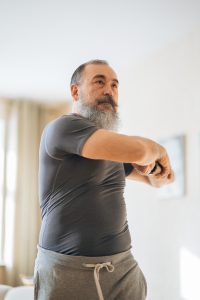
Morning joints can feel particularly stiff after several hours of limited movement.
You don’t have to immediately perform long static stretches as soon as you wake up.
A good approach is to begin with gentle joint movements, gradually increasing your range as your body becomes more comfortable.
If you prefer, you can also take a warm shower or otherwise warm up before doing longer stretches.
The Arthritis Foundation recommends stretching gently and smoothly, avoiding bouncing, and stopping short of painful movement.
A Few Basic Rules
Keep these principles in mind:
- Move slowly.
- Don’t bounce.
- Don’t force a joint farther than it comfortably moves.
- Breathe normally.
- Stop if an exercise causes significant or sharp pain.
- Use a sturdy chair or other stable support for standing movements.
- Reduce the range of motion if a movement feels uncomfortable.
- Start with fewer movements if you’re especially stiff.
If you’re new to exercise or have significant limitations, consider asking a healthcare professional or physical therapist which movements are appropriate for you.
1. Gentle Neck and Shoulder Movements

Your neck and shoulders can feel stiff after sleeping in one position.
These movements are designed to gently get them moving rather than provide a deep stretch.
Shoulder Rolls
How to do it:
- Sit or stand comfortably.
- Let your arms relax by your sides.
- Slowly roll your shoulders backward in a comfortable circle.
- Repeat several times.
- Then reverse the direction if comfortable.
Keep the movement small at first.
Gentle Neck Turns
How to do it:
- Sit or stand upright.
- Look straight ahead.
- Slowly turn your head toward one shoulder.
- Return to the center.
- Turn toward the other side.
- Repeat several times.
Don’t force your head to turn as far as possible.
The goal is gentle movement, not maximum range.
Optional Side Tilt
If comfortable, gently tilt your head toward one shoulder without raising the shoulder.
Return to the center and repeat on the other side.
Stop if this causes neck pain, dizziness, or other concerning symptoms.
2. Hand and Wrist Movements
Morning stiffness in the hands can make dressing, opening containers, preparing breakfast, and other everyday activities difficult.
Gentle hand movements can help you gradually get your fingers and wrists moving.
Open and Close Your Hands
How to do it:
- Hold your hands comfortably in front of you.
- Slowly open your fingers.
- Gently close your hands without squeezing tightly.
- Repeat several times.
You don’t need to make a tight fist.
Wrist Circles
How to do it:
- Relax your hands.
- Slowly move your wrists in a small circle.
- Reverse direction.
- Repeat on both sides.
Keep the circles small if your wrists are particularly stiff.
Finger Movement
One at a time, gently bend and straighten your fingers.
You can also touch your thumb to each fingertip if that movement is comfortable.
These simple movements can be particularly useful before tasks that require gripping or fine hand movements.
3. Gentle Upper-Body Rotation
This seated movement can gently involve your upper back and torso.
Seated Torso Turn
How to do it:
- Sit toward the front of a sturdy chair.
- Keep both feet comfortably on the floor.
- Sit upright without forcing your posture.
- Slowly turn your upper body toward one side.
- Return to the center.
- Turn gently toward the other side.
- Repeat several times.
Keep the movement comfortable.
You don’t need to twist as far as possible.
If you have a back condition or have been advised to avoid spinal rotation, check with your healthcare professional before adding this movement.
4. Seated Hip and Knee Movements

If your hips or knees feel stiff in the morning, seated movements can be a convenient way to begin before standing and walking.
Seated Knee Straightening
How to do it:
- Sit in a sturdy chair.
- Keep one foot on the floor.
- Slowly straighten the other knee.
- Pause briefly.
- Lower your foot back down.
- Repeat with the other leg.
Don’t force your knee completely straight if that causes discomfort.
Seated Marching
How to do it:
- Sit upright in a sturdy chair.
- Slowly lift one foot a short distance from the floor.
- Lower it.
- Lift the opposite foot.
- Continue alternating sides.
Keep the movement small if your hips or knees are stiff.
This can also help transition from sitting to standing and walking.
5. Ankle and Foot Movements
Feet and ankles can feel particularly stiff when you first stand up.
A few simple movements can get them moving before you begin walking.
Ankle Circles
How to do it:
- Sit securely in a chair.
- Lift one foot slightly from the floor.
- Slowly circle your ankle.
- Reverse the direction.
- Repeat with the other ankle.
Keep the circles small and controlled.
Point and Flex
How to do it:
- Sit with your feet supported.
- Slowly point your toes away from you.
- Then gently pull your toes back toward you.
- Repeat several times.
This is a simple range-of-motion movement for the ankle and foot.
The Arthritis Foundation includes ankle and foot movements among its joint-friendly exercise options.
6. Gentle Standing Stretch
Once you’ve done some seated movements and feel ready to stand, you can add a gentle standing stretch.
Use a sturdy chair, countertop, or other stable support if you need help with balance.
Standing Calf Stretch
How to do it:
- Stand facing a sturdy support.
- Place your hands on it.
- Step one foot slightly behind you.
- Keep the back heel on the floor if comfortable.
- Gently shift your weight forward.
- You should feel a mild stretch in the calf.
- Hold briefly, then return to the starting position.
- Repeat with the other leg.
Don’t force the heel toward the floor.
If you have balance problems, perform this only with appropriate support.
The Arthritis Foundation recommends holding stretches rather than bouncing and using a stable object for balance when needed.
A Simple 5–10 Minute Morning Routine
You don’t have to perform every movement separately.
Here’s one simple sequence:
| Movement | Suggested starting point |
|---|---|
| Shoulder rolls | 5–10 repetitions |
| Gentle neck turns | 3–5 each direction |
| Hand opening and closing | 5–10 repetitions |
| Wrist circles | 5 each direction |
| Seated torso turns | 3–5 each side |
| Seated knee straightening | 5 each leg |
| Seated marching | 5–10 each side |
| Ankle circles | 5 each direction |
| Point and flex | 5–10 repetitions |
| Standing calf stretch | Brief comfortable hold on each side |
These numbers are starting points rather than requirements.
You can do fewer repetitions when you’re particularly stiff and gradually increase your activity as your body becomes accustomed to the routine.
The CDC recommends starting physical activity slowly and paying attention to how your body responds. Even short periods of activity can be useful.
If You’re Very Stiff in the Morning
You don’t have to complete the whole routine.
Try this shorter version:
Before getting out of bed or from a seated position:
- Open and close your hands.
- Move your wrists.
- Point and flex your feet.
- Gently bend and straighten your knees.
After getting up:
- Roll your shoulders.
- Turn your head gently from side to side.
- Walk around for a few minutes.
- Add the remaining stretches if they feel comfortable.
Starting with a few movements may be easier than trying to complete a full routine when your joints are at their stiffest.
Should You Stretch Before or After a Warm Shower?
Either can work depending on what feels comfortable for you.
Some people prefer to take a warm shower first and then stretch when they feel more comfortable moving.
Others prefer to begin with a few gentle movements before showering.
There is no requirement that you follow one particular order.
If your joints feel especially stiff when you wake up, starting with gentle range-of-motion movements may be more comfortable than immediately holding deeper stretches.
What If Stretching Hurts?
A gentle stretch should not feel like a sharp or significant pain.
If a movement hurts:
- Stop the movement.
- Return to a comfortable position.
- Try a smaller range of motion.
- Consider skipping that movement.
- If the problem continues, ask a healthcare professional whether the exercise is appropriate.
The Arthritis Foundation specifically recommends stretching only until you feel gentle pulling and avoiding painful stretching or bouncing.
Stiffness vs. Pain
There is a difference between feeling a joint gradually move through stiffness and forcing a painful movement.
You may notice:
Mild tension or stiffness:
The movement feels limited but manageable.
Sharp, severe, or increasing pain:
The movement is not appropriate at that intensity or range.
When in doubt, make the movement smaller or stop.
What If You Have a Morning Arthritis Flare?
A flare can be a time to simplify your routine rather than push through a normal workout.
On a particularly difficult morning, you might perform only a few gentle range-of-motion movements and skip more demanding exercises.
The Arthritis Foundation has advised that during a flare, people may want to focus on gentle range-of-motion exercises.
If your symptoms are severe, unusual, or significantly different from your normal arthritis symptoms, contact your healthcare professional rather than trying to exercise through them.
Who Might Benefit From a Gentle Morning Routine?
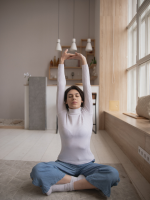
A gentle morning mobility routine may be useful for people who experience:
- Stiffness after sleeping
- Stiff hands or fingers
- Stiff knees
- Stiff hips
- Stiff feet or ankles
- Shoulder stiffness
- Reduced flexibility
- Stiffness after periods of inactivity
However, the same exercises aren’t appropriate for everyone.
Your arthritis type, affected joints, range of motion, balance, other health conditions, and current symptoms all matter.
If you’re unsure which movements are appropriate, a physical therapist can help you develop a routine suited to your abilities.
Common Mistakes to Avoid
Trying to Stretch as Far as Possible
You don’t need to reach your maximum range of motion for a stretch to be useful.
Start with a comfortable range and gradually increase it if appropriate.
Bouncing
Bouncing can make a stretch more difficult to control.
Use slow, smooth movements instead.
Holding Your Breath
Breathe normally while stretching.
Doing Too Much Because You Feel Stiff
More isn’t necessarily better.
If you are extremely stiff, start with a few movements rather than attempting a long routine.
Treating Stretching as Your Entire Exercise Program
Stretching and range-of-motion work are useful parts of physical activity, but a complete arthritis exercise program may also include aerobic activity, strength training, and balance work depending on your needs.
The CDC recommends a combination of aerobic and muscle-strengthening activity for adults, while older adults are also encouraged to include balance activities.
This morning routine is specifically intended to help you get moving, not replace your overall exercise program.
How Often Should You Do These Stretches?
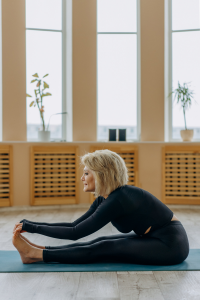
You can use gentle mobility movements as part of your regular morning routine if they feel comfortable and fit your needs.
You don’t have to complete the entire routine every day.
Some mornings you may need only a few movements. On other days, you may feel comfortable doing more.
Consistency matters more than forcing yourself through a long routine.
The Arthritis Foundation notes that regular range-of-motion exercises can help maintain and improve flexibility.
When Should You Get Professional Advice?
Talk with a healthcare professional or physical therapist if:
- You are new to exercise and have significant mobility limitations.
- A movement consistently causes pain.
- Your joints are significantly swollen or unusually hot.
- You have recently had an injury.
- You have difficulty maintaining your balance.
- Your range of motion is becoming noticeably worse.
- Your symptoms are changing or becoming more severe.
- You aren’t sure which exercises are appropriate for your condition.
Stop exercising and seek medical advice if you experience severe pain or other concerning symptoms.
Frequently Asked Questions
Is stretching good for arthritis in the morning?
Gentle stretching and range-of-motion movements can be useful for maintaining flexibility and helping you get moving when you feel stiff.
The key is to keep the movements comfortable rather than forcing stiff joints into a deeper stretch.
Should I stretch when my joints are stiff?
You can try gentle movement when your joints are stiff, provided the movements are appropriate for you and don’t cause significant pain.
Start with small, controlled movements and gradually increase your range if comfortable.
How long should morning stretches take?
They don’t need to take long.
A 5–10 minute routine can be a practical starting point, and you can use only the movements you find helpful.
Short periods of physical activity can still contribute to your overall activity level.
Should I stretch every morning?
You can include gentle mobility work in your morning routine if it feels comfortable and is appropriate for you.
You don’t need to force yourself to complete every exercise every day. Adjust the routine according to how your joints feel.
Can I do these stretches without getting on the floor?
Yes.
The routine in this article is designed around seated and standing movements, so you don’t need to get down on the floor.
That can make it more practical for people who have difficulty getting up and down or who simply prefer standing or chair-based exercises.
Is stretching enough exercise for arthritis?
Stretching is only one part of physical activity.
People with arthritis can benefit from a combination of range-of-motion, aerobic, strengthening, and—in appropriate individuals—balance activities.
These morning stretches are best viewed as a way to start your day and get your joints moving.
What should I do if an exercise makes my arthritis pain worse?
Stop the movement and allow your symptoms to settle.
You can try a smaller range of motion or skip that exercise altogether.
If pain or other symptoms remain severe or don’t improve, contact your healthcare professional. The CDC recommends paying attention to how your body responds when starting or increasing physical activity.
Related Reading
How to Reduce Morning Arthritis Stiffness: Practical Tips That May Help
Practical strategies for making stiff mornings easier, including gradual movement, warmth, pacing, and everyday adjustments.
How Long Should Morning Stiffness Last? OA vs RA Explained
Learn how the duration and pattern of morning stiffness can differ between osteoarthritis and rheumatoid arthritis.
Best Products for Morning Arthritis Relief
Explore practical products that may make mornings easier, including options for warmth, comfort, and everyday tasks.
Key Takeaways
Morning stretching doesn’t need to be complicated.
A few minutes of gentle movement can be a practical way to transition from sleep into your normal morning activities.
Remember:
- Start slowly.
- Use comfortable, controlled movements.
- Don’t bounce or force a joint.
- Gentle pulling is okay; significant or sharp pain is not.
- A chair can make many movements easier and more accessible.
- You can do the routine in about 5–10 minutes.
- On very stiff mornings, use only a few movements.
- During a flare, gentler range-of-motion movements may be more appropriate than a full exercise routine.
- Stretching is one part of an overall arthritis exercise program.
The goal isn’t to stretch as far as possible.
The goal is to move comfortably and give your joints a gradual start to the day.
Medical Disclaimer: This article is for informational purposes only and does not constitute medical advice. Always consult your doctor, rheumatologist, or occupational therapist before making changes to how you manage your arthritis.
