

Sleeping with arthritis can feel like a nightly battle. Just as you’re trying to unwind, joint pain, stiffness, and swelling flare up, making it hard to fall asleep and even harder to stay asleep.
Poor sleep doesn’t stay contained to the night, either. Many people with arthritis notice that a bad night is reliably followed by a worse day — more stiffness, more fatigue, and a shorter fuse for pain. Breaking that cycle starts with how you set up your sleep environment, position your joints, and wind down before bed.
This guide covers practical comfort strategies, arthritis-friendly sleep tools, and bedroom accessibility improvements — not medical treatment — so you can build a nighttime routine that actually supports your joints.
Quick Fixes You Can Try Tonight
- Mattress feel: A medium-firm surface, or a topper on an existing bed, tends to work best for most joints.
- Alignment: Sleep on your side or back with a supportive pillow cradling the affected joints.
- Heat first: Apply gentle heat to painful joints 20–30 minutes before bed.
- Lighter bedding: Swap heavy blankets for a lightweight, breathable duvet.
- Cooler room: Aim for 60–67°F (15–19°C).
- Wind down: A few minutes of slow, gentle movement before you lie down.
Why Arthritis Pain Feels Worse at Night
If your joints feel manageable during the day but throb the moment you get into bed, you’re not imagining it. A few things are working against you after dark:
Stillness leads to stiffness. Movement helps keep joints lubricated. Lying still for hours lets inflammation settle into the joint capsules, which is a big part of why mornings feel so locked up.
Fewer distractions, more awareness. During the day, activity and conversation give your brain other things to focus on. At night, in a quiet room, discomfort has your full attention.
Fluid shifts. Lying flat changes circulation patterns, and fluid can pool around inflamed joints — especially the knees, ankles, hips, and hands — adding pressure and throbbing.
The pain-sleep loop. Poor sleep tends to lower pain tolerance and raise next-day discomfort, which then makes the following night harder too. It’s a two-way relationship, and either side can kick off the cycle.
The Vicious Cycle: Pain Disrupts Sleep ➔ Fatigue Rises ➔ Inflammation Spikes ➔ Pain Worsens
Common Mistakes That Make Night Pain Worse
A few small, easy-to-miss habits tend to work against arthritis sufferers at night:
- Too many pillows. Stacking pillows can twist the spine or prop joints at awkward angles instead of supporting them.
- Heavy blankets. Dense bedding adds pressure to sensitive joints and can trap excess heat.
- A sagging mattress. A mattress that dips in the middle forces joints into strained positions all night.
- Overly tight braces. Compression should be gentle — anything that restricts circulation will backfire.
- Sleeping curled tightly (fetal position). It can feel comforting at first but compresses the hips and knees.
- Skipping heat therapy. Going to bed with cold, tense joints often means a rougher night.
Sleeping Positions for Arthritis Relief
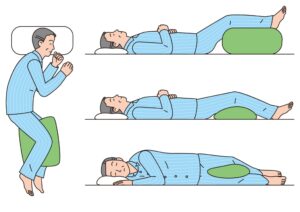
Your posture determines how much mechanical stress your joints carry overnight. In short: side sleeping with a knee pillow and back sleeping with under-knee support tend to work best, while stomach sleeping is generally discouraged because it strains the neck and flattens the spine’s natural curve.
We cover position-by-position setup, plus targeted advice for hip, knee, back, and neck pain, in our full breakdown: Best Sleeping Positions for Arthritis Pain.
Choosing Supportive Bedding
Your bed shouldn’t fight against your body. For most people with arthritis, a medium-firm mattress hits the right balance — enough give for hips and shoulders to sink in, enough support to keep the spine aligned. If a new mattress isn’t in the budget, a 2–3 inch memory foam or latex topper can meaningfully change how an old or overly firm bed feels.
Lightweight, breathable duvets are worth the switch too — heavy blankets pressing down on toes, ankles, and knees can add strain you don’t need. Cooling pads can help if heat sensitivity or gout is part of the picture, while a heated blanket or mattress pad with an automatic shut-off can help before bed if stiffness is the bigger issue.

For a deeper comparison of mattress and bed options: Best Mattress for Arthritis Pain Relief
Considering an adjustable base? Elevating the head slightly can ease pressure on the neck and upper back, while raising the legs helps drain fluid from swollen knees and ankles. See Top-Rated Adjustable Beds
Pillow and Support Tools
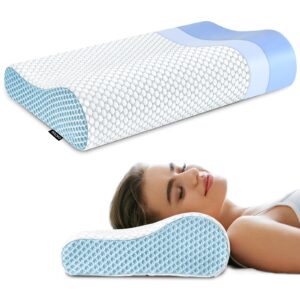
The right pillow setup does most of the heavy lifting for joint alignment:
- Cervical pillows — shaped to support the neck’s natural curve, helpful for neck arthritis and upper-back stiffness.
- Knee pillows — keep the hips level for side sleepers and support the knees for back sleepers.
- Full-length body pillows — support the shoulder, hip, and knee at once, useful for side sleepers.
- Lumbar rolls — help maintain the lower back’s natural curve for back sleepers.
For specific pillow picks and buying advice: Best Pillows for Arthritis Pain Relief.
Night Braces and Compression
For localized arthritis, especially in the wrists, hands, or knees, a lightweight compression sleeve or soft stabilizer worn overnight can help control minor swelling and prevent accidental joint strain. The key word is lightweight — anything tight enough to restrict circulation or cause numbness should come off.
Sleep Tools by Arthritis Type
Different types of arthritis create different nighttime challenges, so it’s worth tailoring your setup:
Rheumatoid arthritis (RA): Often involves widespread inflammation in the hands, feet, and shoulders. Heated gloves or socks before bed, an adjustable base to relieve pressure, and lightweight bedding tend to help most.
Osteoarthritis (OA): Typically affects weight-bearing joints — knees, hips, spine. Knee pillows, lumbar rolls, and a memory foam or latex mattress topper are the biggest levers here.
Gout: Flare-ups often strike the big toe or ankle overnight. Cooling pads, toe separators, and ultra-light bedding that avoids contact with the affected joint can make a real difference. Elevating the foot slightly may also help with swelling.
Fibromyalgia plus arthritis: Pressure sensitivity is often the bigger issue. Pressure-relief mattress toppers, body pillows, and gentle compression can help, and some people benefit from alternating heat and cooling depending on the type of pain that night.
Bedroom Setup for Safer, Easier Nights
Small layout changes can meaningfully reduce nighttime strain. Start with bed height — you should be able to sit with feet flat on the floor and stand without much effort. Bed risers can raise a too-low bed; removing a bulky box spring can lower one that’s too high.
Clear pathways matter too. Loose rugs, cords, and clutter are a fall risk on nighttime bathroom trips. Motion-activated night lights along the floor or hallway remove the need to fumble for switches, which is especially helpful during a flare.
A few other additions worth considering:
- Bed rails for stability getting in and out of bed
- Overbed tables to keep heat wraps, water, or medication within reach
- Bedside grab bars for extra support when repositioning
- Anti-slip rugs for nighttime bathroom trips
- Smart plugs and voice-controlled lights so you’re not twisting or gripping small switches in the dark
For a full room-by-room walkthrough: Arthritis-Friendly Home Modifications.
Building a Joint-Friendly Nighttime Routine
A consistent wind-down routine helps your body shift out of daytime tension and into deeper sleep.
Start with heat. A warm bath or shower about 90 minutes before bed, an electric blanket with an automatic shut-off, or a microwavable wrap on troublesome joints can all help relax the muscles around the joint.
Add gentle mobility. Five to ten minutes of light stretching or range-of-motion movement before bed helps prevent stiffness from settling in overnight.
Cut the blue light. Screens suppress melatonin production, so powering down phones, tablets, and TVs about an hour before bed makes it easier to reach deep sleep stages.
Cool the room. A dark, quiet room between 60–67°F (15–19°C) tends to support the deepest, most restorative sleep.
Daytime Habits That Set Up Better Sleep
Good sleep starts well before bedtime. Gentle, regular movement — walking, swimming, water aerobics, tai chi — keeps joints lubricated and tends to reduce nighttime stiffness. Pacing matters just as much: pushing hard on a good day is one of the more common triggers for a flare that shows up right at bedtime.
An anti-inflammatory diet — leafy greens, berries, fatty fish, nuts, olive oil — can support overall symptom management, and staying hydrated through the day supports joint lubrication. If stiffness reliably wakes you around the same time each night, it’s worth mentioning to your doctor — adjusting medication timing can sometimes extend relief further into the early morning.
For more on this: Anti-Inflammatory Foods for Arthritis Pain Relief.
Easing Into the Morning
Morning stiffness is one of the most common complaints with arthritis, and a few tools can make the transition out of bed easier: bed rails or a stand-assist device for getting up, heated gloves or socks to loosen stiff joints in the first few minutes, slip-on shoes that skip the bending and gripping, and grab bars or non-slip mats in the bathroom. A short morning mobility routine — gentle stretching or a slow walk — helps get circulation moving before the day starts.
Arthritis-Friendly Sleep Checklist
Before bed:
- Apply heat therapy to stiff joints
- Position knee, cervical, or body pillows for alignment
- Swap in lightweight bedding
- Add light compression if needed
- Set the room to 60–67°F (15–19°C)
- Turn on motion-activated night lights
- Clear pathways to the bathroom or hallway
In the morning:
- Use bed rails or a stand-assist device to get up safely
- Do a few minutes of gentle mobility work
- Apply heat to joints that feel tight or swollen
- Wear slip-on shoes to skip bending and gripping
- Use easy-grip mugs or utensils for breakfast
Frequently Asked Questions
What is the best sleeping position for arthritis?
Side sleeping with a supportive knee pillow, or back sleeping with a pillow under the knees, tends to work best for most people. If shoulder pain is part of the picture, hugging a body pillow can help keep the upper shoulder from collapsing forward.
Why does arthritis pain feel worse at night?
A combination of joint stillness, fluid pooling around inflamed joints, and fewer daytime distractions tends to make nighttime pain more noticeable. Heat therapy, supportive pillows, and lightweight bedding can help counteract some of this.
Do weighted blankets help or hurt arthritis pain?
It depends on the person. The deep-pressure effect can be calming for anxiety and restlessness, but a heavy blanket can also press down on sensitive toe, ankle, or knee joints. If you want to try one, a lighter version is the safer starting point.
Can poor sleep make arthritis worse?
Many people find that a bad night is reliably followed by more stiffness and lower pain tolerance the next day. Tools like adjustable beds, supportive pillows, and a consistent wind-down routine can help reduce how often that happens.
Should I wear a brace while sleeping?
A light, breathable compression sleeve or soft stabilizer can help manage swelling and prevent strain, but it should never feel tight or cause numbness. If it does, switch to a softer or looser option.
Key Takeaways
Nighttime arthritis pain is common, but it’s not something you have to just live with. Adjusting your sleep position, upgrading your bedding, leaning on heat therapy, and setting up your bedroom for easier nighttime movement can go a long way toward breaking the pain cycle.
How We Put This Guide Together
This guide reflects practical, non-clinical strategies commonly recommended for improving sleep comfort with arthritis, cross-checked against general orthopedic and sleep-hygiene guidance. It’s not a substitute for medical advice — if nighttime pain or insomnia is persistent, a rheumatologist or primary care physician can help rule out other contributing factors.