
How We Evaluate Walkers and Rollators for Arthritis
Our editorial team reviews mobility aids based on arthritis-specific criteria: grip comfort and brake ease for hands and wrists affected by stiffness or pain, adjustability for proper posture alignment, weight and foldability for real-world handling, wheel size and surface performance, and seating and storage for fatigue management. We draw on product specifications, verified customer feedback, and occupational therapy guidance. No manufacturer has paid for inclusion or placement in this guide.
Walking with arthritis can feel different from one day to the next. On a good day, you may move with relative ease. On a harder day, joint pain, stiffness, reduced grip strength, and fatigue can make even short distances feel more demanding than they should.
A walker or rollator can help — but only if it matches your body, your symptoms, and the way you actually live. The wrong choice can increase strain, discourage use, or simply sit in a corner unused.
This guide covers five types of walkers and rollators suited to arthritis, explains what separates them, and recommends specific models for each use case. If you are not sure where to start, the decision framework below will help you narrow it down before you look at products.
Best Walkers and Rollators for Arthritis: Quick Picks
| Best For | Our Pick |
|---|---|
| Best Overall | Drive Medical 4-Wheel Rollator with Seat |
| Best for Small Spaces | VIVE Mobility 3-Wheel Rollator |
| Best Lightweight Option | Drive Medical Trigger Release Folding Walker |
| Best for Posture and Outdoor Use | ELENKER All-Terrain Upright Rollator |
| Best Maximum Stability | Standard Walker (no wheels) |
Walker and Rollator Types: What the Differences Actually Mean
Before comparing products, it helps to understand what each walker type is actually designed to do. These are not just style differences — each type makes a different tradeoff between stability, ease of movement, and features.
Standard Walker (No Wheels)
A basic frame with four rubber-tipped legs and no wheels. You lift it slightly, move it forward, and step into it. Offers the most stability of any walker type. Best for people with significant balance concerns, post-surgical recovery, or primarily indoor use. Requires more upper body effort per step and more lifting — not ideal if you have significant shoulder or wrist involvement.
Folding Walker with Front Wheels
A standard walker with two small wheels on the front legs. You push the front forward rather than lifting the whole frame. Significantly reduces the effort per step while maintaining strong stability. A good middle ground for people who need solid support but find a fully rigid walker too tiring to use.
Three-Wheel Rollator
A compact, lightweight rolling walker that turns easily in tight spaces. No seat, but usually includes a small storage pouch. Best for apartment and indoor use where maneuverability matters. Less stable than four-wheel designs — not suited for outdoor terrain or users who need frequent rest breaks.
Four-Wheel Rollator
The most versatile and widely used rollator design. Rolls smoothly, includes hand brakes, a padded seat, and under-seat storage. Works indoors and outdoors. Requires some balance confidence and the hand strength to manage brakes — important considerations for arthritis affecting the hands.
Upright Rollator
A four-wheel rollator with padded forearm supports instead of standard handle grips. Encourages an upright walking posture rather than the forward lean that standard rollators can promote. Reduces pressure on the wrists and hands. Larger wheels on most models improve outdoor handling. Bulkier than compact rollators and may feel large in tight indoor spaces. A strong option for anyone with wrist or hand arthritis, back discomfort, or posture concerns.
Walker vs Rollator: Full Comparison
| Feature | Standard Walker | Folding Walker (Front Wheels) | 3-Wheel Rollator | 4-Wheel Rollator | Upright Rollator |
|---|---|---|---|---|---|
| Stability | Maximum | Very High | Moderate | Good | Good |
| Movement Style | Lift to move | Push forward | Rolls freely | Rolls freely | Rolls freely |
| Posture Support | Varies | Varies | Limited | Limited | Excellent |
| Hand/Wrist Pressure | Moderate | Moderate | Moderate | Moderate | Minimal |
| Built-In Seat | No | No | No | Yes | Yes |
| Storage | None | None | Small pouch | Basket | Basket |
| Hand Strength Needed | Low | Low | Moderate | Moderate | Low |
| Indoor Maneuverability | Good | Good | Excellent | Good | Moderate |
| Outdoor Performance | Limited | Limited | Limited | Good | Very Good |
| Learning Curve | Very Low | Very Low | Low | Low–Moderate | Low–Moderate |
How to Choose the Right Walker for Arthritis: Key Questions
The right walker is not the one with the most features — it is the one that fits your daily reality. Work through these questions before looking at specific models.
Where will you use it most?
Indoors in a smaller home or apartment: a standard walker, folding walker, or three-wheel rollator will navigate tight spaces and doorways more easily. Outdoors or across multiple environments: a four-wheel rollator or upright rollator handles varied surfaces better and includes a seat for longer outings.
How is your balance?
If balance is a significant concern — especially after a fall, surgery, or during a flare — a standard walker or front-wheeled folding walker provides more stability than a rollator. Rollators roll freely, which offers less resistance if you lose your footing. If your balance is reasonable but your stamina or joint pain is the main issue, a rollator is likely the better fit.
How are your hands and wrists?
This is one of the most overlooked considerations for arthritis specifically. Standard walkers require less grip strength than rollators, since there are no brakes to squeeze. If you have moderate to severe hand or wrist involvement, check that rollator brakes are loop-style or otherwise easy to engage without significant force. An upright rollator removes most hand and wrist pressure entirely by shifting support to the forearms.
Do you need to sit and rest?
Arthritis fatigue is real and unpredictable. If you regularly need rest breaks — or simply want the option — only four-wheel rollators and upright rollators include a built-in seat. A standard or folding walker offers no seating, which may limit how far you are willing to go.
How often will you lift or transport it?
If you regularly put a walker in and out of a car, weight matters significantly. A 7-pound folding walker is far easier to handle than an 18-pound rollator. If you will mostly use it at home and transport is infrequent, weight is less critical.
Is posture or back discomfort a concern?
Standard walkers and conventional rollators can encourage a forward lean over time, increasing back and neck strain. If posture or back pain is a factor, an upright rollator with forearm supports is worth considering specifically for this reason.
Many people with arthritis begin with a standard walker for stability during a flare or recovery period, then transition to a rollator as confidence and endurance return. Having a clear sense of where you are now — not just where you hope to be — leads to a more useful purchase.
If you are unsure, an occupational therapist can assess your walking pattern and recommend the most appropriate type for your situation.
Features That Matter Most for Arthritis
Grip Comfort
Hard, narrow grips increase pressure on already-sensitive joints. Look for padded, contoured handles with a larger diameter that distributes grip pressure more evenly. Some walkers offer foam or gel padding as standard; others allow aftermarket grip covers as an inexpensive modification.
Brake Design
For rollators, brake levers vary significantly in the force required to engage them. Loop-style brakes, which work by pulling upward rather than squeezing inward, tend to be easier for people with limited hand strength or finger stiffness. Test brake action if possible before buying, or check verified reviews specifically from users with hand arthritis.
Height Adjustability
A properly fitted walker reduces unnecessary strain on the shoulders, neck, and back. When holding the handles with your arms at your sides, your elbows should bend at a slight angle — roughly 15 to 20 degrees. Most walkers offer push-button height adjustment; confirm the range covers your height before purchasing.
Weight
A walker you struggle to handle is one you will not use consistently. Lightweight aluminum frames (typically 7–13 lbs) are far easier to reposition, fold, and transport than heavier steel frames. If you live alone or frequently move the walker in and out of a vehicle, prioritize weight as a key criterion.
Wheel Size
Larger wheels roll more smoothly over thresholds, cracks, and uneven pavement. Most standard rollators have 6–8 inch wheels suitable for smooth indoor and outdoor surfaces. Upright or all-terrain rollators with 10-inch wheels handle varied outdoor terrain more comfortably.
Seating and Padding
If a seat is important, check the cushioning quality. Thin mesh seats offer minimal comfort for extended sitting. Firm foam padding provides more stable support — an important distinction if you plan to use the seat regularly rather than just occasionally.
Best Walkers and Rollators for Arthritis: Our Picks
Best Overall: Drive Medical 4-Wheel Rollator with 7.5″ Casters
Best for: Everyday indoor and outdoor mobility on multiple surfaces
Weight: 18 lbs | Weight Capacity: 300 lbs
The Drive Medical 4-Wheel Rollator is our top overall pick for people with arthritis who want dependable support, comfort, and everyday versatility. The sturdy steel frame and 7.5-inch wheels move smoothly over sidewalks, carpets, and household flooring. Unlike a standard walker that requires lifting with every step, the four-wheel design allows continuous movement with considerably less effort.

Why We Like It for Arthritis
- Large wheels help manage uneven surfaces and minor outdoor terrain
- Loop-style brakes are easier to engage than small squeeze levers for many users with hand stiffness
- Padded seat provides a built-in rest option when fatigue or joint discomfort increases
- Under-seat storage basket reduces the need to carry bags by hand
Key Features
- Four-wheel design for smooth maneuverability
- Padded seat and backrest
- Adjustable handle height
- Foldable frame for storage and transport
- Under-seat storage basket
Considerations
- 18 lbs may be difficult to lift into a vehicle for some users
- Rolling design requires more balance confidence than a standard walker
- Requires basic assembly
Who May Want a Different Option
People who need maximum stability, users with very limited grip strength who struggle with brakes, or anyone needing an ultra-light walker for frequent vehicle transport.
Bottom Line: A reliable everyday rollator that balances comfort, mobility, and arthritis-friendly design for people who want greater independence while walking.
Check Price and Read Reviews on Amazon
Best for Small Spaces: VIVE Mobility 3-Wheel Rollator Walker
Best for: Apartments, narrow hallways, and indoor use
Weight: Approximately 11 lbs
The VIVE Mobility 3-Wheel Rollator is designed for people who need easier movement in smaller living spaces. Its compact frame navigates around furniture, into bathrooms, through hallways, and around tight corners more easily than larger four-wheel designs.

Why We Like It for Arthritis
- Easier turning reduces unnecessary twisting and strain on hips and knees
- Storage pouch reduces the need to carry items by hand around the home
- Compact, lightweight design works well in smaller homes and apartments
Key Features
- Three-wheel design for tight-space maneuverability
- Foldable frame for storage
- Storage pouch for personal items
- Non-slip wheels
Considerations
- No built-in seat for rest breaks
- Less stable than four-wheel rollators
- Not well suited to outdoor or uneven terrain
Who May Want a Different Option
Users who need a seat for frequent rest breaks, people who require maximum stability, or anyone planning longer outdoor walks.
Bottom Line: A practical indoor choice when maneuverability in tight spaces matters more than outdoor performance or built-in seating.
View the VIVE Mobility 3-Wheel Rollator on Amazon
Best Lightweight Option: Drive Medical Trigger Release Folding Walker
Best for: Indoor use, portability, and simple everyday support
Weight: Approximately 7 lbs
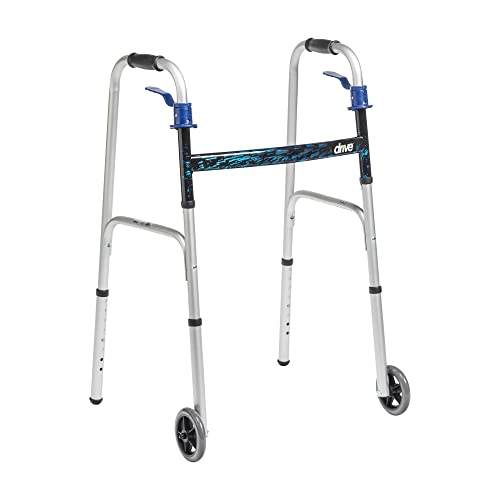
The Drive Medical Trigger Release Folding Walker is a practical option for people who want a lightweight, easy-to-use mobility aid for indoor movement and short distances. Its simple design makes it especially well suited for individuals with arthritis who find heavier frames or complicated folding mechanisms difficult to manage.
Why We Like It for Arthritis
- Lightweight frame reduces strain when lifting or repositioning throughout the day
- Trigger-release folding mechanism is easier to operate with stiff or painful fingers than push-button systems
- Simple design requires no brake management — a genuine advantage for significant hand arthritis
- Compact size fits through standard doorways and narrow spaces without adjustment
Key Features
- Ultra-light aluminum frame
- Trigger-release folding mechanism
- Adjustable height settings
- Compact design for indoor use
Considerations
- No seat or storage
- Requires lifting with each step — more tiring over longer distances
- Not suited for outdoor terrain
Who May Want a Different Option
People who need a seat for resting, users looking for smoother rolling movement, or anyone walking longer outdoor distances regularly.
Bottom Line: A simple, lightweight walker that provides reliable indoor support without the complexity of rollator brakes or the bulk of a larger frame.
Best for Posture and Outdoor Use: ELENKER All-Terrain Upright Rollator Walker
Best for: Users with wrist or hand arthritis, back concerns, or active outdoor walking
Weight: 30 lbs] | Weight Capacity: 300 lbs | Wheel Size: 10 inches
Most walkers and rollators place your hands at grip level, which can encourage a slight forward lean over time. For people with back discomfort, poor posture, or significant wrist and hand involvement, this creates a compounding problem — the aid that is supposed to help ends up adding strain in a different place.
The ELENKER All-Terrain Upright Rollator takes a different approach. Padded forearm supports replace standard handle grips, shifting load from the hands and wrists to the forearms and encouraging a more natural, upright walking position. Combined with 10-inch puncture-resistant wheels, it handles sidewalks, pavement cracks, and everyday outdoor terrain more smoothly than standard rollators.

Why We Like It for Arthritis
- Forearm support design removes most pressure from wrists and hands — a significant advantage for hand or wrist arthritis
- Upright posture positioning may help reduce lower back strain and fatigue on longer walks
- 10-inch wheels roll more smoothly over cracks, thresholds, and uneven pavement than standard rollator wheels
- Padded high-density foam seat provides more stable seated support than thin mesh seating on basic rollators
- Cane holder, cup holder, and under-seat basket reduce the need to carry items by hand
Key Features
- Padded forearm support uprights for improved posture
- 10-inch puncture-resistant all-terrain wheels
- Padded high-density foam seat
- Adjustable handle height and armrest positioning (fits heights 4’8″ to 6’4″)
- Under-seat storage basket, cane holder, and cup holder
- Ergonomic handbrakes
Considerations
- Larger frame is bulkier than compact rollators — may feel unwieldy in tight indoor spaces
- Heavier than basic walkers
- Not designed for rugged trails — suited for everyday outdoor surfaces
Who May Want a Different Option
Users who primarily need maximum indoor stability, people in smaller homes where a larger frame is impractical, or anyone who needs a very lightweight option for frequent transport.
Bottom Line: The strongest option for people whose arthritis affects the wrists or hands, those who experience back discomfort with standard rollators, or anyone spending meaningful time outdoors and wanting a more comfortable walking posture.
Read our full ELENKER Upright Rollator review | View on Amazon
Common Mistakes When Buying a Walker for Arthritis
Choosing Based Mainly on Price
The least expensive option may lack the grip comfort, brake design, or weight that make a walker genuinely usable day to day. A walker that causes pain or sits unused is not a saving.
Ignoring Hand and Wrist Comfort
Hard grips and stiff brake levers can worsen joint pain and reduce how often someone actually uses a walker. This is especially worth attention if hand or wrist arthritis is part of the picture.
Buying a Walker That Is Too Heavy to Handle
If lifting a walker in and out of a vehicle is difficult, or repositioning it around the home is a struggle, it will be used less than it should be. Test the weight before buying, or check the specification carefully against your own lifting ability.
Not Matching the Walker to Your Environment
A compact indoor walker may roll poorly on outdoor surfaces. A large-wheeled rollator may be awkward to turn in a narrow bathroom. Thinking through where the walker will actually be used — not just where you hope to use it — leads to a better match.
Skipping Proper Height Adjustment
Using a walker set at the wrong height increases strain on shoulders, back, and neck. Most walkers arrive needing adjustment before first use. Set handle height so elbows remain at a slight bend — approximately 15 to 20 degrees — when holding the handles naturally.
Frequently Asked Questions
Can walkers and rollators help with arthritis?
Yes. Walkers and rollators can improve stability, reduce load on affected joints, and make walking safer and more comfortable for people with arthritis. They are not a treatment for the condition, but they can meaningfully reduce the strain and fatigue that arthritis adds to everyday movement.
What type of walker is best for hand arthritis?
Standard walkers and folding walkers require less grip strength than rollators, since there are no brakes to squeeze. Among rollators, look for loop-style brakes and padded grips. An upright rollator removes most hand and wrist pressure entirely by using forearm supports instead of grip handles — worth considering for significant hand involvement.
Is a rollator better than a standard walker for arthritis?
It depends on your primary symptoms and environment. Rollators are better for longer distances, outdoor use, and when rest breaks matter. Standard walkers provide more stability for people with balance concerns or who primarily move around indoors. Many people with arthritis use both at different stages or for different activities.
Do walkers help with arthritis fatigue?
They can. By providing support and reducing the effort required to maintain balance and posture while walking, a walker may help conserve energy during daily activities. Rollators with built-in seats extend this further by making rest breaks available wherever you are.
How do I know if a walker is the right height?
Stand upright with your arms relaxed at your sides and hold the walker handles. Your elbows should bend at a slight angle — roughly 15 to 20 degrees. If your arms are straight or you are reaching up or hunching down, the height needs adjustment. Most walkers offer push-button height settings in one-inch increments.
What is an upright rollator and who is it for?
An upright rollator uses padded forearm supports rather than standard grip handles, encouraging a more upright walking posture. It is designed for people who lean forward on conventional rollators, those with wrist or hand pain that makes gripping difficult, or anyone managing back discomfort alongside mobility concerns. It tends to be bulkier than standard rollators but offers a meaningfully different experience for the right user.
Should I use a cane instead of a walker?
Canes provide lighter support for people who need mild stability assistance on one side. Walkers provide more substantial bilateral support and are generally more appropriate when balance, fatigue, or joint pain is affecting both sides or making walking genuinely difficult. See our guide to walking canes for arthritis for a detailed comparison.
Final Thoughts
The right walker or rollator can make a meaningful difference in daily life for people living with arthritis — not just in terms of stability, but in confidence, range, and the ability to keep doing the things that matter.
The best choice is rarely the most expensive or the most feature-rich. It is the one that fits your current symptoms, your home, and the way you actually move through your day. Start with the decision questions above, match the walker type to your situation, and then use the product picks to find a specific model in that category.
For a broader look at mobility aids and adaptive tools that support independent living with arthritis, see our complete guide to mobility aids for arthritis.
Related Reading
- ELENKER All-Terrain Upright Rollator: Full Review
- Best Walking Canes for Arthritis
- Mobility Aids for Arthritis: Complete Guide
- Helpful Products for an Arthritis-Friendly Home
- The Best Tools to Make Life Easier for People with Arthritis