
Gardening should be relaxing — not painful. If arthritis makes gripping, cutting, or digging uncomfortable, the right ergonomic gardening tools can make a meaningful difference.
This guide focuses exclusively on arthritis-friendly gardening tools designed to reduce strain on your hands, wrists, knees, and shoulders. With the right equipment, you can garden longer, more comfortably, and with greater confidence.
How We Approach This Guide
The Arthritis Wares Editorial Team evaluates ergonomic gardening tools using occupational therapy and ergonomic design principles, focusing on grip comfort, leverage, weight, and joint alignment, and references guidance from the Arthritis Foundation on joint protection during repetitive tasks. We recommend confirming any major changes to your gardening routine with your doctor or occupational therapist.
Why Standard Gardening Tools Can Worsen Arthritis Pain
Traditional garden tools often require tight gripping, repetitive squeezing, awkward wrist angles, and excessive force. For people with arthritis, this can trigger flare-ups, fatigue, and gradual loss of hand strength. Ergonomic tools are designed to reduce joint stress by improving leverage, grip comfort, and body alignment.
What Makes a Gardening Tool Arthritis-Friendly?
When shopping for ergonomic gardening tools, these design features matter most:
- Padded, non-slip handles to reduce grip pressure
- Angled or curved handles that keep wrists in a neutral position
- Lightweight materials to prevent fatigue
- Spring-assisted or ratcheting mechanisms to reduce hand force
- Extended handles to limit bending and kneeling
These details add up to meaningful pain reduction over a full gardening session.
How to Test a Tool Before You Buy
Specs on a product page only tell part of the story. Where possible:
- Check the handle diameter — thicker, cushioned grips generally require less squeeze force than thin metal handles
- Weigh the tool in your hand if you can (or check listed weight) — under 1 lb is a good target for hand tools
- Look for a manufacturer return policy, since grip comfort is personal and hard to judge from photos alone
- Read reviews specifically mentioning “arthritis” or “grip strength” rather than general star ratings
Ergonomic Hand Tools for Arthritic Hands
Pruners & Shears
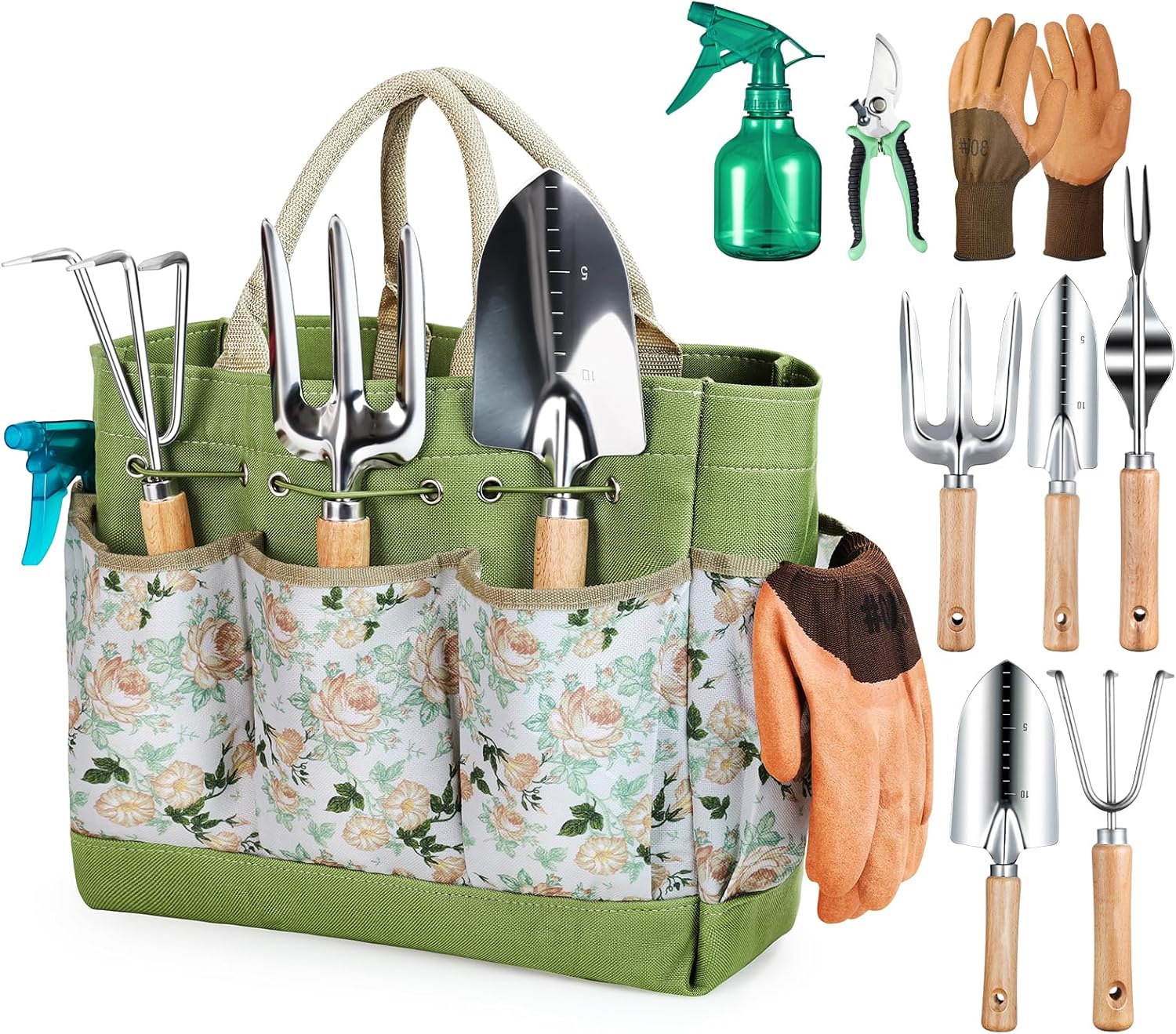
Pruning can be especially hard on arthritic hands. Ergonomic pruners minimize squeezing and wrist strain through rotating or rolling handles, easy-squeeze spring mechanisms, and cushioned grips. Best for hand arthritis, finger stiffness, and reduced grip strength.

Trowels & Cultivators
Digging and planting are far more comfortable with tools that keep your wrist aligned naturally. Look for curved or vertical handles, non-slip padded grips, and lightweight aluminum or composite materials. Best for wrist arthritis, carpal tunnel overlap, and forearm pain.
Long-Handled Tools
Long-handled tools allow you to work without bending or kneeling, protecting knees, hips, and lower back. Common options include long-handled weeders, extended rakes and hoes, and adjustable-length tools. Best for knee arthritis, hip pain, and balance concerns.

Electric & Battery-Assisted Tools
For more severe grip loss or higher-demand tasks, battery-powered tools remove most of the manual force required by traditional versions:
- Electric pruning shears — a trigger press replaces repeated squeezing, useful for thicker stems and extended pruning sessions
- Cordless mini cultivators/tillers — reduce the twisting force needed to break up soil by hand
- Battery-powered hedge trimmers with rotating handles — cut down on wrist strain during shaping and trimming
Electric tools cost more upfront and add some weight from the battery, so they tend to make the most sense for gardeners doing frequent or heavier-duty tasks rather than light container gardening.

Mobility & Support Tools for Comfortable Gardening
Garden Kneelers & Seats
A good garden kneeler provides cushioned support for your knees and assists with standing back up — a significant help when joints are stiff. Look for models that include side handles for leverage, convert between a kneeler and a seat, and fold flat for easy storage. Best for knee pain, limited mobility, and fatigue.

Padded Gardening Gloves
Arthritis-friendly gloves protect hands from pressure and vibration, and add a layer of grip security when hand strength is reduced. Look for gel or foam padding, flexible materials that don’t restrict movement, and textured grip surfaces. Best for hand pain, joint swelling, and sensitive skin.

Rolling Garden Carts
Carrying tools and soil bags can strain wrists and shoulders considerably. A rolling cart eliminates most of that lifting, reduces the number of trips back and forth, and improves safety and balance on uneven ground. Best for shoulder arthritis, wrist pain, and low-stamina days.

Matching Tools to Your Type of Arthritis
Different joints need different support, and the most effective toolkit is built around your specific pattern of pain — not a one-size-fits-all list.
- Hand and finger arthritis: Prioritize pruners with rotating handles, padded-grip trowels, and gel-padded gloves. Grip force and wrist angle are the main variables to address.
- Wrist and forearm pain: Look for tools with vertical or curved handles that keep the wrist in a neutral position rather than requiring twisting or downward pressure.
- Knee and hip arthritis: Long-handled tools and rolling carts reduce bending, kneeling, and load-bearing. Pair with a garden kneeler-seat for moments when you do need to get low.
- Shoulder and neck pain: Lightweight tools with extended handles reduce reach and overhead effort. Rolling carts take the shoulder strain out of hauling supplies.
- Higher-pain or flare-up days: Scale back to your lightest, lowest-force tools. A lightweight trowel, gloves, and a rolling cart are often all you need for light maintenance when joints are more inflamed.
Mixing and matching based on your needs — rather than using the same tools every session — leads to better comfort and fewer flare-ups over time.
Frequently Asked Questions
What handle grip size is best for arthritic hands?
A thicker, cushioned handle (roughly 1.25–1.5 inches in diameter) generally requires less grip force than a thin metal handle, which spreads pressure across the whole hand instead of concentrating it in the fingers.
Are electric gardening tools worth it for arthritis?
For frequent or heavier-duty tasks like pruning thick branches or breaking up soil, electric tools can meaningfully reduce hand strain. For light container gardening, manual ergonomic tools are often sufficient and lighter to hold.
How do I know if a tool will actually fit my hands before buying?
Check listed handle diameter and weight, look for reviews that specifically mention arthritis or grip strength, and buy from retailers with an easy return policy so you can test it at home.
Do ergonomic tools cost significantly more than standard ones?
Some ergonomic hand tools cost about the same as standard versions. Spring-assisted, rotating-handle, and electric tools typically cost more, but the difference is often modest compared to the reduction in joint strain they can provide.
Final Thoughts: Tools That Let You Keep Gardening
You don’t need to give up gardening because of arthritis — you just need better tools. Ergonomic gardening tools reduce joint strain, increase control, and help you stay active doing something you love. For advice on pacing, session length, and knowing when to pause, see our complete gardening with arthritis guide.
Related Guides
- Gardening with Arthritis: Complete Guide to Tools, Layout & Techniques — hub overview of joint-friendly gardening strategies including pacing and technique
- Accessible Garden Design for Arthritis — raised beds, paths, and layout planning