
Disclosure: As an Amazon Associate, Arthritis Wares earns from qualifying purchases at no extra cost to you. We are not paid or sponsored by any manufacturer. Affiliate links help support our work.
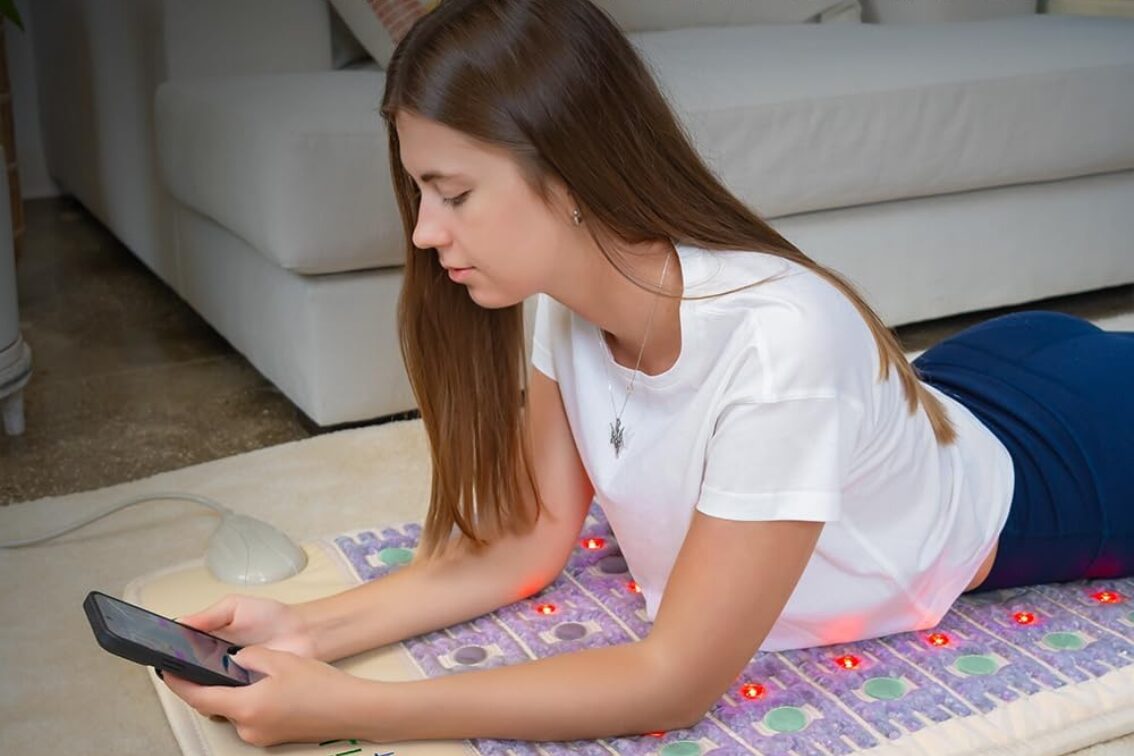
Pulsed electromagnetic field (PEMF) therapy is marketed as a non-invasive way to help manage pain and stiffness. At-home devices range from small targeted applicators to full-body mats that combine electromagnetic stimulation with heat and other features.
But does PEMF therapy actually help arthritis, and is an expensive home device worth considering?
Research suggests PEMF may provide short-term relief for some people with osteoarthritis, particularly knee osteoarthritis. However, the evidence is mixed, studies use different devices and treatment settings, and results from clinical studies cannot automatically be applied to every consumer product.
Quick answer: PEMF therapy is a possible complementary option for osteoarthritis symptom management, but its benefits remain uncertain. It has not been established that consumer PEMF mats repair damaged cartilage or stop arthritis from progressing. If you’re considering a device, understand the evidence, check the specifications and safety instructions, and weigh the cost against more established approaches to managing arthritis.
What Is PEMF Therapy?
PEMF stands for pulsed electromagnetic field therapy. A device produces changing electromagnetic fields in pulses, which interact with tissues in the treated area.
PEMF devices vary considerably. They may use different frequencies, field strengths, waveforms, coil arrangements and treatment schedules. Some are designed for targeted areas such as a knee, while others use large mats intended to cover much of the body.
Some full-body mats also combine PEMF with far-infrared heat, light therapy or other features. These additional functions make it difficult to determine which component, if any, accounts for a user’s perceived improvement.
PEMF is different from static magnets, TENS electrical stimulation, and ordinary heating pads. These technologies should not be treated as interchangeable simply because they are marketed for pain relief.
How Is PEMF Supposed to Help Arthritis?
Researchers have investigated whether pulsed electromagnetic fields can influence biological processes involved in pain, inflammation and tissue activity.
However, a proposed biological mechanism is not the same as proof of a meaningful clinical benefit. Research into how electromagnetic fields affect cells does not establish that a particular consumer mat will relieve arthritis symptoms.
For people with osteoarthritis, the most relevant question is whether treatment produces a noticeable improvement in pain, stiffness or everyday function—and whether that improvement is reliable and lasts beyond the treatment period.
What Does the Research Say About PEMF for Arthritis?
Research on PEMF and osteoarthritis has produced some encouraging findings, but important uncertainties remain.
Findings From Published Reviews
A 2020 systematic review and meta-analysis examined randomized, placebo-controlled trials of PEMF for osteoarthritis. It reported beneficial effects on pain, stiffness and physical function. However, the evidence primarily addressed short-term outcomes, with limited information about long-term benefits. Read the study on PubMed.
A 2022 review of systematic reviews found that most of the available research concerned knee osteoarthritis. Some studies also examined hand, neck or ankle osteoarthritis. The authors reported encouraging short-term findings but noted that many studies were small, varied in quality and used different treatment protocols. They concluded that the evidence was not sufficient to establish effectiveness conclusively. Read the review.
A 2024 systematic review examined 17 studies involving 1,197 participants. It reported improvements in some osteoarthritis outcomes, particularly pain. However, the studies used different devices, treatment schedules and outcome measures, making it difficult to determine what results a person should expect from a particular product. Read the review.
What Do These Findings Mean for Someone With Arthritis?
The research supports continued investigation of PEMF, but it does not justify promising substantial pain relief to every user.
Keep these limitations in mind:
- Results vary: Some studies report improvements, while others find smaller or inconsistent benefits.
- The evidence is largely short-term: Long-term effectiveness and the durability of any improvement remain uncertain.
- Devices differ: Results from one treatment protocol cannot automatically be applied to a consumer mat with different specifications.
- Osteoarthritis is not the same as rheumatoid arthritis: Evidence from osteoarthritis studies does not establish that PEMF controls rheumatoid arthritis or other inflammatory diseases.
- Pain relief is not cartilage repair: Current evidence does not establish that consumer PEMF mats rebuild damaged cartilage or reverse osteoarthritis.
PEMF is best considered an option that some people may wish to investigate—not a proven replacement for established arthritis care.
At-Home PEMF Mats: Features, Costs and What to Check
If you are considering buying a PEMF device, start by deciding what you want it to do. A full-body mat may appeal to someone who wants to treat several areas during a session, while a smaller device may be more practical for a single joint.
Neither format is automatically more effective.
The two products below illustrate different approaches to at-home PEMF. Their listed specifications are manufacturer-provided information, not independent evidence that they relieve arthritis.
OMI Pads Full Body Mat
Best considered by: People researching a PEMF-focused full-body mat who want adjustable settings and published technical specifications.
According to the product information provided by OMI, the Full Body Mat includes eight copper induction coils, three built-in programs and an adjustable frequency range of 1–99 Hz. OMI lists a maximum field intensity of 220 microtesla, equivalent to 2.2 gauss, and describes the pulse waveform as sinusoidal.
These details help describe the device, but they do not establish that its particular settings are optimal for arthritis or that it delivers the same results as devices used in clinical trials.
Before buying, check the exact model’s current specifications, treatment instructions, warranty, return policy and safety precautions.
Product information: OMI Pads

HealthyLine TAJ Series PEMF Photon InfraMat Pro
Best considered by: People who want a full-body mat that combines PEMF with heat and additional features.
The specifications supplied for this HealthyLine model list six PEMF coils, a frequency range of 1–30 Hz, a sine waveform and a peak intensity of 2 gauss. The mat also combines PEMF with far-infrared heat, photon light and other features.
The key difference is that this is a multi-therapy product rather than a PEMF-only mat. If you feel better after using it, that experience alone cannot tell you whether the change came from PEMF, warmth, relaxation or a combination of factors.
The listed maximum heat temperature is 70°C (158°F). Follow the manufacturer’s instructions carefully, and take particular care if you have reduced sensation or difficulty recognizing excessive heat.
Product information: HealthyLine TAJ Series PEMF Photon InfraMat Pro

Comparing the Two Mats
| Feature | OMI Full Body Mat | HealthyLine TAJ Series |
|---|---|---|
| Listed frequency range | 1–99 Hz | 1–30 Hz |
| Listed maximum PEMF intensity | 220 µT (2.2 gauss) | 2 gauss (200 µT) |
| PEMF coils | 8 | 6 |
| Waveform | Sinusoidal | Sine |
| Additional features | PEMF-focused design | Heat, photon light and other features |
| Main consideration | Easier to focus the comparison on PEMF specifications | Multiple features make it harder to separate the effects of PEMF from those of other therapies |
Specifications are based on the product information available for these models and should be confirmed against the current manufacturer’s documentation.
A higher frequency range, more coils or slightly greater field intensity does not automatically mean a device is more effective. There is no simple specification that establishes which consumer mat will provide the best arthritis relief.
I would not rank either product as the best PEMF device for arthritis without reliable product-specific clinical evidence.
What to Check Before Buying a PEMF Device
PEMF mats can be expensive, so it is worth checking more than the advertised benefits.
1. Verify the Technology
Confirm that the device actually generates pulsed electromagnetic fields. Look for published information about frequency, field strength, waveform, coil configuration and treatment settings.
Do not confuse PEMF with static magnetic products, TENS devices or infrared heating pads.
2. Check the Medical Claims
Be cautious if a seller promises to repair cartilage, reverse arthritis, eliminate inflammation or deliver guaranteed results.
A manufacturer’s product description can tell you what it claims the device does. It is not independent proof that the claims are accurate.
3. Understand the Regulatory Status
Check the regulatory status of the exact model and the specific intended use. Do not assume that a product is FDA-cleared or FDA-approved for arthritis because a seller mentions FDA registration or refers to research on PEMF generally.
Regulatory status for one device or medical indication does not establish that a different consumer product is effective for arthritis.
4. Consider Cost and Practicality
Before buying, check:
- The current price and whether the device fits your budget.
- The warranty and return policy.
- The mat’s size, weight and storage requirements.
- How long sessions take and how often the manufacturer recommends using it.
- Whether the controls are easy to operate with painful or stiff hands.
- Whether the device’s safety instructions fit your individual circumstances.
A large mat may be inconvenient to move or store. A smaller product may be easier to handle, but convenience alone does not establish effectiveness.
5. Read the Safety Instructions
Do not assume every PEMF device has identical precautions. Check the manual for the exact model, particularly if you have an implanted electronic device, are pregnant, have reduced sensation, or have another condition that could affect safe use.
Ask your healthcare professional if you are unsure whether a device is appropriate for you. With heated mats, be especially careful if you cannot reliably sense excessive heat.
PEMF Compared With Established Arthritis Treatments
PEMF should not displace treatments with stronger evidence or replace a clinician’s advice.
| Approach | Main purpose | What to keep in mind |
|---|---|---|
| Therapeutic exercise | Maintain strength, mobility and physical function | Activities can be adapted to symptoms and ability |
| Physical therapy | Support movement, strength, function and joint management | A therapist can tailor a plan to your needs |
| Heat therapy | May ease stiffness and help muscles relax | Protect the skin and avoid excessive temperatures |
| Cold therapy | May temporarily ease discomfort or swelling | Use an appropriate barrier and avoid prolonged direct contact |
| Topical or oral medication | Relieve symptoms; some medicines treat underlying inflammatory disease | Suitability and risks depend on the medicine and the individual |
| PEMF | A possible complementary approach under investigation | Benefits from consumer devices remain uncertain |
The appropriate treatment depends on the type of arthritis, the affected joints, other health conditions and individual goals. People with rheumatoid arthritis should continue appropriate disease-modifying treatment under medical supervision; a PEMF mat is not a substitute.
For practical options you can compare, see our guides to Best Hand Therapy Tools for Arthritis and Ease Arthritis Knee Pain: 7 Proven Strategies for Relief.
Frequently Asked Questions About PEMF Therapy
Does PEMF therapy work for osteoarthritis?
Some clinical reviews report short-term improvements in pain, stiffness or physical function, particularly for knee osteoarthritis. However, findings are not consistent enough to guarantee a benefit, and the results from clinical studies cannot automatically be applied to every consumer device.
Can PEMF repair damaged cartilage?
There is not sufficient clinical evidence to claim that at-home PEMF mats repair damaged cartilage or reverse osteoarthritis. A change in pain does not necessarily mean the underlying joint damage has changed.
Is PEMF the same as magnetic therapy?
Not exactly. PEMF uses changing electromagnetic fields delivered in pulses. Static magnetic products use magnets that do not generate the same pulsed field. Evidence for one type of device should not be assumed to apply to another.
Is a full-body mat better than a targeted device?
Not necessarily. A full-body mat covers a larger area, while a targeted device may be more convenient for a single joint. Coverage and convenience do not prove greater effectiveness. The evidence for the specific device and its intended use matters more than size alone.
How long does it take for PEMF to work?
There is no reliable timeline that applies to every device or user. Studies have used different treatment schedules, and evidence from those studies does not establish that a consumer mat will produce results within a particular number of days or weeks.
Follow the manufacturer’s instructions and avoid increasing session length or intensity in an attempt to speed up results.
Can PEMF replace arthritis medication?
No. Do not stop, reduce or replace prescribed medication because you are using a PEMF device. Discuss changes to your arthritis treatment with your healthcare professional.
Are expensive PEMF mats worth the money?
That depends on your budget, expectations and willingness to accept uncertain benefits. Because product-specific evidence is limited, consider the cost carefully and check the return policy before committing to an expensive device.
Final Thoughts: Is PEMF Worth Considering?
PEMF therapy is an interesting area of research, and some studies suggest it may help relieve certain osteoarthritis symptoms in the short term. But the evidence has important limitations, and it does not establish that expensive at-home mats deliver the same results as devices used in clinical research.
If you are considering a PEMF mat, compare the actual specifications, safety instructions, cost and return terms. Treat manufacturer claims cautiously, and do not expect PEMF to repair cartilage or replace established arthritis treatment.
For most people, the sensible approach is to prioritize established arthritis management strategies and consider a PEMF device only as a possible complementary option after weighing the uncertainty and expense.
Medical Disclaimer: This article is for informational purposes only and does not constitute medical advice. Always consult your doctor, rheumatologist, or occupational therapist before making changes to how you manage your arthritis.
