

Disclosure: As an Amazon Associate, Arthritis Wares earns from qualifying purchases at no extra cost to you. We are not paid or sponsored by any manufacturer. Affiliate links help support our work.
Living with arthritis in the knees, hips, feet, or spine can make longer walks and everyday outings difficult. A mobility scooter may help you conserve energy, reduce the amount of walking required, and continue participating in activities that matter to you.
The best mobility scooter for arthritis is not necessarily the fastest or most powerful model. What matters most is whether you can steer it comfortably, get on and off safely, manage its controls, and transport or charge it without placing too much strain on your joints.
This guide compares four mobility options and explains which features deserve the most attention when arthritis affects your hands, wrists, hips, knees, or back.
Quick Answer: What Type of Mobility Scooter Is Best for Arthritis?
The right choice depends on your mobility needs and which joints are affected.
- For everyday errands: Consider a compact travel scooter with comfortable steering controls and manageable disassembly.
- For a more comfortable outdoor ride: Look for a scooter with suitable suspension, a supportive seat, and tires appropriate for the surfaces you use.
- For frequent travel: Consider a folding scooter, but check its actual lifting weight, folded dimensions, battery restrictions, and transport requirements.
- For significant hand or wrist limitations: A joystick-controlled power wheelchair may be easier to operate than a traditional scooter, depending on your abilities.
Before buying, arrange a demonstration if possible. A scooter that looks convenient on paper may still be difficult to steer, transfer into, or load into a vehicle.
Comparing Mobility Scooters and Power Chairs for Arthritis
The following options address different needs. They are not a universal ranking, and the best choice depends on your body, daily activities, and transportation arrangements.
| Model | Best suited to | Feature to investigate | Important consideration |
|---|---|---|---|
| Pride Go-Go Elite Traveler series | Everyday errands and portability | Delta-style tiller options and disassembly | Check the exact model, component weights, and controls |
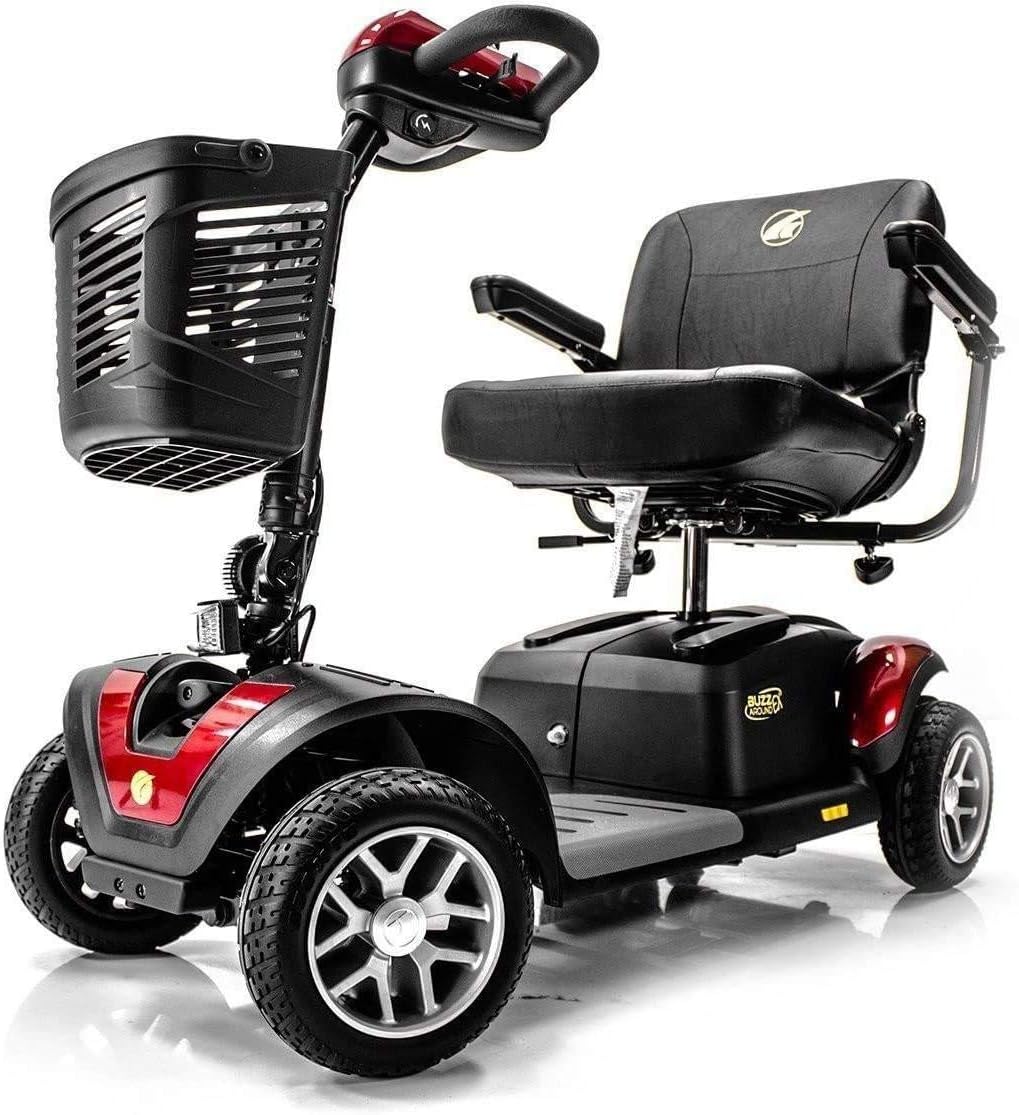
| Golden Technologies Buzzaround EX series | Longer outings and outdoor comfort | Suspension, seat support, and ground clearance | Confirm the version’s specifications and suitability for your terrain |
| EV Rider Transport AF Plus | Travel and compact storage | Automatic folding | Check total lifting weight, battery rules, and transport compatibility |
| WHILL Model C2 | People who may prefer joystick steering | Joystick control and seating support | It is a power wheelchair, not a conventional mobility scooter |
Important: Specifications, accessories, battery configurations, and model availability can change. Verify the exact version with the manufacturer or an authorized dealer before purchasing.
1. Pride Go-Go Elite Traveler Series — For Everyday Errands
A compact travel scooter can be useful for shopping trips, appointments, and outings where walking the entire distance would be tiring.
The Pride Go-Go Elite Traveler range is worth investigating if you want a portable scooter that can be separated into components for transportation. Some configurations in the Go-Go family offer Delta-style tiller controls, which may be easier to operate than a narrow handlebar for certain users.
What to consider if you have arthritis
- Steering: Check whether the specific model has a tiller that you can comfortably operate without tightly gripping or repeatedly twisting your wrists.
- Disassembly: Ask how the scooter separates and how much each individual component weighs.
- Transfers: A swivel seat may make it easier to position yourself for getting on or off, but it does not eliminate the need for safe transfer technique.
- Storage: Measure your vehicle’s trunk and consider whether you can lift the heaviest component without aggravating your joints.
Potential drawbacks
A portable scooter still requires some handling unless you have a suitable lifting or loading solution. Small travel scooters may also be less comfortable on uneven ground than models designed for more demanding outdoor use.
Best for: People who need a compact scooter for errands and have a practical way to transport it.
Before buying: Confirm the precise model name and specifications. The Go-Go Elite Traveler, Elite Traveler Plus, and other versions should not be treated as interchangeable.
🔗 Related Reading: Best Walkers and Rollators for Arthritis: A Complete Review
Product recommendation: Pride Go-Go Elite Traveler series — check the exact model and current specifications before buying.

2. Golden Technologies Buzzaround EX Series — For Comfort on Longer Outings
If you plan to use a scooter outdoors, ride comfort deserves particular attention. Uneven pavement, cracks, and rough paths can transmit vibration through the seat and frame.
The Golden Technologies Buzzaround EX series is worth considering if you need a scooter designed for longer outings and want to compare its suspension, seat, tires, and ground clearance with those of smaller travel scooters.
What to consider if you have arthritis
- Suspension: Check whether the exact version has suspension and whether it is designed for the surfaces you regularly encounter.
- Seat support: Look for sufficient cushioning, a comfortable seat height, and armrests that help rather than obstruct transfers.
- Ground clearance: Appropriate clearance can help with minor surface irregularities, but it does not make a scooter suitable for every trail or uneven surface.
- Battery range: Compare the manufacturer’s stated range with your actual travel needs, allowing for conditions that may reduce it.
Potential drawbacks
A scooter built for comfort and longer outdoor use may be heavier or bulkier than a compact travel model. That can make vehicle transport and storage more difficult.
Solid tires can reduce flat-tire maintenance, while pneumatic tires may provide a different ride feel. Neither type guarantees comfort on its own; suspension, seat design, tire size, and terrain all matter.
Best for: People who prioritize outdoor comfort and need to compare larger or longer-range scooters.
Before buying: Confirm the exact Buzzaround EX version, seat dimensions, weight capacity, battery specifications, and suspension features.
Product recommendation: Golden Technologies Buzzaround EX series — compare the specific model’s comfort and portability features.
3. EV Rider Transport AF Plus — For Folding and Travel
Handling a scooter can be particularly difficult when arthritis affects the fingers, hands, shoulders, or back. A folding scooter may reduce the effort involved in preparing a device for storage, but the word folding does not necessarily mean easy to lift.
The EV Rider Transport AF Plus is an option to investigate if compact storage and an automatic folding mechanism are important to you.
What to consider if you have arthritis
- Folding operation: Find out whether the folding process is fully automatic and whether you can operate the controls comfortably.
- Lifting weight: Check the weight of the scooter in the configuration you would actually lift, including or excluding the battery as applicable.
- Vehicle loading: Determine whether you can load it safely or need a ramp, lift, assistance, or a different transportation arrangement.
- Travel requirements: Airline acceptance depends on the carrier, battery specifications, and current rules. Cruise-line policies may differ as well.
Potential drawbacks
A folding mechanism can reduce the need to disassemble a scooter, but it does not guarantee that the folded device is light enough to lift. Compact models may also have different seating, ride comfort, and range characteristics from larger scooters.
Best for: People who travel frequently and need a scooter that can be stored compactly.
Before buying: Verify the current model specifications, folding procedure, total weight, battery details, and acceptance requirements with your airline or cruise operator.
Product recommendation: EV Rider Transport AF Plus — confirm travel compatibility before booking a trip.

4. WHILL Model C2 — A Joystick-Controlled Power Wheelchair Alternative
A traditional mobility scooter is steered using a tiller. If arthritis makes gripping handles, turning your wrists, or maintaining your arms in a steering position difficult, that control arrangement may not be suitable.
A joystick-controlled power wheelchair is an alternative worth exploring. The WHILL Model C2 is one example of a power wheelchair designed around joystick steering.
What to consider if you have arthritis
- Joystick operation: Test whether you can move the joystick comfortably and accurately without excessive finger, wrist, or shoulder strain.
- Arm support: Check whether the armrests and control position let you relax your shoulders and support your arms comfortably.
- Seating and posture: Consider seat support, adjustability, and whether you can maintain a comfortable position during longer outings.
- Turning and access: Compare the device’s turning space and dimensions with the hallways, doorways, shops, and other locations you use.
Potential drawbacks
A power wheelchair is not automatically easier for every person with arthritis. Joystick sensitivity, positioning, seating, and control placement need to match your abilities. Some power wheelchairs may also be less convenient to transport than a small travel scooter.
Best for: People who have difficulty using a conventional tiller and may benefit from joystick steering.
Before buying: Arrange a professional assessment or demonstration to determine whether the controls, seating, and overall configuration suit your needs.
🔗 Related Reading: Best Hand Therapy Tools for Arthritis: Reviews & Guide
Product recommendation: WHILL Model C2 power wheelchair — investigate control comfort and suitability with a mobility professional.

How to Choose a Mobility Scooter for Arthritis
The features below can make a meaningful difference to everyday usability. Prioritize the ones that match your particular limitations rather than paying for specifications you may not need.
1. Choose Controls You Can Operate Comfortably
Steering controls are especially important if arthritis affects your fingers, thumbs, or wrists.
Some scooters have a Delta-style tiller with curved handles that can offer alternative hand positions. However, this design is not automatically suitable for everyone. You still need enough control to steer, operate the throttle, and use the brakes or other controls as required by that model.
When testing a scooter, ask yourself:
- Can I reach the controls without stretching?
- Can I steer without tightly gripping the handles?
- Can I operate the throttle and other controls repeatedly without discomfort?
- Can I manage the controls with my usual hand position?
- Can I stop the scooter safely and consistently?
If you cannot operate the controls reliably, do not assume that you will get used to them. Try another control arrangement or ask an occupational therapist or mobility specialist about alternatives.
2. Check How the Scooter Is Transported
A scooter that is easy to drive may still be difficult to take along in a vehicle.
Some models separate into components, while others fold. These designs solve different problems, and neither guarantees easy handling.
Before purchasing, check:
- The weight of the heaviest component you must lift.
- Whether the battery must be removed and how difficult that is.
- Whether latches, clips, or release mechanisms require pinching or twisting.
- Whether the folded or disassembled scooter fits your vehicle.
- Whether a ramp, hoist, or help from another person would be necessary.
Practical tip: If lifting is difficult, include the cost and practicality of a vehicle lift or loading ramp in your decision. A slightly larger scooter may be a better choice if you can transport it without repeatedly straining your hands, shoulders, or back.
3. Look for a Comfortable Seat and Easier Transfers
Getting on and off can be just as important as riding.
A swivel seat may help you position yourself before standing or sitting, while suitable seat height and armrests may provide useful support. However, a swivel seat alone does not make a transfer safe or effortless.
Check whether you can:
- Approach the seat without awkward twisting.
- Sit down and stand up with control.
- Move your legs onto and off the scooter’s platform.
- Reach the armrests without stretching.
- Keep the scooter stable during transfers.
If hip or knee arthritis makes standing difficult, ask a qualified professional to assess the seat height and transfer method. Use the scooter’s parking brake and follow the manufacturer’s instructions for safe transfers.
4. Match Suspension and Tires to Your Routes
If you mostly travel through smooth indoor spaces or shopping centres, your needs may differ from those of someone who uses cracked sidewalks and uneven outdoor paths.
Consider the surfaces you actually encounter. Suspension, seat cushioning, wheel size, and tire type can all affect ride comfort.
- Smooth indoor floors: Maneuverability and turning space may matter more than rugged outdoor features.
- Sidewalks and paved paths: Consider ride comfort, ground clearance, and the scooter’s suitability for uneven sections.
- Rougher surfaces: Look for a model explicitly designed for the terrain you intend to use, and stay within its operating limits.
Do not assume that a scooter with suspension can safely handle gravel, steep slopes, grass, or rough trails. Check the manufacturer’s guidance and test the scooter on suitable surfaces before relying on it for regular outings.
5. Choose Enough Battery Range for Your Activities
Manufacturers’ range figures are estimates, not guarantees. Actual range can vary with rider weight, terrain, temperature, battery condition, speed, and how frequently the scooter stops and starts.
Estimate the distance you expect to travel on a typical outing, including the return trip. Then allow a sensible reserve for detours, changes in conditions, and battery aging.
For example, if your planned round trip is 6 miles, a scooter advertised with a 6-mile maximum range would leave little margin. A model with a higher stated range may be more appropriate, depending on real-world performance.
Before buying, check:
- The manufacturer’s estimated range.
- Battery charging time and charging requirements.
- Whether you can manage the charger and battery connections.
- The availability and cost of replacement batteries.
- Whether the battery can be charged conveniently at home.
Do not rely on the maximum advertised range as a promise of how far the scooter will travel on every trip.
6. Check Weight Capacity, Dimensions, and Storage
A scooter must fit the rider and the spaces where it will be used.
Confirm the manufacturer’s weight capacity and measure narrow doorways, storage areas, vehicle openings, and any other tight spaces that matter. If you intend to use the scooter indoors, check its turning requirements against your home layout.
Also consider where the scooter will be stored and charged. A model that is difficult to park, move, or plug in may become inconvenient even if it performs well outdoors.
Mobility Scooter or Power Wheelchair: Which Is Better for Arthritis?
Neither option is universally better. The main difference is how the device is controlled and how well it supports your individual mobility needs.
| Consideration | Mobility scooter | Power wheelchair |
|---|---|---|
| Steering | Usually a tiller with hand controls | Often a joystick or another specialized control |
| Hand and wrist limitations | May be difficult if gripping or operating the tiller is painful | May be an option if joystick operation is easier |
| Seating and positioning | Varies by model, with many designed for seated travel | May offer different seating and positioning options |
| Transport | Some models separate or fold for vehicle transport | Portability varies; some models require specialized transport |
| Best next step | Test steering, controls, and transfers | Test controls, seating, and positioning with professional guidance |
Consider a mobility scooter if you can operate its steering controls comfortably and transfer onto the seat safely. Consider a power wheelchair assessment if your hand, wrist, shoulder, posture, or balance limitations make a scooter difficult to use.
An occupational therapist or mobility specialist can help assess the device, controls, seating, and home environment. If you have significant vision, balance, cognitive, or upper-body limitations, ask for an individualized safety assessment before using either device.
Frequently Asked Questions
Can using a mobility scooter make my muscles weaker?
A scooter can reduce the amount of walking you do, so it is worth balancing mobility assistance with the activity that is appropriate for you. A scooter may help you conserve energy for daily tasks and activities, but it should not be treated as a substitute for exercise or rehabilitation when those are appropriate.
Ask your healthcare professional how to balance walking, activity, rest, and mobility-device use for your needs.
Are folding mobility scooters automatically approved for air travel?
No. Acceptance depends on the scooter, its battery, the airline’s current rules, and the travel arrangements. Contact the airline before booking and provide the exact model and battery information. Do not rely solely on a seller’s general claim that a scooter is airline-friendly.
Which tires are best for arthritis?
There is no single best tire for every rider. Pneumatic tires may offer a different ride feel but require maintenance and can puncture. Solid tires avoid flats but may transmit more vibration, depending on the scooter. Suspension and seat cushioning also affect comfort.
Compare the complete setup and test the scooter on the types of surfaces you use.
Will Medicare or private insurance pay for a mobility scooter?
Coverage depends on your location, insurance plan, eligibility requirements, and the device’s intended use. In the United States, Medicare coverage for mobility equipment has specific medical-necessity and documentation requirements; a doctor’s recommendation alone does not guarantee payment.
Contact your insurer or relevant public benefits program before purchasing. Ask whether an assessment, prescription, approved supplier, or prior authorization is required. Since coverage rules differ by country and plan, confirm the requirements that apply to you.
What makes a scooter easier to get on and off?
Seat height, seat design, armrest placement, foot-platform layout, and the user’s mobility all matter. A swivel seat may help some people position themselves, but it will not solve every transfer difficulty.
Try the actual model before buying, and seek professional advice if getting up or sitting down is difficult or unsafe.
Can I use a mobility scooter inside my home?
Some compact scooters can be used indoors, but dimensions and turning space are important. Measure doorways and hallways, check the scooter’s turning requirements, and consider rugs, thresholds, furniture, and other obstacles. Ensure there is enough space to turn and transfer safely.
Should I buy a scooter online without trying it first?
If possible, test the scooter before purchasing. Online specifications cannot tell you whether the steering controls, seat, armrests, or transfer height will be comfortable for you. A local mobility-equipment dealer may be able to arrange a demonstration and explain servicing, warranty, battery replacement, and transport options.
Final Thoughts: Choose the Scooter That Fits Your Life
A mobility scooter can make outings more manageable when arthritis limits how far or how comfortably you can walk. The right choice depends on more than range or price: steering, transfers, seating, portability, and battery handling all affect whether the device will work for you in everyday life.
Start by identifying the tasks that have become difficult. Then compare a few suitable models, test their controls and seating if possible, and confirm the specifications with the manufacturer or a qualified dealer.
The best scooter is one you can operate safely, transport realistically, and use comfortably for the activities that matter to you.
Medical Disclaimer: This article is for informational purposes only and does not constitute medical advice. Always consult your doctor, rheumatologist, or occupational therapist before making changes to how you manage your arthritis.
