
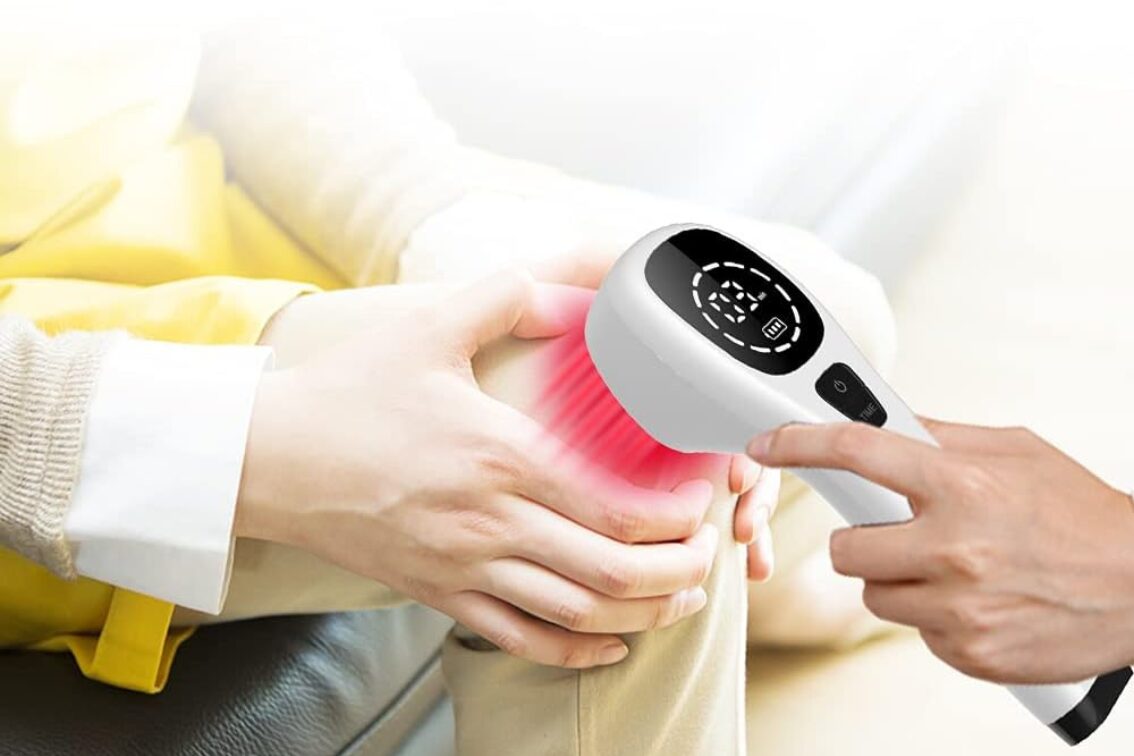
Disclosure: As an Amazon Associate, Arthritis Wares earns from qualifying purchases at no extra cost to you. We are not paid or sponsored by any manufacturer. Affiliate links help support our work.
If you have been researching light-based treatments for arthritis, you have probably encountered terms such as cold laser therapy, low-level laser therapy (LLLT), low-level light therapy, red light therapy, near-infrared therapy, and photobiomodulation (PBM).
These terms can make the treatments sound interchangeable. They are related, but they are not necessarily the same thing.
The important differences include the type of light source, wavelengths, treatment area, delivery method, treatment settings, and whether the treatment is typically provided by a professional or used at home.
For someone with arthritis, the practical question is not simply:
“Which is better—cold laser or red light therapy?”
A better question is:
“What are the differences, what does the research actually show, and which approach makes sense for the way I want to use light therapy?”
This guide explains the differences without assuming that one treatment is automatically better than the other.
Cold Laser vs. Red Light Therapy: Quick Answer
Cold laser therapy generally refers to low-level laser treatment in which a laser light source delivers light to a relatively targeted area. It is commonly associated with professional treatment.
Red light therapy usually refers to photobiomodulation delivered by LEDs, often using visible red light, near-infrared light, or both. Consumer devices are widely available for home use.
Both can fall under the broader category of photobiomodulation, but the specific device, wavelength, power, treatment time, and delivery method matter.
For practical purposes:
| If you’re looking for… | The more relevant option may be… |
|---|---|
| Professionally administered treatment | Laser-based PBM/LLLT |
| A home-use option | LED red/NIR therapy |
| Treatment focused on a specific area | Laser-based treatment or a small LED device |
| Broader home coverage | LED panel, pad, or wrap |
| Someone else to administer the treatment | Professional laser/PBM treatment |
| Something you can use as part of a home routine | Consumer LED device |
This is a comparison of how the treatments are typically delivered, not a claim that one produces better arthritis relief.
What Is Photobiomodulation?
Photobiomodulation (PBM) is the broader term used for therapeutic applications of specific wavelengths of light.
Depending on the treatment and device, PBM can involve laser or LED light sources.
Researchers have investigated PBM for a variety of conditions, including musculoskeletal pain and knee osteoarthritis.
The terminology can therefore become confusing. A treatment may be described as:
- Photobiomodulation
- Low-level laser therapy (LLLT)
- Low-level light therapy
- Red light therapy
- Near-infrared therapy
- Cold laser therapy
These terms should not automatically be treated as exact synonyms.
The details of the treatment matter.
What Is Cold Laser Therapy?
Cold laser therapy is a common name for certain forms of low-level laser therapy.
The word “cold” can be misleading. It does not mean the treatment uses cold temperatures.
Instead, it distinguishes lower-intensity therapeutic laser applications from high-powered surgical lasers that are designed to cut, vaporize, or heat tissue.
Laser-based PBM uses a laser light source to deliver specific wavelengths of light to the treatment area.
Why Is It Called Laser Therapy?
The important distinction is the light source.
A laser produces a highly directed beam of light. This allows the treatment provider to position the light over a particular area rather than illuminating a broad region.
That targeted delivery can be useful when treatment is focused on a particular joint or small area.
However, targeted delivery does not automatically mean greater arthritis relief.
The outcome depends on factors such as:
- The condition being treated
- Wavelength
- Power and energy delivered
- Treatment duration
- Number of treatment sessions
- How the device is positioned
- The specific treatment protocol
A laser device being more precise does not by itself establish that it will work better.
What Is Red Light Therapy?
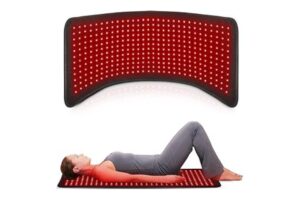
Red light therapy generally uses light-emitting diodes (LEDs) rather than a laser.
Consumer devices may use:
- Visible red light
- Near-infrared (NIR) light
- A combination of red and NIR wavelengths
LED devices can spread light over a larger area than a tightly directed laser beam.
That makes them particularly practical for home use.
Home red-light products include:
- Handheld devices
- Flexible wraps
- Pads
- Small panels
- Larger panels
- Wearable devices
The amount of an area that can be treated at one time depends on the design and specifications of the particular device.
Red Light vs. Near-Infrared Light
Red light is visible to the human eye.
Near-infrared light is outside the visible range.
Many consumer devices combine the two.
You will often see wavelengths such as 630–660 nm associated with visible red light and wavelengths in the 800–900 nm range associated with near-infrared devices.
However, there is no single wavelength that has been established as the universally best choice for arthritis.
The wavelength is only one part of the treatment. Power, dose, treatment time, distance from the skin, treatment area, and the specific condition being treated can also matter.
For a more detailed look at the evidence behind red light therapy itself, see:
Red Light Therapy for Arthritis: What the Research Really Shows
What Does the Research Say About Light Therapy for Arthritis?
This is where the distinction between the technology and the evidence becomes important.
Research suggests that photobiomodulation may reduce pain in some people with knee osteoarthritis, but the evidence is not strong enough to describe light therapy as a proven stand-alone arthritis treatment.
A 2024 systematic review and meta-analysis examined 10 placebo-controlled studies involving 542 people with knee osteoarthritis. It found a statistically significant reduction in pain at rest compared with placebo treatment.
However, all of the included studies were judged to have unclear-to-high risk of bias, and the certainty of the evidence for the pain result was rated very low.
The researchers concluded that PBM may reduce pain but that the evidence was not strong enough to recommend it as an isolated treatment.
Another 2024 systematic review and network meta-analysis examined 13 studies involving 673 people with knee osteoarthritis. It also found an improvement in pain compared with sham treatment, but did not find significant improvements in physical function or stiffness.
The researchers also found differences in outcomes between wavelengths, but the quality of evidence for the wavelength comparisons was low or very low.
- Oliveira et al., 2024 — PubMed: 10 studies, 542 participants; pain improvement versus placebo, but very low-certainty evidence. PubMed: Effectiveness of Photobiomodulation in Knee Osteoarthritis
- Fan et al., 2024 — PubMed: 13 studies, 673 participants; pain improvement versus sham, but no significant improvement in stiffness or function; evidence quality low/very low. PubMed: Low-Level Light Therapy and Knee Osteoarthritis
The practical takeaway: light therapy is promising, particularly for pain associated with knee osteoarthritis, but the evidence is not strong enough to say that every light therapy device will work or that one type of device is universally best.
Does the Research Prove That Cold Laser Is Better Than Red Light?
No.
This is an important distinction.
Some clinical studies of photobiomodulation use laser light, while consumer red-light devices commonly use LEDs. But you cannot look at a study using a particular laser treatment protocol and assume that an inexpensive LED panel or handheld device will produce the same results.
The opposite is also true.
The fact that a home LED device uses a wavelength that appears in research does not mean that the particular product has been proven to treat arthritis.
Treatment parameters can differ substantially between studies and consumer products.
For that reason, it is better to think of the research as evidence about photobiomodulation under particular conditions, rather than proof that every product marketed as “red light therapy” or “cold laser” will provide the same benefit.
Cold Laser vs. Red Light Therapy: Key Differences
| Feature | Laser-Based PBM/LLLT | Red/NIR LED Therapy |
|---|---|---|
| Light source | Laser | LEDs |
| Typical delivery | More concentrated/targeted | Broader illumination |
| Common setting | Often professional | Widely available for home use |
| Treatment area | Often localized | Small to large, depending on device |
| Convenience | Usually requires an appointment | Can be used at home |
| Positioning | Usually handled by provider | User positions device |
| Product availability | More limited for consumers | Extensive consumer market |
| Main practical advantage | Targeted professional application | Convenience and coverage |
| Evidence limitation | Results vary by protocol | Consumer devices vary widely |
The table describes typical characteristics. It does not establish that one method is more effective for arthritis.
Does Laser Light Penetrate Deeper Than Red Light?
This is one of the most common claims in light-therapy marketing, but it deserves a more careful explanation.
Light behaves differently as it passes through tissue. Wavelength, tissue composition, distance, power, and other factors affect how much light remains available at different depths.
Near-infrared wavelengths are often selected in PBM research because they can interact with tissue differently from visible red light.
But saying that a wavelength “penetrates deeper” does not prove that enough light reaches an arthritic joint to produce a therapeutic effect.
Nor does deeper penetration automatically mean better arthritis relief.
A large joint such as the knee presents a very different challenge from a small area such as a finger.
This is one reason to be skeptical of consumer advertising that promises to “reach deep into the joint” without providing meaningful information about the device’s treatment parameters.
Is Near-Infrared Better Than Red Light for Arthritis?
Not necessarily.
A 2024 network meta-analysis of low-level light therapy for knee osteoarthritis found that certain near-infrared wavelengths showed potential for reducing pain. The analysis identified 904–905 nm as having the highest ranking among the wavelengths studied.
However, the researchers also rated the evidence for these comparisons as low quality.
That means the study does not establish 904–905 nm as the universally best wavelength for arthritis.
It is better to look at wavelength as one part of the overall treatment rather than using wavelength alone to choose a device.
Which Is More Practical for One Painful Joint?
If your symptoms are concentrated in one area, both approaches may be practical, but they have different advantages.
Professional laser-based treatment
A professional can position the device over specific areas and follow a defined treatment protocol.
This may appeal to someone who wants treatment administered rather than having to select, position, and operate a home device.
Home LED therapy
A small handheld LED device can also be positioned over a localized area.
The advantage is convenience.
You can use it at home without scheduling appointments, assuming the device is appropriate for the area and you follow its instructions.
The tradeoff is that you are responsible for positioning and using the device correctly.
What If You Have Arthritis in Several Areas?
This is where larger LED devices can have a practical advantage.
Someone dealing with discomfort in the hands, knees, and shoulders may prefer a home device that can be repositioned or a larger panel that covers more area.
However, treating multiple areas does not necessarily mean a larger device is better.
A larger panel may:
- Cost more
- Require more space
- Be harder to position
- Take longer to set up
A small handheld device may be easier to store and use but requires you to treat one area at a time.
Think about how you will actually use the device, not simply how large or powerful the product appears in an advertisement.
What About Knee Arthritis?
Knee arthritis is one of the areas where photobiomodulation has been studied most extensively.
Research has investigated both laser-based and other low-level light approaches for knee osteoarthritis.
The evidence suggests that PBM may help reduce pain in some people, but the certainty of the evidence remains limited.
The size and depth of the knee also make device design important.
A small handheld device may require repositioning over several parts of the knee.
A larger panel may cover more of the area at once.
A flexible wrap may make positioning easier because the light source stays close to the treatment area.
None of those design differences proves that one device will provide better arthritis relief.
What About Arthritis in the Hands and Fingers?
Hands and fingers are smaller treatment areas, which can make positioning easier.
For home LED therapy, a small handheld device or wrap may be more practical than a large panel.
Look for features that make repeated use easier, especially if arthritis affects your hands.
For example:
- Simple controls
- Easy-to-read settings
- Lightweight construction
- A way to position the device without continuously gripping it
- Clear treatment instructions
- A treatment area appropriate for the joints you want to address
The easiest device to use consistently may be more practical than a product with impressive specifications that is difficult to operate.
What Should You Look for in a Home Red Light Therapy Device?
If you decide to explore a home red or near-infrared device, don’t choose solely on the number of LEDs or phrases such as “medical grade.”
1. Clearly Stated Wavelengths
Look for actual wavelength information rather than vague descriptions such as “full spectrum.”
If the device includes near-infrared light, the manufacturer should identify the NIR wavelength.
2. Appropriate Treatment Area
Think about the joints you actually want to treat.
A handheld device may make sense for a small area.
A wrap, pad, or panel may be more convenient for a knee, shoulder, or larger area.
3. Clear Treatment Instructions
The manufacturer should explain how long to use the device, how often to use it, and how far away it should be positioned when distance matters.
Don’t assume that longer treatment times produce better results.
4. Easy Positioning
If you have hand arthritis, consider whether you will have to hold the device throughout every treatment.
A device that can rest against a surface or be positioned without constant gripping may be much easier to use.
5. Realistic Marketing
Be skeptical of claims that a device can:
- Cure arthritis
- Rebuild damaged cartilage
- Reverse arthritis
- Guarantee pain relief
- Replace medical treatment
Those are claims that go far beyond what the current evidence allows.
One Consumer Red Light Device Worth a Look
If you decide to try home red-light therapy, I would look for a device that clearly states its wavelengths and provides practical treatment instructions rather than choosing solely on price, LED count, or marketing language.
One example is the Toponechoice Red Light Therapy Device, which currently lists 650 nm red light and 808 nm near-infrared light. Its handheld design makes it more suited to targeted areas than a large full-body panel.
Important: This is not a claim that this particular device has been proven to treat arthritis.
The clinical research on photobiomodulation uses different devices, wavelengths, doses, and treatment protocols. Results from those studies cannot automatically be applied to a particular consumer product.
It is simply an example of a home device where the advertised wavelengths are clearly stated and the format may be practical for someone interested in treating a smaller area.

What About Buying a Home “Cold Laser”?
This is where I would be especially cautious.
Online marketplaces contain products marketed as “cold laser,” “low-level laser,” “laser therapy,” or combinations of laser and red light.
The label alone does not establish that a consumer device delivers the same treatment used in a clinical study.
A product may use laser diodes, LEDs, or a combination of technologies. It may also have very different power, dosage, treatment time, and treatment-area specifications from the equipment used in clinical research.
Before buying a home device marketed as a cold laser, ask:
- What type of light source does it actually use?
- What wavelengths does it produce?
- Are the treatment parameters clearly stated?
- Is the intended use clearly explained?
- Are the instructions specific enough to follow safely?
- Is there credible information about the particular device rather than simply general claims about laser therapy?
If those answers are difficult to find, I would be reluctant to recommend the product.
For that reason, Arthritis Wares does not recommend treating an inexpensive marketplace “cold laser” as equivalent to professional laser therapy.
Which Is Better for Arthritis?
There isn’t enough evidence to give a universal winner.
Instead, consider what you value most.
Laser-based treatment may make more sense if:
- You want a professionally administered treatment.
- Your symptoms are concentrated in a particular area.
- You prefer not to choose and operate a home device yourself.
- You are willing to attend treatment sessions.
Home LED red/NIR therapy may make more sense if:
- You want a home-use option.
- Convenience is important.
- You want to use the device as part of a regular routine.
- You want to treat different areas at different times.
- You prefer to avoid repeated appointments.
These are practical differences, not proof that one approach will produce better arthritis relief.
What Results Should You Expect?
It is important to keep expectations realistic.
The current evidence suggests that photobiomodulation may help reduce pain for some people with knee osteoarthritis, but it should be considered a potential supportive therapy, not a cure.
You may notice:
- Less discomfort
- A temporary change in symptoms
- Little or no noticeable difference
Results may vary depending on:
- The type of arthritis
- The joint being treated
- The treatment protocol
- The device
- Wavelength
- Treatment dose
- Frequency of treatment
- Individual response
If you try a home device, consider tracking your symptoms rather than relying entirely on memory.
For example, record your discomfort before treatment and later in the day for several sessions. This can help you determine whether the device appears to be making a meaningful difference.
Can Light Therapy Replace Other Arthritis Treatments?
Light therapy should not be viewed as a replacement for appropriate arthritis care.
Depending on the type of arthritis you have, management may include:
- Exercise
- Physical therapy
- Activity modification
- Weight management when appropriate
- Heat or cold
- Medications
- Assistive devices
- Other treatments recommended by a healthcare professional
A light therapy device, if appropriate, may be considered one part of a broader approach.
If you have been diagnosed with arthritis and are considering adding a new treatment, discuss it with your doctor, rheumatologist, physical therapist, or another qualified healthcare professional when appropriate.
Cold Laser vs. Red Light Therapy: The Bottom Line
Cold laser therapy and consumer red light therapy are related but they are not interchangeable treatments.
Laser-based photobiomodulation generally uses a laser light source and is commonly delivered in a more targeted, professional setting.
Consumer red and near-infrared devices generally use LEDs and offer the convenience of home treatment over areas ranging from a small joint to a larger region of the body.
Research suggests that photobiomodulation may help reduce pain associated with knee osteoarthritis, but the evidence remains limited and does not establish a universally best device, wavelength, or delivery method.
If you are considering home red light therapy, focus on clear specifications, realistic claims, appropriate treatment area, ease of use, and manufacturer instructions rather than assuming that the most powerful-looking or expensive device will work best.
And if you are considering a product marketed as a “cold laser,” remember that an inexpensive consumer device should not automatically be treated as equivalent to professional laser therapy.
Practical tools. No hype. That’s the approach worth taking with light therapy too.
Frequently Asked Questions
Is cold laser therapy the same as red light therapy?
No. They are related forms of light-based therapy, and both may fall under the broader category of photobiomodulation. However, laser-based treatment uses a laser light source, while most consumer red light therapy devices use LEDs.
Is cold laser therapy better than red light therapy for arthritis?
There is not enough evidence to say that one is universally better. Laser-based treatment offers more targeted delivery and is commonly administered professionally, while LED devices are widely available for home use. The specific treatment protocol and condition matter.
Can red light therapy reach a knee joint?
Some wavelengths of light can travel through biological tissue, but the amount of light reaching a deeper structure depends on factors such as wavelength, power, distance, treatment time, and the tissue between the device and the target.
Be cautious about claims that a particular consumer device is proven to deliver a therapeutic dose directly to an arthritic joint.
Is near-infrared light better than red light for arthritis?
Not necessarily. Near-infrared wavelengths are often studied for their interaction with tissue, and some research has found potential benefits from particular NIR wavelengths. However, the evidence is not strong enough to establish one wavelength as the best choice for everyone with arthritis.
Can I use red light therapy every day?
Follow the instructions provided with your specific device. Treatment schedules vary, and more exposure is not necessarily better.
Does cold laser therapy hurt?
Low-level laser treatment is non-invasive and is not intended to cut or burn tissue. However, the experience can vary depending on the equipment and treatment being provided.
Is red light therapy safe for people with arthritis?
The safety of light therapy depends on the particular device and the individual using it. Follow the manufacturer’s instructions. If you have concerns about light sensitivity, a medical condition, or medications that may increase light sensitivity, discuss the treatment with a qualified healthcare professional before use.
Can I buy a cold laser for home use?
Consumer products marketed as cold lasers are available, but they should not automatically be considered equivalent to professional laser therapy.
Look for clear information about the light source, wavelength, treatment parameters, intended use, and instructions. If those details are unclear, it may be difficult to judge whether the product is appropriate.
Related Reading
📌 Red Light Therapy for Arthritis: What the Research Really Shows
📌 Heat vs. Cold Therapy for Arthritis
📌 Arthritis Supplies & Tools: Complete Guide to Daily Living Aids
Medical Disclaimer: This article is for informational purposes only and does not constitute medical advice. Always consult your doctor, rheumatologist, or occupational therapist before making changes to how you manage your arthritis.
