
*This post may contain affiliate links, from which we may earn a small commission at no extra cost to you.*
A massage chair can feel like a luxury—until joint pain, stiffness, or daily stress makes it feel like a necessity.
If you live with arthritis or chronic muscle tension, the idea of having relief available at home is incredibly appealing. But once you start shopping, it quickly becomes overwhelming. Features, tracks, rollers, heat zones—it’s a lot.
In this guide, I’ll walk you through what actually matters when choosing a massage chair, especially if pain relief and daily comfort are your priorities.
Why a Massage Chair Is Worth It
Massage chairs do far more than help you relax after a long day. For many people, they’re part of an ongoing pain-management routine.
Here’s how a massage chair can help:
- Relieve muscle tension and joint stiffness, especially in the back, hips, and legs
- Support arthritis comfort with controlled, repeatable pressure
- Improve circulation, which may help reduce swelling and heaviness
- Encourage better posture by relaxing tight supporting muscles
- Reduce stress, which often worsens pain flare-ups
Many people already use complementary tools like massage guns for targeted relief, heating pads, or stretching aids. A massage chair simply brings several of these benefits together in one place for consistent, hands-free use.
Key Features to Look For in a Massage Chair
Not every feature is necessary. The goal is choosing features that support your body and pain level, not buying the most expensive option available.
1. Massage Techniques
Most massage chairs include a combination of:
- Kneading: Helpful for tight shoulders and chronic back tension
- Shiatsu: Focused pressure points for stress and stiffness
- Rolling: Gentle spinal movement that supports posture
- Tapping: Encourages circulation and loosens rigid muscles
- Air compression: Uses airbags to gently squeeze calves, feet, arms, and hips
If you deal with arthritis, adjustability matters more than intensity. Gentle, controlled pressure is usually best.
2. Track Systems (Very Important)
- S-Track: Follows the natural curve of your spine
- L-Track: Extends from the neck down through the hips and thighs
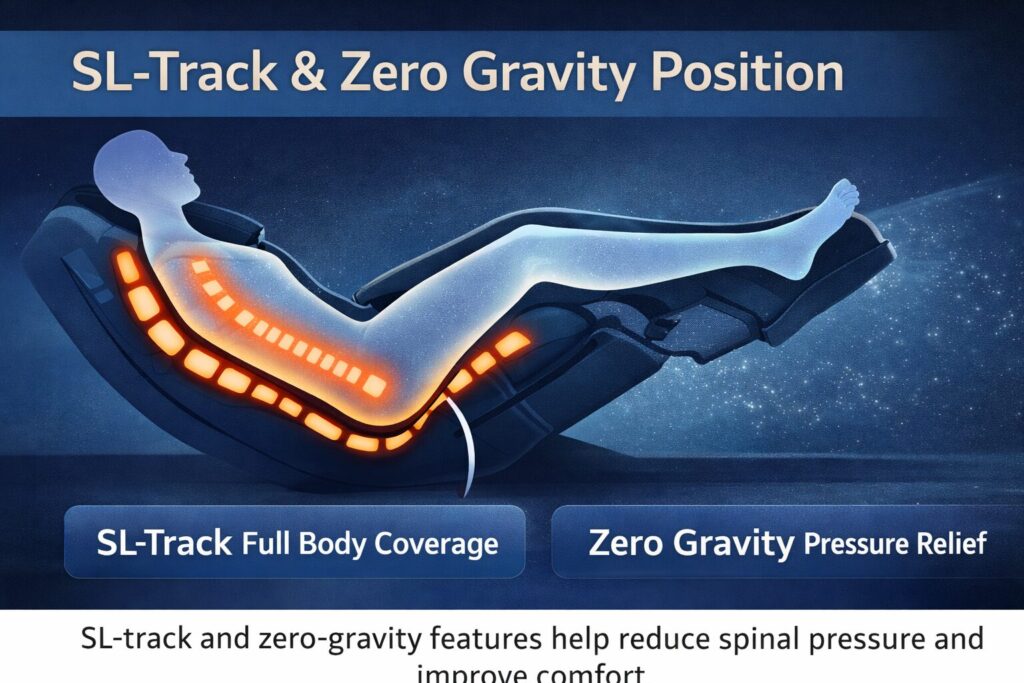
- SL-Track: Combines both for fuller coverage
If lower-back or hip discomfort is a major issue for you, SL-track chairs tend to provide better support. Some people also combine massage chair use with a back stretcher designed to ease lower-back pressure for added spinal relief between sessions.
3. Zero-Gravity Reclining
Zero-gravity positioning elevates your legs and reduces pressure on the spine. This can:
- Make massage feel deeper without increasing force
- Improve circulation
- Reduce lower-back compression
It’s especially helpful for people who struggle with back pain or stiffness after long periods of sitting.
4. Heat Therapy
Heat relaxes muscles and increases blood flow, making massage more effective.
Most chairs focus heat on the lower back, while some also warm the legs or calves. If heat therapy has already helped you manage pain, you may also benefit from combining massage with other heat-based arthritis pain relief options on rest days.
5. Body Scanning Technology
Body scanning allows the chair to adjust roller placement based on your height and shape. This helps prevent uncomfortable pressure points and improves consistency.
6. Adjustability and Controls
Look for chairs that allow you to:
- Adjust intensity and speed
- Focus on specific zones
- Save preferred programs
Remote or app controls are helpful, especially if hand strength or dexterity is limited.
7. Space-Saving Design
If space is tight, choose a wall-hugging design that slides forward as it reclines. This fits well into many arthritis-friendly home setups without needing major room changes.
Massage Chair Budget Breakdown
Entry-Level ($500–$2,000)
Best for: Occasional relaxation and mild stiffness
- Basic massage techniques
- Limited heat
- Minimal customization
Mid-Range ($2,000–$5,000)
Best for: Daily use, arthritis comfort, chronic tension
- SL-Track systems
- Zero-gravity reclining
- Body scanning
- Better cushioning
This range offers the best balance of comfort, durability, and value for most people.
High-End ($5,000+)
Best for: Full-body relief and long sessions
- Advanced 3D or 4D rollers
- Highly customizable programs
- Premium materials
Step-by-Step: How to Choose the Right Massage Chair
- Identify your main pain areas (back, hips, legs, or full body)
- Decide how often you’ll use it (daily vs occasional)
- Set a realistic budget
- Check height range, weight limits, and room size
- Review warranty and return policies
Many people pair massage chairs with smaller tools—like hand massagers that use compression and heat—to manage localized discomfort throughout the day.
Recommended Massage Chairs by Category
Best Entry-Level Option
Real Relax Massage Chair
Best for: Light daily relaxation
- Heat therapy
- Zero-gravity reclining
- App control
Good for beginners, though customization is limited for more complex pain needs.

Best Mid-Range Choice
MYNTA Full-Body SL-Track Massage Chair
Best for: Arthritis comfort and daily stiffness
- SL-Track coverage
- Zero-gravity positioning
- Body scanning
- Calf and foot massage
This is a strong choice for people who want reliable relief without stepping into luxury pricing.

Best High-End Option
Osaki OS-4D Pro Maestro
Best for: Full-body relief and premium comfort
- 4D rollers
- Advanced customization
- Deep but adjustable massage
Ideal for experienced users who want maximum control.

Quick Comparison Table
| Feature | Real Relax | MYNTA | Osaki Maestro |
|---|---|---|---|
| Price Tier | Entry | Mid | High |
| Track Type | S-Track | SL-Track | SL-Track |
| Zero Gravity | Yes | Yes | Yes |
| Heat Therapy | Yes | Yes | Yes |
| Customization | Basic | Moderate | Advanced |
| Best For | Light relaxation | Daily arthritis comfort | Full-body relief |
Frequently Asked Questions
Can you use a massage chair every day?
Yes. Most people benefit from 15–30 minutes per session. Start gently and increase as your body adjusts.
Are massage chairs safe for arthritis?
Generally yes when used at lower intensities. Avoid aggressive settings during flare-ups.
Do massage chairs help circulation?
Massage and compression can improve circulation, especially in the legs and feet. This pairs well with other circulation-support tools.
Are massage chairs good for seniors?
Yes. Look for easy controls, gentle programs, and supportive seating.
How much space do massage chairs need?
Many modern chairs only need a few inches of clearance thanks to space-saving designs.
Final Thoughts
Choosing a massage chair doesn’t have to feel overwhelming. When you focus on your pain needs, the right features, and realistic expectations, a massage chair can become a valuable part of your daily comfort routine.
If you already use tools like massage guns, heat therapy, or supportive home modifications, a massage chair can complement those strategies beautifully.