
*This post may contain affiliate links, from which we may earn a small commission at no extra cost to you.*
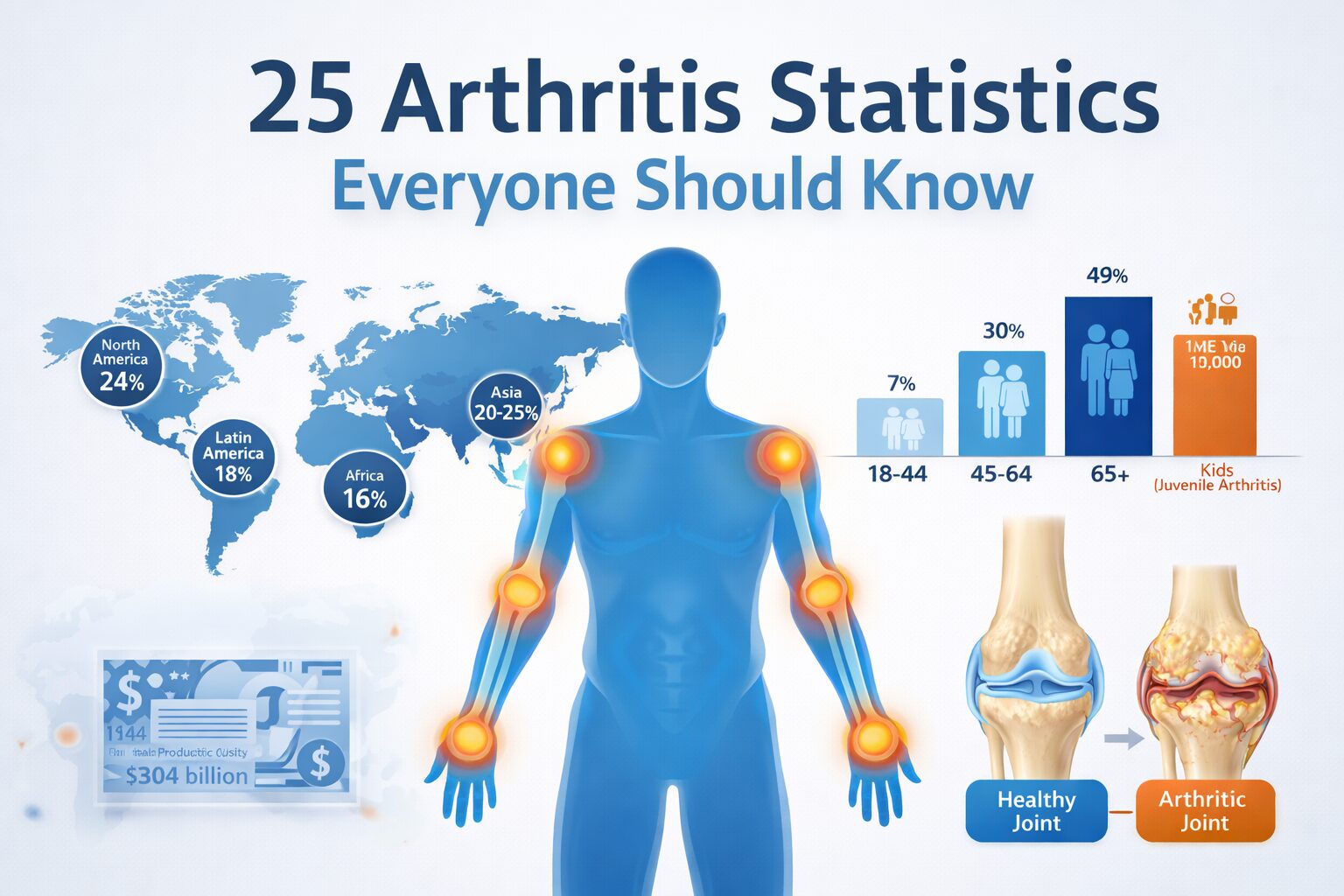
Arthritis is one of the most common causes of chronic pain and disability worldwide. It affects people of all ages, from young adults to seniors, and can influence everything from mobility and sleep to work and daily activities.
Understanding the numbers behind arthritis helps highlight just how widespread this condition is—and why tools, lifestyle adjustments, and proper care can make such a meaningful difference.
Below are 25 important arthritis statistics that reveal the scale of the condition and its impact on everyday life.
Journalist tip: If you’re writing about arthritis, feel free to reference these statistics with attribution.
Quick Arthritis Facts
- Over 350 million people worldwide live with arthritis.
- About 1 in 4 adults in the United States has arthritis.
- Arthritis is a leading cause of disability globally.
- Osteoarthritis is the most common type of arthritis.
- Arthritis-related healthcare costs exceed $300 billion annually in the U.S.
Global Arthritis Statistics
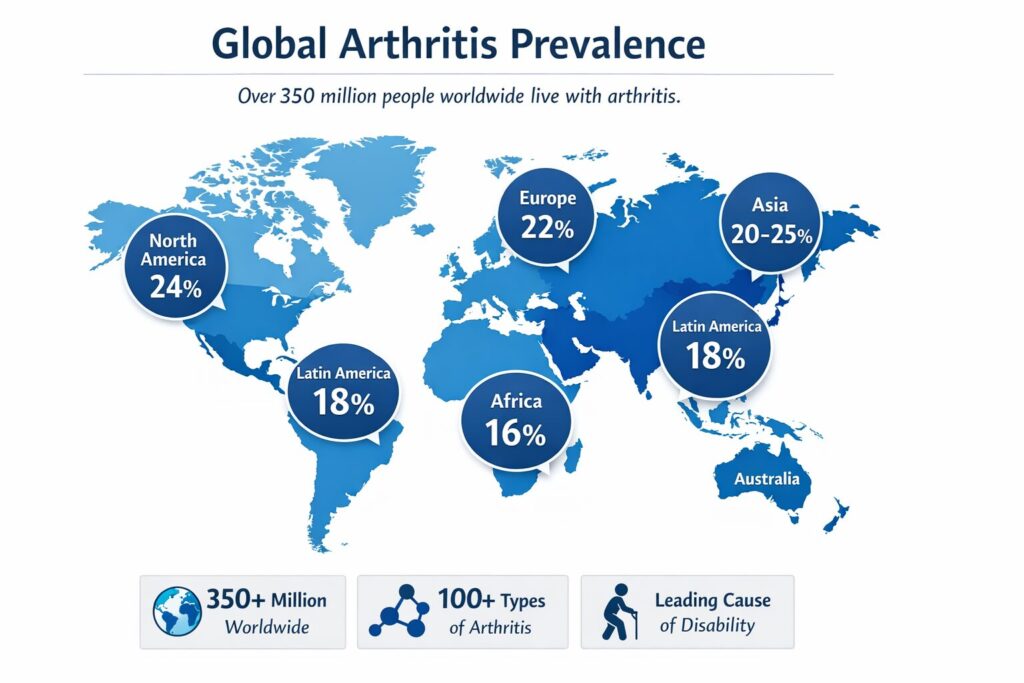
1. Arthritis affects more than 350 million people worldwide.
Arthritis is one of the most common chronic health conditions globally, affecting hundreds of millions of people across all age groups.
📊 Statistic:
More than 350 million people worldwide live with arthritis.
📎 Source: Global Burden of Disease Study
Cite This Statistic
Arthritis affects over 350 million people worldwide.
Source: Arthritiswares.com – 25 Arthritis Statistics Everyone Should Know
https://arthritiswares.com/arthritis-statistics/
2. Over 100 different types of arthritis exist.
Common forms include osteoarthritis, rheumatoid arthritis, gout, lupus, and psoriatic arthritis.
3. Osteoarthritis is the most common form of arthritis.
It accounts for the majority of arthritis cases globally.
4. Rheumatoid arthritis affects roughly 1% of the world’s population.
Unlike osteoarthritis, rheumatoid arthritis is an autoimmune disease.
5. Arthritis prevalence continues to increase as populations age.
Longer life expectancy means more people develop joint degeneration over time.
Arthritis in North America
6. About 1 in 4 adults in the United States has arthritis.
📊 Statistic:
More than 58 million adults in the United States are living with doctor-diagnosed arthritis, representing about 1 in 4 adults.
📎 Source: U.S. Centers for Disease Control and Prevention (CDC)
Cite This Statistic
Over 58 million adults in the United States have arthritis.
Source: Arthritiswares.com – 25 Arthritis Statistics Everyone Should Know
https://arthritiswares.com/arthritis-statistics/
7. Arthritis affects over 6 million Canadians.
It is one of the most common chronic diseases in Canada.
8. Arthritis is the leading cause of disability among adults in the United States.
📊 Statistic:
About 24 million adults in the United States experience activity limitations due to arthritis, making everyday tasks such as gripping objects, walking, lifting, or climbing stairs more difficult.
📎 Source: U.S. Centers for Disease Control and Prevention (CDC)
Cite This Statistic
Arthritis is the leading cause of disability among adults in the United States.
Source: Arthritiswares.com – 25 Arthritis Statistics Everyone Should Know
https://arthritiswares.com/arthritis-statistics/
Many people reduce joint strain by using supportive mobility aids and ergonomic tools designed for arthritis.
9. By 2040, arthritis cases in the U.S. are projected to reach nearly 80 million.
This increase is largely due to aging populations and longer lifespans.
10. Women are more likely to develop arthritis than men.
Several forms of arthritis—including rheumatoid arthritis—are significantly more common in women.
Arthritis by Age
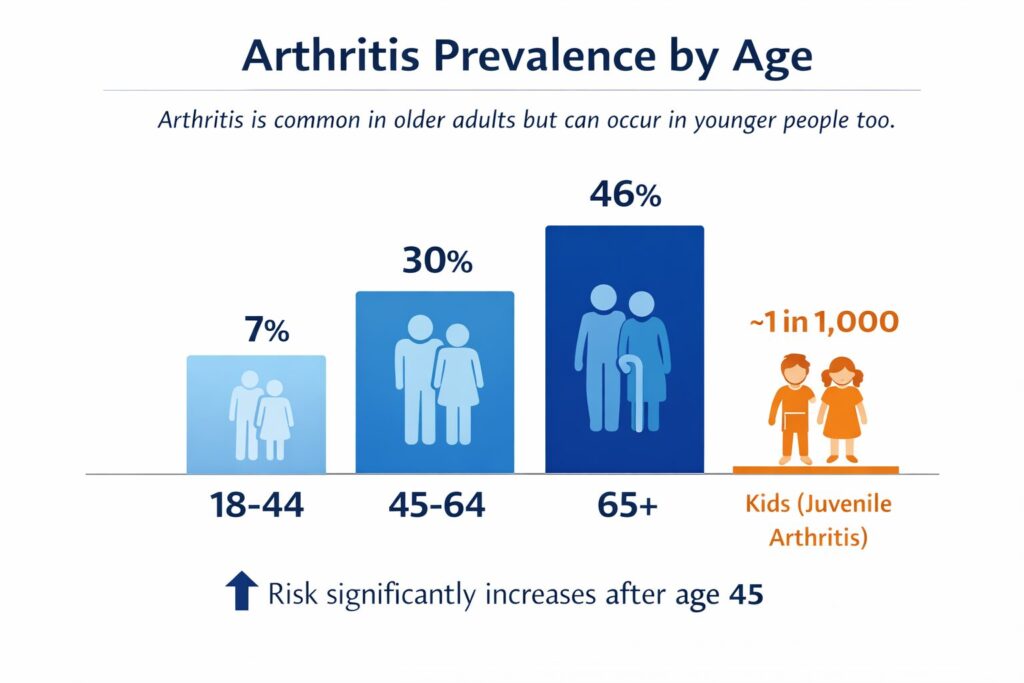
11. Arthritis becomes more common with age.
Rates increase significantly after age 45.
12. Nearly half of adults over 65 have arthritis.
📊 Statistic:
Nearly 50% of adults aged 65 and older live with arthritis, making it one of the most common chronic health conditions affecting older adults.
📎 Source: CDC National Center for Chronic Disease Prevention and Health Promotion
Cite This Statistic
Nearly half of adults age 65 and older have arthritis.
Source: Arthritiswares.com – 25 Arthritis Statistics Everyone Should Know
https://arthritiswares.com/arthritis-statistics/
Many older adults find that simple assistive tools can make daily tasks much easier. You can explore some of the best daily living aids for arthritis that help reduce strain on joints.
13. Arthritis can also affect younger adults.
Millions of people under 45 live with arthritis-related joint conditions.
14. Juvenile arthritis affects about 1 in 1,000 children.
This form can cause joint pain, swelling, and stiffness in young people.
15. Early diagnosis can significantly improve outcomes.
Proper treatment and lifestyle changes can slow progression.
Arthritis and Daily Life
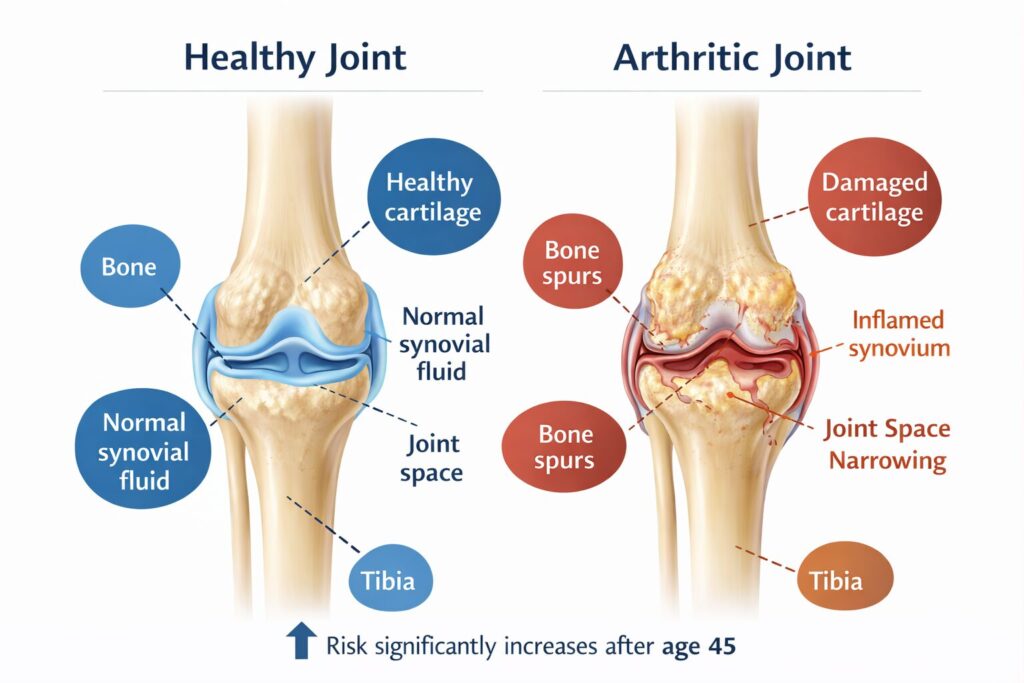
16. Arthritis commonly affects the knees, hips, hands, and spine.
These joints experience the most mechanical stress over time.
Simple ergonomic tools can make daily tasks easier for people with hand arthritis. Explore some of the best tools designed to reduce hand strain and improve grip strength.
17. Joint pain and stiffness are the most frequently reported symptoms.
Many people experience worse symptoms in the morning.
Many people manage arthritis pain using heat therapy, massage tools, and gentle movement. You can explore several helpful options in this guide to arthritis pain relief tools.
18. Arthritis can make everyday tasks difficult.
Activities like opening jars, walking, or climbing stairs can become challenging.
19. Fatigue is a common symptom of inflammatory arthritis.
Many patients report chronic tiredness alongside joint pain.
20. Arthritis can interfere with sleep.
Pain and joint discomfort often worsen at night.
Nighttime joint pain can make it difficult to rest comfortably. These sleep strategies and supportive products for arthritis pain relief may help improve sleep quality.
Economic Impact of Arthritis
21. Arthritis costs the U.S. economy more than $300 billion annually.
📊 Statistic:
Arthritis costs the United States more than $300 billion each year in medical expenses and lost productivity.
📎 Source: CDC
Cite This Statistic
Arthritis costs the U.S. economy over $300 billion annually.
Source: Arthritiswares.com – 25 Arthritis Statistics Everyone Should Know
https://arthritiswares.com/arthritis-statistics/
22. Millions of workdays are lost each year due to arthritis.
Pain and mobility limitations can affect job performance.
23. Arthritis is one of the most common reasons people leave the workforce early.
Severe joint pain can make physically demanding work difficult.
24. Many people require mobility aids as arthritis progresses.
Assistive devices can help maintain independence and reduce strain on joints.
25. Lifestyle changes can significantly improve arthritis symptoms.
Exercise, supportive tools, and joint-friendly habits often help people stay active longer.

Why These Arthritis Statistics Matter
These numbers show just how widespread arthritis has become. Millions of people experience joint pain, stiffness, fatigue, and reduced mobility as part of daily life.
The good news is that many people find relief through:
- supportive mobility tools
- gentle exercise
- improved sleep habits
- ergonomic home adjustments
- joint-friendly lifestyle choices
Making small adjustments to daily routines can often help reduce strain on joints and improve comfort.
Helpful Resources for Managing Arthritis
If you’re looking for ways to reduce joint strain and stay active, these guides may help:
- Best tools that make daily life easier with arthritis
- Gentle exercises that improve joint mobility
- Sleep strategies for arthritis pain relief
- Arthritis-friendly hobbies that protect your joints
These practical strategies can help many people stay comfortable and independent.
Frequently Asked Questions
What is the most common type of arthritis?
Osteoarthritis is the most common form. It occurs when cartilage that cushions joints gradually wears down over time.
Can arthritis affect younger people?
Yes. Although it is more common in older adults, arthritis can affect people of all ages, including children with juvenile arthritis.
What joints are most commonly affected by arthritis?
The knees, hips, hands, and spine are among the most frequently affected joints.
Can lifestyle changes help arthritis symptoms?
Yes. Regular low-impact exercise, weight management, ergonomic tools, and supportive sleep habits can often reduce joint strain and discomfort.
Conclusion
Arthritis affects millions of people worldwide and remains one of the leading causes of pain and disability. While the condition can present daily challenges, many individuals find ways to stay active and maintain a high quality of life through supportive tools, smart lifestyle adjustments, and proper care.
Understanding these arthritis statistics helps highlight the importance of awareness, early management, and practical solutions that make everyday life easier.