
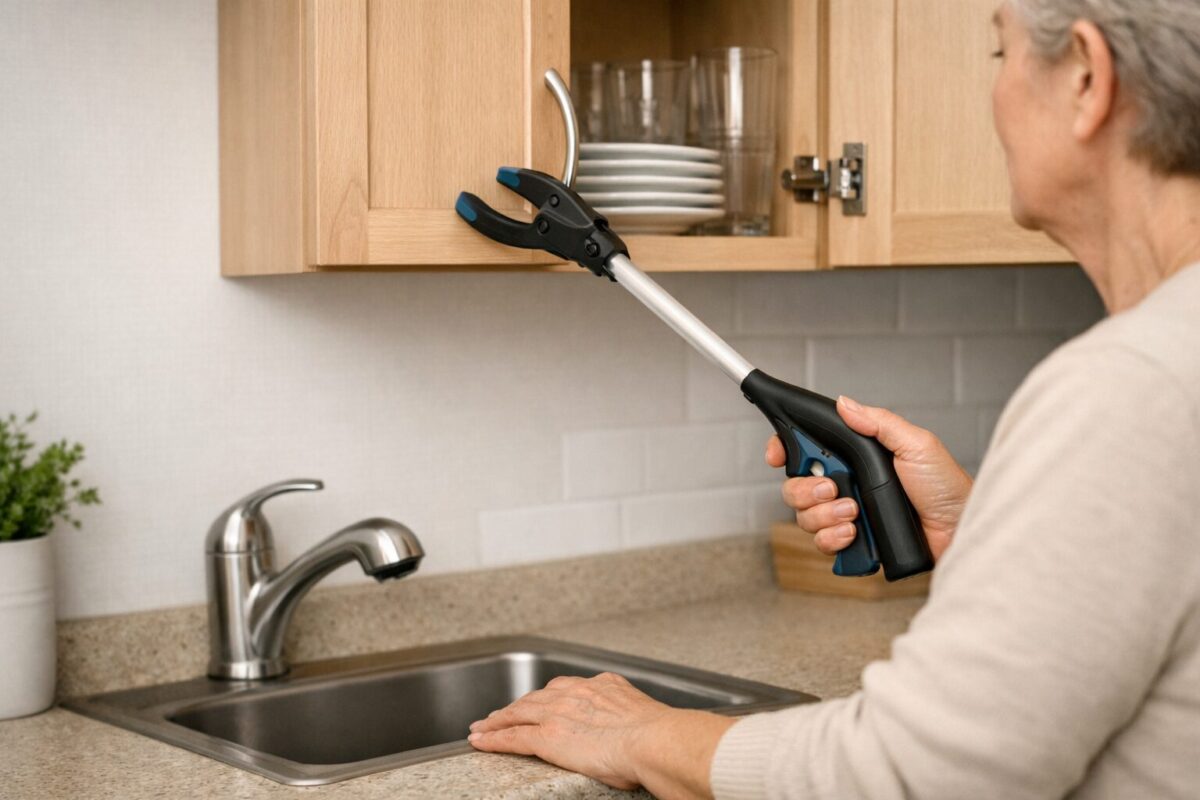
Everyday tasks can become more difficult when arthritis affects your grip, reach, balance, or ability to bend and move comfortably. A cupboard may be hard to reach, a frequently used item may be stored too low, or preparing a meal may involve more standing than you can comfortably manage.
You do not necessarily need to renovate your home to make daily routines easier. Sometimes, moving frequently used items, changing how a task is organized, or using a suitable aid can make a difference.
This free Home Accessibility Mini-Assessment helps you look at your living space room by room, identify tasks that are unnecessarily difficult, and make a practical list of possible improvements.
Quick Answer: What Is a Home Accessibility Assessment?
A home accessibility assessment is a structured way to identify barriers that make everyday activities harder. This printable helps you consider reaching, bending, gripping, moving between areas, and completing routine tasks so you can prioritize changes that suit your needs.
It is a planning tool, not a professional home safety inspection.
What This Printable Helps You Identify
Use the assessment to consider:
- Reaching and storage: Are everyday items easy to reach without stretching or bending awkwardly?
- Kitchen tasks: Can you prepare food and access frequently used utensils without unnecessary effort?
- Bathroom routines: Are toiletries and other essentials positioned conveniently?
- Moving around your home: Are furniture placement and available space making everyday movement difficult?
- Bedroom and dressing tasks: Are clothing, footwear, and bedside essentials accessible?
- Task organization: Could rearranging items or changing a routine make a task easier?
- Possible improvements: Which small adjustments should you try first, and which may require help or professional advice?
You do not need to change every room. Start with the areas where you encounter the greatest difficulty.
Download the Free Home Accessibility Mini-Assessment
Download the Home Accessibility Mini-Assessment (PDF)
Print the assessment and walk through your home at a comfortable pace. You can complete one room at a time and make notes about barriers, possible changes, and tasks where you may need assistance.
Do not climb, stretch beyond your comfortable reach, or move heavy furniture to complete the assessment.
How to Use the Assessment
1. Start With Everyday Difficulties
Think about the tasks that regularly take extra effort. These might include reaching into cupboards, carrying laundry, getting dressed, preparing meals, or moving around crowded spaces.
Focus on the activity that is difficult rather than assuming that you need to replace or renovate something.
2. Review One Room at a Time
Choose a room and consider how you use it. Look at the placement of frequently used items, the space available for movement, and whether the arrangement makes common tasks unnecessarily awkward.
You can complete the assessment over several days if that is more comfortable.
3. Record Possible Changes
For each difficulty, write down one or more options. These might include moving an item to a more convenient shelf, keeping supplies together, sitting for a suitable task, or asking someone to help rearrange a space.
Choose changes that are practical for your home, abilities, and budget.
4. Prioritize the Most Useful Improvements
Start with changes that address a recurring problem and are relatively simple to make. More complicated changes may require help from a family member, occupational therapist, contractor, or other qualified professional.
5. Revisit Your Assessment
Your needs and routines can change over time. Review your notes when a task becomes more difficult, after a change in mobility, or when you reorganize a room.
Accessibility vs. Home Safety
Accessibility and safety are related, but they are not the same.
- Accessibility focuses on whether you can reach, handle, and use things in your home with reasonable effort.
- Home safety focuses on hazards that could contribute to an accident or injury, such as loose rugs, poor lighting, or obstructed pathways.
A home may be relatively safe but still difficult to use. For example, everyday kitchen items may be stored where they require uncomfortable reaching. Conversely, a room may be easy to navigate but still contain a trip hazard that needs attention.
For a separate review of common hazards, see the Arthritis-Friendly Home Safety Checklist in the printables library.
Who May Find This Printable Helpful?
This assessment may be useful for:
- People with arthritis who find reaching, bending, gripping, or routine household tasks difficult.
- Older adults reviewing how comfortably they can use their living spaces.
- People adjusting their home to accommodate changing mobility or physical needs.
- Family members and caregivers helping someone identify practical improvements.
- Anyone who wants to prioritize small home changes before considering larger modifications.
Related Reading
Arthritis Printables Library
Browse the collection of free checklists and practical planning tools.
Helpful Products for an Arthritis-Friendly Home
Explore practical ideas and products that may make selected household tasks easier.
Mobility Aid Fit & Adjustment Checklist (Free Printable)
Review fit, comfort, and equipment-condition concerns relating to your cane, walker, or other mobility aid.
About Arthritis Wares
Arthritis Wares provides practical information and resources to help people with arthritis manage everyday tasks and make informed decisions about useful tools and home adjustments.
Medical Disclaimer: This article is for informational purposes only and does not constitute medical advice. Always consult your doctor, rheumatologist, or occupational therapist before making changes to how you manage your arthritis.
