

Topical pain relief creams and gels are one of the most popular ways to manage arthritis pain day to day — and for good reason. Applied directly to a sore joint, they deliver active ingredients where you actually need them, with less systemic exposure than oral medications.
But not all arthritis creams work the same way, and choosing the wrong one for your type of pain is the most common reason people feel like topical treatments don’t work. Some reduce inflammation gradually over days. Others numb pain within minutes. Using a fast-acting menthol gel when what you actually need is an anti-inflammatory — or vice versa — means you’ll likely be disappointed.
This guide reviews the five most consistently effective options available in 2026, explains what each one actually does, and helps you match the right cream to your symptoms. If you want to understand the science behind how each format works before buying, start with our explainer first.
👉 How gels, creams, and patches work — the full explainer
👉 Back to the complete topical pain relief hub
How We Choose and Review These Products
Our editorial team evaluates each product based on active ingredient evidence, mechanism of action, real-world usability for people with arthritis, and consistent user feedback over time. We consider joint-specific suitability, format practicality (including ease of application for arthritic hands), and value. No manufacturer has paid for inclusion or placement. Affiliate links help support the site at no extra cost to you.
Quick Picks: Best Arthritis Creams at a Glance
| Product | Best For | Key Ingredient | Speed of Relief |
|---|---|---|---|
| Voltaren Gel | Joint inflammation | Diclofenac (NSAID) | Gradual — builds over days |
| Biofreeze | Flare-ups and fast relief | Menthol | Fast — within minutes |
| Aspercreme with Lidocaine | Sharp or localized pain | Lidocaine | Fast numbing |
| Penetrex | Daily maintenance | Arnica, MSM, Boswellia | Gradual — builds over weeks |
| Hempvana | Mild pain, sensitive users | Hemp seed extract | Mild to moderate |
A note on combining: Many people get the best results using two creams strategically — a fast-acting option like Biofreeze or Aspercreme for immediate relief, and Voltaren on its own schedule for ongoing inflammation control. They work through completely different mechanisms and can be used together safely, on alternating applications with at least 30–60 minutes between them on the same joint.
How to Choose the Right Arthritis Cream for Your Symptoms
The single most useful question to ask before buying is: what type of pain am I actually dealing with?
- Swelling, stiffness, warmth around the joint — this is inflammation. Use an NSAID gel like Voltaren. It won’t feel like it’s working immediately, but it’s the only topical option that targets the underlying cause.
- Sharp, shooting, or persistent localized pain — use a lidocaine cream like Aspercreme. It numbs the nerve endings causing that sensation.
- Flare-up, post-activity soreness, or you need relief right now — use a menthol cooling gel like Biofreeze. Fast, temporary, and effective for breaking the pain cycle.
- Mild daily discomfort, sensitive skin, or preference for gentler ingredients — use Penetrex or Hempvana for daily maintenance without stronger pharmaceutical ingredients.
Best Arthritis Pain Relief Creams: Full Reviews
1. Voltaren Arthritis Pain Gel — Best Overall for Inflammation
Voltaren is the only over-the-counter topical cream available in the US and UK that contains diclofenac — a clinically proven NSAID that reduces inflammation directly inside the joint. This makes it categorically different from every other cream on this list: it’s not masking pain signals, it’s addressing one of the primary causes of osteoarthritis discomfort.
It requires consistent use to work properly — typically twice daily for several days before peak effect — which is why people who try it once or twice and stop often conclude it doesn’t work. Used as directed over a genuine week of consistent application, it has strong clinical evidence behind it, particularly for knee and hand osteoarthritis.
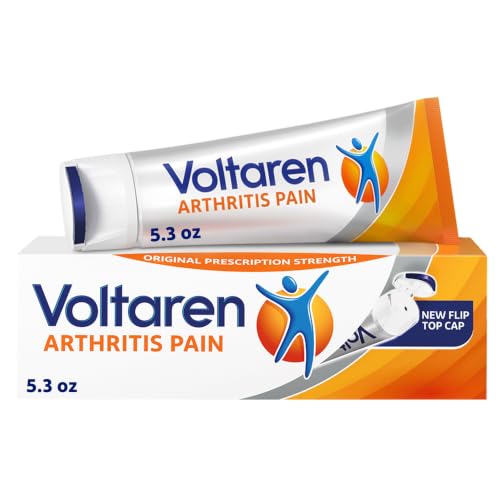
Active ingredient: Diclofenac sodium 1%
Pros:
- The only OTC topical with clinically proven anti-inflammatory action
- Targets joint inflammation directly, not just pain sensation
- Long-lasting relief with consistent use
- Significantly lower systemic absorption than oral NSAIDs
Cons:
- Not for immediate or on-demand relief — requires days of consistent use to build effect
- Should not be used alongside oral NSAIDs without doctor guidance
- Not suitable for people with NSAID sensitivity or certain kidney, liver, or GI conditions
Best for: Knee, hand, elbow, and foot joint inflammation; osteoarthritis with swelling or stiffness.
Not ideal for: Immediate pain relief or people who cannot tolerate NSAIDs.
👉 Check Price on Amazon — Voltaren Arthritis Pain Gel
2. Biofreeze Pain Relief Gel — Best for Fast Cooling Relief
Biofreeze works through counter-irritation: the menthol creates an intense cooling sensation that competes with and overrides pain signals traveling to the brain. It doesn’t reduce inflammation or treat the underlying joint condition — but for getting through a flare-up, completing a task, or recovering after activity, few products work faster or more reliably.
It’s available in gel, roll-on, and spray formats. The roll-on is worth highlighting specifically for people with hand arthritis — squeezing a tube is painful for many people, and the roll-on format removes that friction entirely. The professional-strength version contains a higher menthol concentration than the standard retail formula.

Active ingredient: Menthol 10.5% (professional strength)
Pros:
- Relief within minutes — one of the fastest topical options available
- Non-greasy; absorbs quickly for daytime use
- Available in roll-on format — easier for arthritic hands
- FSA/HSA eligible
Cons:
- Temporary relief only — does not address inflammation
- Strong menthol scent that some users find overpowering
- Needs reapplication every few hours
Best for: Flare-ups, post-activity soreness, quick relief before or after movement.
Not ideal for: Long-term inflammation management on its own.
👉 Check Price on Amazon — Biofreeze Professional Strength Pain Relief Gel
3. Aspercreme with Lidocaine — Best for Numbing Sharp Pain
Lidocaine is a local anesthetic — the same class of drug used in dental injections, at a much lower topical concentration. Applied to the skin, it temporarily blocks nerve signals in the area, which is particularly effective for the sharp, stabbing, or persistent localized pain that some forms of arthritis produce.
It’s fragrance-free, which makes it one of the better options for people with sensitive skin, scent sensitivities, or those who need to use it at work. Unlike menthol creams, there’s no strong sensation on application — it simply, quietly numbs. Relief typically arrives within 20–30 minutes and lasts several hours.

Active ingredient: Lidocaine 4%
Pros:
- Fast-acting numbing without strong scent or sensation on application
- Fragrance-free — suitable for sensitive skin and workplace use
- Non-greasy formula comfortable for regular daily use
Cons:
- Does not reduce inflammation — pain returns after it wears off
- Requires regular reapplication for sustained relief
- Not the right choice if swelling is the primary symptom
Not ideal for: Inflammatory pain with visible swelling.
Best for: Sharp or nerve-adjacent pain, hands, knuckles, localized joint pain.
👉 Check Price on Amazon — Aspercreme with Lidocaine
4. Penetrex Pain Relief Cream — Best for Daily Maintenance
Penetrex is designed for consistent, low-intensity daily use rather than acute relief. Its formula combines arnica, MSM (methylsulfonylmethane), vitamin B6, and boswellia — a plant resin with documented anti-inflammatory properties, though most evidence for boswellia comes from oral supplementation studies rather than topical application specifically.
It’s a practical choice for people who want something to apply morning and evening as part of a daily routine, without worrying about pharmaceutical ingredients or interactions. Results build gradually — most users report noticeable improvement after one to two weeks of consistent use rather than days.

Active ingredients: Arnica, MSM, Vitamin B6, Boswellia
Pros:
- Non-greasy and comfortable for daily use
- No pharmaceutical active ingredients — lower concern for drug interactions
- Well-regarded by long-term arthritis users for maintenance between flare-ups
Cons:
- Slow to take effect — not appropriate for acute or flare-up pain
- Higher price point than many alternatives
- Evidence for topical boswellia and MSM is less robust than for diclofenac
Best for: Daily joint comfort, maintenance between flare-ups, people who prefer non-pharmaceutical ingredients.
Not ideal for: Immediate or acute pain relief.
👉 Check Price on Amazon — Penetrex Joint & Muscle Therapy
5. Hempvana Pain Relief Cream — Best Natural Option for Mild Pain
Hempvana uses hemp seed extract as its primary ingredient. It’s worth being clear on what this means: hemp seed extract is not CBD (cannabidiol), which comes from a different part of the hemp plant and has more studied pain-relief properties. Hemp seed oil is rich in fatty acids and has moisturizing and mild anti-inflammatory effects — it’s a gentler option than pharmaceutical creams.
For mild arthritis, sensitive users, or people who want a comfortable daily cream with clean ingredients, many users find it genuinely helpful — particularly for hand and finger joints where a lightweight, non-greasy formula makes it easy to keep using your hands after application.

Active ingredient: Hemp seed extract
Pros:
- Lightweight, non-greasy, and absorbs easily
- Odor-free — good for workplaces or scent-sensitive environments
- Comfortable for frequent daily application
Cons:
- Less potent than NSAID or lidocaine options
- Hemp seed extract is not the same as CBD — different properties and evidence base
- Results vary considerably between users
Best for: Mild arthritis symptoms, sensitive users, daily moisturizing and comfort.
Not ideal for: Moderate to severe pain or significant inflammation.
👉 Check Price on Amazon — Hempvana Double Platinum Relief Cream
Best Arthritis Cream by Joint Location
Hand and Finger Arthritis
Small joints in the hands respond well to fast-absorbing gels and lidocaine creams — bulkier or greasier formulas make it hard to use your hands afterward. Aspercreme and Biofreeze roll-on are both practical choices. Voltaren also has strong clinical trial data specifically for hand osteoarthritis and is worth using consistently if inflammation is the primary problem.
Knee Arthritis
The knee is the best-studied joint for topical diclofenac, and most clinical guidelines specifically recommend it for knee osteoarthritis. Apply around the entire knee — not just on top — for best absorption. Biofreeze can be used alongside Voltaren on alternating applications for additional fast relief during flare-ups.
Shoulder Arthritis
Shoulders are large and sometimes hard to reach, making a spray format or roll-on practical for self-application. Warming creams — including capsaicin-based options — can help loosen tight surrounding muscles, which often contribute to shoulder pain alongside the joint itself.
Foot and Ankle Arthritis
Menthol cooling gels work particularly well for feet after walking or standing — the cooling sensation is especially welcome after activity. Apply at the end of the day and allow to absorb before putting on socks. Voltaren is also effective for foot and ankle osteoarthritis with consistent use.
Cream vs Gel vs Patch: Which Format Works Best?
The active ingredient matters more than the format — but format does affect how practical a product is to use day to day.
Creams have a thicker, moisturizing texture that suits massage application and stays on the skin longer. They’re comfortable for the hands and joints where rubbing in the product is itself beneficial. Gels absorb faster and leave less residue, making them better for daytime use when you don’t want transfer onto clothing. Most menthol products come in gel format for this reason.
Patches provide sustained, slow-release delivery over 8–12 hours — useful for areas that are awkward to reapply cream to, such as the lower back, shoulder, or knee while sleeping. Roll-ons deserve a specific mention for anyone with hand arthritis: if squeezing a tube is painful, a roll-on format removes that barrier entirely.
👉 Read the full format explainer: Arthritis Gels, Creams & Patches — How Each One Works
Frequently Asked Questions
Do arthritis creams actually work?
Yes — but effectiveness depends heavily on matching the right ingredient to the right type of pain. Diclofenac (Voltaren) has the strongest clinical evidence for osteoarthritis. Menthol and lidocaine creams provide real but temporary relief. Natural creams work better for mild symptoms and daily maintenance. People who feel creams don’t work have often been using the wrong type for their symptoms, or haven’t used them consistently enough for the ingredient to build effect.
Can I use more than one arthritis cream at a time?
You can use different creams on the same joint as long as they contain different active ingredients and you don’t apply them simultaneously. A common and sensible approach: use Biofreeze for immediate relief, then apply Voltaren a couple of hours later for longer-term anti-inflammatory effect. Don’t layer creams on top of each other, wash hands between applications, and allow at least 30–60 minutes between products on the same joint.
Is Voltaren safe for long-term use?
Voltaren is generally considered safe for ongoing use at the recommended dose, and its topical application means far less systemic absorption than oral diclofenac. However, if you’re also using oral NSAIDs, or have a history of kidney, liver, or gastrointestinal issues, check with your doctor before using it long-term.
Are arthritis creams safe for older adults?
Topical creams are generally preferred over oral NSAIDs for older adults specifically because of lower systemic absorption. Voltaren, Biofreeze, and Aspercreme are all widely used by older adults. The main cautions are skin sensitivity — patch test before full application — and avoiding use on broken or irritated skin.
What’s the difference between Voltaren and generic diclofenac gel?
Functionally, very little. Generic diclofenac 1% gel contains the same active ingredient at the same concentration and is typically significantly cheaper. The main differences are in the base formulation — texture, scent, and absorption rate — which some users find affects their daily compliance. If cost is a factor, a generic is a reasonable place to start.
Final Thoughts
There’s no single best arthritis cream — there’s the right one for your specific type of pain, your affected joint, and how quickly you need relief. The good news is that once you understand how each type works, the right choice becomes straightforward.
If inflammation is driving your pain, start with Voltaren and give it a genuine week of consistent use. If you need fast relief on top of that, keep Biofreeze or Aspercreme on hand for flare-ups. For gentle daily maintenance, Penetrex works well as a complementary routine. Used consistently and matched to the right symptoms, topical creams can make a real difference to how comfortably you move through your day.
Related Articles
- Arthritis Gels, Creams & Patches: How Each One Works
- Topical Pain Relief for Arthritis — Complete Hub
- Heat vs Cold Therapy for Arthritis: Which One Works Best and When
- Effective Self-Massage Routines for Arthritis Pain Relief
- Best Hand Massagers for Arthritis Pain Relief